
✨ Intro Blurb
Some places don’t just survive history — they absorb it.
December 9th began before the city was fully awake, stepping onto marble that has known worship, war, fire, devotion, destruction, and rebuilding. The Acropolis doesn’t hide its fractures. It doesn’t pretend it was never broken. And maybe that’s what makes it sacred.
This wasn’t just a morning of ruins and plaques (yes, I read every single one). It was a walk through endurance. Through layers of belief and rebuilding. Through a place that has been temple, church, mosque, monument — and still rises above the city.
And still it stands.
🏛️ Early Entry: Marble Before the Morning
The sky was barely awake when I stepped through the gates. The marble still held the cool of the night, and for a moment, the Acropolis felt quiet — almost private. There’s something sacred about walking ancient ground before the crowds arrive. I had intentionally booked the very first entry time, which I highly recommend if you go: you beat the crowds, the views are stunning in the early morning, and (if it’s summer) you’ll beat the heat.
I felt a soft, excited anticipation as I waited to enter through the gates. That could’ve been because I was trying to finish my breakfast treat and coffee too — last bite shoved in my mouth, last gulp of hot coffee (thankful for my Italian coffee-drinking skills now).
And then I stepped fully onto the path
It’s one thing to see the Acropolis from afar. It’s another to feel the stone beneath your feet — stone worn by worshippers, philosophers, soldiers, priests, and ordinary citizens who climbed these same hills carrying offerings, prayers, swords, or expectations. I tried to imagine their belief — how real their gods must have felt to them. How sacred this ground must have seemed before it knew fire, siege, explosion, and erosion.
Standing there, I felt the weight of devotion layered with destruction. Faith and fragility in the same place.
🎭 The Theatre: Where Stories First Took the Stage
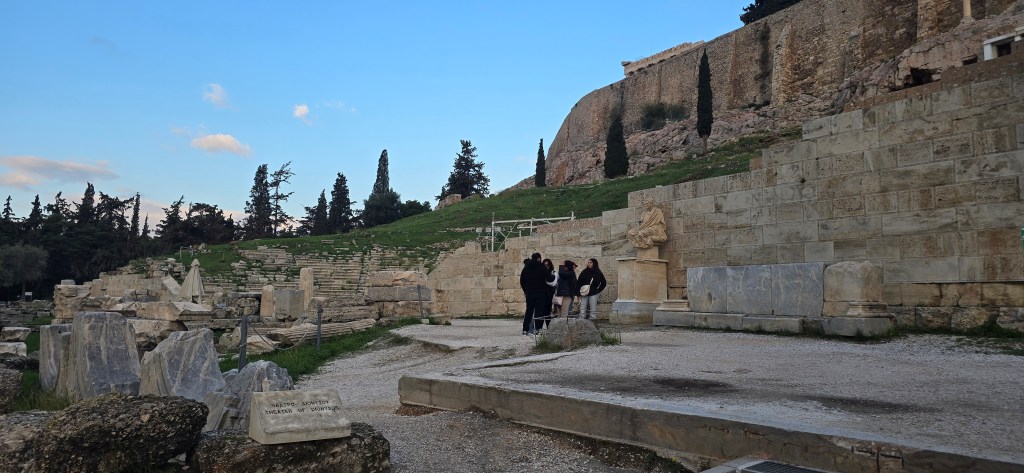
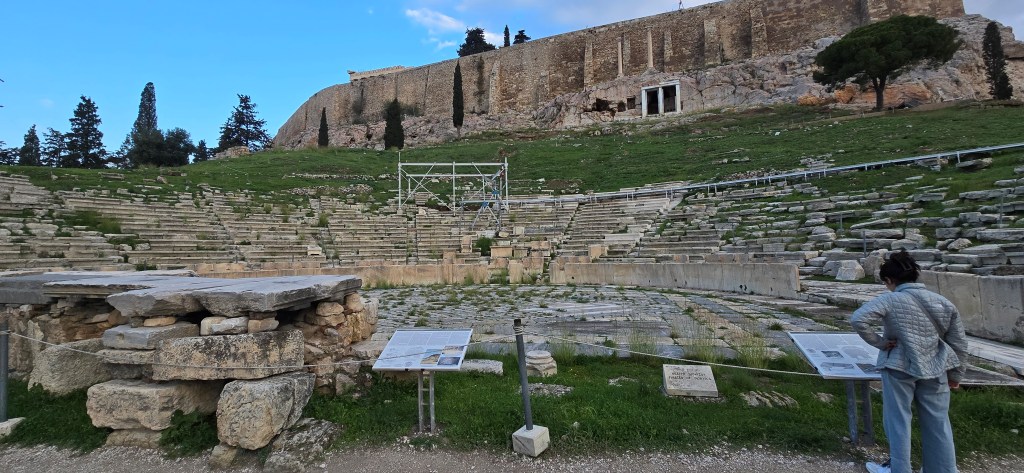
The first major section you walk is the eastern and main entrance to the theatre. This entrance would have been used by the priests and officials for the performances during the Dionysian festival of the city. Along the northern side of this entrance, statues once stood honoring dramatic poets and the three most famous tragedians — Aeschylus, Sophocles, and Euripides (completed around 330 BC).
East of this monument, the honorary base and statue of the most important representative of New Comedy, Menander, was completed in 291 BC. He is credited with writing over 100 plays and winning the competition multiple times. His innovative work focused on ordinary people, and he is considered the father of psychological drama. One other statue base, most likely from the 2nd century BC, has not been identified. Restoration work in this area was completed in 2012.
Standing there, I couldn’t help but think how wild it is that stories meant to move hearts thousands of years ago still echo on stages today. I’ve sat in audiences. I’ve stood under lights. I’ve directed scenes. But standing at the birthplace of theatre felt different — like seeing the first spark before the flame. I almost didn’t want to leave… I took one last glance back toward the stage below, then turned and let the path guide me higher — one quiet step at a time.
(Yes, I read every single plaque.)
🏛️ The Peripatos & The Stoa of Eumenes: The In-Between Spaces
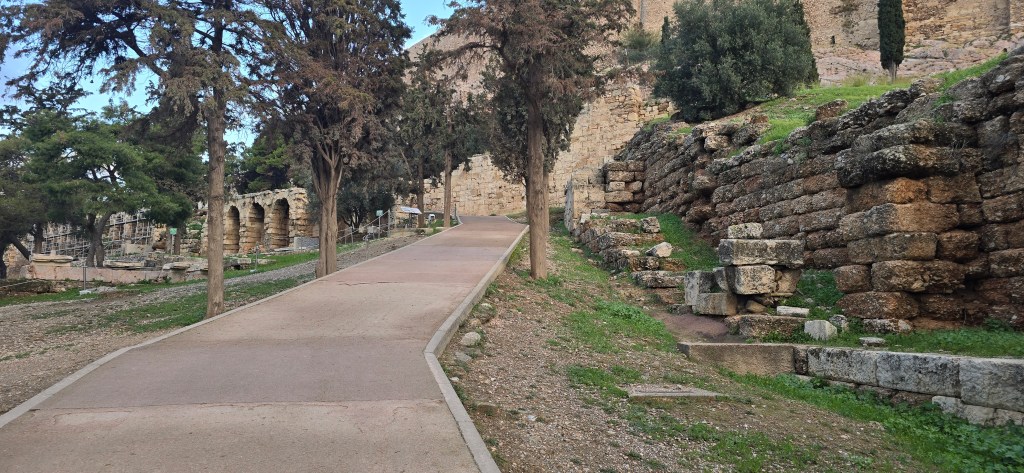
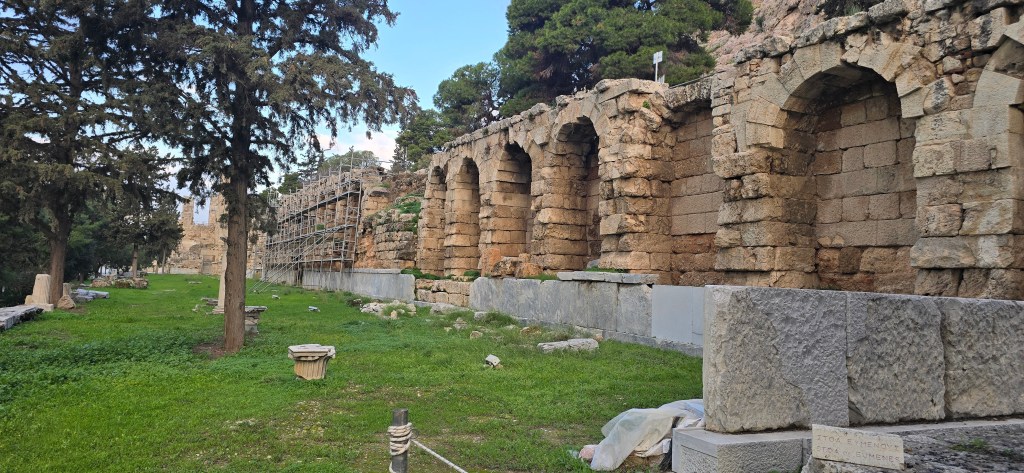
Next, I walked up a modern pathway that lies on top of the Peripatos — the ancient road that circled the Acropolis — toward the Stoa of Eumenes. The King of Pergamon, Eumenes II (ruled 197–159 BC), donated this structure. It measured 163 m x 17.65 m and was two stories tall. What we see now is the arched wall built to reinforce the first floor (the wall would have stretched across the grassy area — I’ll insert the photo below).
I stood there trying to picture it: two stories tall, stretching across the hillside, filled with movement and conversation. This wasn’t just architecture. It was shelter. It was gathering. It was the in-between space before the performance began. I imagined people waiting there in the shade, adjusting robes, debating philosophy, laughing before tragedy unfolded below in the theatre.
🏺 Temple of Asklepios: Healing, Hope, and Surrender
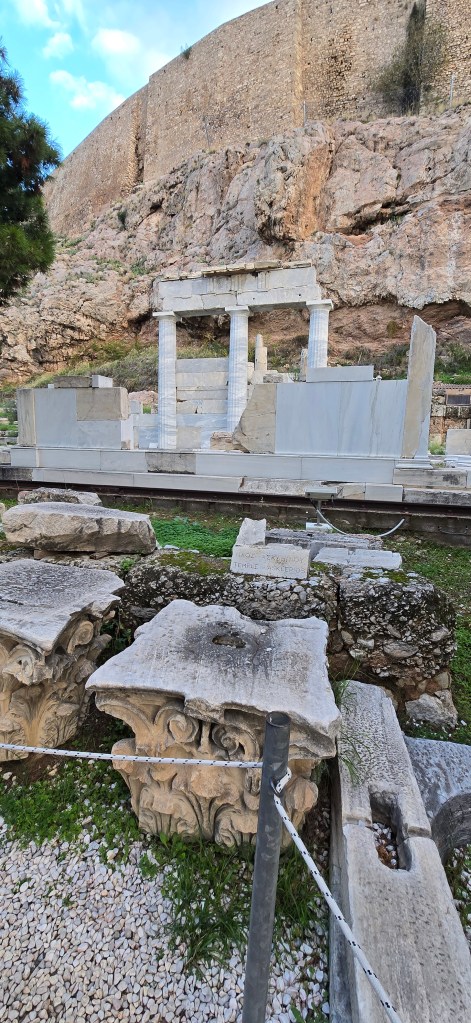
The Temple of Asklepios followed, founded in 420 BC by the citizen Telemachos. When I read that name, I knew I had heard it somewhere before. After a quick search, I realized why: Telemachos is also known as the son of Odysseus, King of Ithaca, and his wife Penelope. As strange as it may seem, I really enjoy The Odyssey and The Iliad, so this made me ridiculously excited.
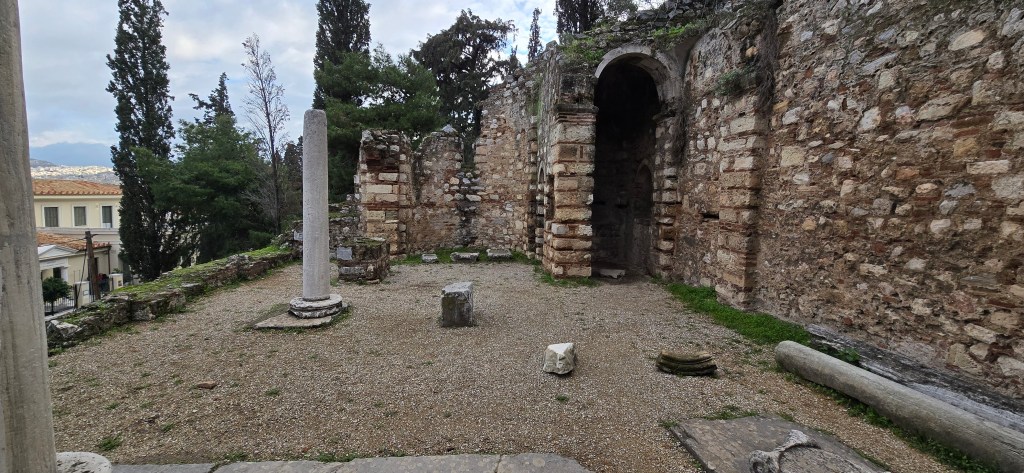
The sanctuary was built in honor of the god Asklepios and his daughter Hygieia. Inside was a depiction of the arrival of the gods in Athens and their reception by Telemachos. The sanctuary would have included an altar, dining and lodging for priests, and two galleries. Visitors seeking healing would spend the night there, hoping to see the god in their dreams and be healed.
The idea of lying down in hope — trusting that healing would come in a dream — felt strangely familiar. Faith has always required surrender.
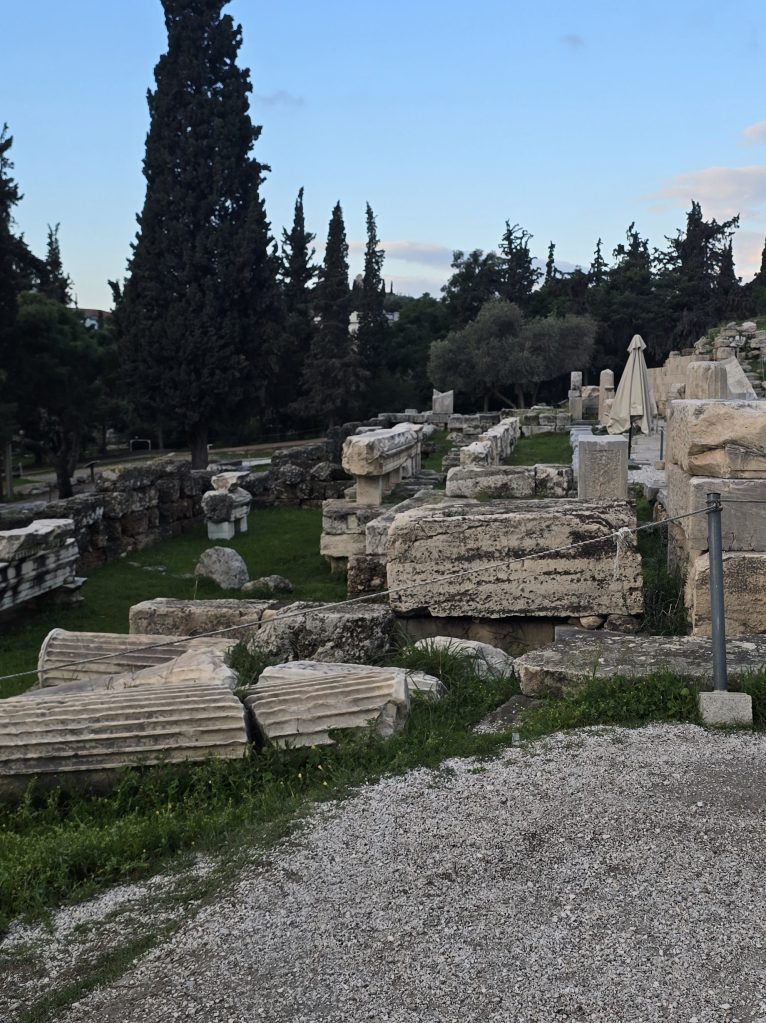
In the 6th century AD, when Christianity replaced paganism, the buildings of the Asklepieion were integrated into the complex of a large three-aisled basilica. During the Byzantine period (11th–12th century AD), two small, single-aisled churches were built on the site as well.
It amazed me how large the columns were and how they would have been hand-carved and moved.
🧱 The Hand-Built World: When Stone Refuses to Be Ignored
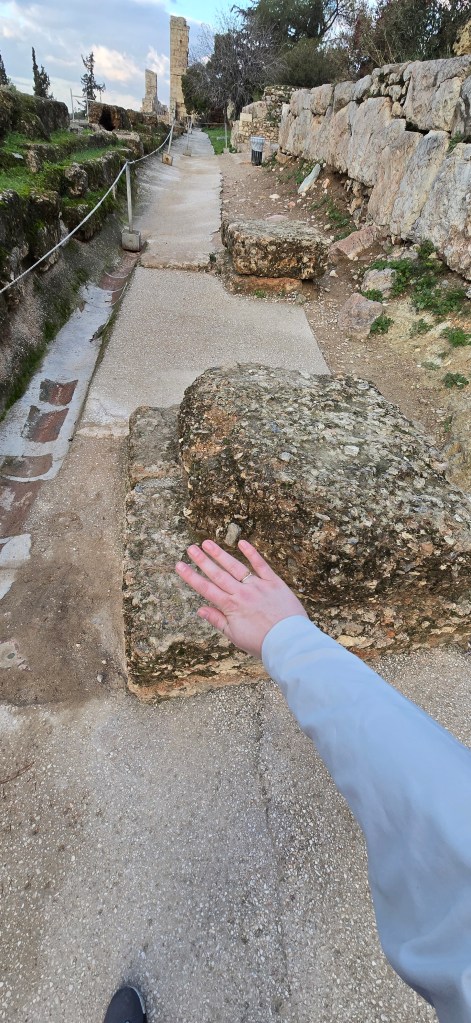
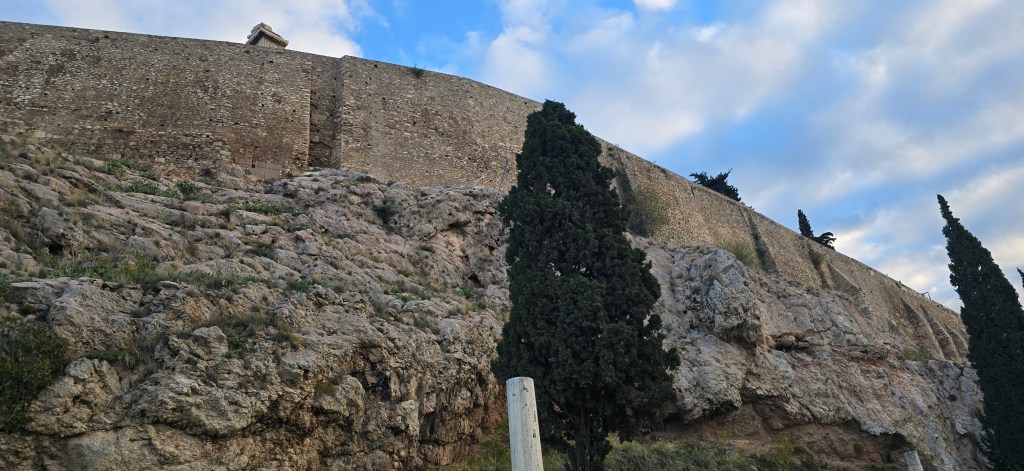
Walking along the way, it was difficult to keep moving because I kept finding myself just staring up at the walls that would have been built by hand. I kept stopping mid-step, tilting my head back, trying to understand how something this massive was carved and raised without machinery. The scale of it humbles you. It refuses to be rushed past.
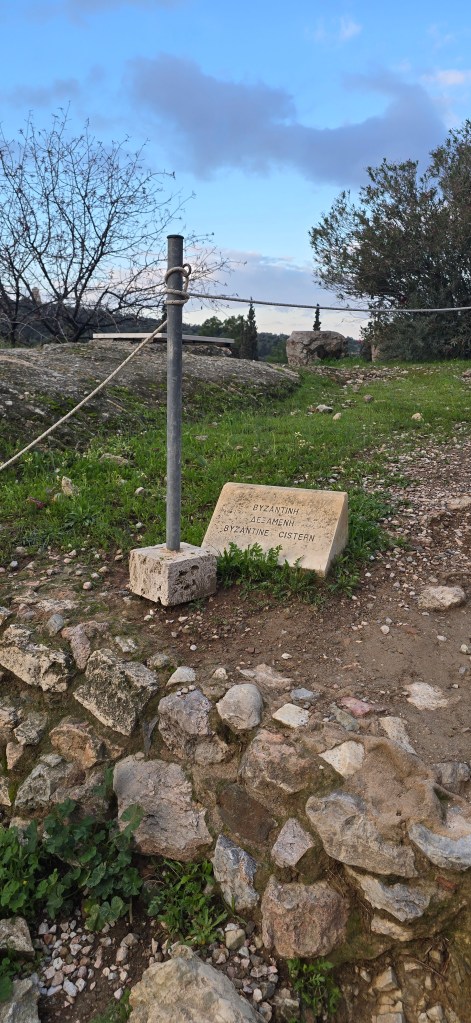
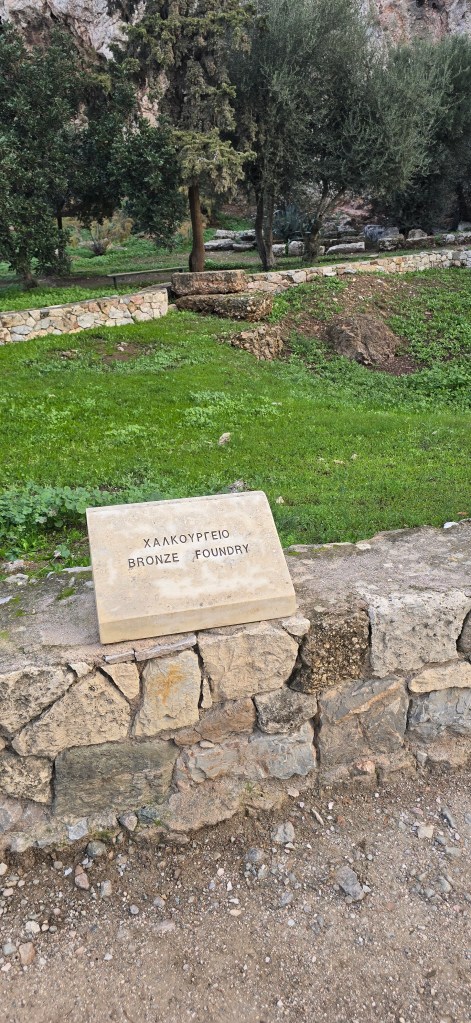
Along the route, I passed a bronze foundry, cisterns, fountains, and views of modern Athens — a reminder that the ancient world and the living city still share the same breath.
The path curved again, and I followed it without hesitation, as if the hill itself were unfolding its next story just ahead of me.
(I promise I didn’t memorize all these dates… I just took photos.)
🎶 Odeion of Herodes Atticus: Music Where Grief Once Lived
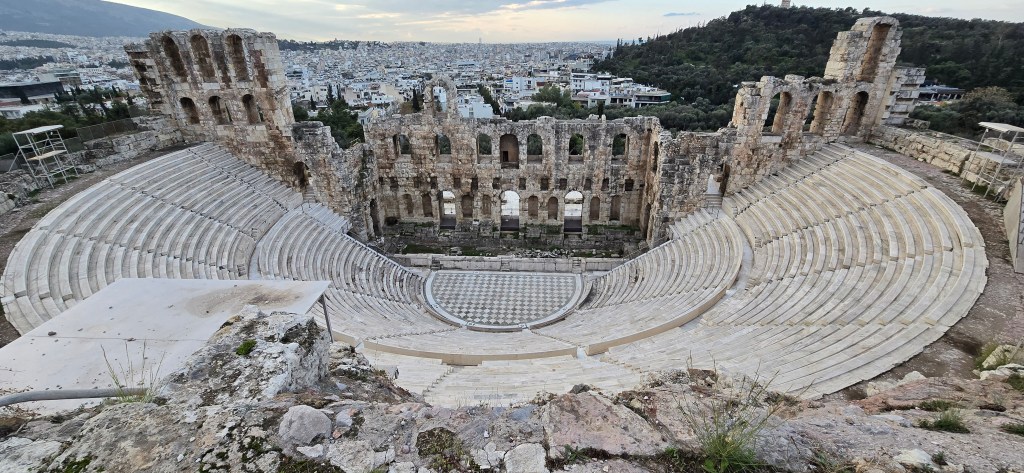
Next on the journey was the Odeion of Herodes Atticus, an ancient stone Roman theatre located on the southwest slope of the Acropolis. The theatre was completed in 161 AD and was built by Herodes Atticus in memory of his wife.
Even empty, it feels alive. You can almost hear the acoustics testing themselves against the stone. The fact that performances still happen here today — that music continues where grief once inspired its construction — felt quietly poetic.
The theatre was destroyed by the Heruli in 267 AD and wasn’t restored until the 1950s. This 5,000-seat theatre was one of the largest of its time and is still used today as a premier venue for the Athens Festival.
From there, you continue upward toward what would have been the western gate… and then up the steps into the Propylaea.
🚪 The Western Gate: Where Ancient and Modern Meet
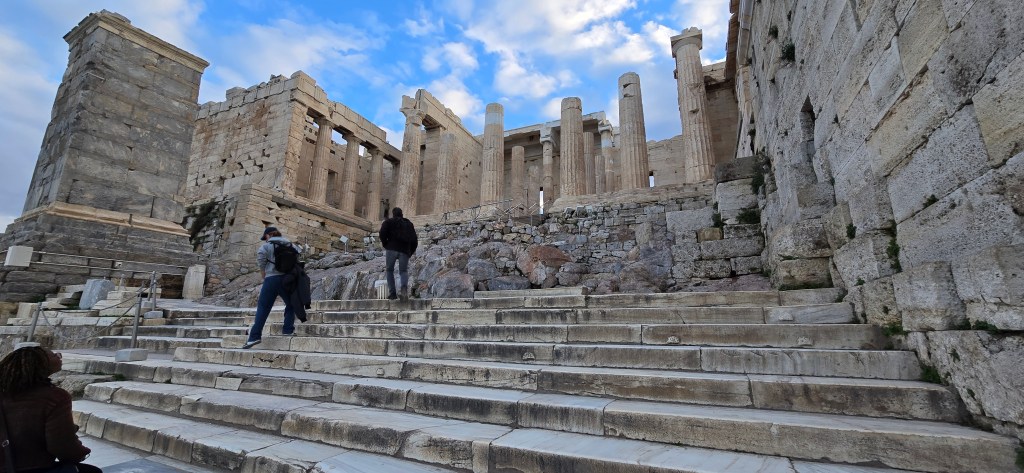
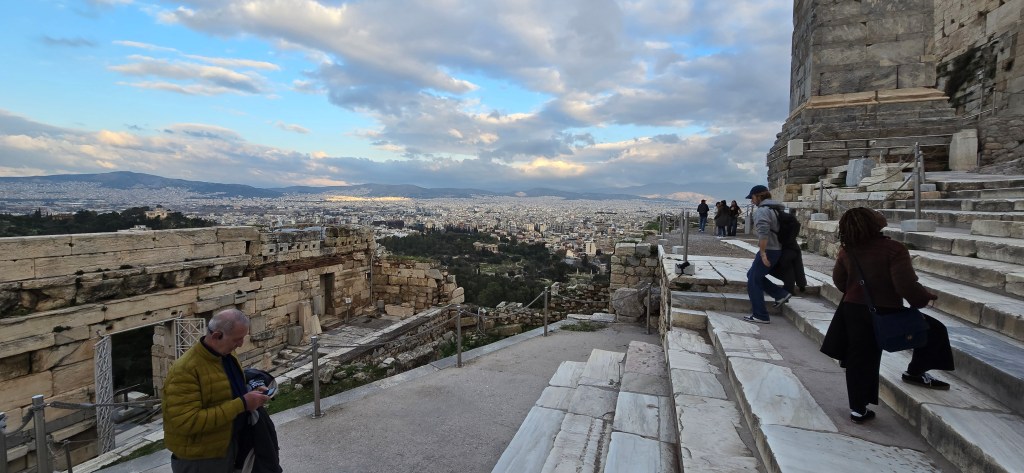
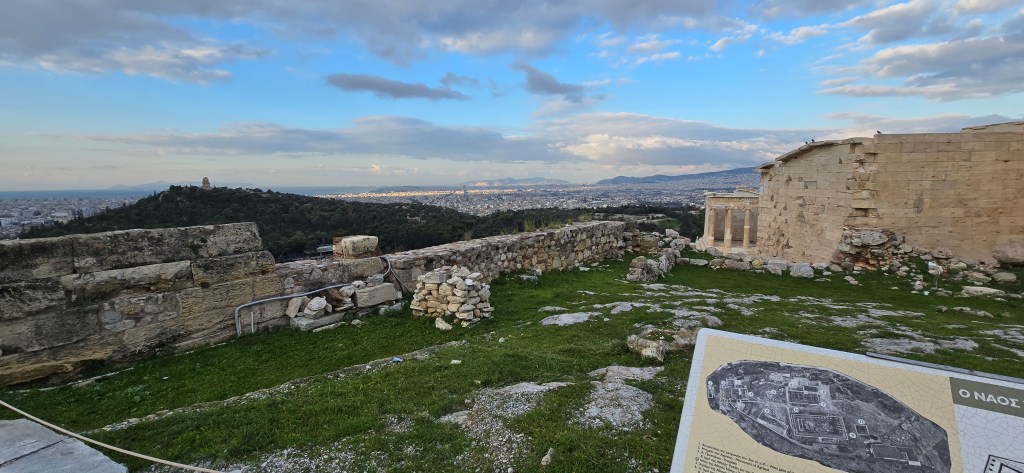
To the left is the Monument of Agrippa, to the right the Temple of Athena Nike, and straight ahead the Propylaea. The grandeur of the steps alone was enough to make me walk in awe.
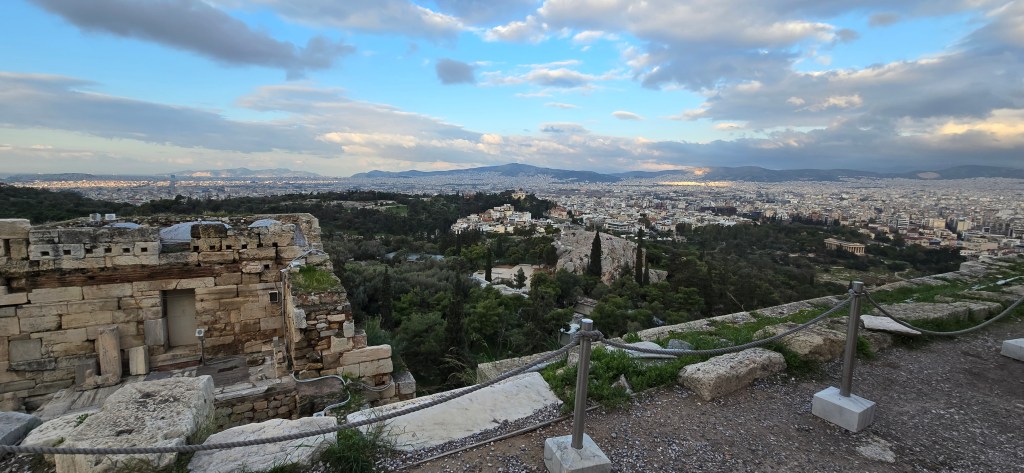
Beyond the gate, the contrast was breathtaking — lush green, ancient marble, and modern Athens spilling out below. Below me, the city buzzed with traffic and café tables. Behind me, marble older than empires. Somehow, neither erased the other.
Walking around, you can see areas where restoration work has made the stone look “new,” and other portions left untouched — a visible reminder of time, repair, and what endurance actually looks like.
Looking out toward the sea, the water was crisp blue and dotted with white boats. I imagined ancient wives awaiting their warriors returning from battle, the hope they placed in their gods. The fresh air and wind felt like the breath of every life that had looked out from this very spot before mine. And in the distance, I could see the monument I’d reached the day before — the same place where I’d looked toward the Acropolis and wondered what it would feel like to stand here.

🏛️ The Propylaea, Agrippa, and Athena Nike: Victory, Ceremony, and Power
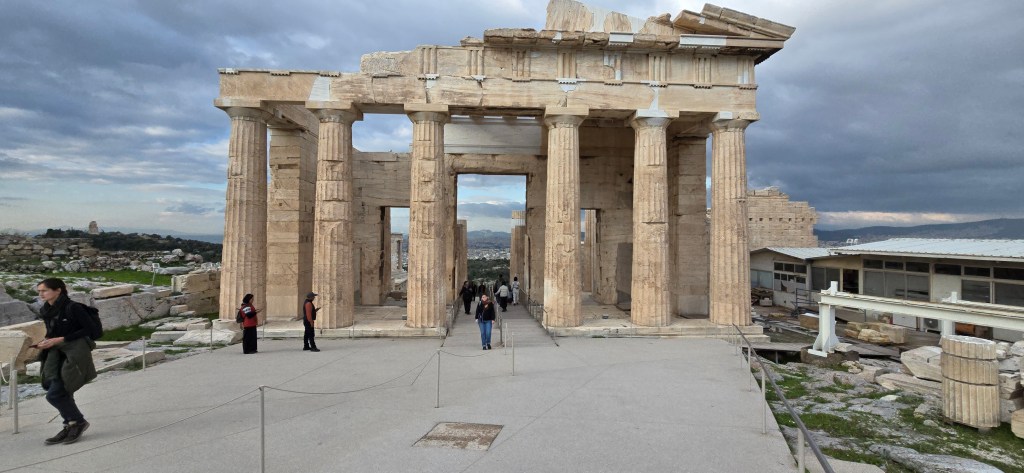
The Propylaea served as the monumental ceremonial gateway to the Acropolis, built between 437 and 432 BC. Traces left on the building show that the plan evolved considerably during construction, and the project was ultimately left unfinished.
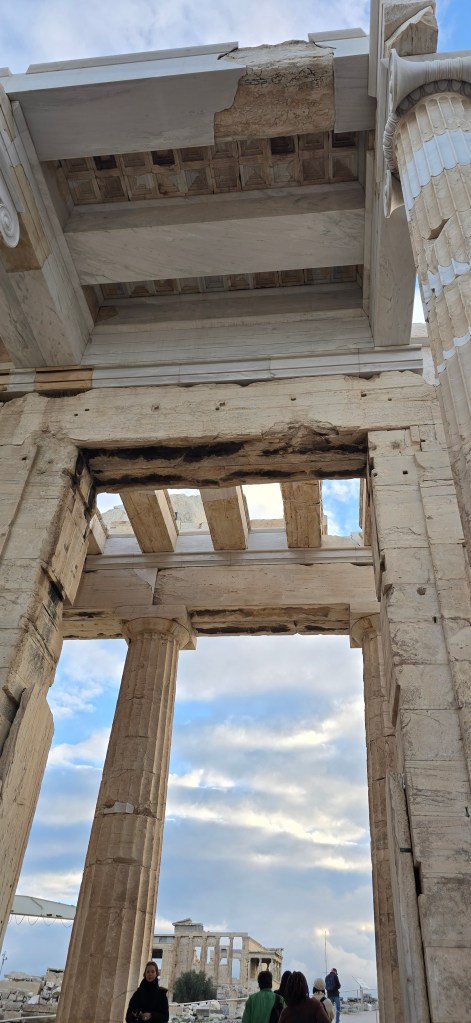
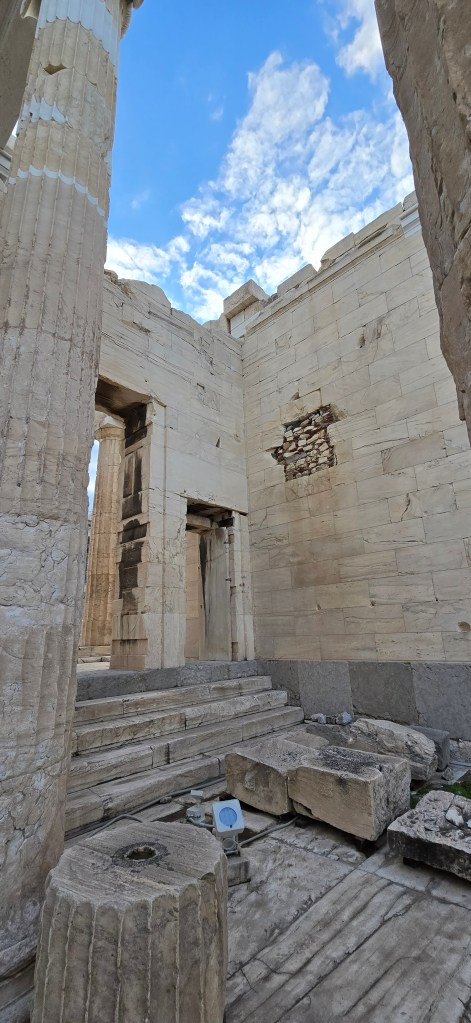
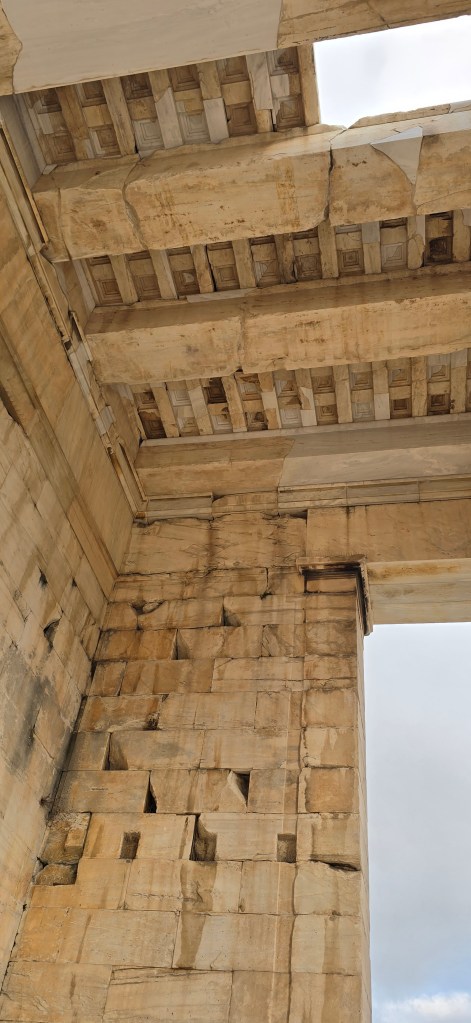
To the west (left for me) stood the monument dedicated by the Athenians to Marcus Vipsanius Agrippa, son-in-law and general of Emperor Octavian Augustus. Today only the marble base remains. The monument was dedicated between 27 BC (when Agrippa became consul for the third time) and 12 BC (the year of his death).
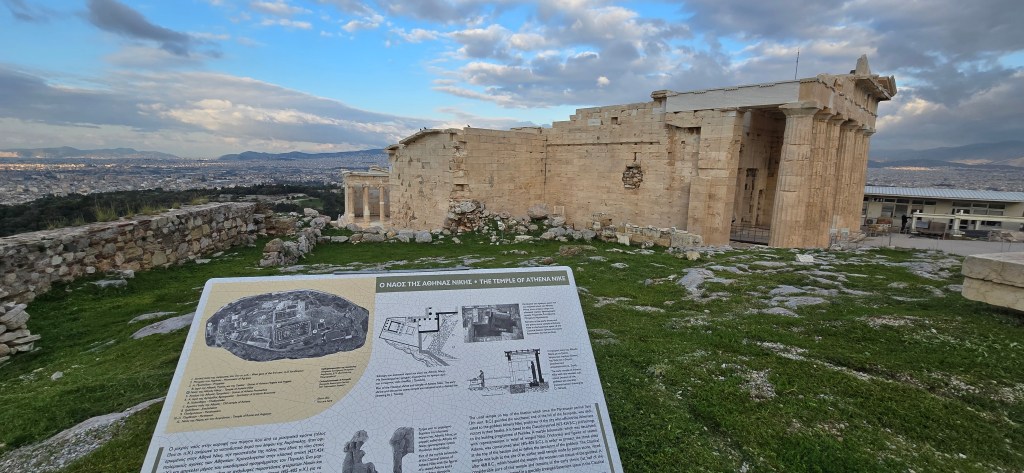
Opposite the Monument of Agrippa is the Temple of Athena Nike. Athena Nike was the protector of the city and offered victory in battle. The original temple dates to the Classical period (427–424 BC). Sculptures depicted victorious battles — gods versus giants, Athenians versus Amazons, Greeks versus Persians. Many sculptures were recovered after the temple’s destruction in 1686 during Ottoman occupation and are preserved in part at the museum. The current temple was reconstructed in 1834 after Greek independence.
🏛️ The Parthenon: Awe and Loss in the Same Breath
And then… the Parthenon.
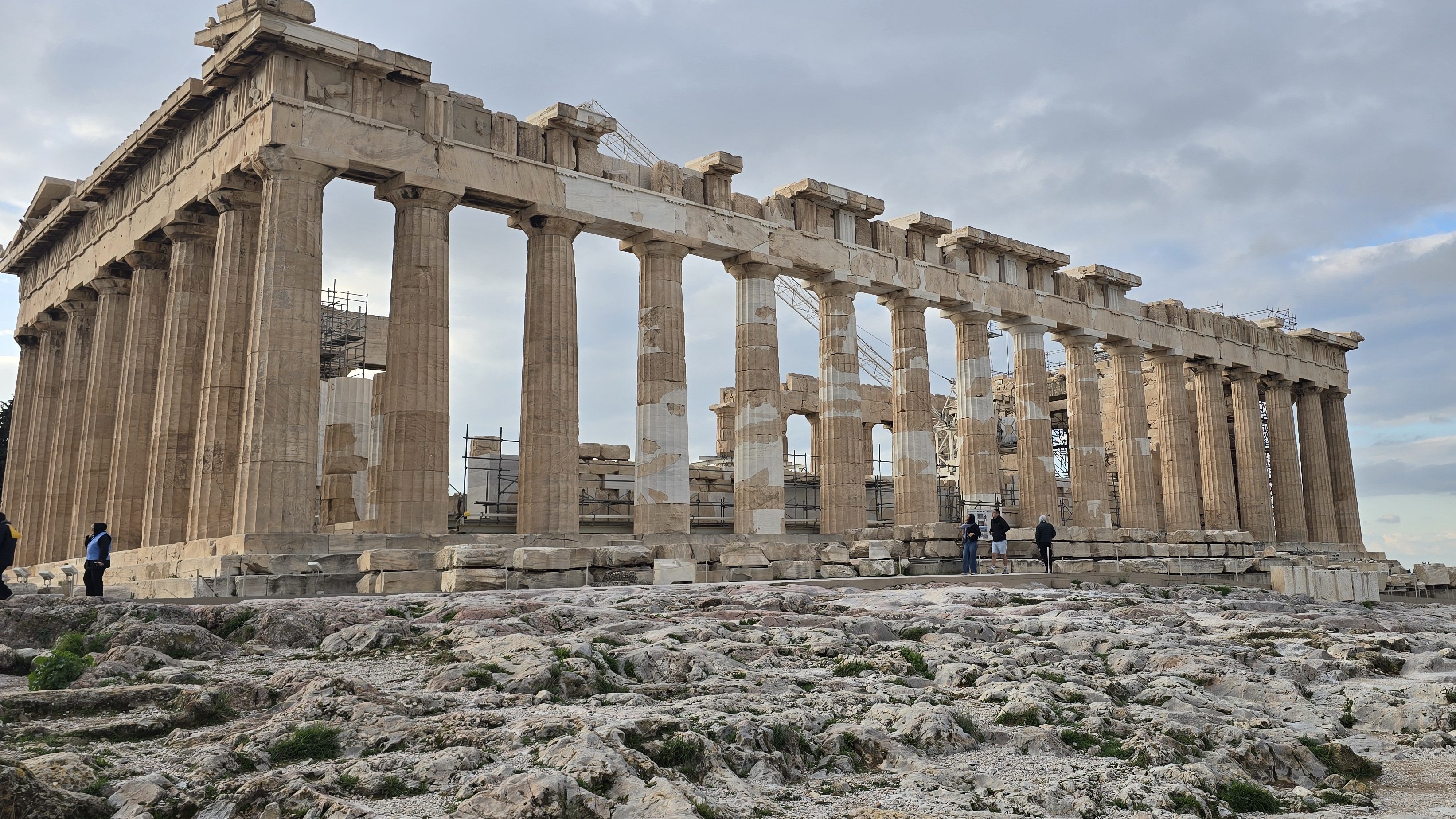
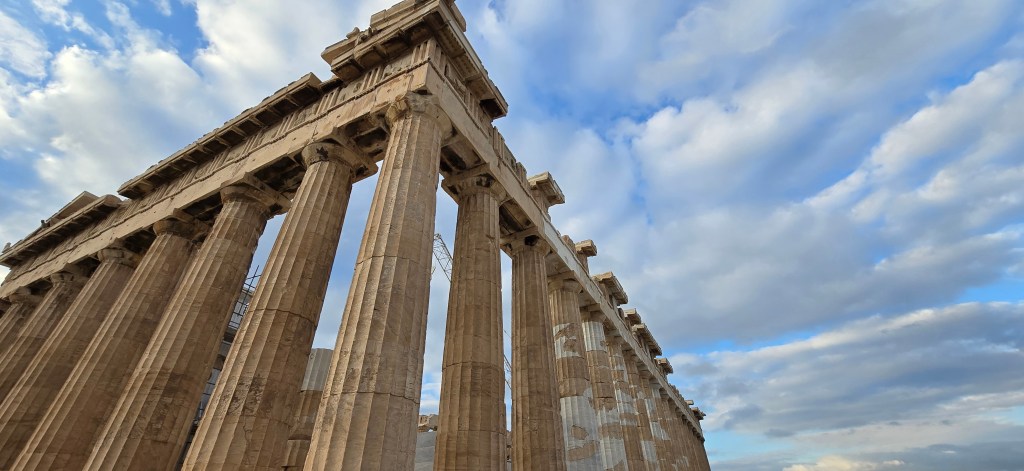
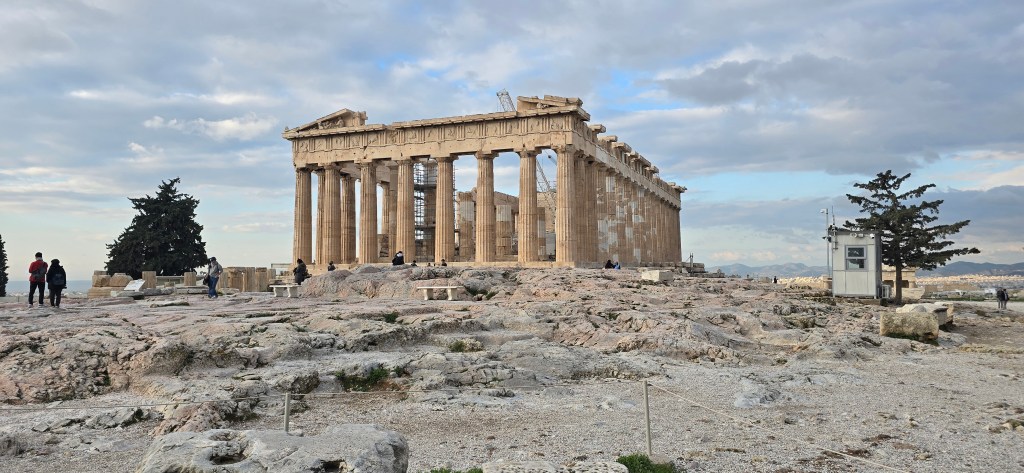
The Parthenon is what most people picture when they think of Ancient Athens. It crowns the Acropolis — enormous, iconic, and visible from so many corners of the city. Dedicated to Athena Parthenos, it became the most important building for the re-establishment of the Acropolis sanctuary after the Persian sack in 480 BC.
It was built in 447–438 BC, and its sculptures were completed in 432 BC. Over the centuries, additions were made — including a bronze shield dedicated by Alexander the Great from the spoils of his victory at the Granikos River in 334 BC, and later honors to the Roman Emperor Nero in 61 AD.
In the 6th century, during the spread of Christianity, it was converted into a church dedicated to “Holy Wisdom,” and in the 11th century to the Virgin Mary. In 1458, when Athens surrendered to the Ottoman Turks, it became a mosque.
The Parthenon has endured the weight of time — and sieges. In the late 3rd/4th centuries AD, its interior was destroyed by fire. In 1687, during the Venetian siege, a cannonball made a direct hit that destroyed the roof and many sculptures (some burned fragments can be seen today inside the Acropolis Museum).
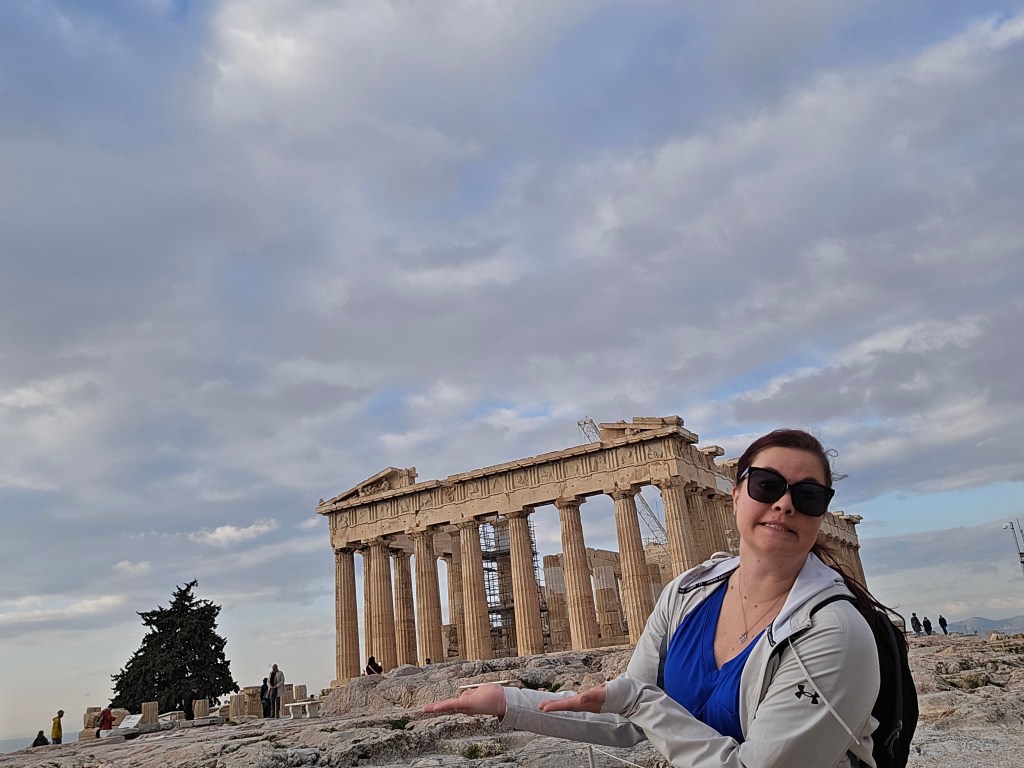
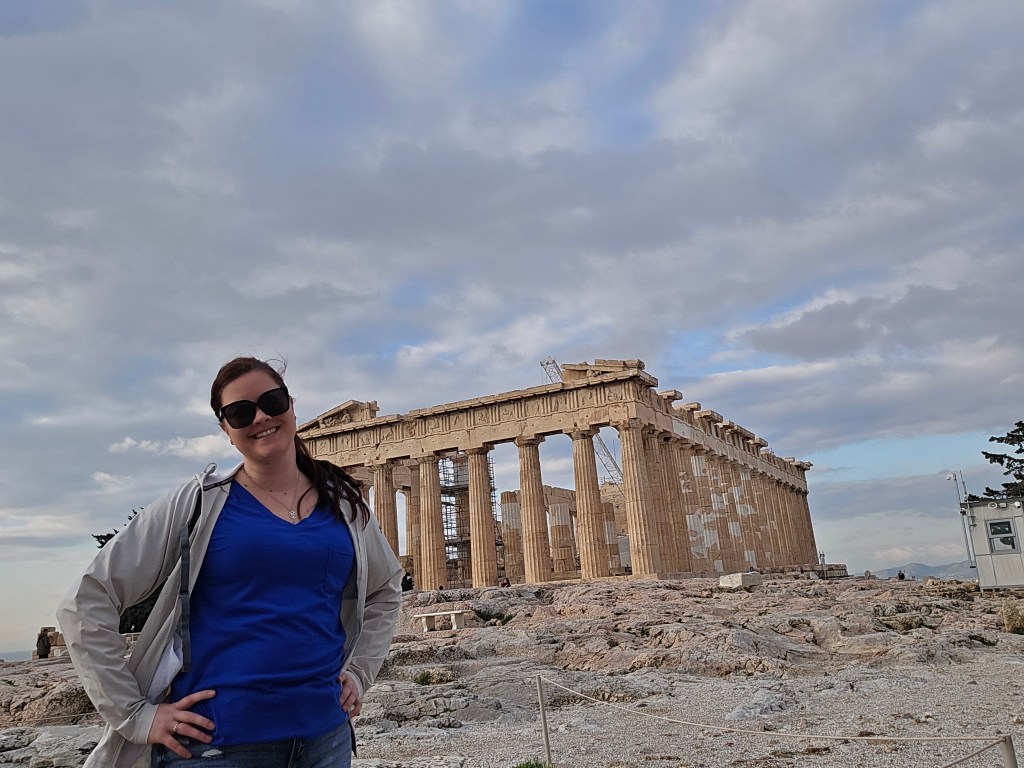
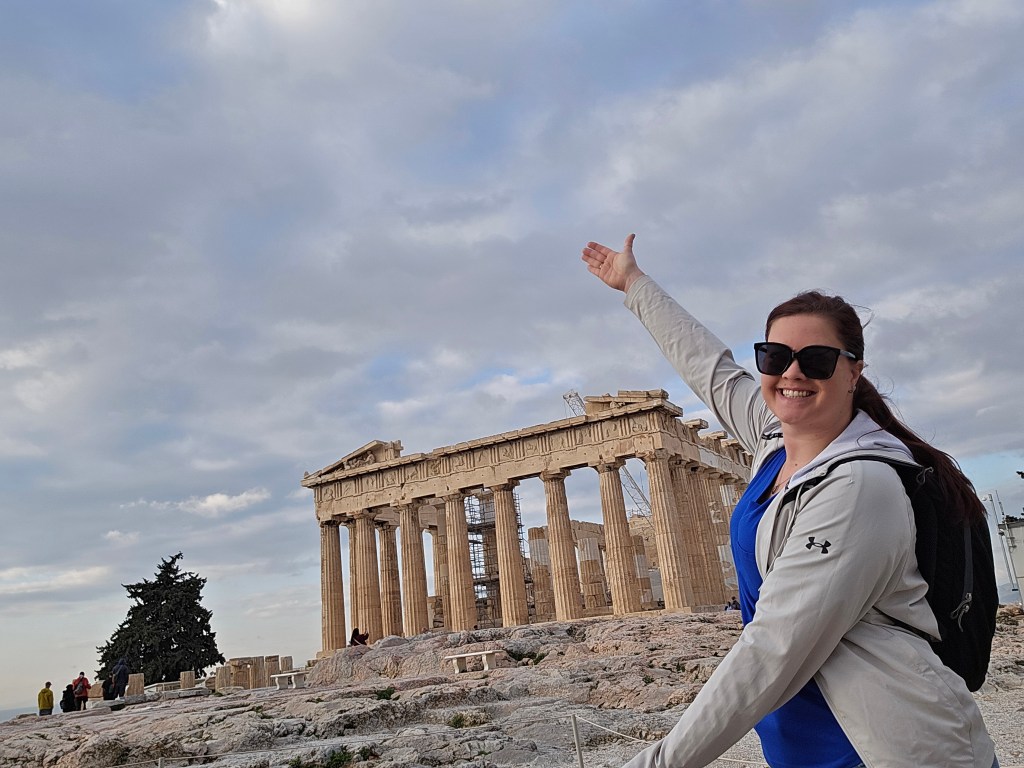
The most severe damage came in 1801–1802, when Thomas Bruce, the 7th Earl of Elgin, removed a large portion of sculptures and compromised structural elements. Knowing that so much of what once crowned this place now sits in a museum thousands of miles away felt complicated — awe and loss in the same breath. There’s something unsettling about knowing parts of a story live far from the place they were born. It made the emptiness feel louder. In total, 19 sculptures, 15 metopes, and 56 sawn blocks of the frieze were transported to England; today these items can be viewed in the British Museum in London. (I had fun taking these photos — enjoy all the heavy lifting I did to get them for you!)
The Parthenon doesn’t pretend to be untouched. Its fractures are visible. Its history is complicated. It has been temple, church, mosque, ruin, symbol. And yet, it refuses to disappear.
Fire. Conversion. Siege. Explosion. Stripped sculptures.
And still it stands.
🇬🇷 The Flag and the View: Stillness Above the City
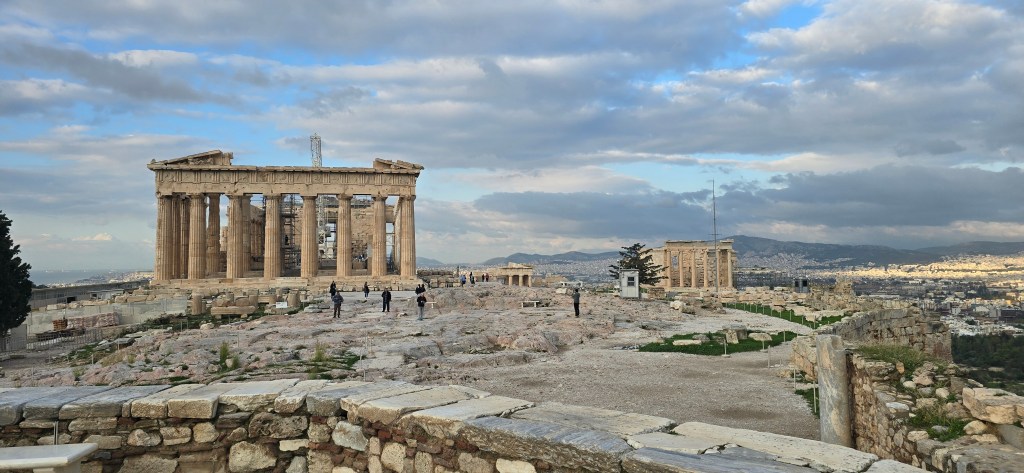
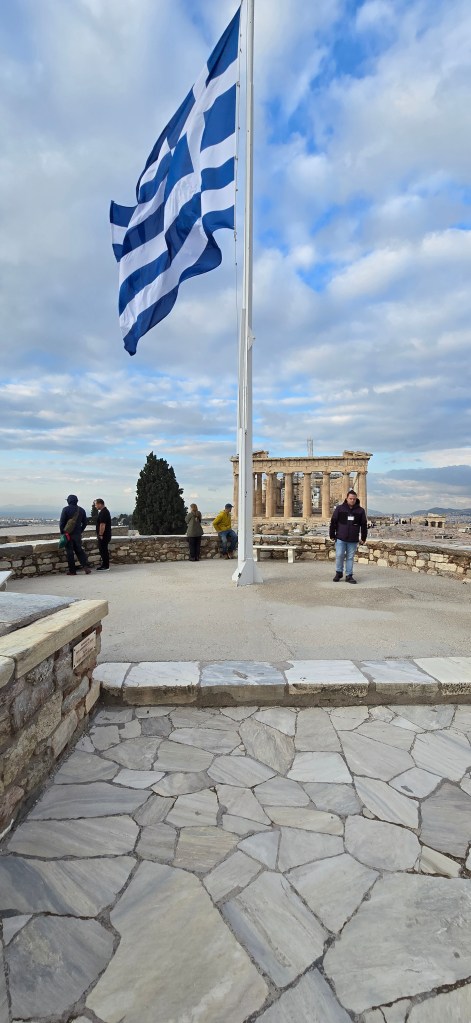
Once I walked around the Parthenon’s right side, I passed the Temple of Rome and Augustus and found myself facing a giant billowing Greek flag — the kind of sight that makes you stop without choosing to. The flag snapped sharply in the wind, its blue almost impossibly vivid against the sky. It didn’t feel symbolic in a political way — it felt resilient. This place has been burned, conquered, converted, restored… and still it rises. I watched the flag and felt something steady settle in my chest. Resilience doesn’t always shout. Sometimes it simply endures.
And then the view opened up.
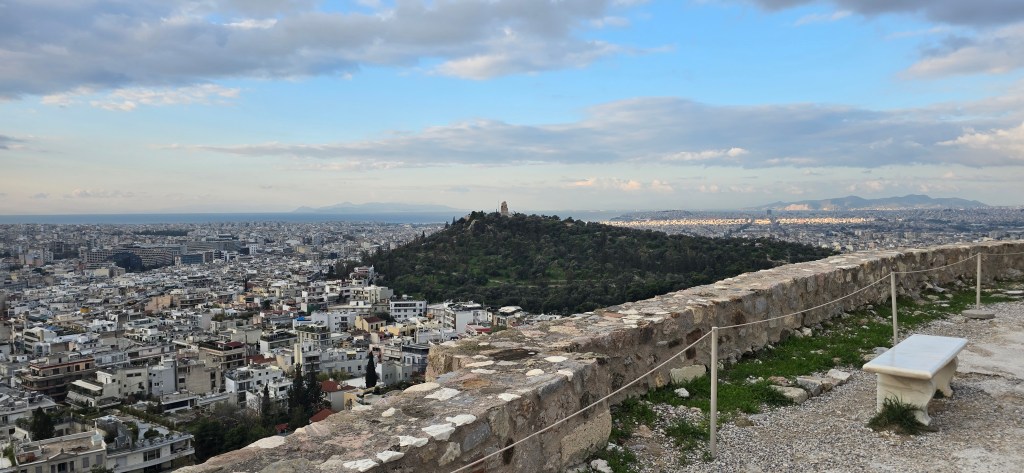
The sea gleamed in the distance. The city stretched out in every direction, rooftops and streets and soft morning light spilling over everything like it was blessing it. The wind tossed aside the noise of other conversations until it felt like the world had quieted just for a moment — not empty, not lonely… just still.
There weren’t many of us up there yet — maybe twenty people scattered across the rock, all moving slowly, all speaking in softer voices like we’d stepped into a place that didn’t want to be rushed. I love watching awe pass across someone else’s face because it reminds me I’m not the only one feeling it — that this kind of wonder is human, and shared, and timeless.
I know it gets packed later. You can see the waves of people from below. But that morning? It felt like the Acropolis let me stand in its silence long enough to actually feel it.

🌿 The Pandroseion: Myth as Memory
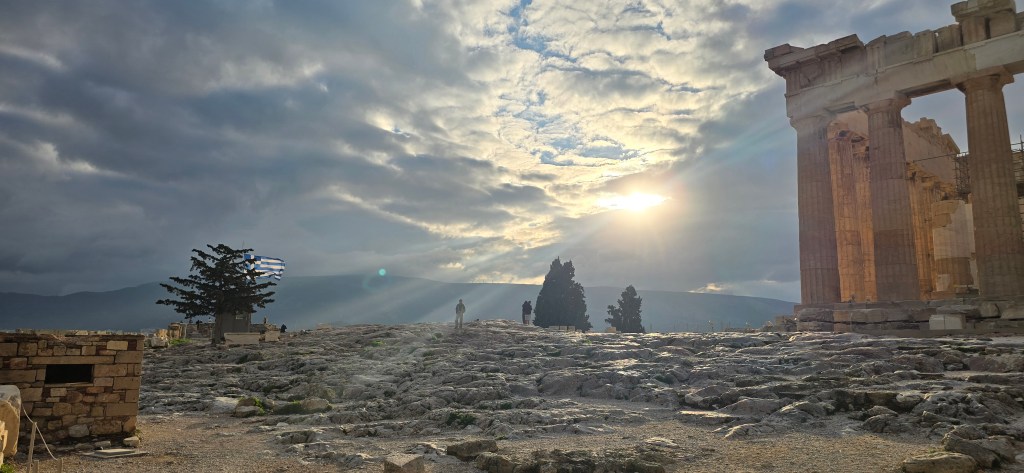
Moving to the left side of the Parthenon, I was reminded quickly how uneven the ground is up there. I was grateful for my tennis shoes — even though I could still feel the rocks underfoot.
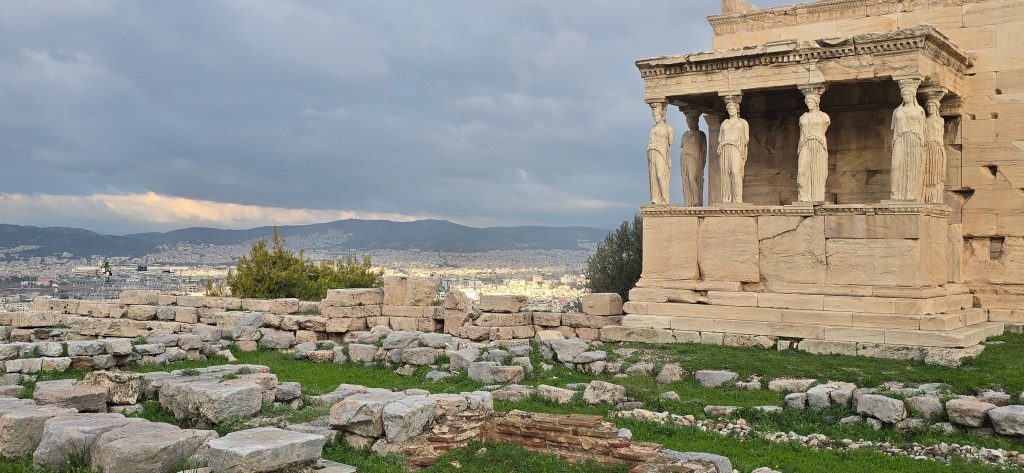
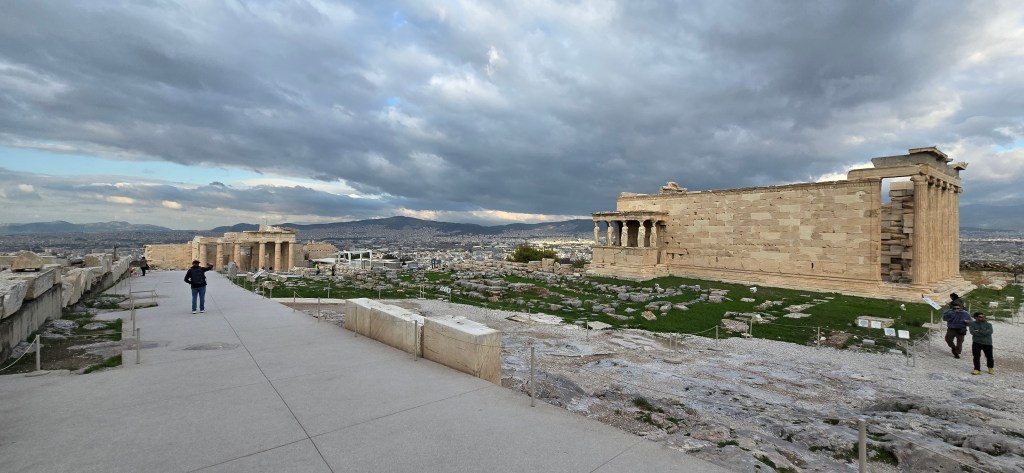
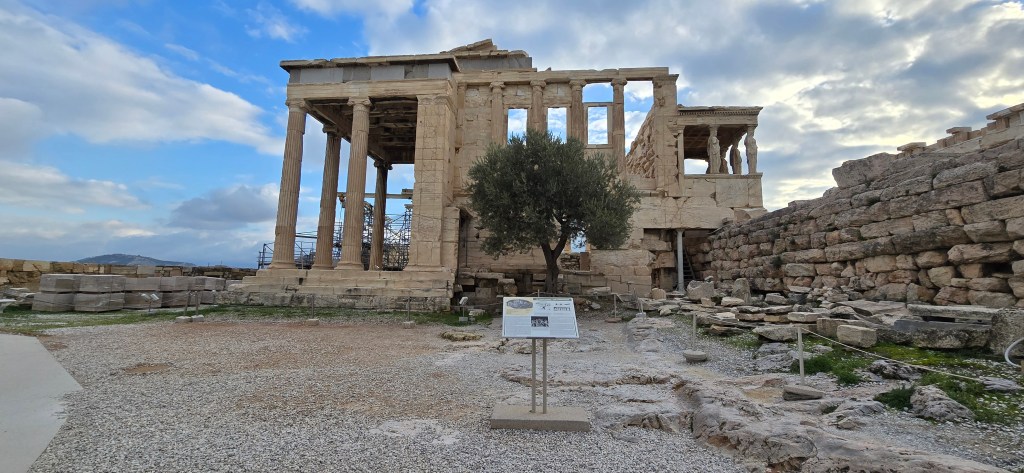
That path brings you to the Pandroseion on the north side of the Old Temple of Athena. It was dedicated to Pandrosos, the kind and obedient daughter of the legendary King Kekrops. She was the first priestess of Athena Polias, patron goddess of the city. This was one of the oldest and most sacred areas of the Acropolis — the site of the contest between Athena and Poseidon for the city’s patronage: her sacred olive tree and his salty spring. The tomb of King Kekrops was also believed to be located here. King Kekrops, according to the legend was the judge between thee great Athena and Poiseden contest.
Even here, mythology felt less like fantasy and more like identity. These weren’t just stories. They were origin narratives — explanations for belonging.
The Pandroseion was destroyed in 480 BC by the Persians and later restored and altered (either 431–406 BC or 421–406 BC).
Note: the olive tree present today was planted in the 20th century in memory of Athena’s sacred, legendary tree.
💧 Klepsydra Spring: The Sound That Outlasts Empires
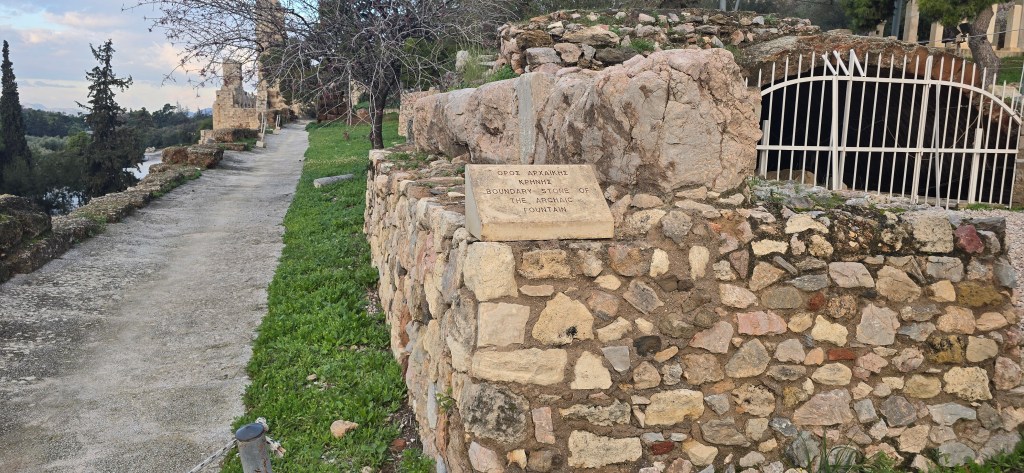
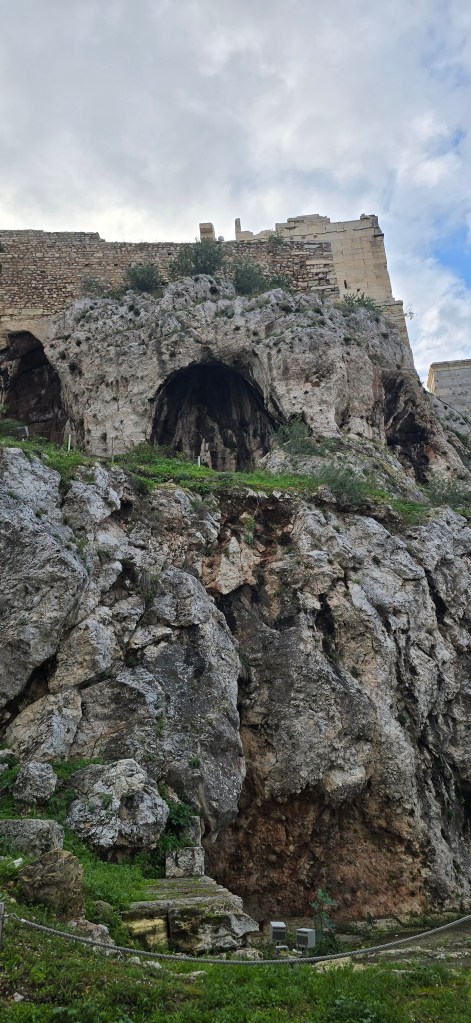
Walking back through the western entrance, I rounded the path to explore the backside of the Acropolis. Here you pass the Paved Court of Klepsydra — the most important spring on the Acropolis rock, functional since antiquity. On the north side, it sits below the Sacred Caves of Pan, Zeus, and Apollo.
The Klepsydra monument is composed of two buildings: the fountain and the paved court, both built during the 5th century BC. The court was used for six centuries and was accessible by stairs until rock collapses in the 1st century AD. During the 3rd century AD, it was abandoned and covered by dirt. Excavations began in the 1870s and were completed in 1940. Restoration of the fragile floor took place from 2011–2015, and reinforcement has been added under the structures.
The sound of the water is softer than you expect — steady, persistent. Water that has flowed here for centuries, long before any of us arrived to marvel at it.
⛪ Leaving the Hill: Centuries Before Coffee
As you leave this area, you also come across the Church of St. Nikolaos or Serapheim, believed to have been built in the first Turkish domination (1458–1687).
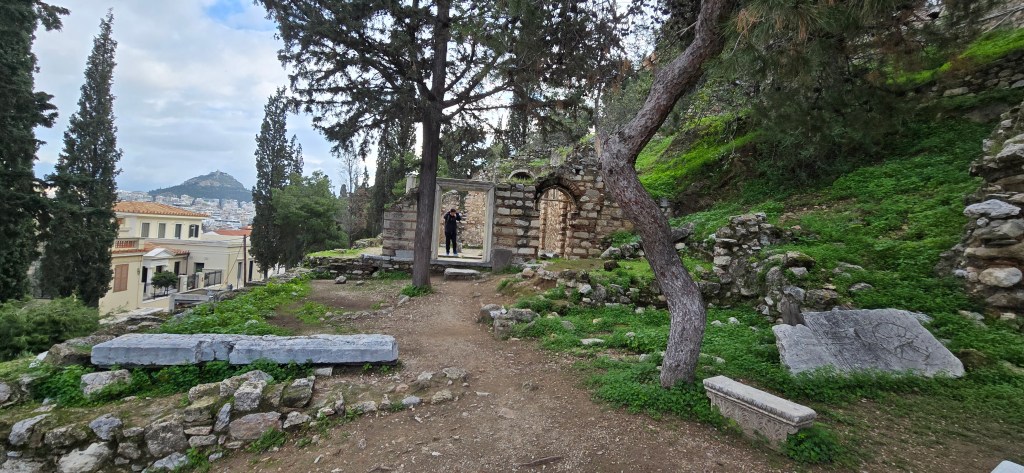
Leaving the Acropolis hill on the opposite side, I was heading toward the places where St. Paul would have been spreading Christianity.And it wasn’t even 9:15 in the morning.
I had already walked through centuries before most people had finished their first cup of coffee.

 Where in the World is Dakota?
Leave a comment