
✨ Intro
Not every sacred place sits quietly in the center of a city.
Some cling to cliffs. Some watch the sea.
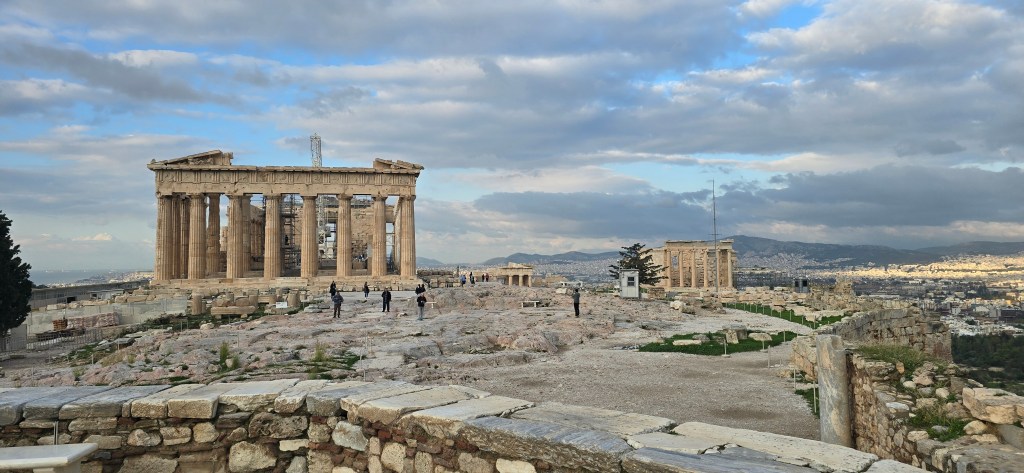
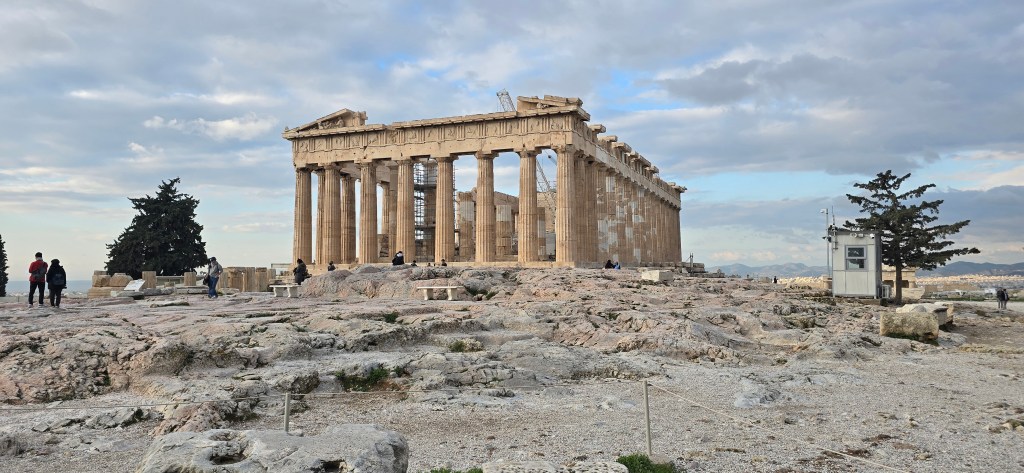
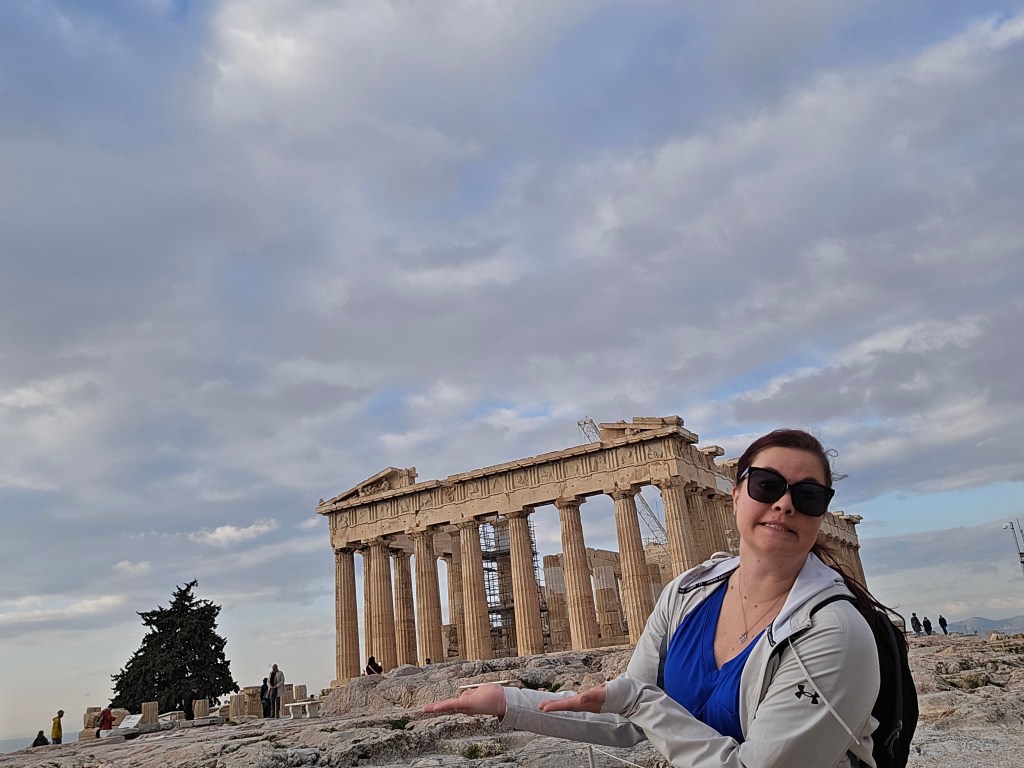
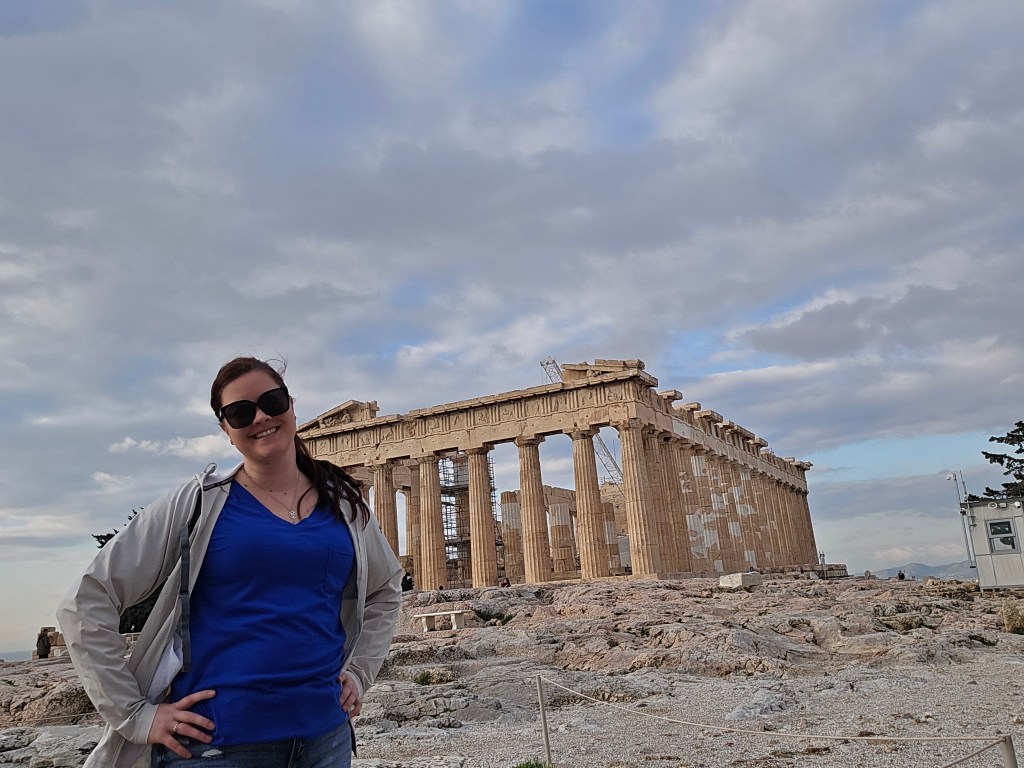
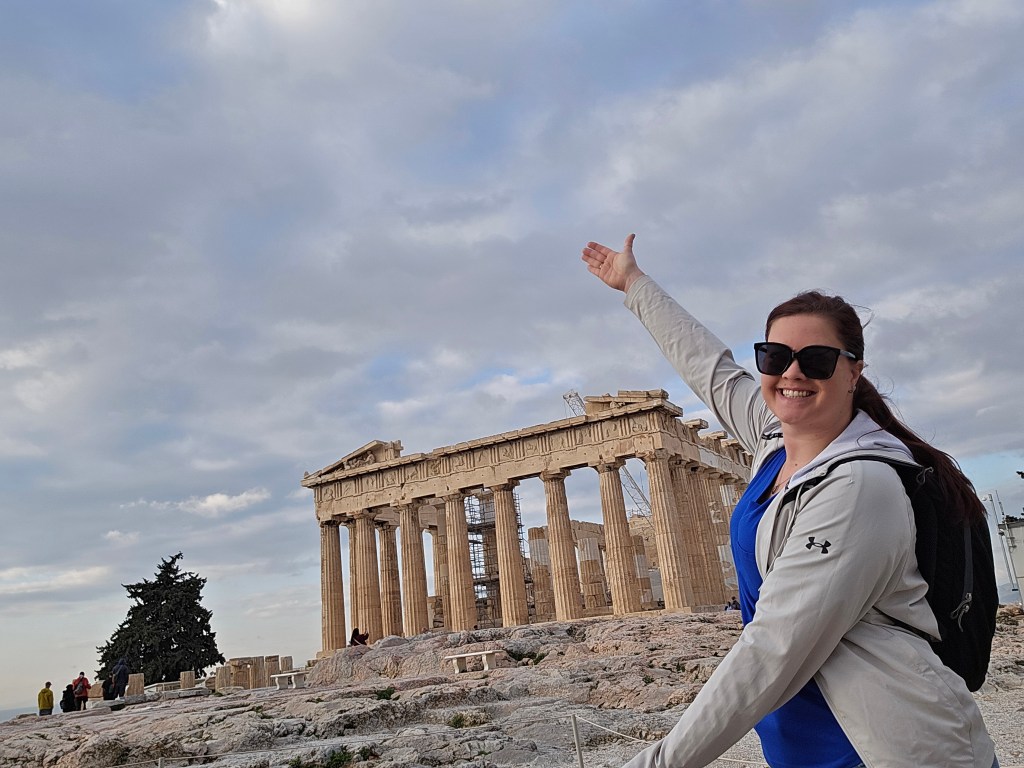
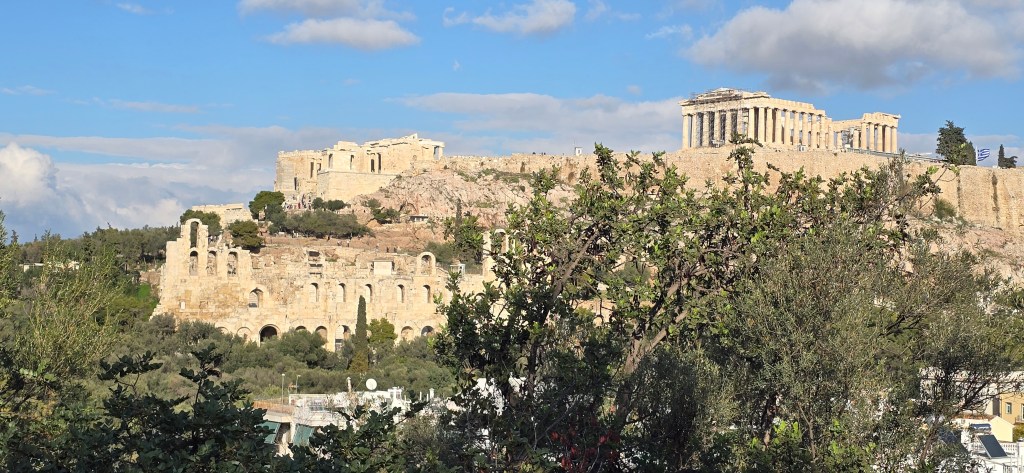
On December 9, after walking through centuries on the Acropolis before breakfast, I found myself heading through more history and then toward Cape Sounion-where myth, memory, and wind all meet the edge of the world.
There would be ancient gods, Homeric echoes, an unexpected tumble off a bus (not my finest moment), and one of the most unforgettable sunsets I’ve ever witnessed.
🌿 Where Paul Stood
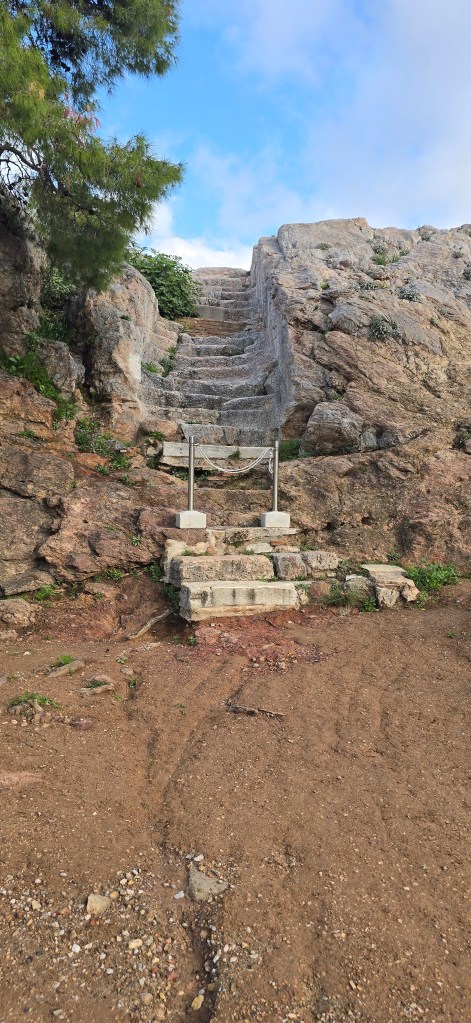
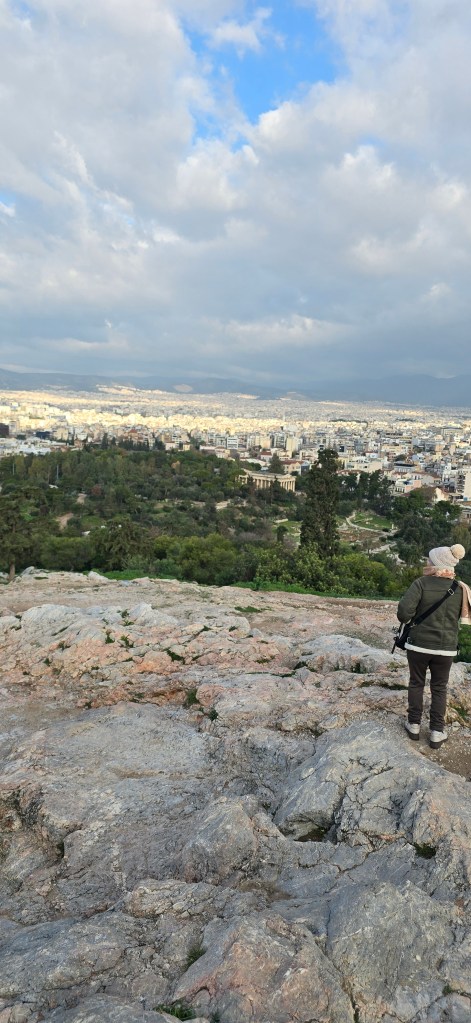
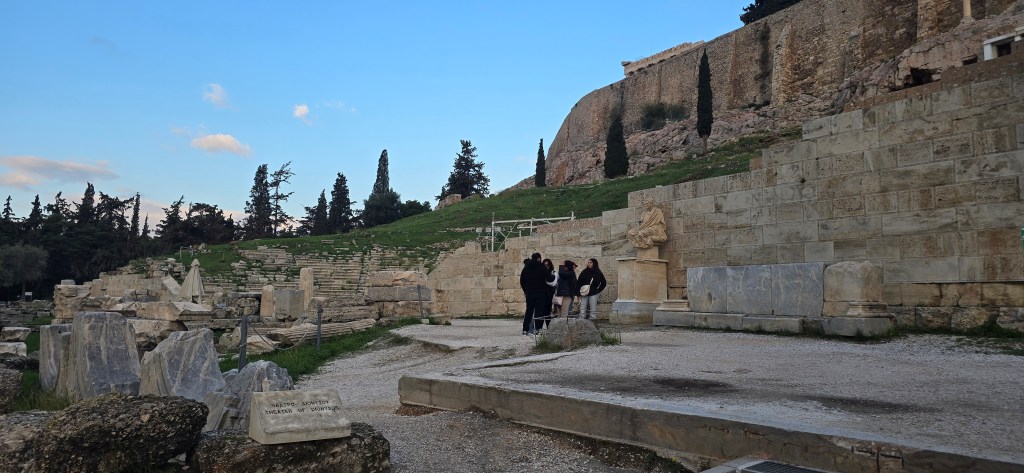
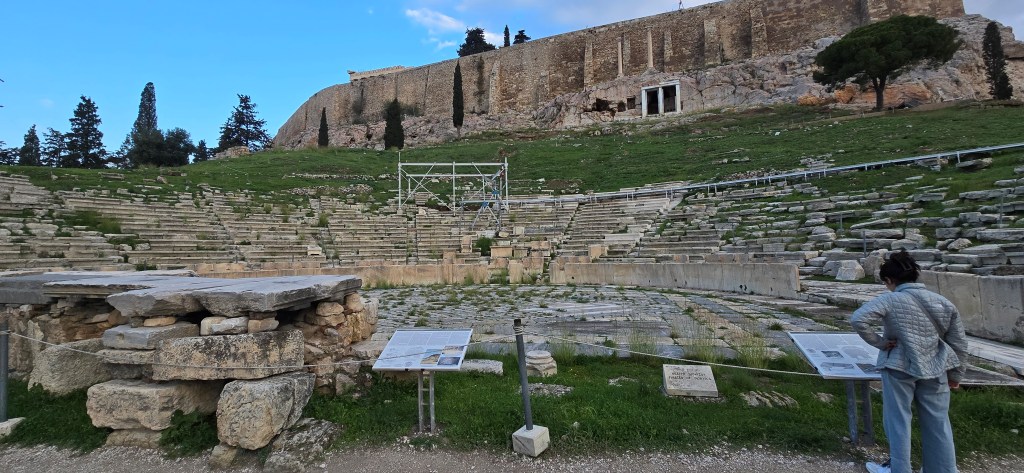
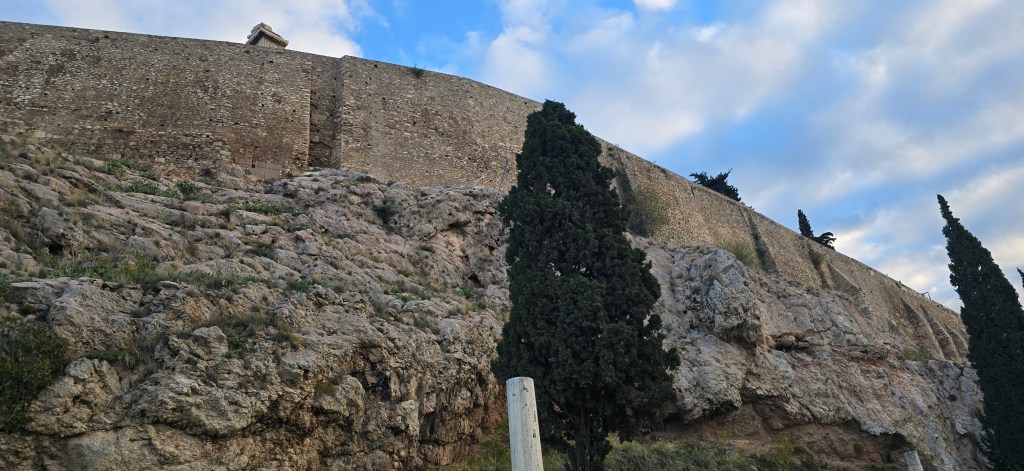
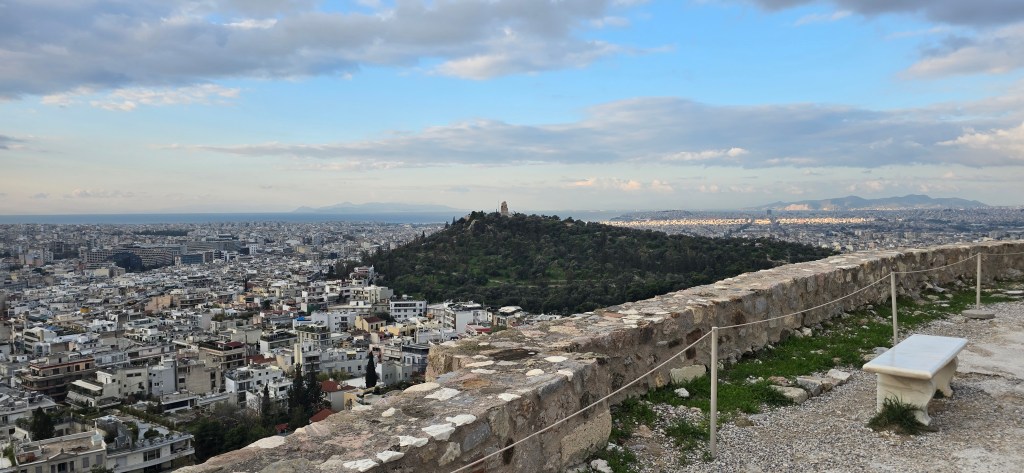
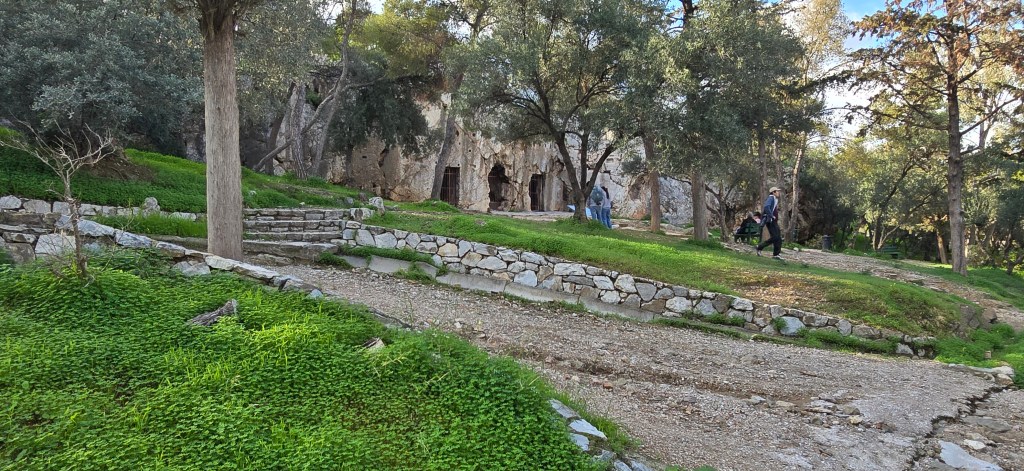
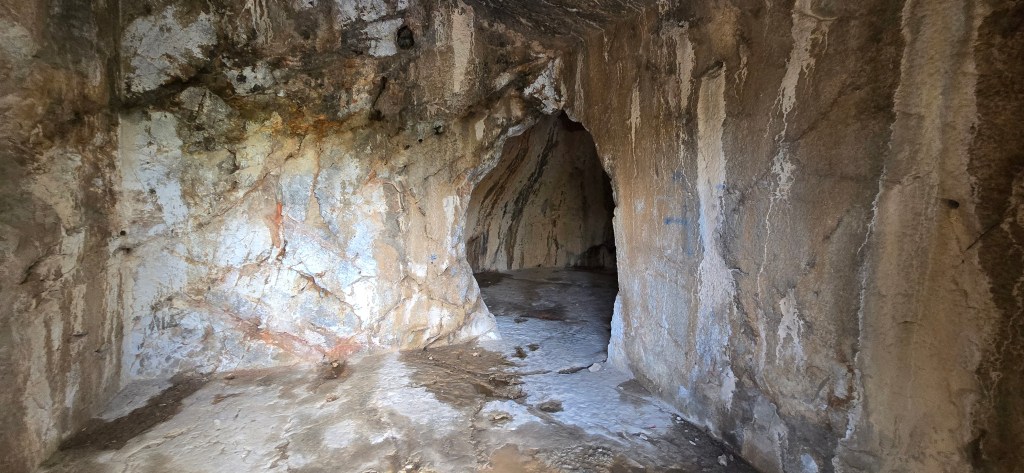
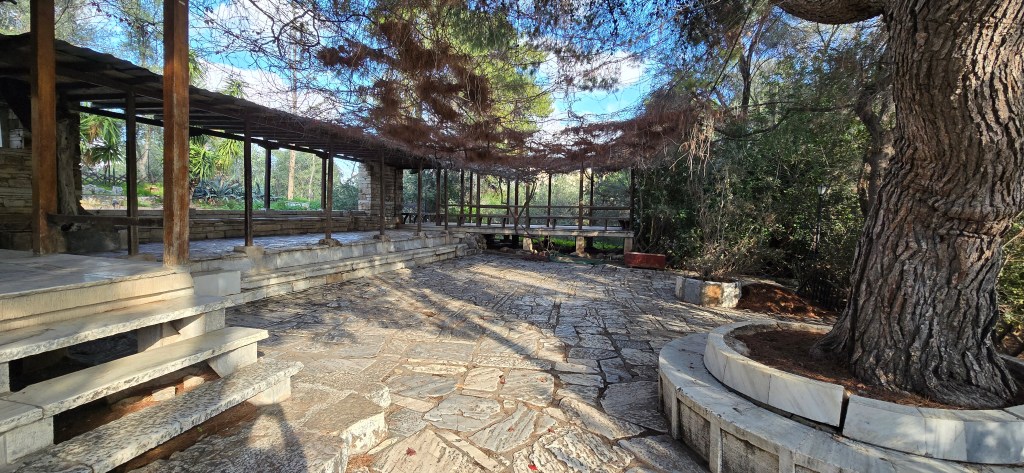
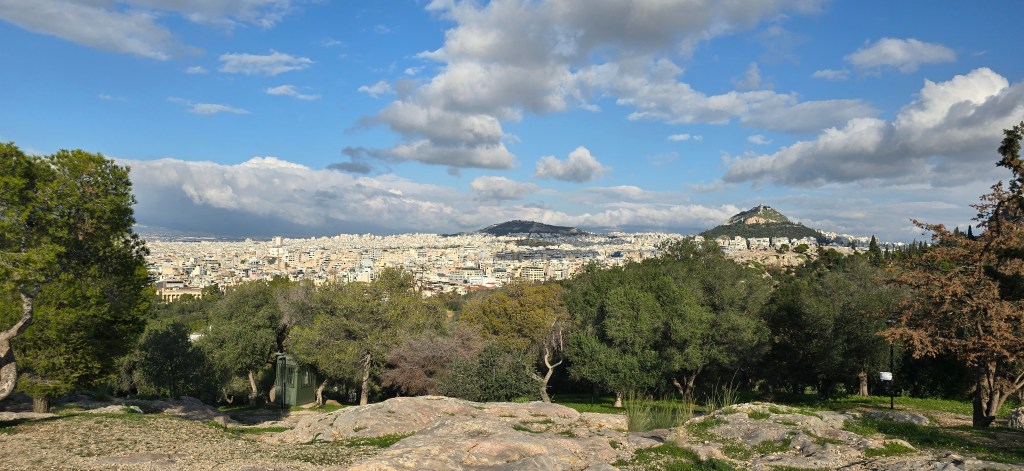
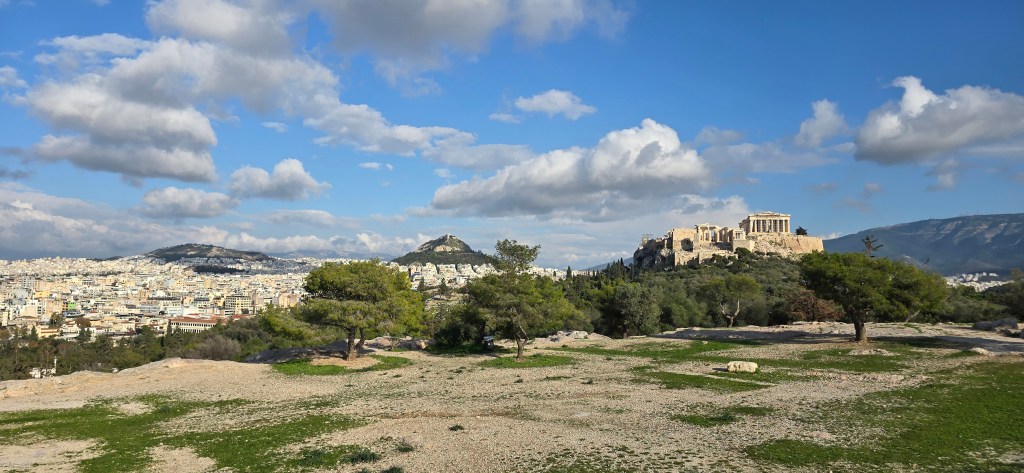
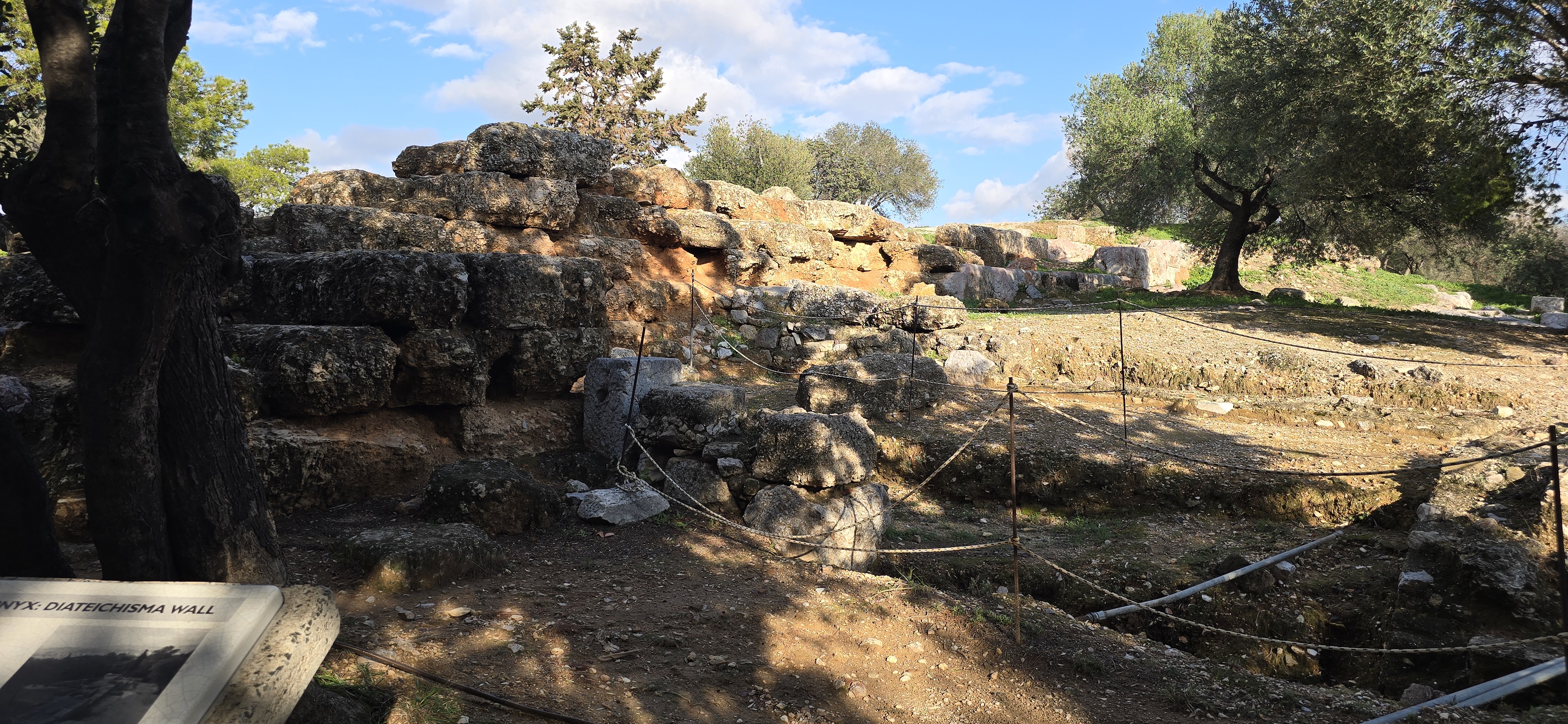
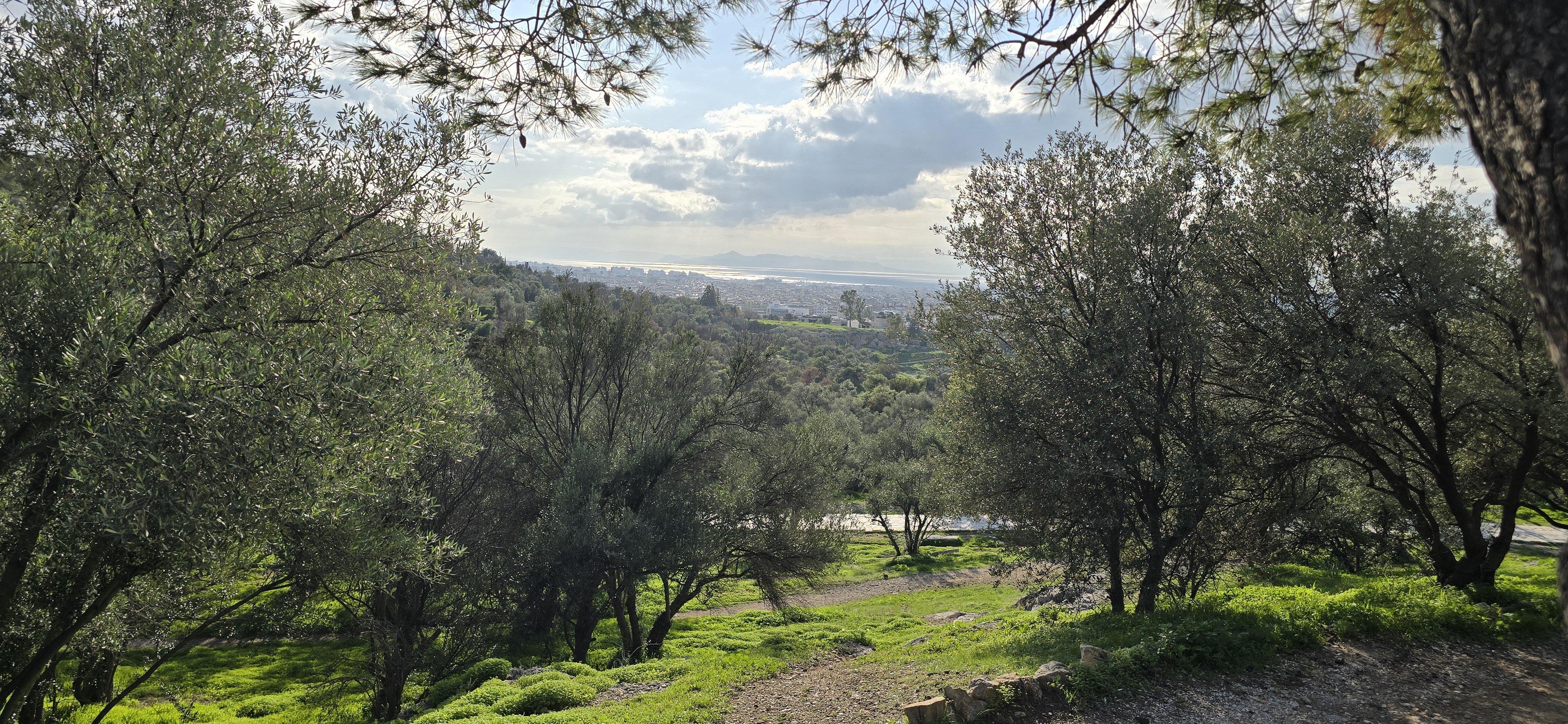
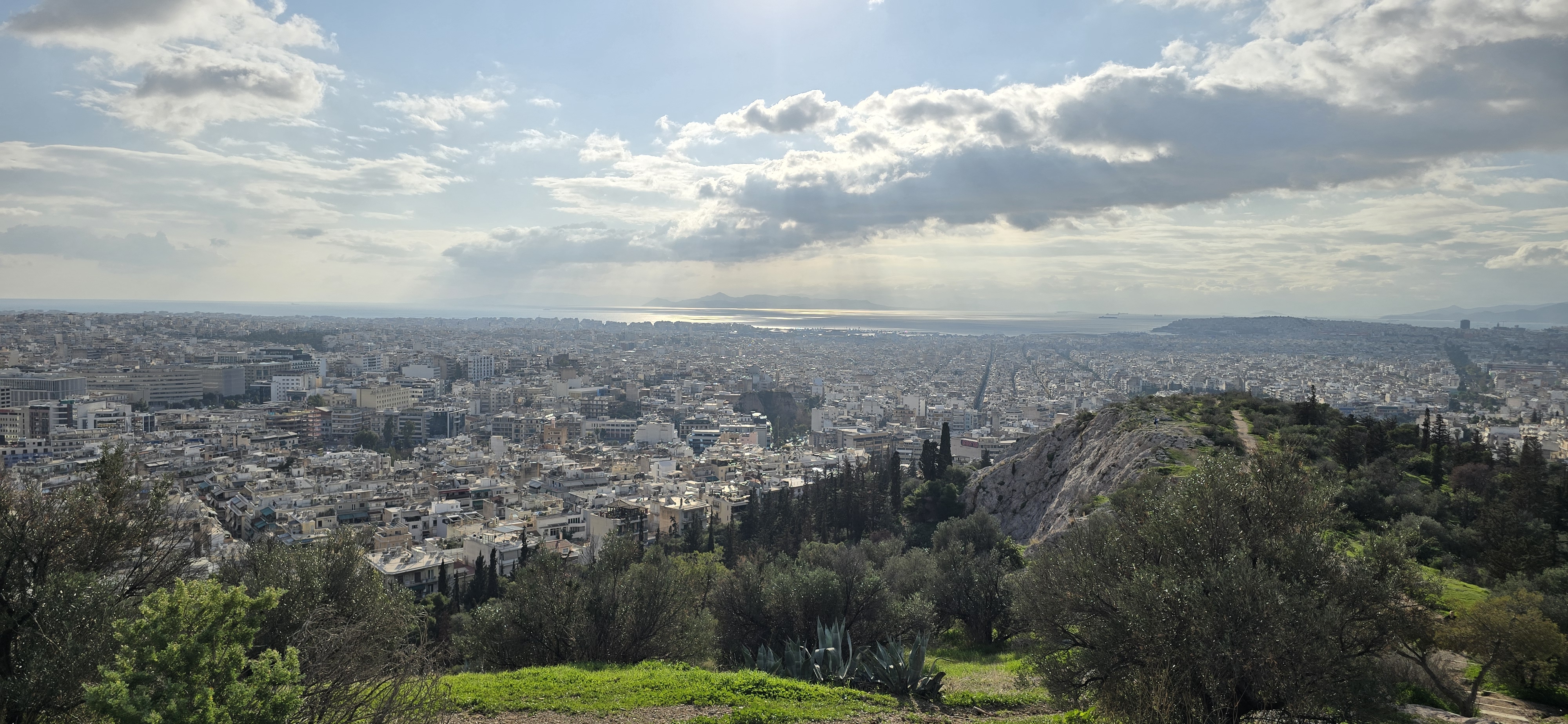
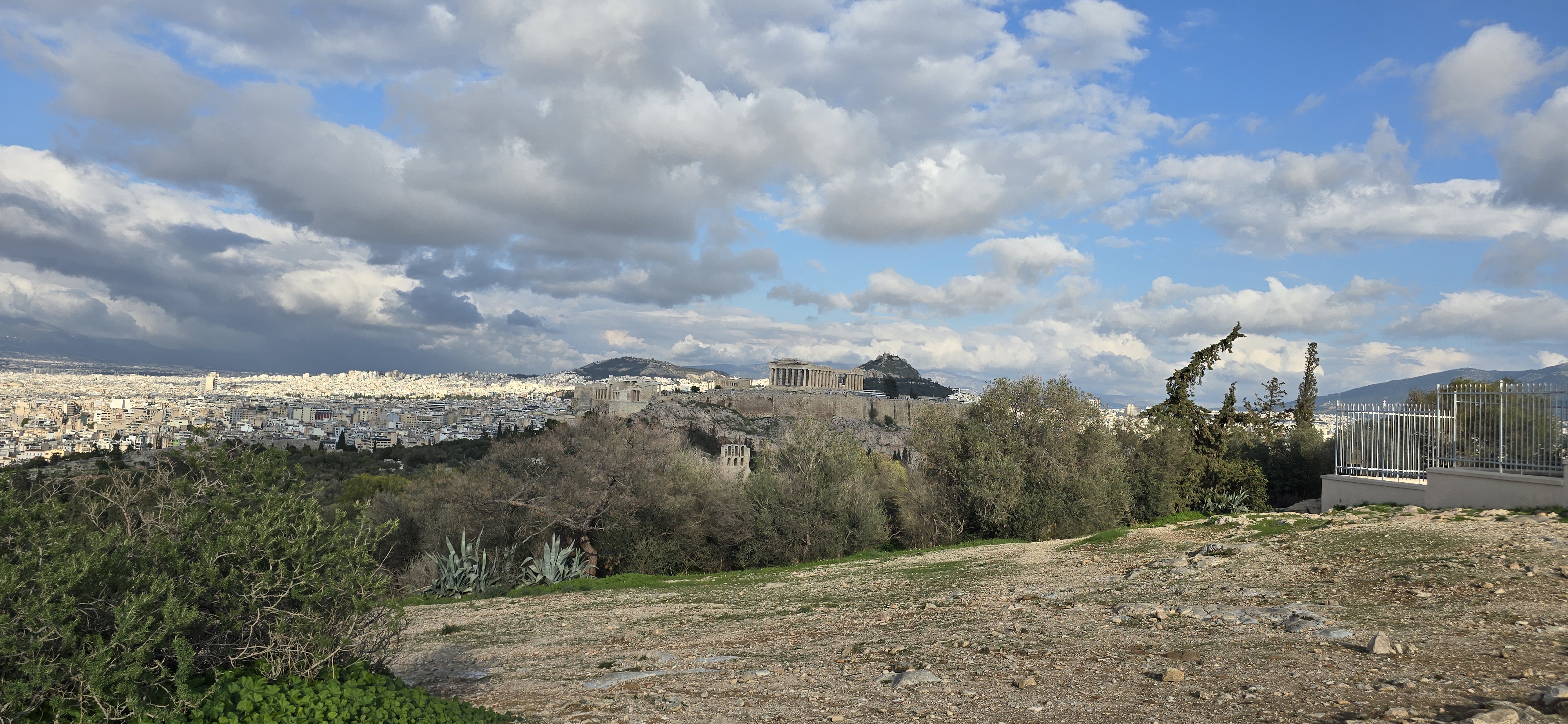
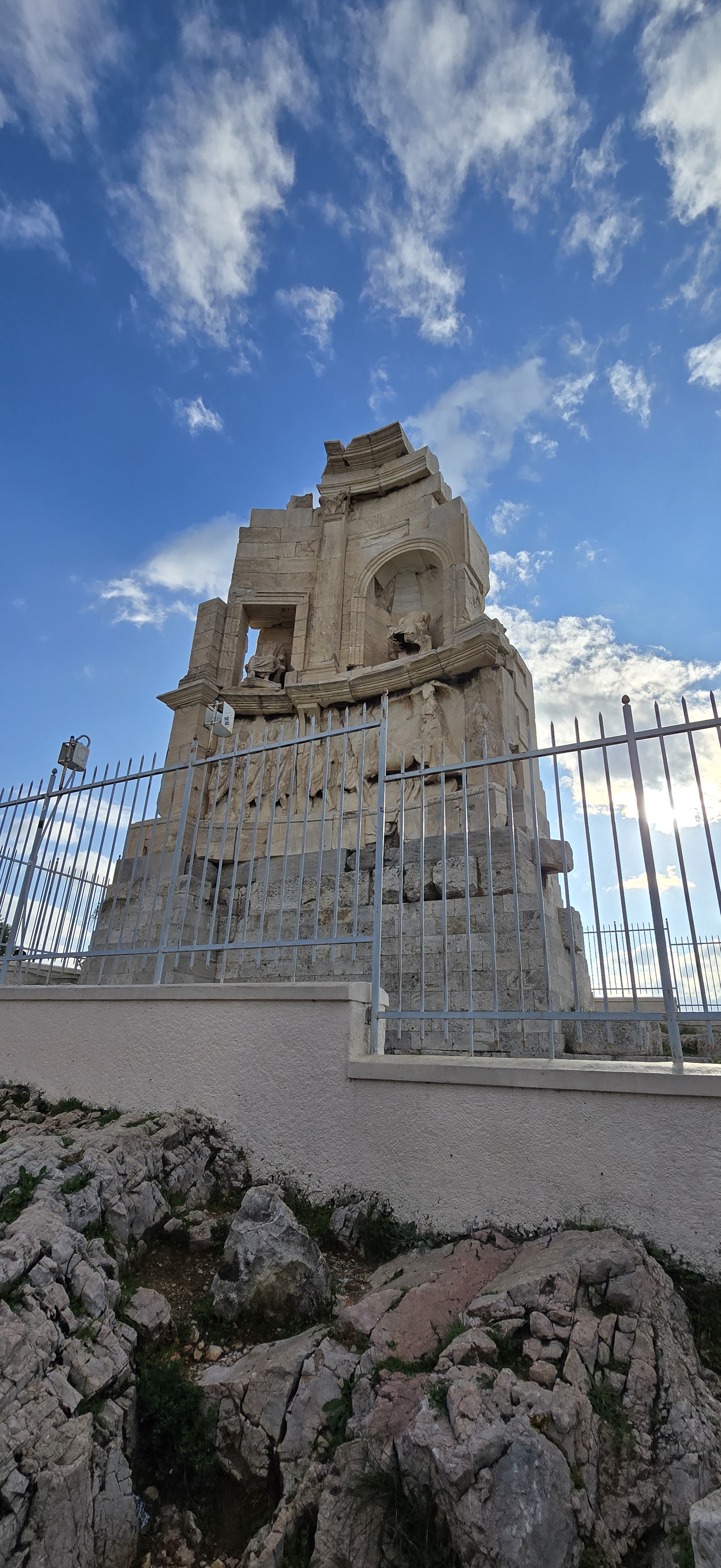
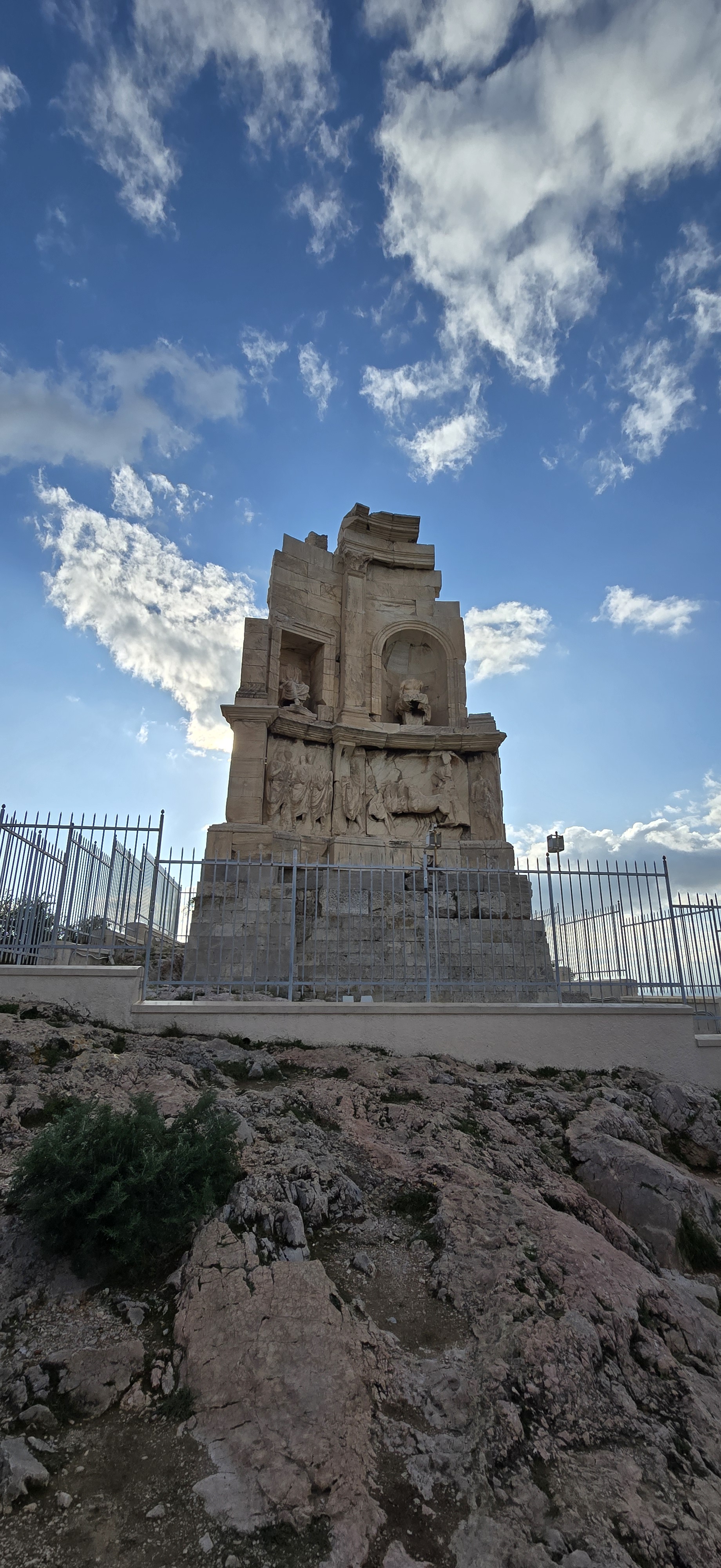
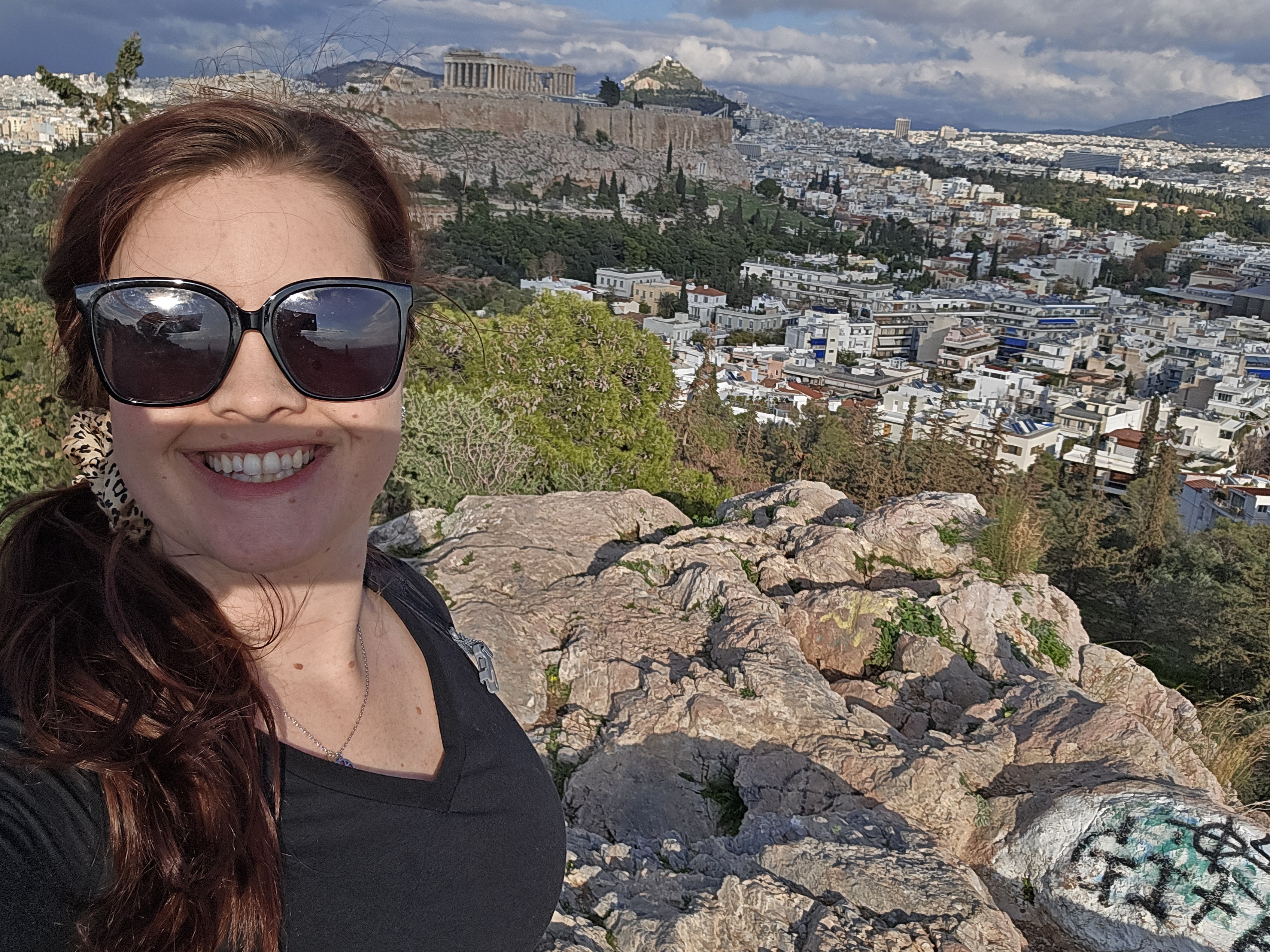
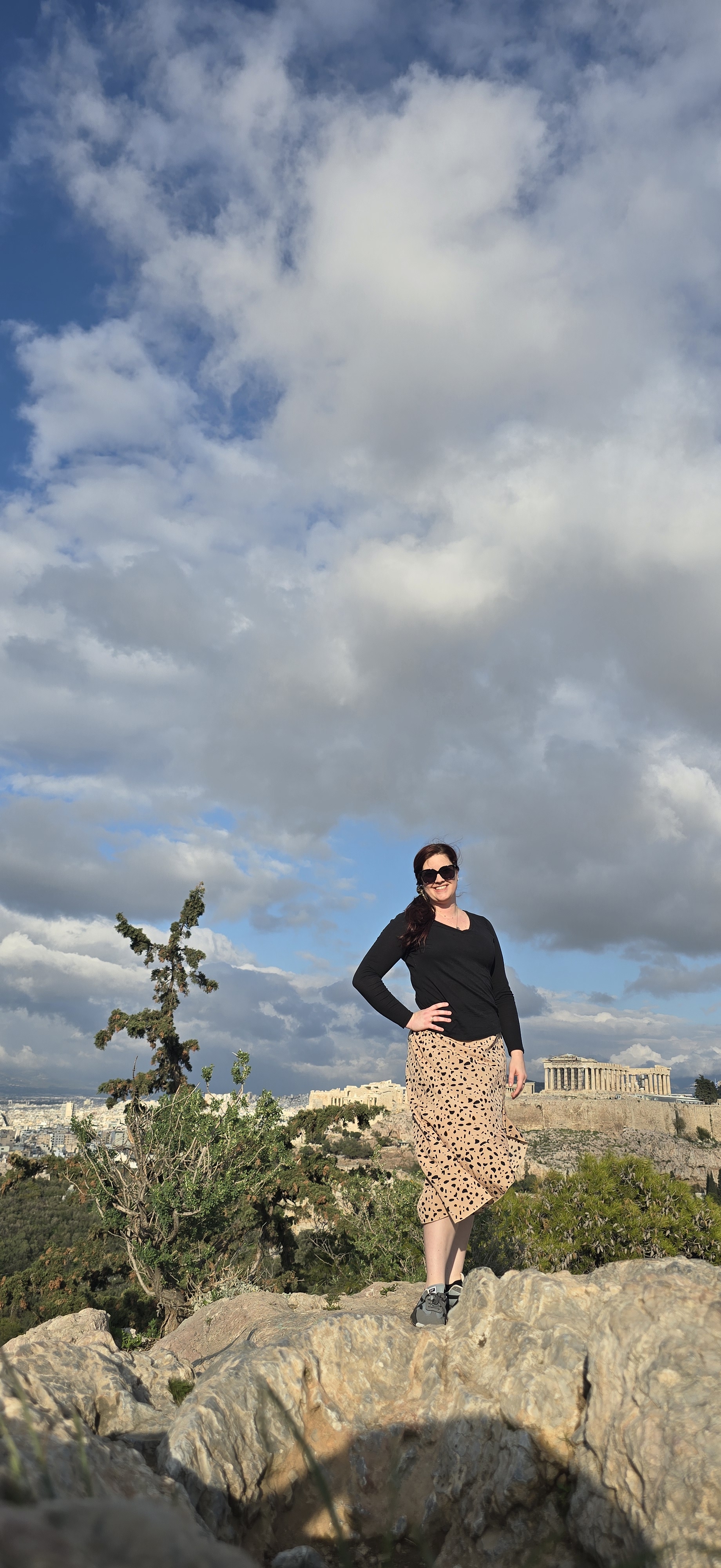
Leaving the Acropolis behind, I walked toward the place where St. Paul once stood and spoke.
Not in a dramatic, cathedral-like way.
Just… another rocky hill in Athens.
Paul arrived here around 50 AD, during his missionary journeys. Acts 17 tells us he walked through the city, deeply unsettled by the number of idols he saw. Eventually he was brought before the Areopagus — Mars Hill — and invited to explain this “new teaching” he spoke of.
Standing there, I tried to imagine it.
A former persecutor of Christians.
A Roman citizen.
A scholar.
A man who had once been called Saul.
Not preaching in a church — but reasoning in public. Quoting Greek poets. Referencing their altar “To an Unknown God.”
It struck me how bold that must have been.
To speak about truth in the middle of competing beliefs.
To stand calmly where philosophy and power met.
And there I was — just walking it casually, sneakers on ancient stone.
🏛 Around the Ancient Agora
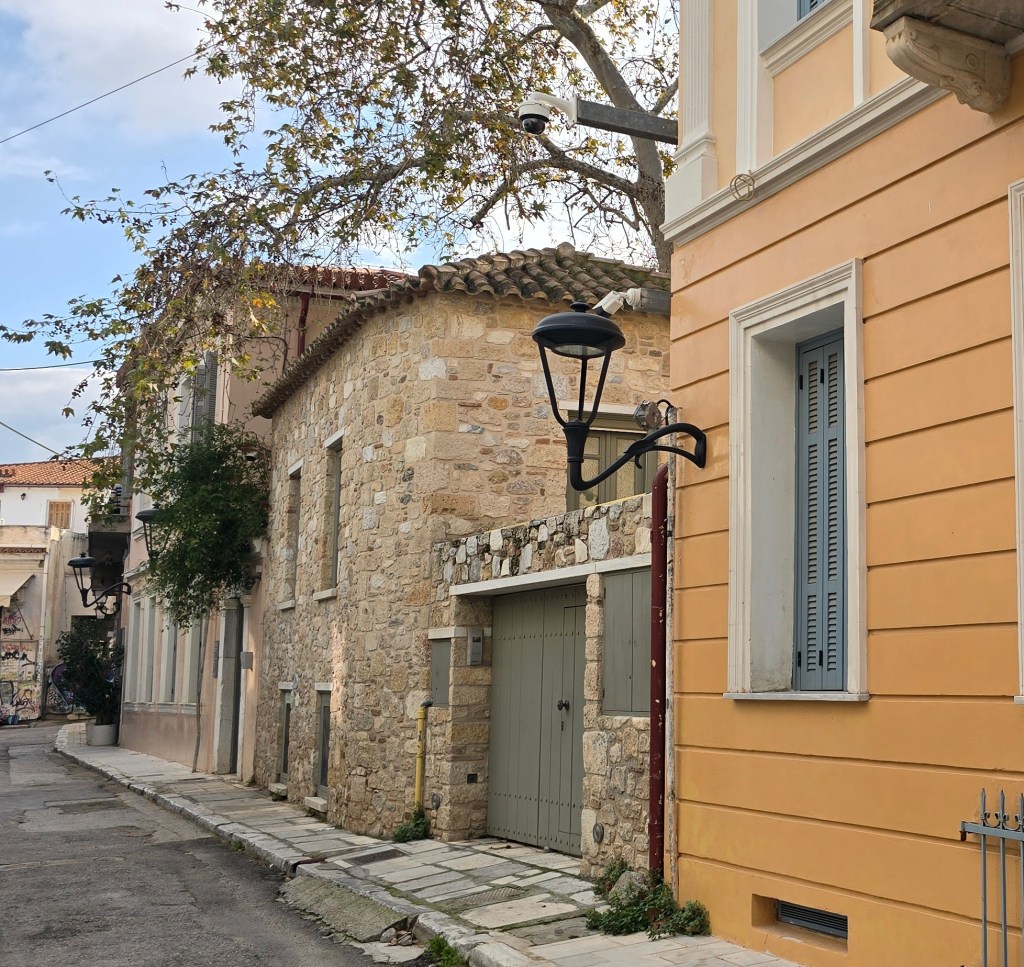
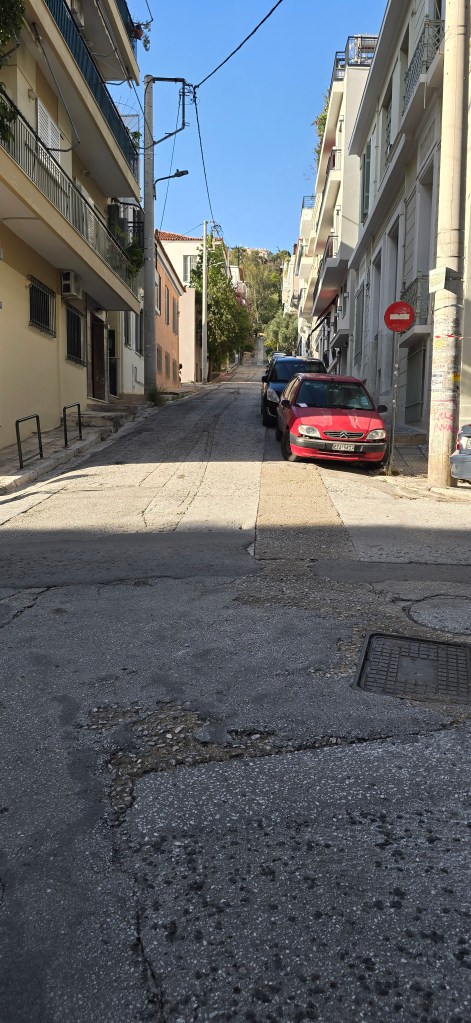
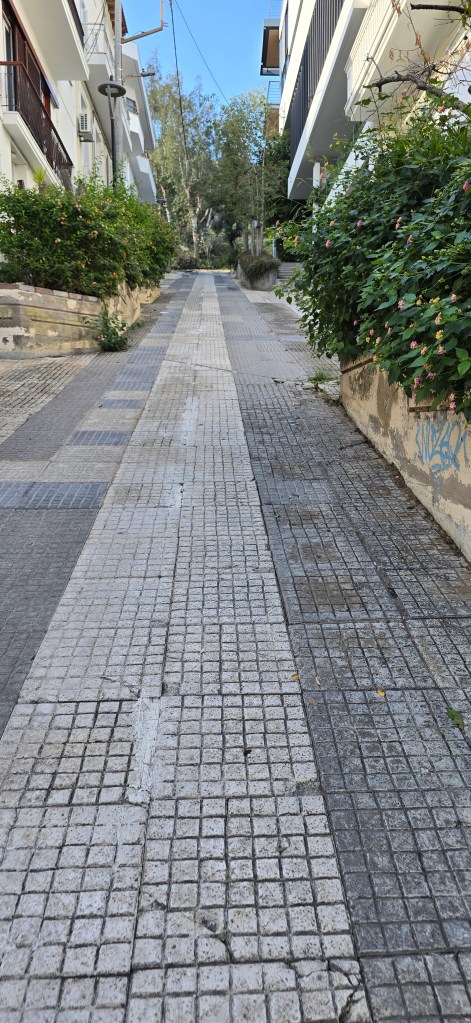
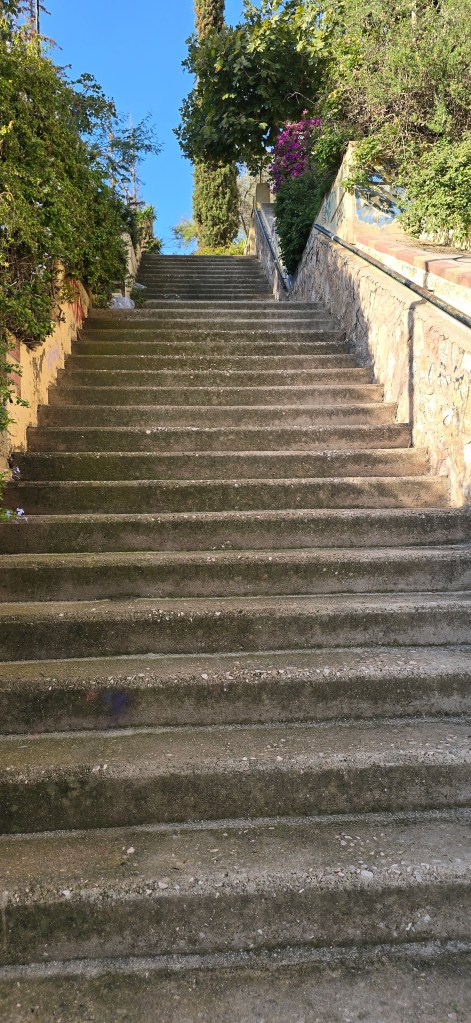
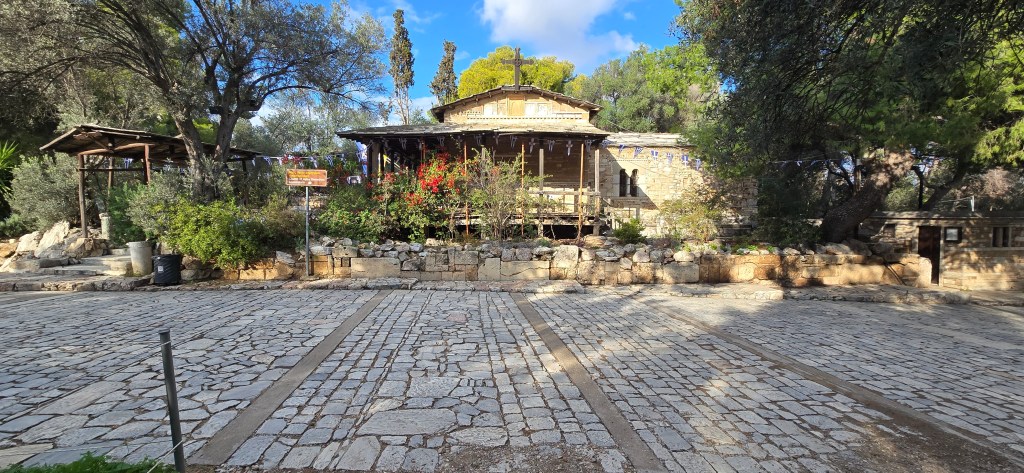
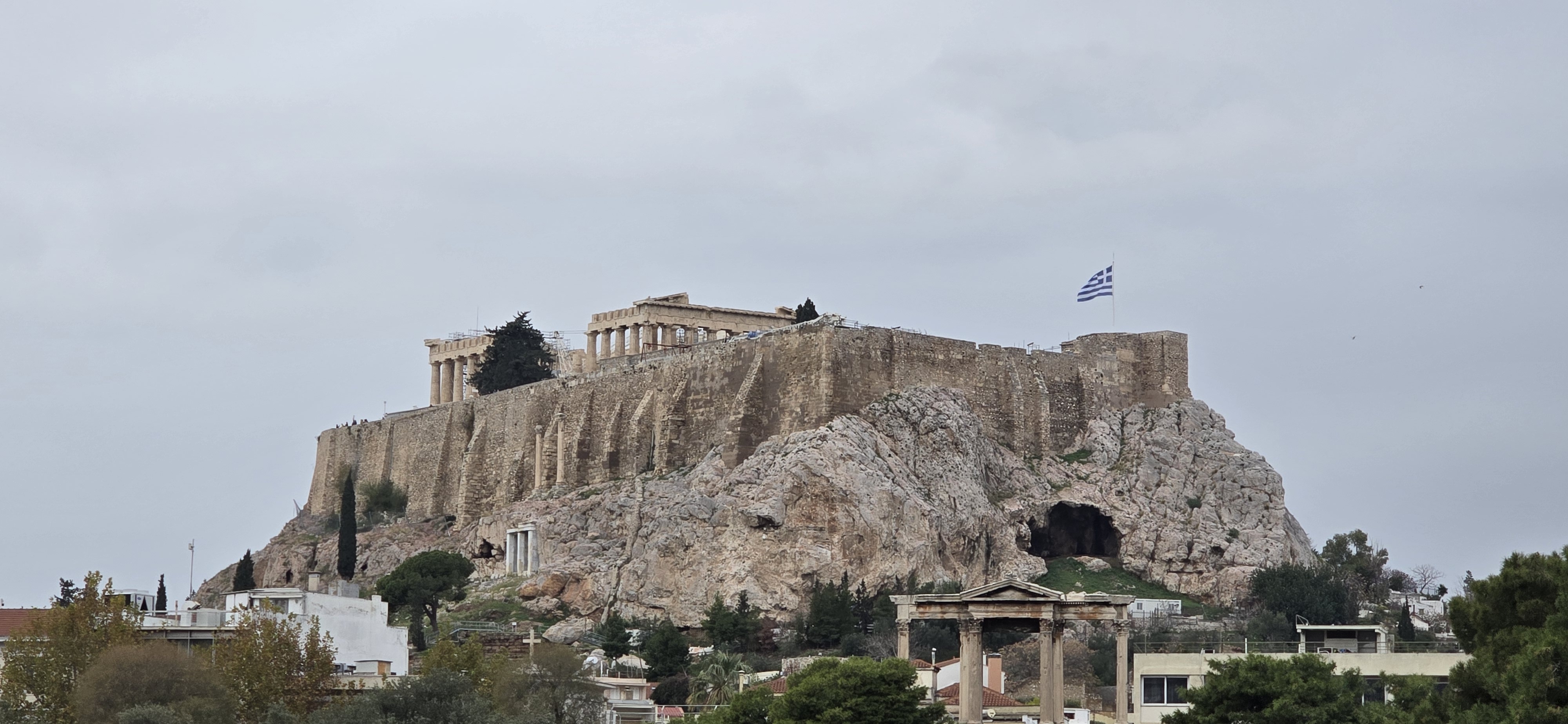
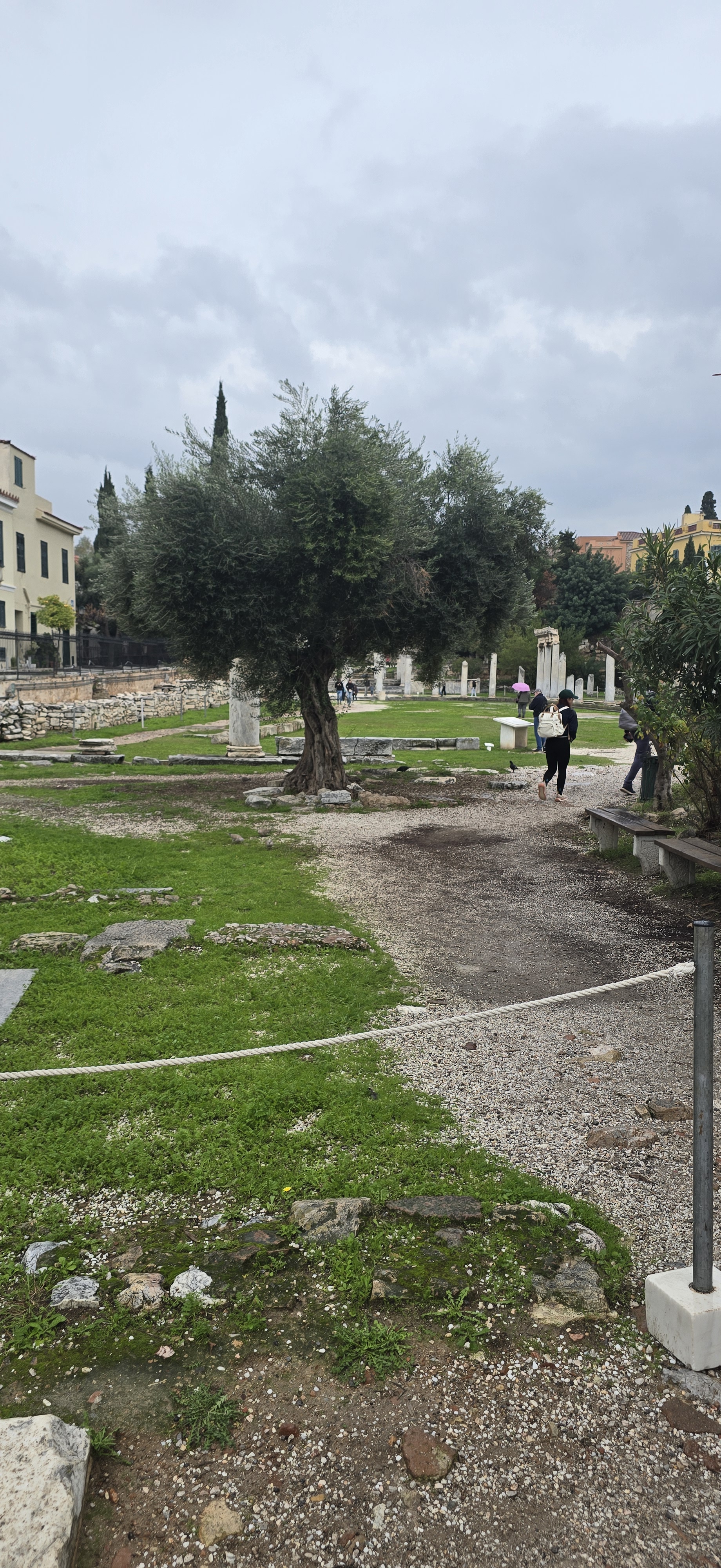
From there, I wandered — off the main route, of course. Apparently this is just who I am now.
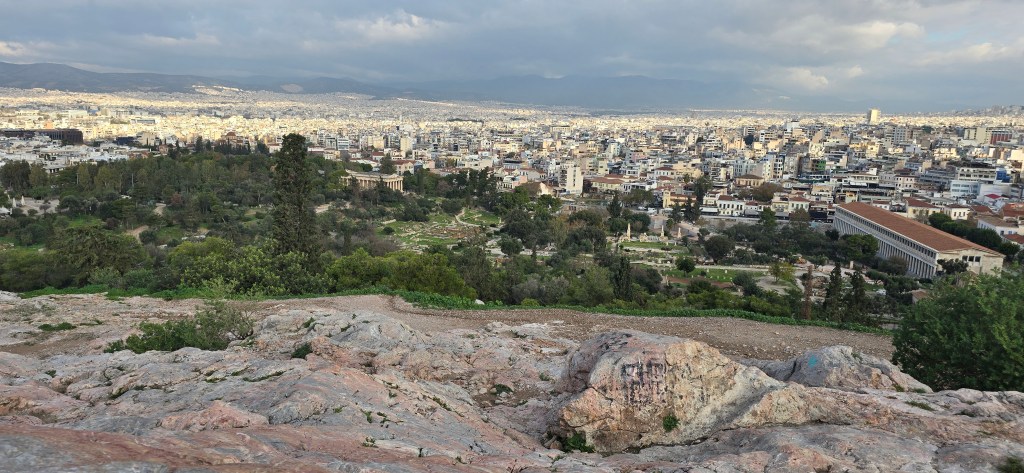
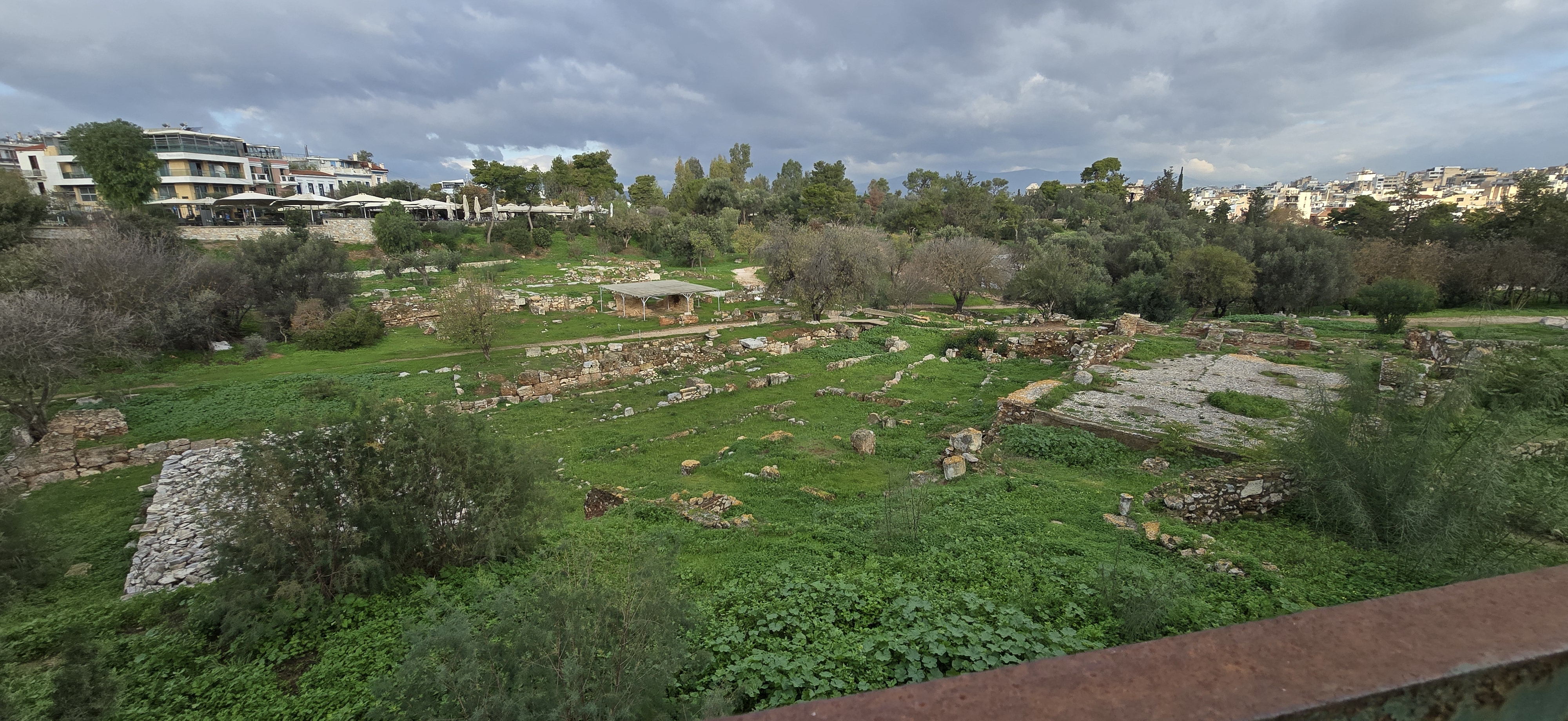
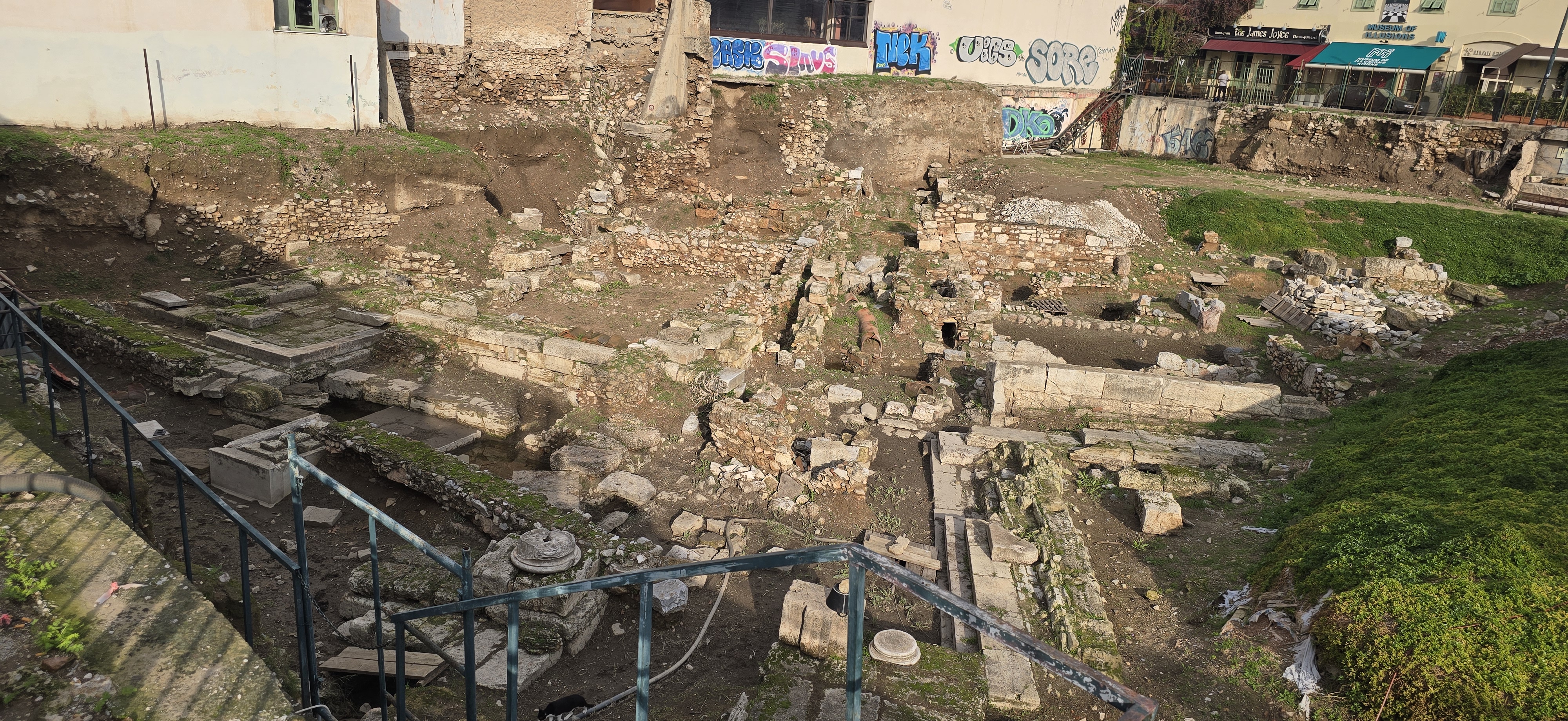
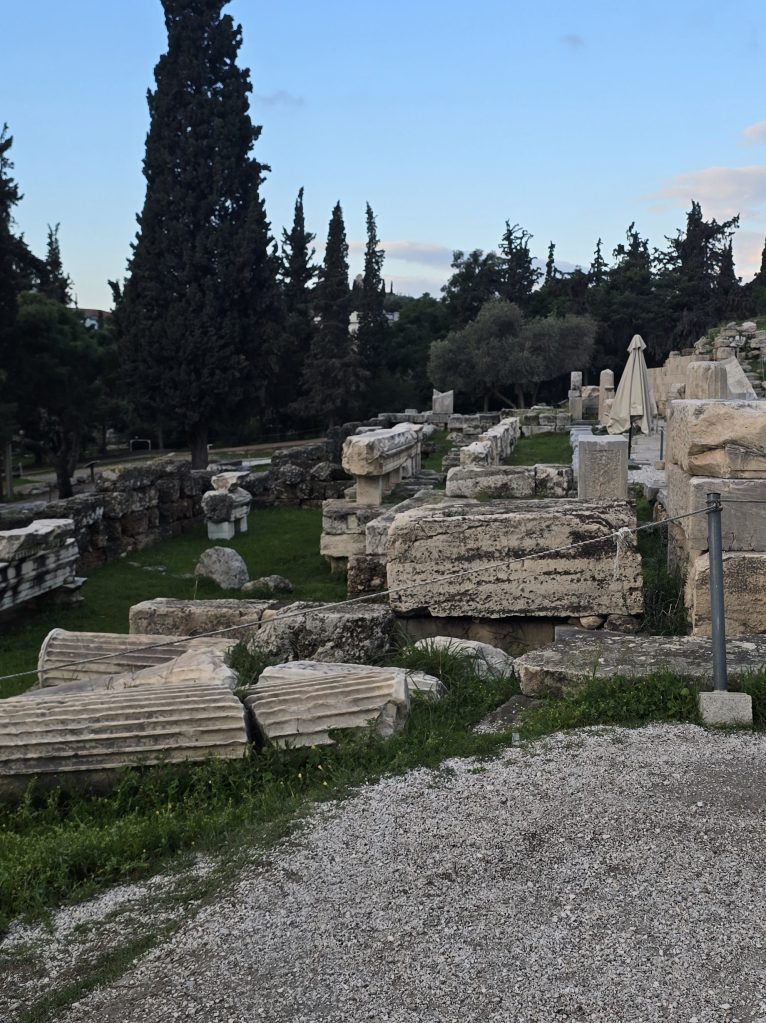
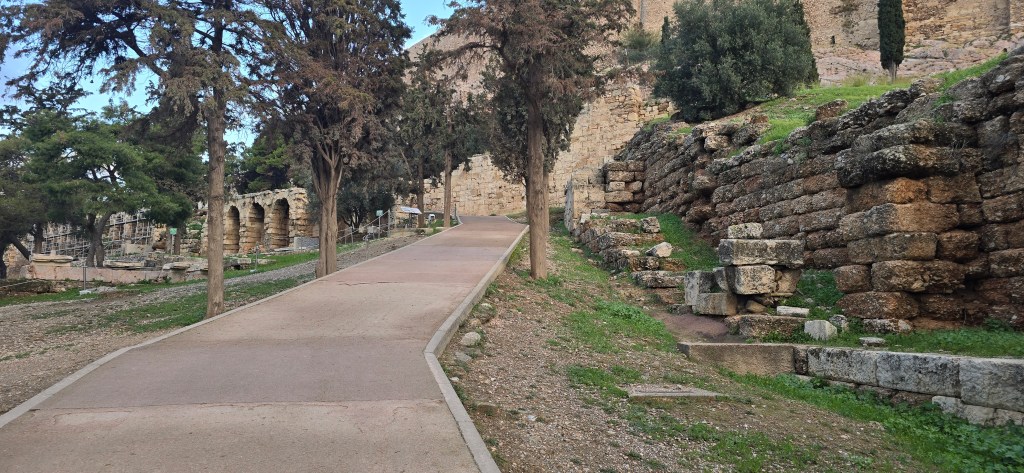
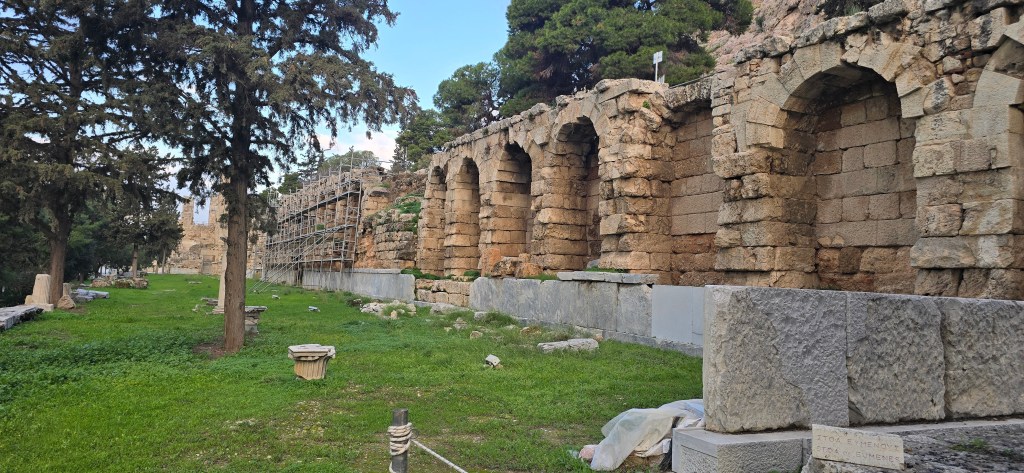
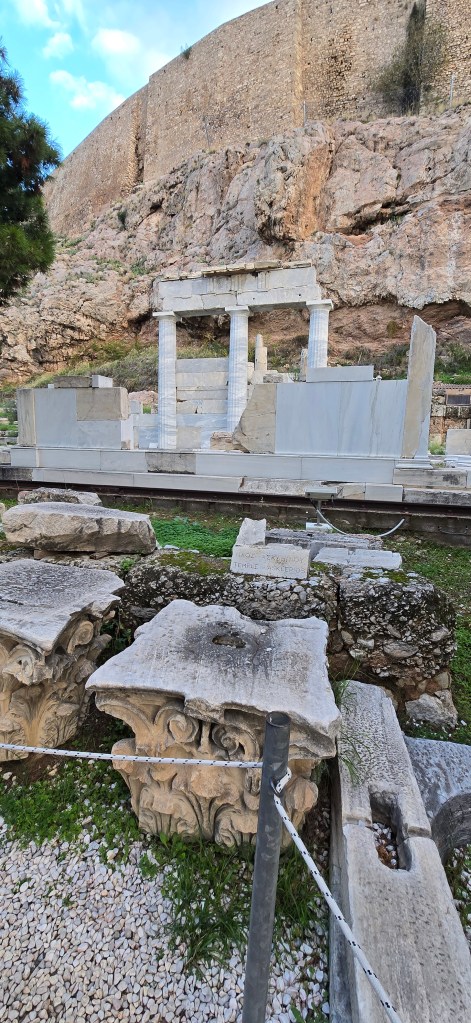
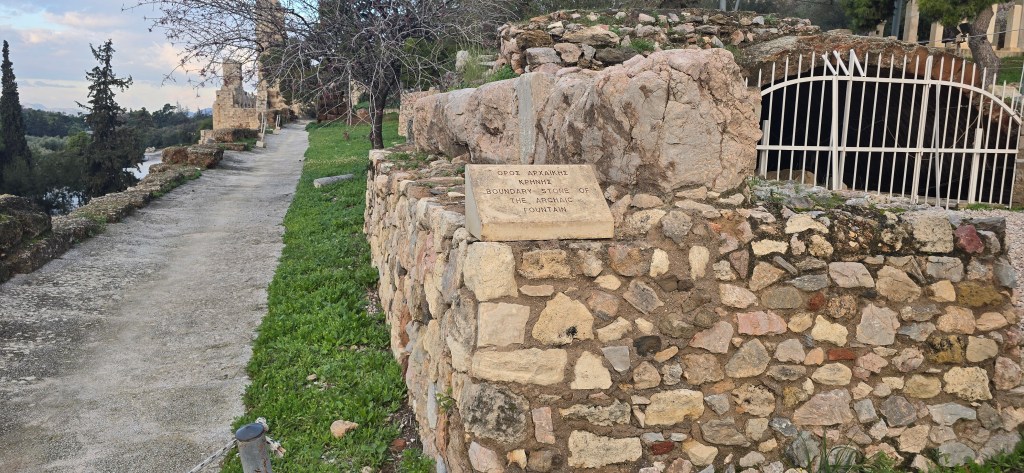
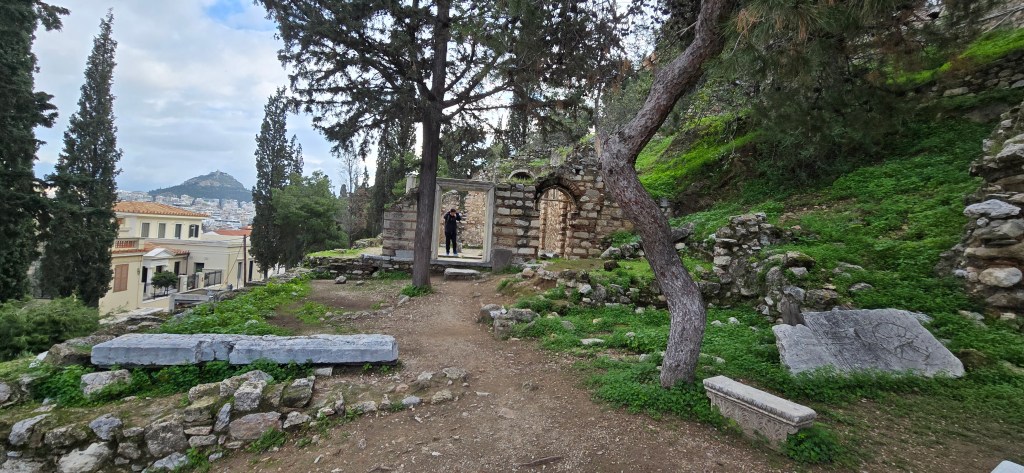
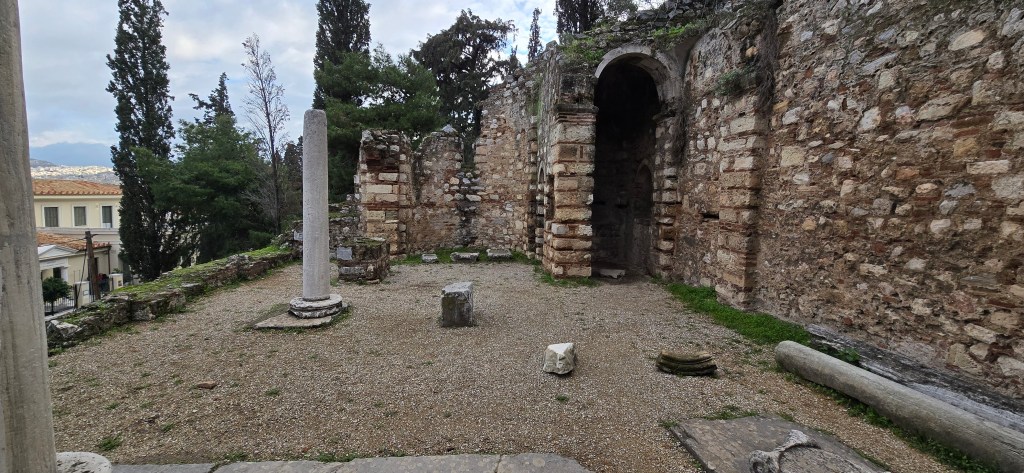
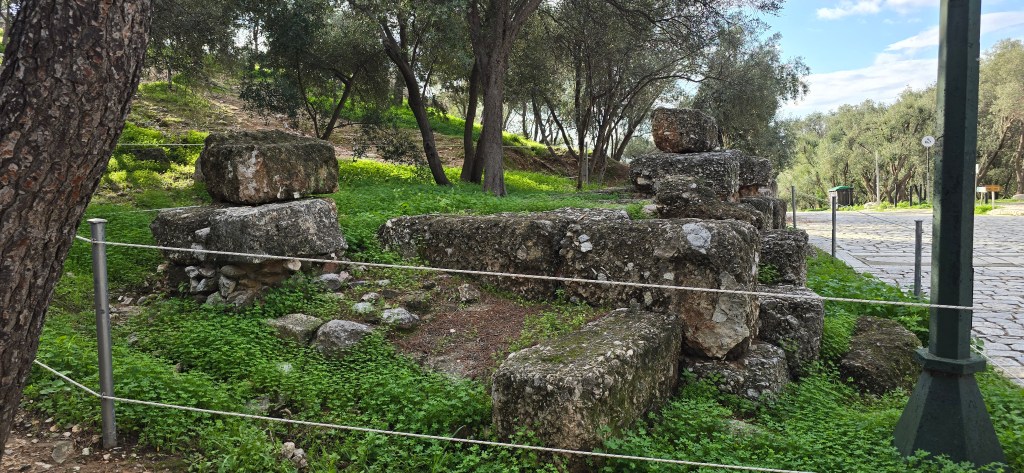
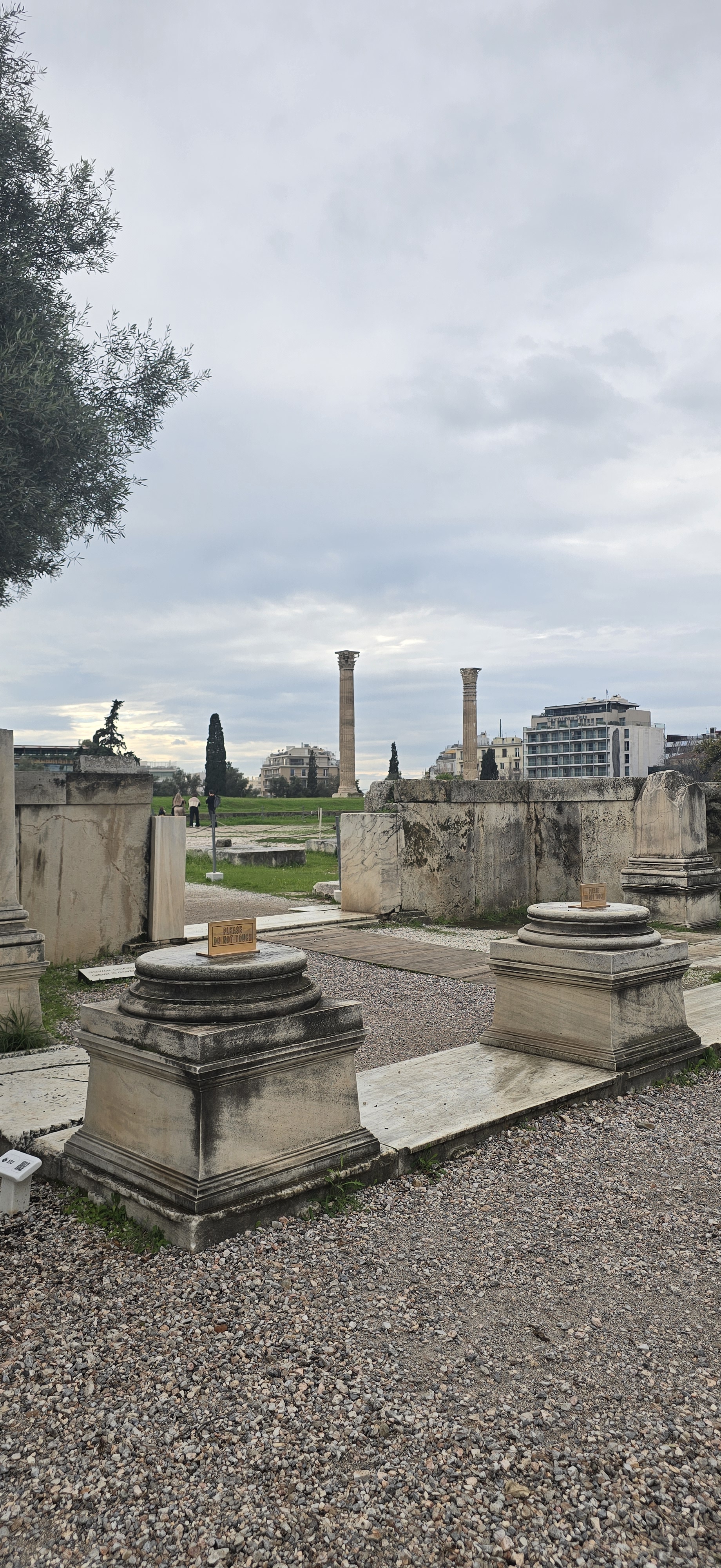
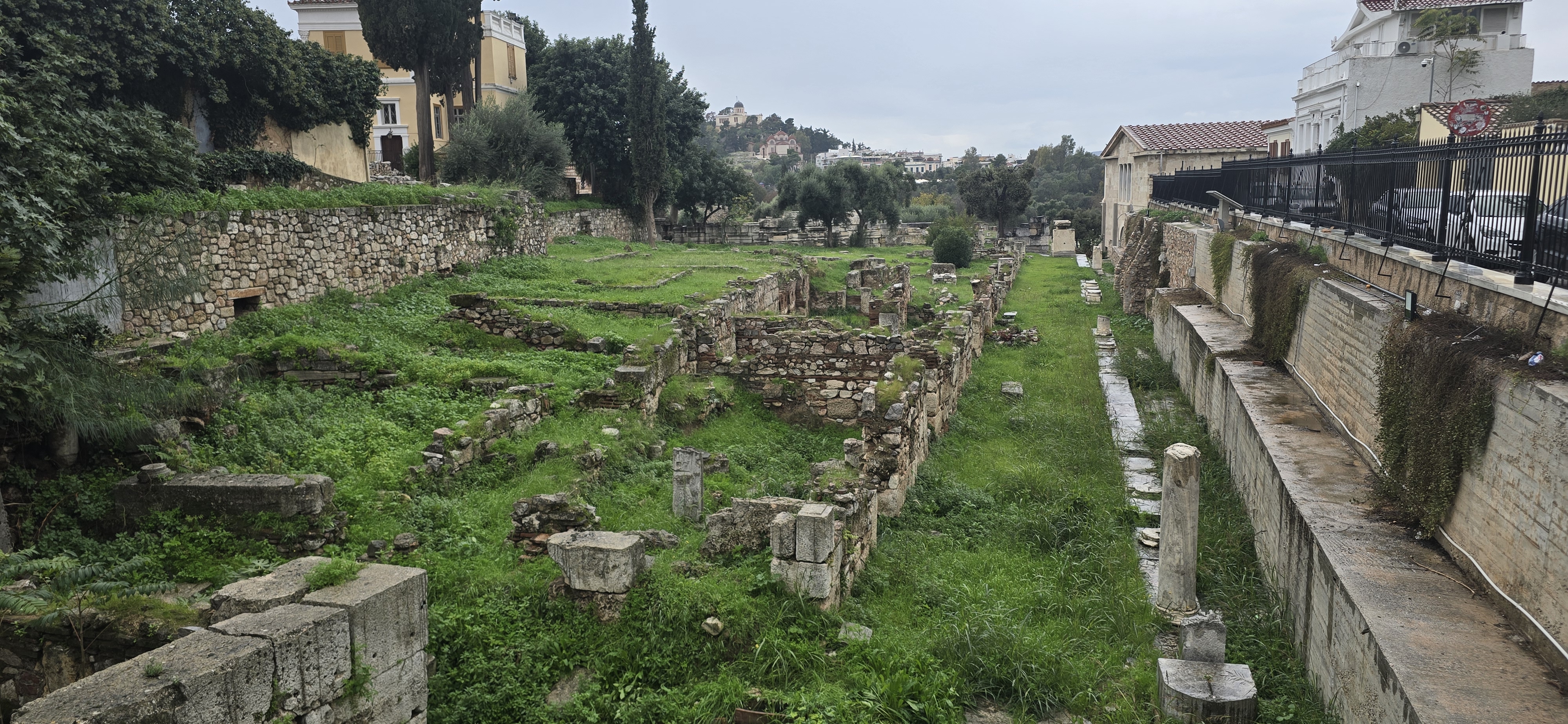
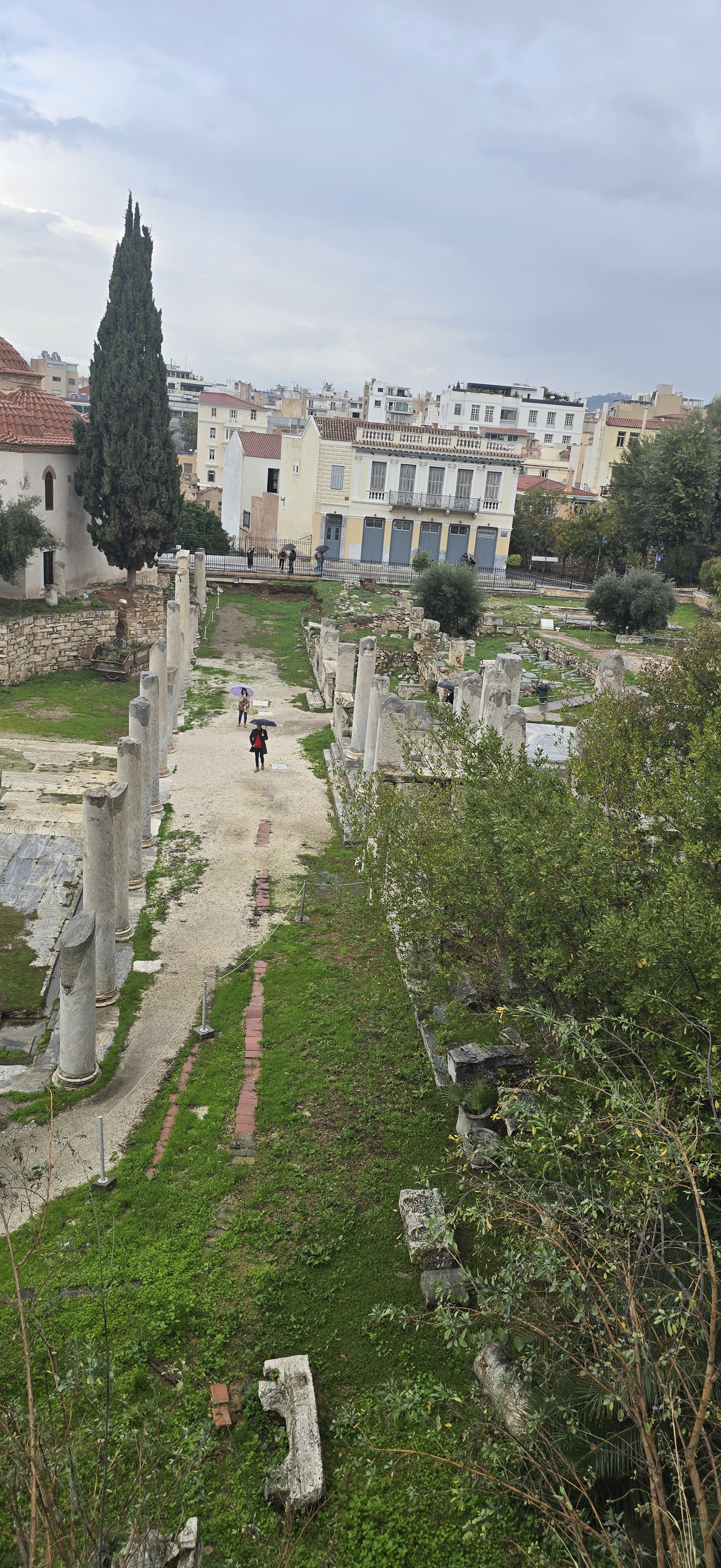
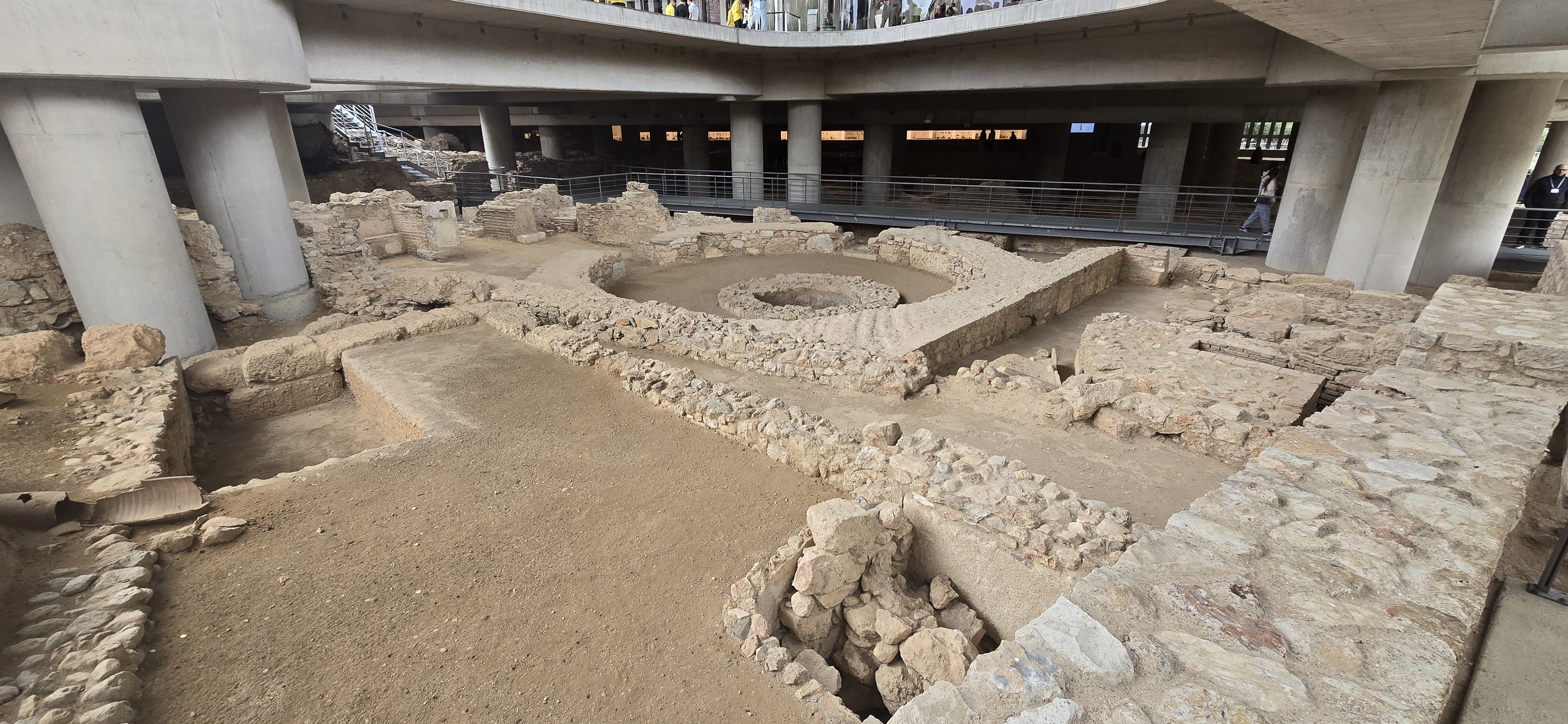
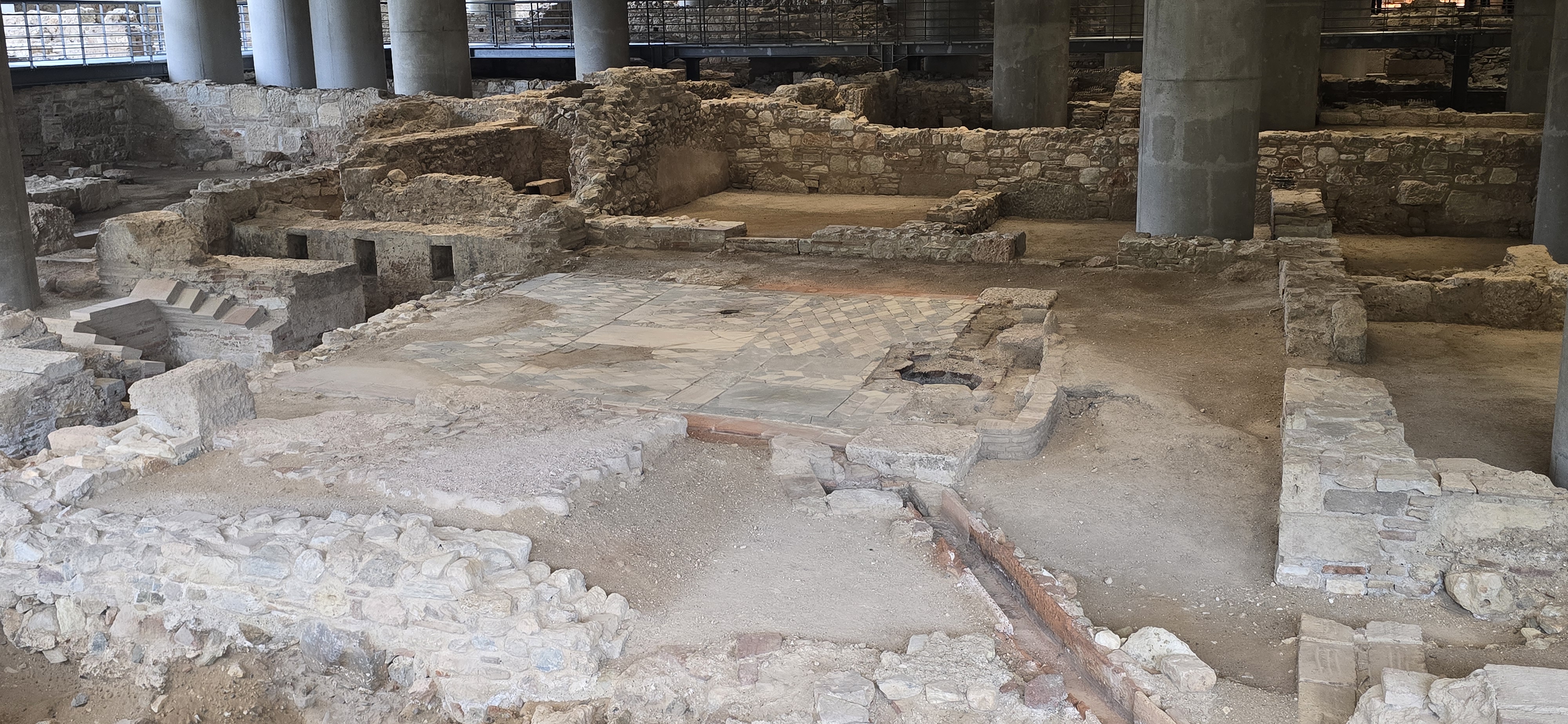
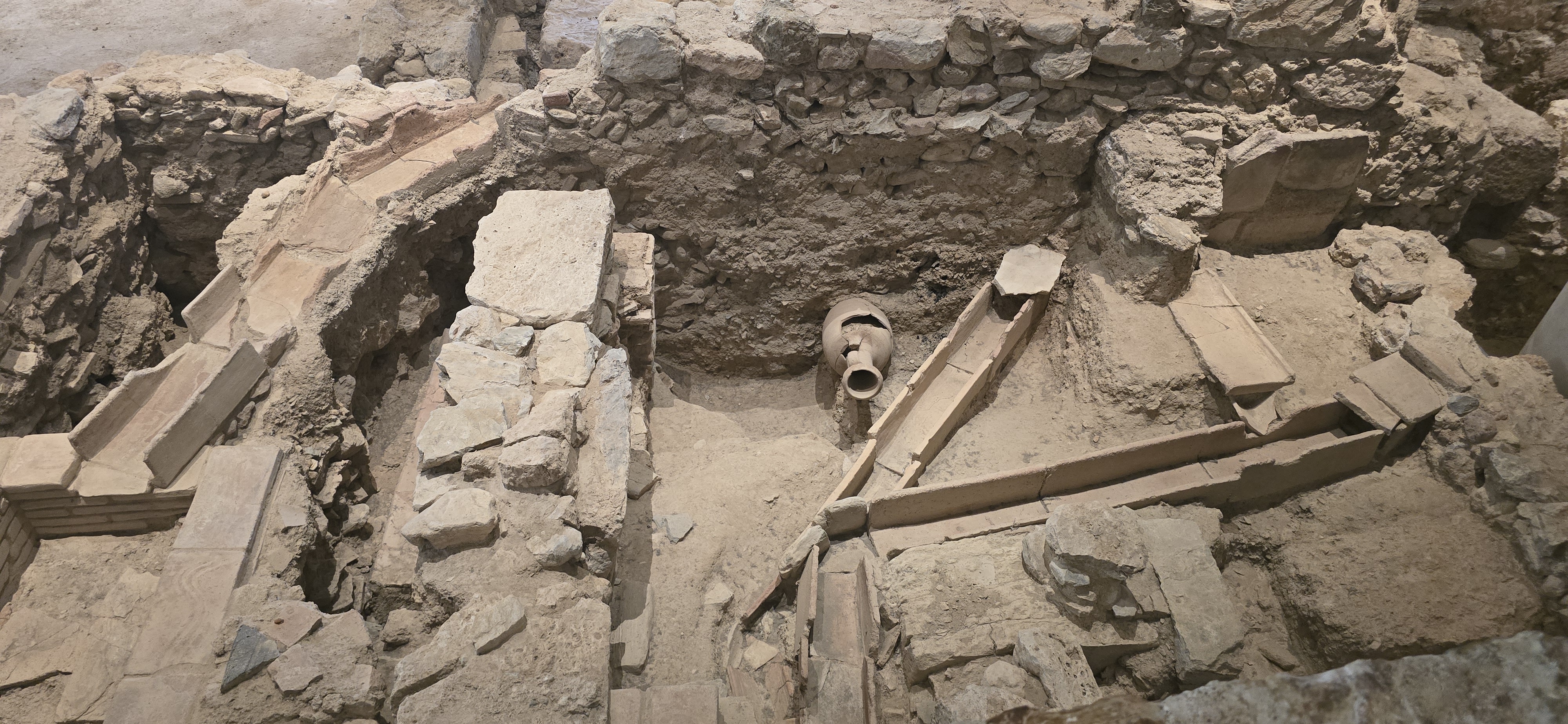
I passed uncovered stone foundations — what were likely ordinary homes once. It’s strange how history often highlights kings and temples, but entire neighborhoods once lived here quietly.
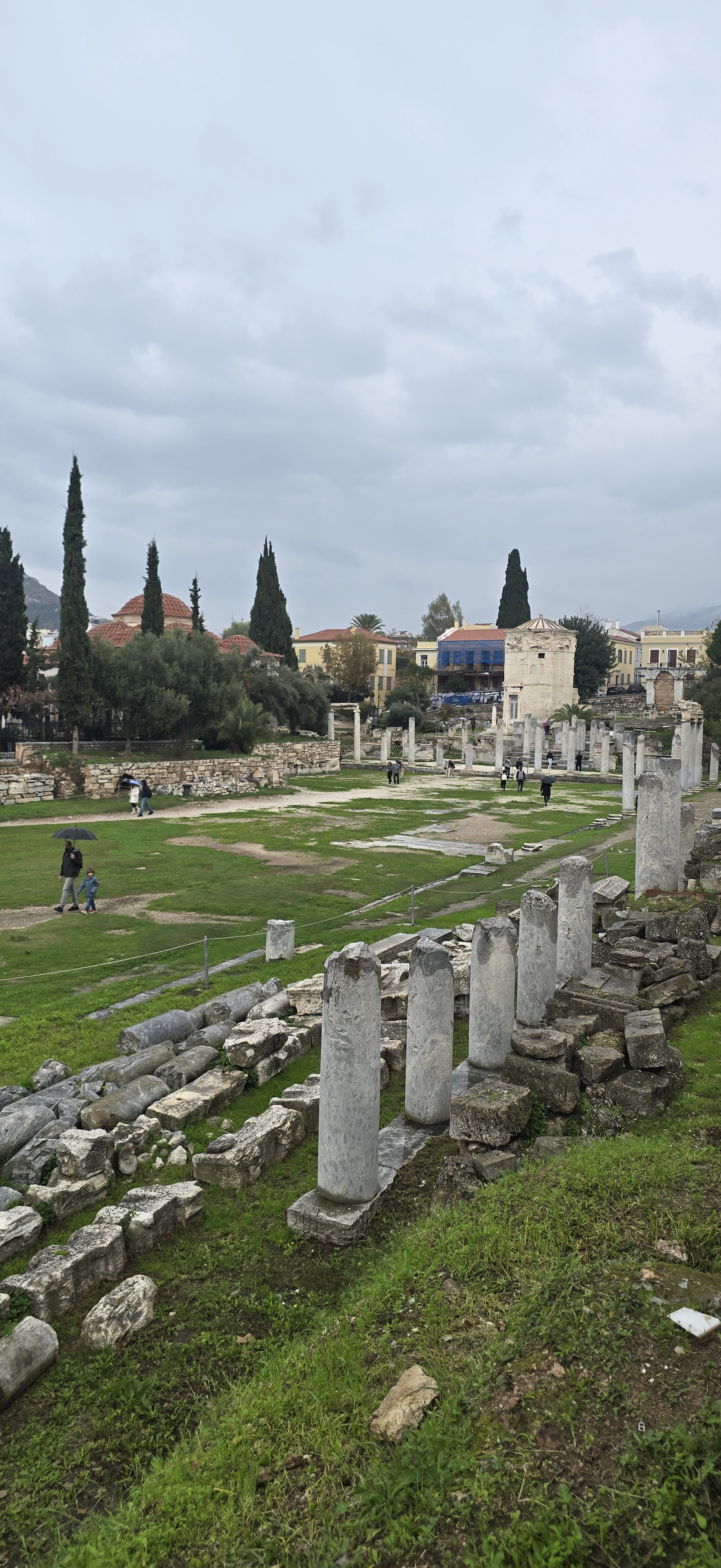
The Ancient Agora was the heart of Athens — political center, marketplace, courtroom, meeting place. Democracy was practiced here. Philosophers debated here. Citizens argued, traded, gathered.
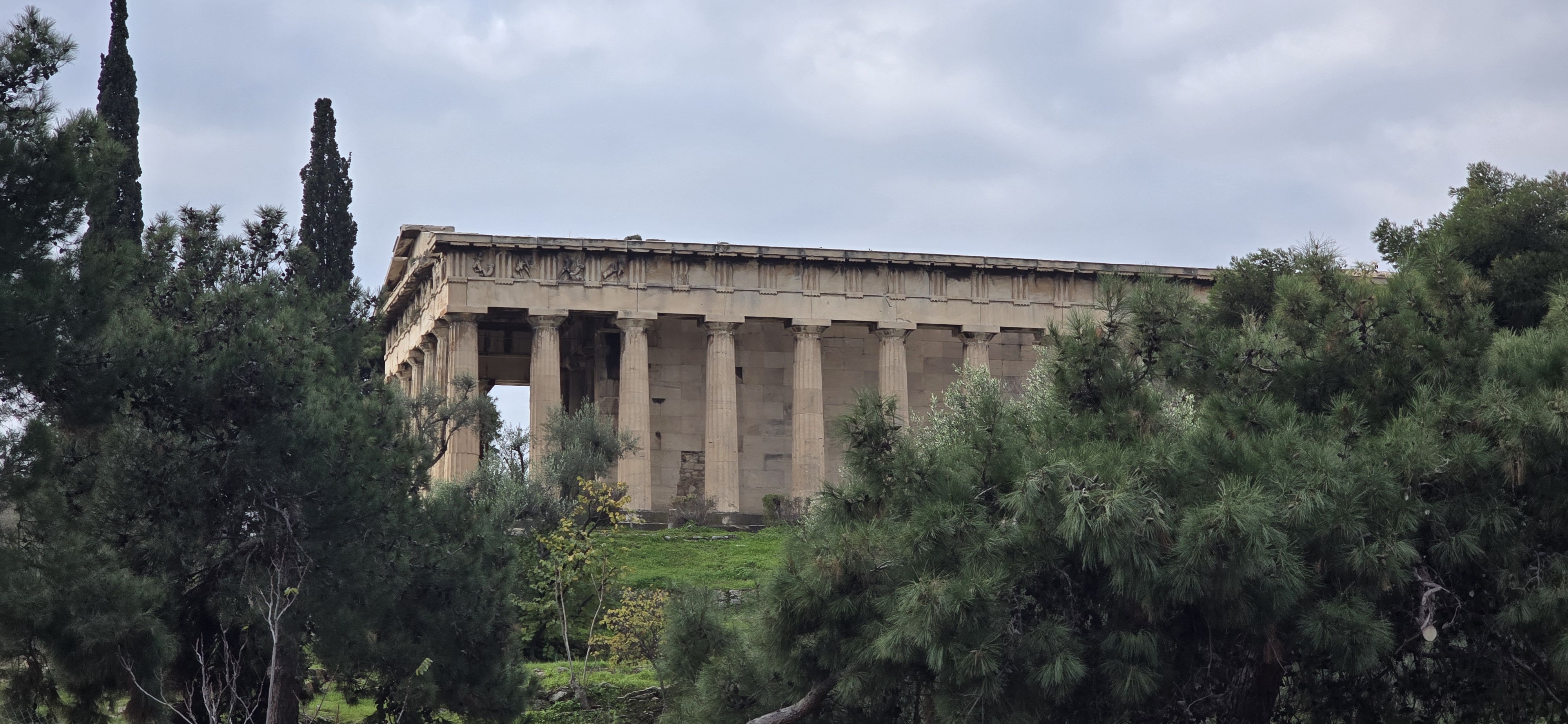
I didn’t go inside the fenced area, but I walked along three sides of it — enough to feel its scale. The Temple of Hephaestus stands almost impossibly preserved above it, steady and symmetrical.
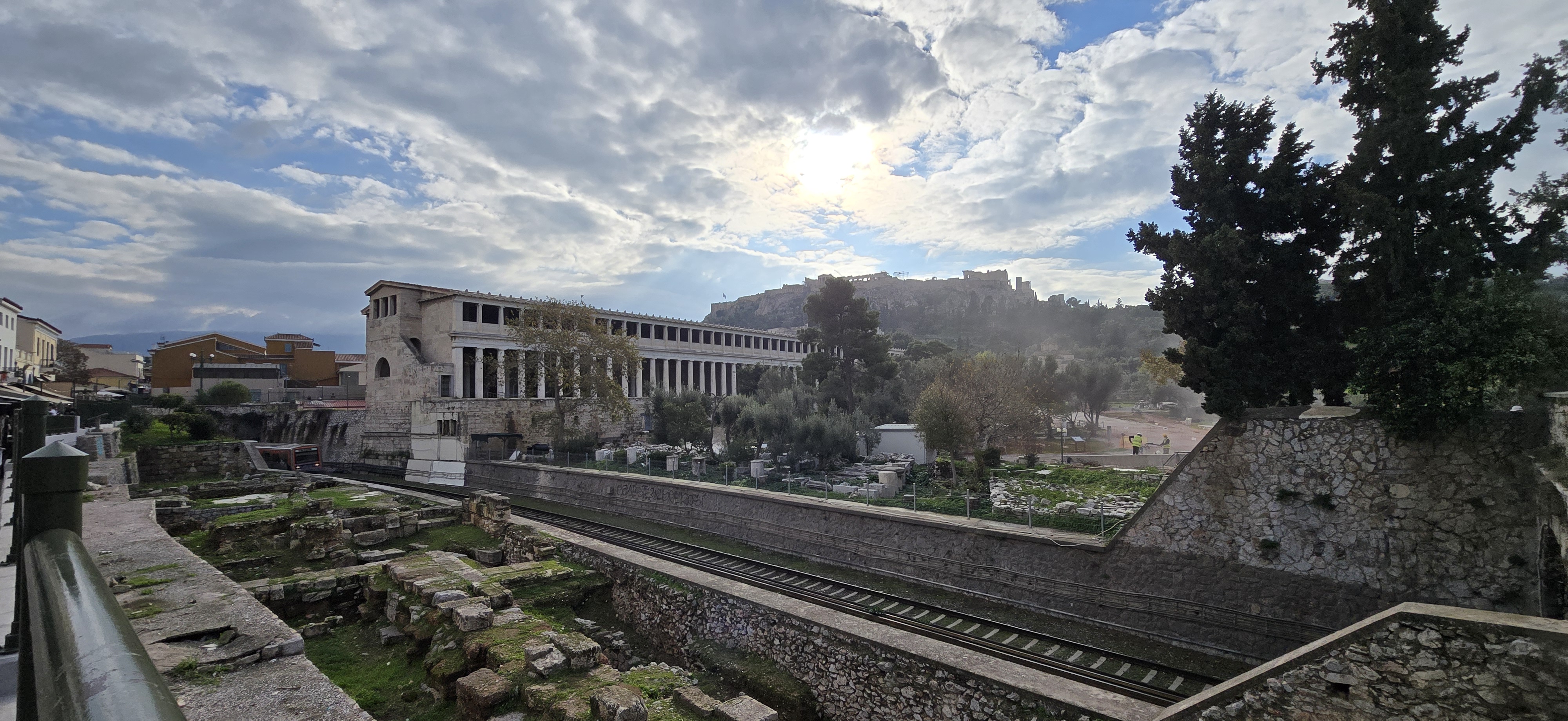
And then — a modern train rattled straight through the edge of the landscape.
I laughed.
Of course Athens would casually run a train past democracy’s birthplace. History and present day refusing to take turns.
To the east stands the Stoa of Attalos, reconstructed in the 1950s. Once a two-story colonnade for commerce and gathering — now a museum. Again: ancient bones, modern rebuilding.
📚 Roman Layers — Hadrian & Pancakes
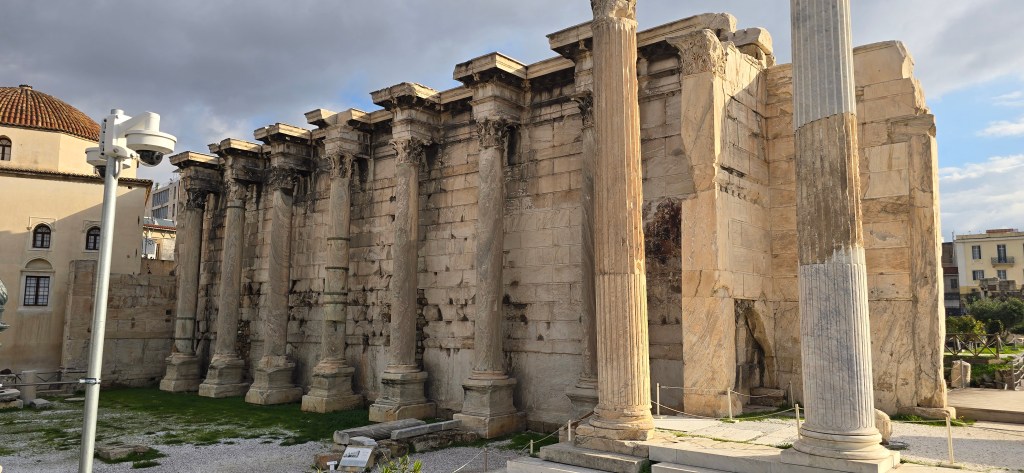
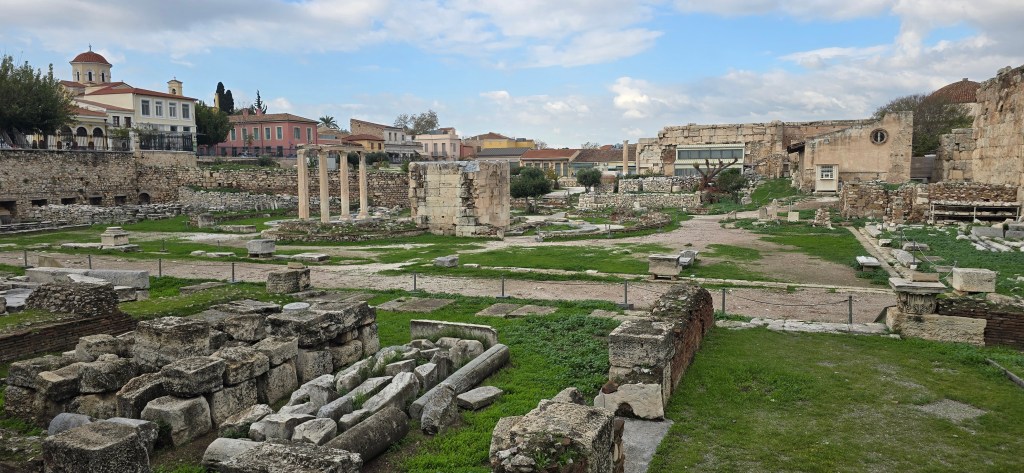
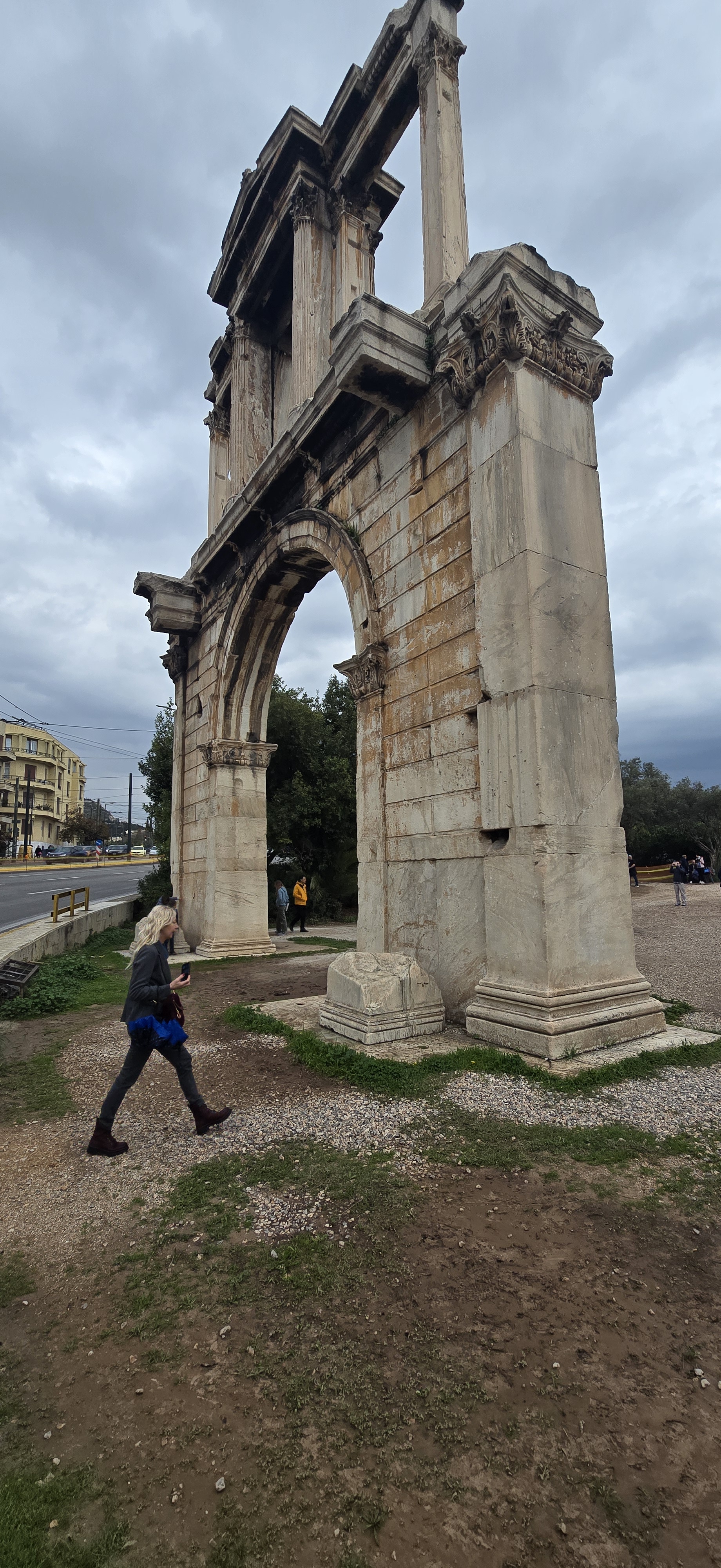
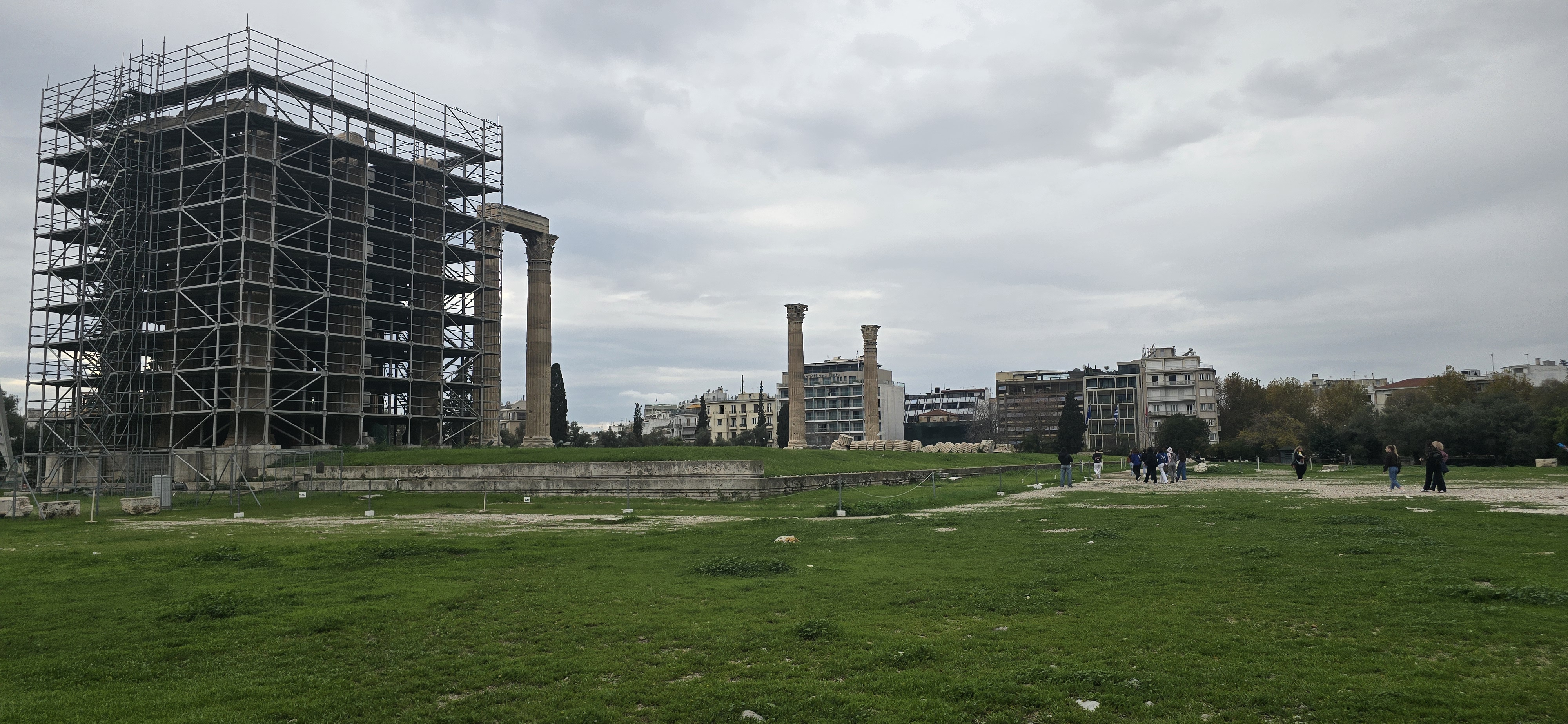
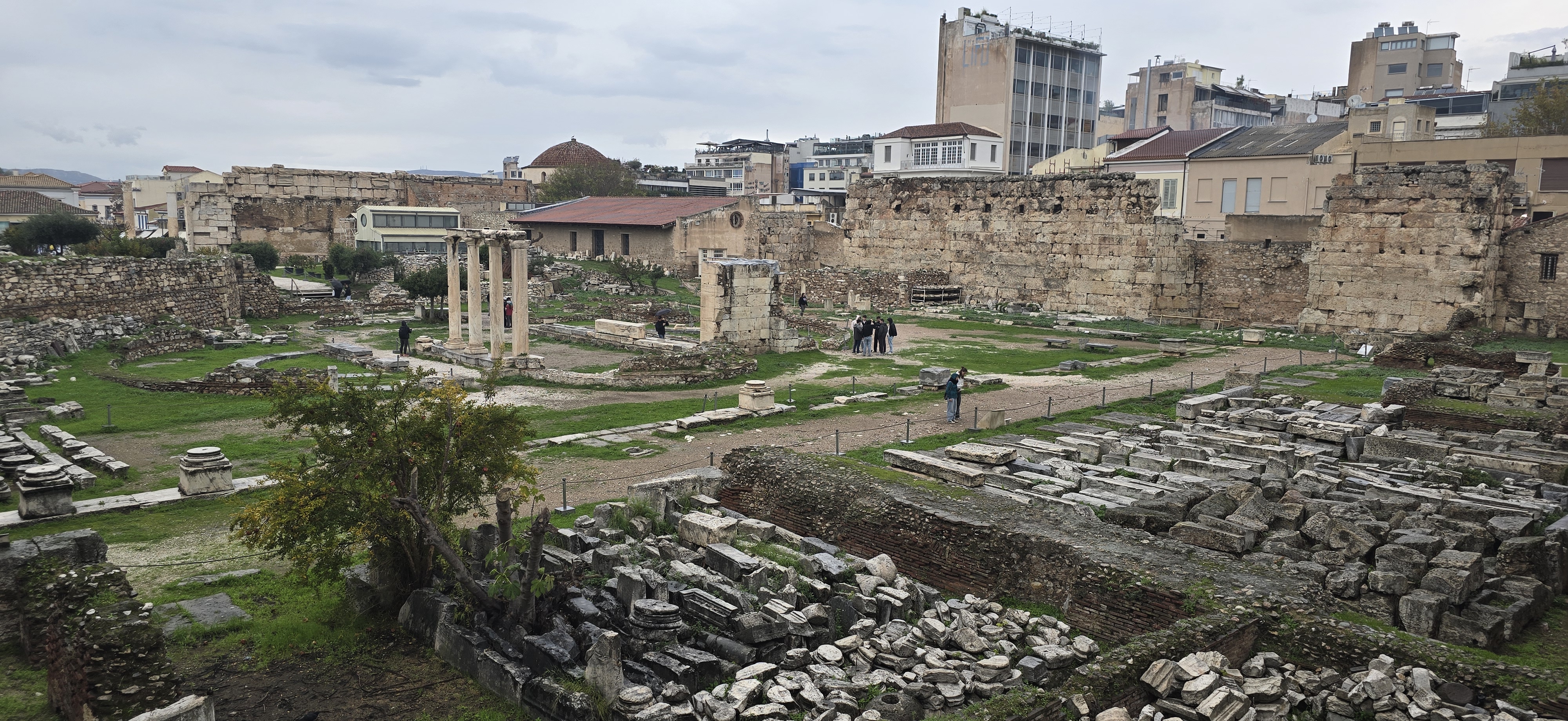
Nearby is Hadrian’s Library, built in 132 AD by Emperor Hadrian — a Roman love letter to Athens. A massive complex that once held scrolls, lecture halls, and courtyards.
I didn’t go inside — just admired it from afar. Sometimes seeing the structure is enough.
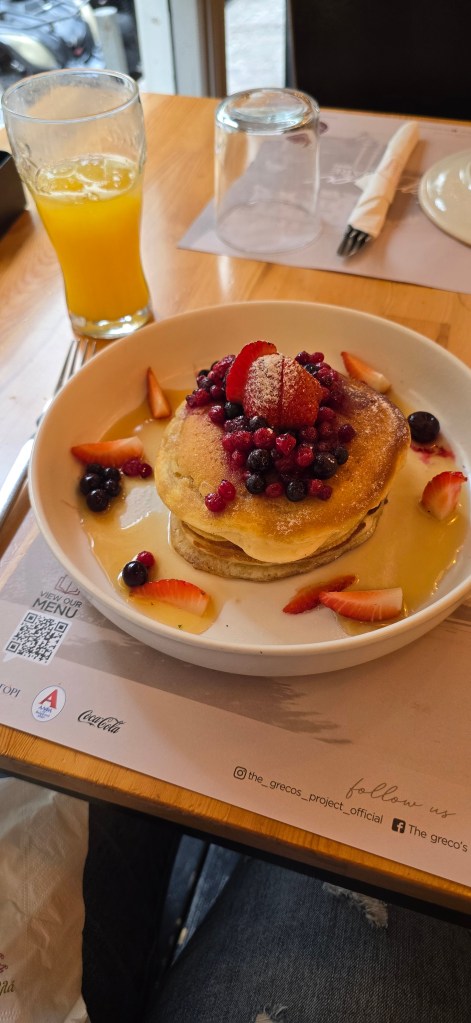
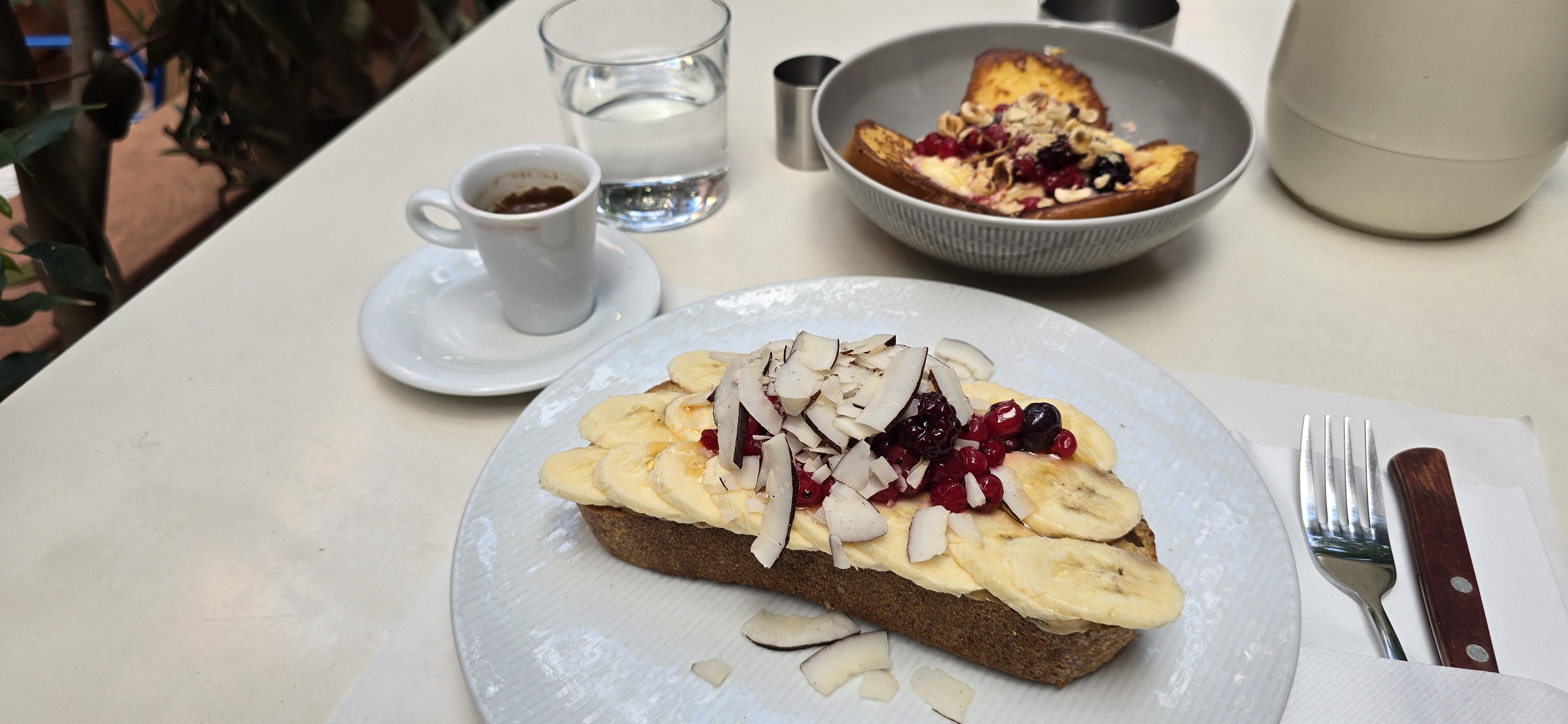
And then: pancakes.
Yummy, fruit-loaded, absolutely deserved pancakes.
There is something humbling about eating modern brunch within walking distance of 2,000-year-old ruins.
🚐 Toward the Edge of the Sea
By late afternoon, it was time for my sunset tour to Cape Sounion.
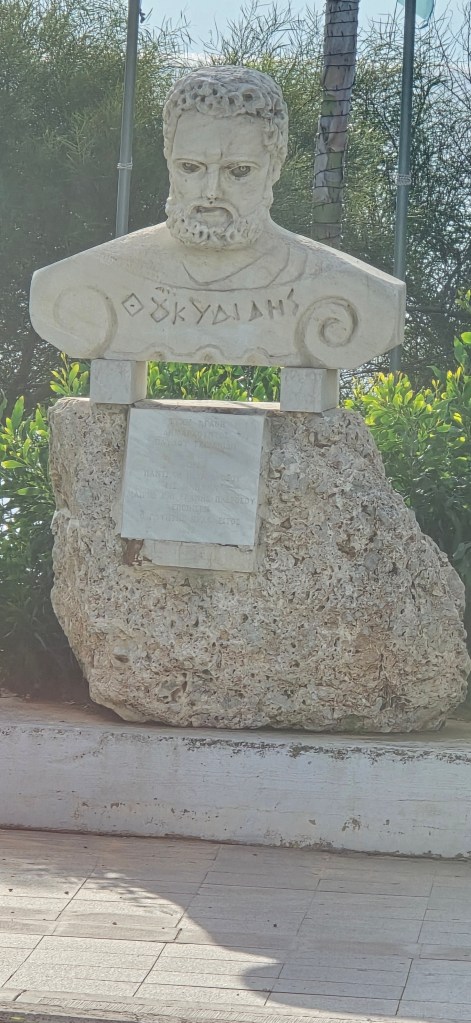
On the drive, I spotted a carving of Odysseus — and it made me grin. Apparently, when you spend the day with Homer, he sends a reminder you’re still in his story.
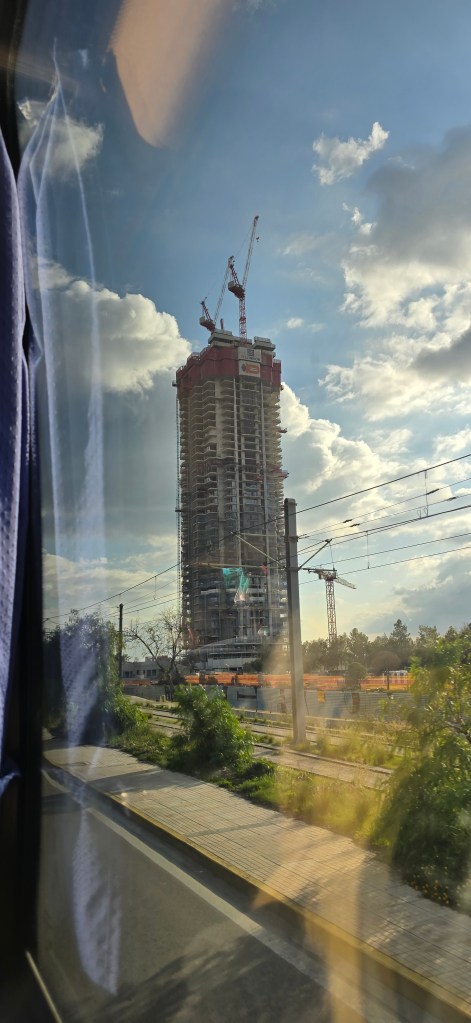
We passed Athens’ first skyscraper under construction — cranes rising into the skyline. Ancient columns and modern steel, still coexisting.
Then the coastline appeared.
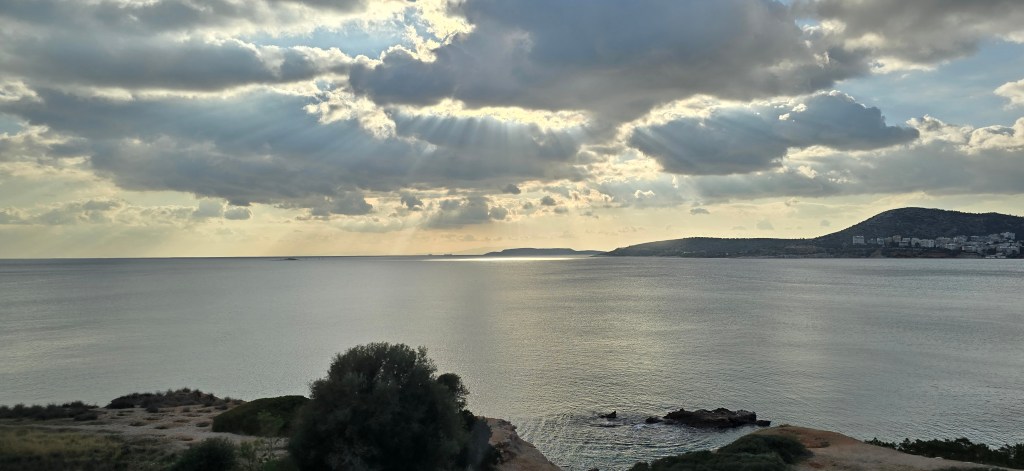
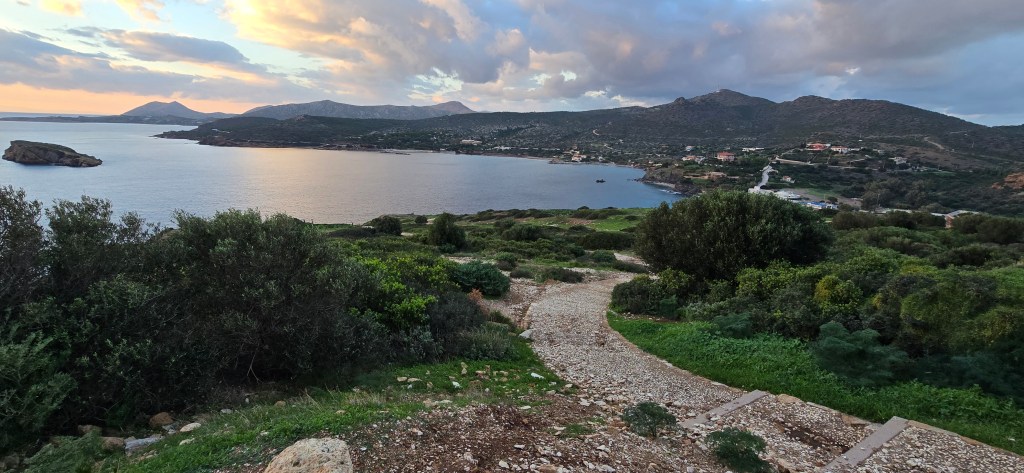
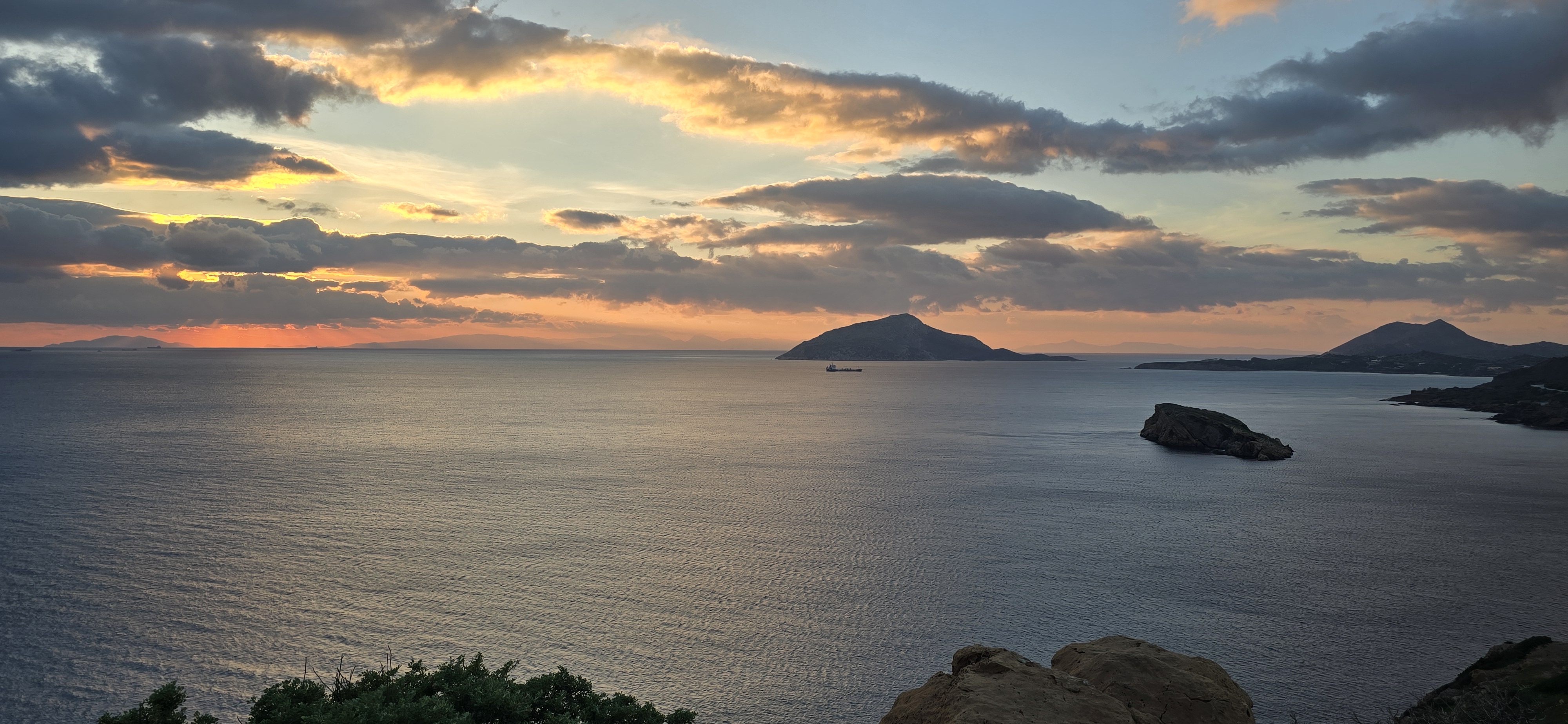
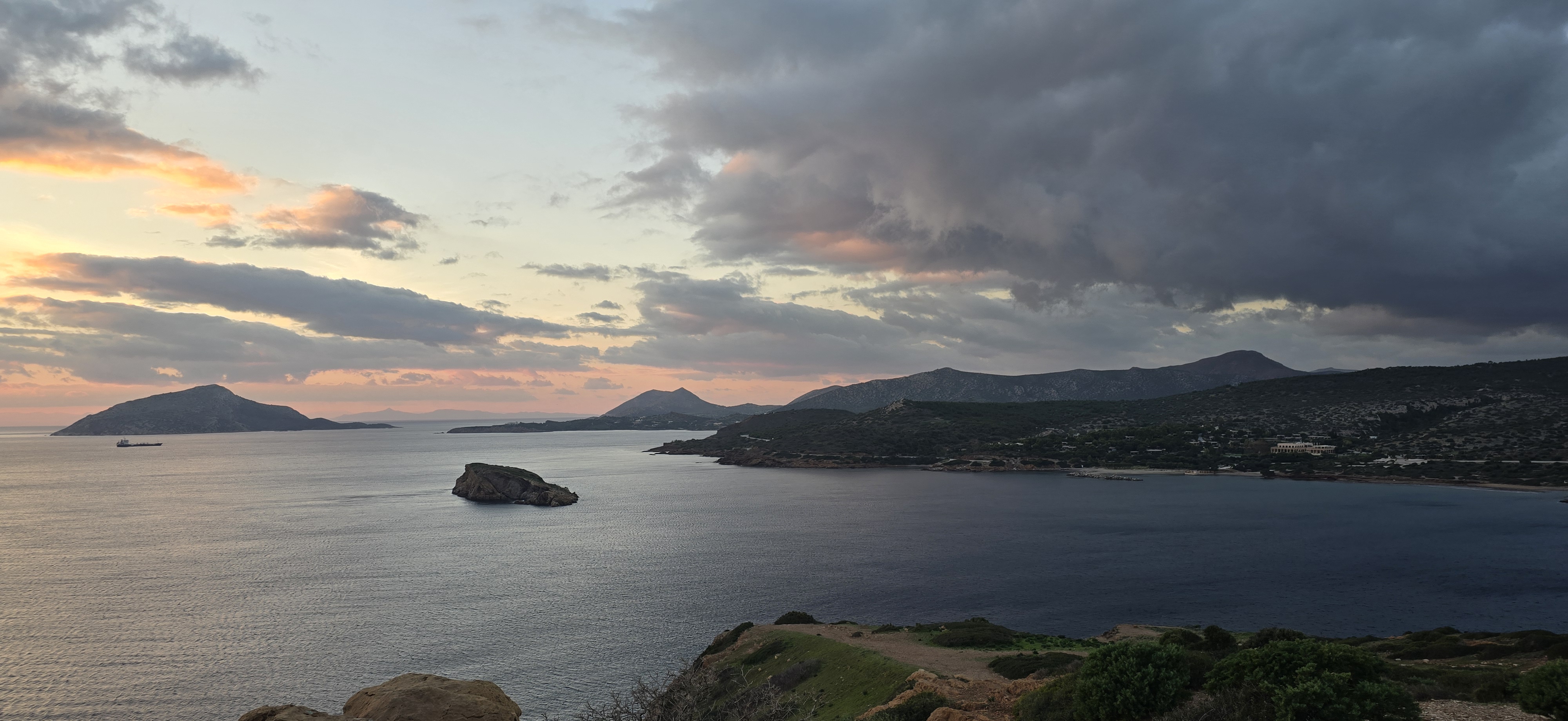
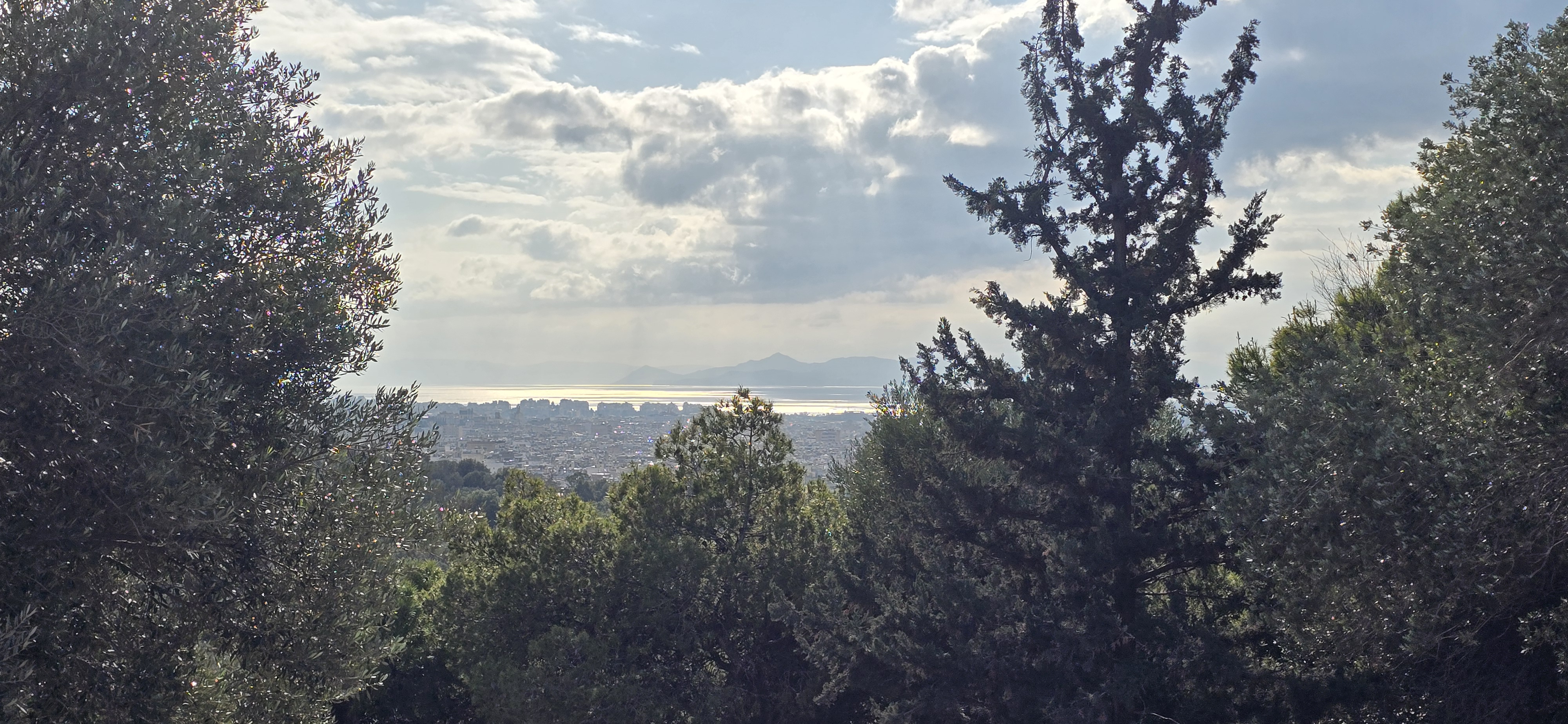
The Aegean stretched out in blues that don’t quite exist in crayon boxes. Islands dotted the horizon — some close, some hazy in the distance.
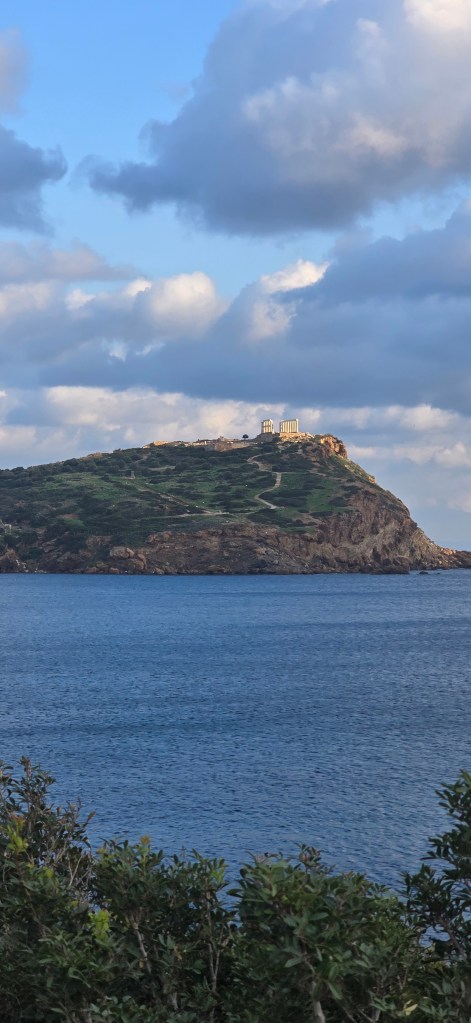
As we pulled over at a scenic viewpoint to glimpse the Temple of Poseidon in the distance…
…I fell.
Not gracefully.
Not subtly.
One second stepping off the bus.
Next second — pavement.
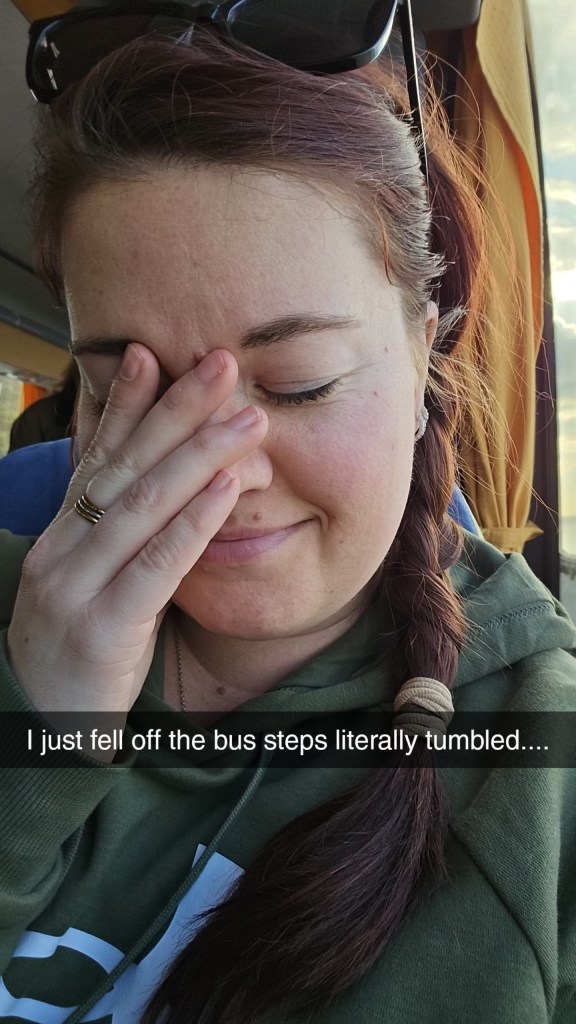
I literally tumbled down the bus steps. Right in front of the entire group.
Spectacular.
There was that split second of silence — the universal “Is she okay?” pause — and then I just started laughing. What else are you going to do?
The tour guide rushed over, visibly concerned and incredibly kind. After reassuring her (and everyone else) that I was fine — truly fine — I let the rest of the group continue disembarking while I regained both my balance and my dignity.
Twisted ankle. Red face. Pride slightly bruised.
But still determined.
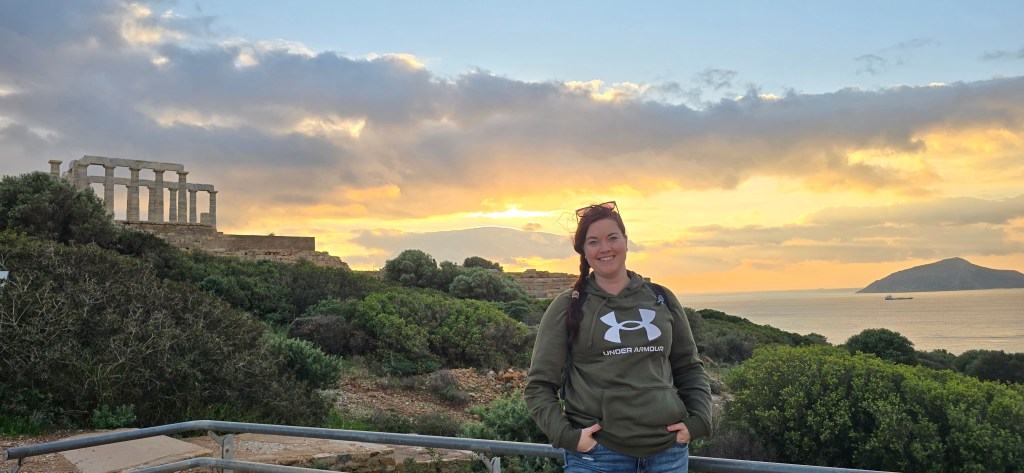
After a moment, I stood up, tested my footing, and took a few photos from the overlook — because if you’re going to fall at Cape Sounion, you might as well document it.

🌅 Temple of Poseidon — Where Land Ends & Stories Begin
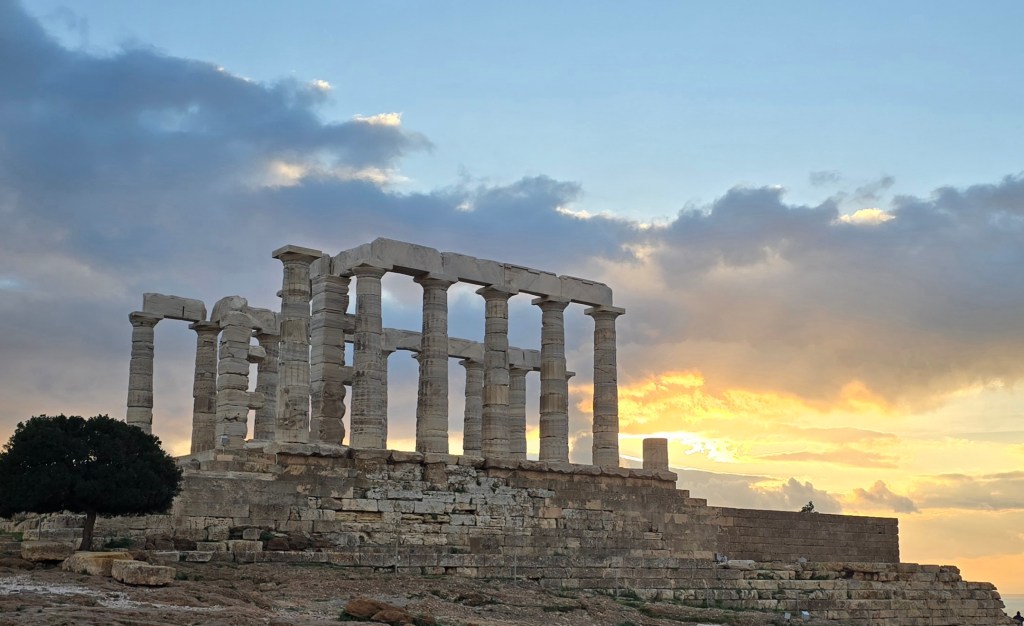
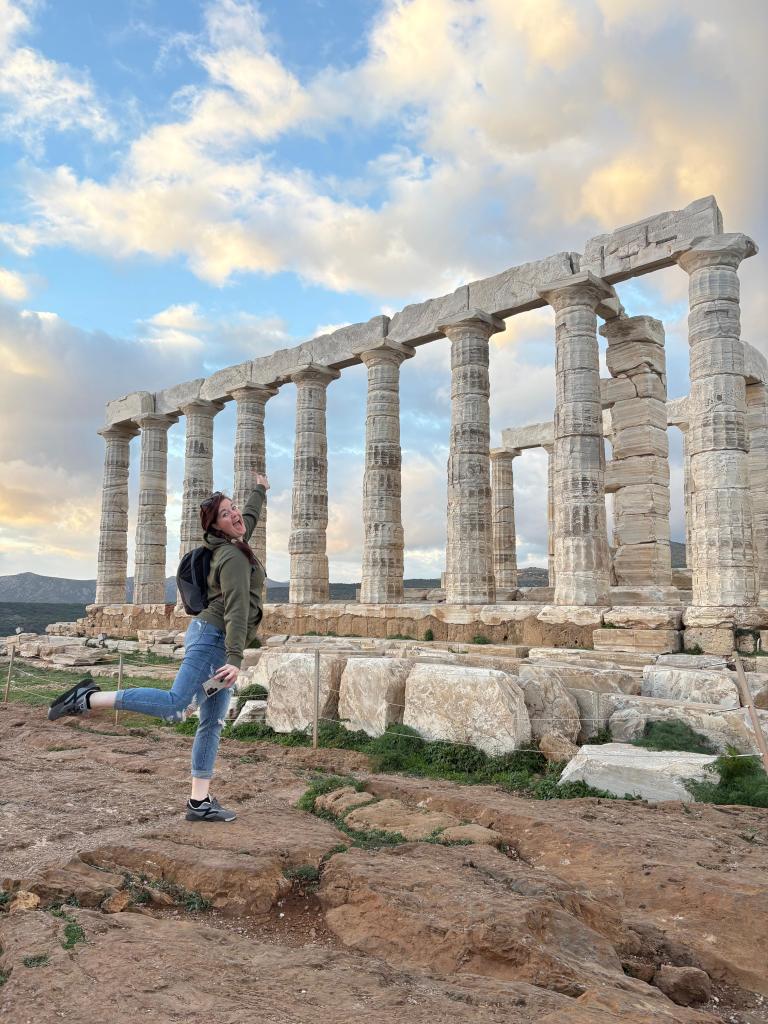
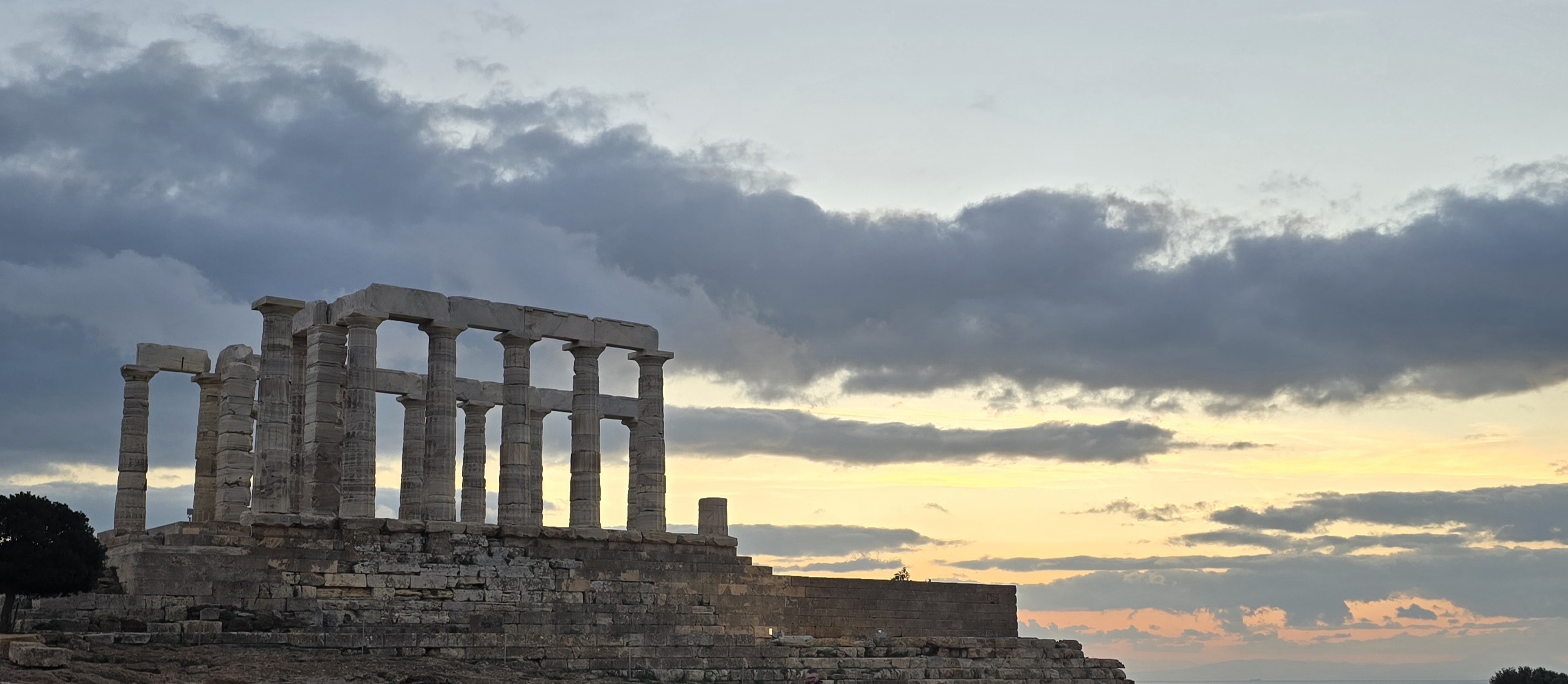
The Temple of Poseidon stands at Cape Sounion, perched high above the Aegean Sea. Built in the 5th century BC during the Golden Age of Athens, it wasn’t just decorative — it was strategic, symbolic, and sacred. Sailors leaving Athens would round this cape and offer prayers to Poseidon for safe passage. Those returning home would look for these columns as their first glimpse of land.
For men who lived by the sea, this was reassurance.
And yes — it’s mentioned in Homer’s Odyssey. As Odysseus sails home after the Trojan War, he passes Cape Sounion. Even in epic poetry, this place marked transition — between danger and safety, between exile and return.
Then there’s the myth of King Aegeus. He stood here watching the horizon for his son, Theseus. The signal had been agreed upon: white sails if victorious, black if dead. When he saw black sails approaching, he believed his son had perished — and threw himself into the sea below. That sea would bear his name forever.
So yes — this place carries drama.
But standing there as the sun lowered, what struck me wasn’t tragedy.
It was the view.
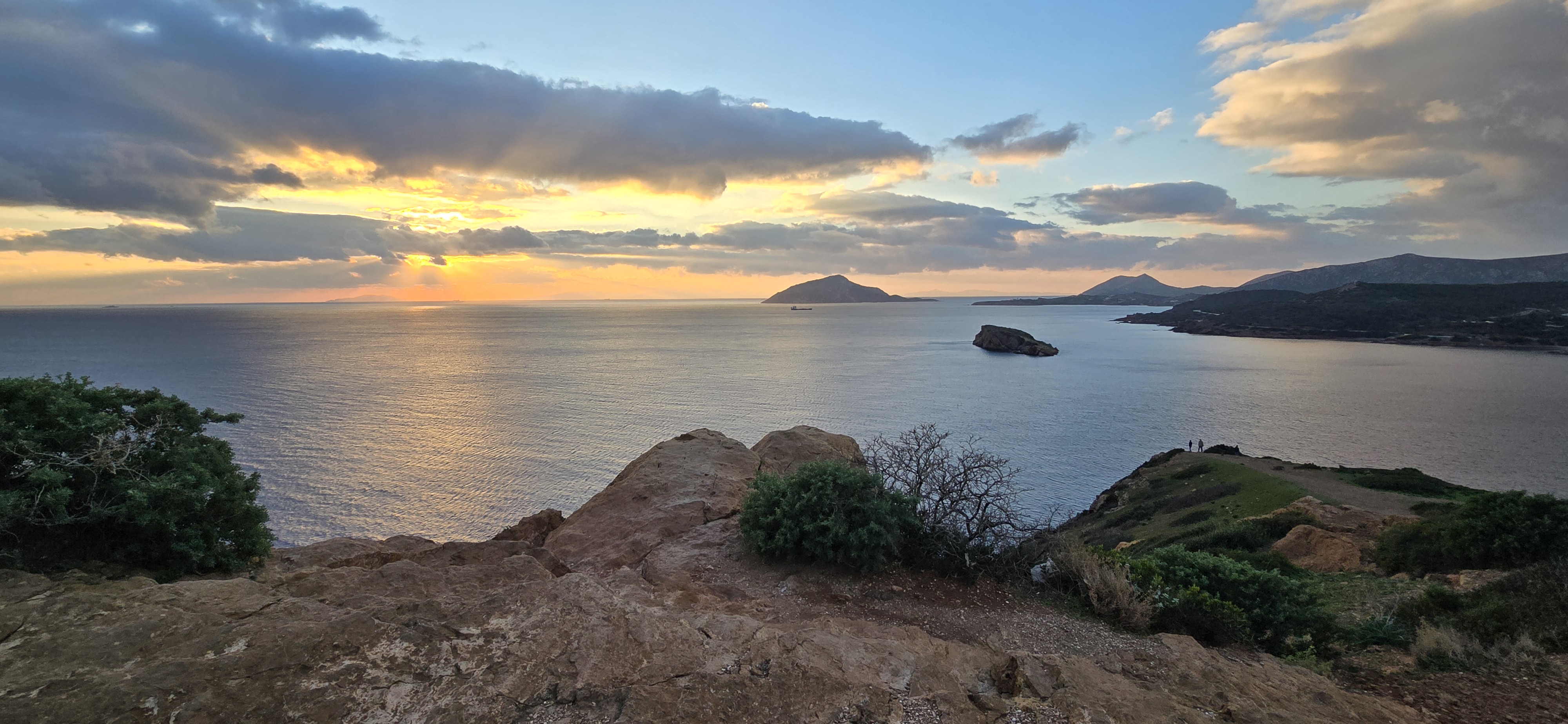
The cliffs fall sharply into endless blue. The temple’s marble columns rise — weathered, fractured, but steady. The wind moves differently there — steady and insistent, though not nearly as fierce as Scotland’s. It feels less wild, more watchful.
Cape Sounion has always been a threshold. A lookout. A place of departure and return. Standing there, I understood why.
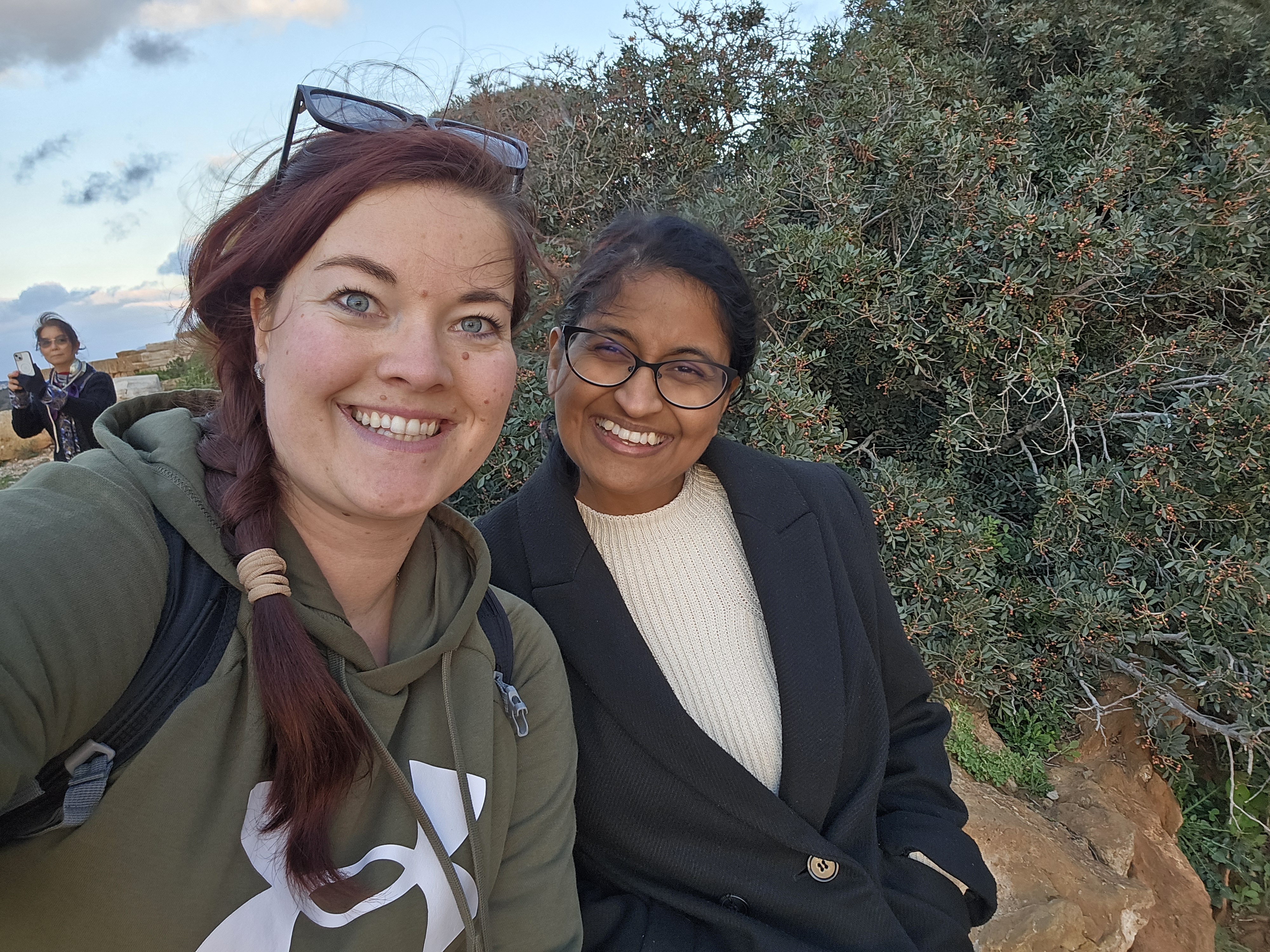
I walked the perimeter slowly, golden light catching in the stone, shadows stretching longer across the ground. And just as I reached the main columns, my rooftop dinner friend arrived with her tour group.
We had both booked tickets for the same sunset — different companies, same destination.
🌇 Claiming a Rock
As sunset approached, we picked a rock and sat down — claiming our spot like it was front-row seating to something holy.
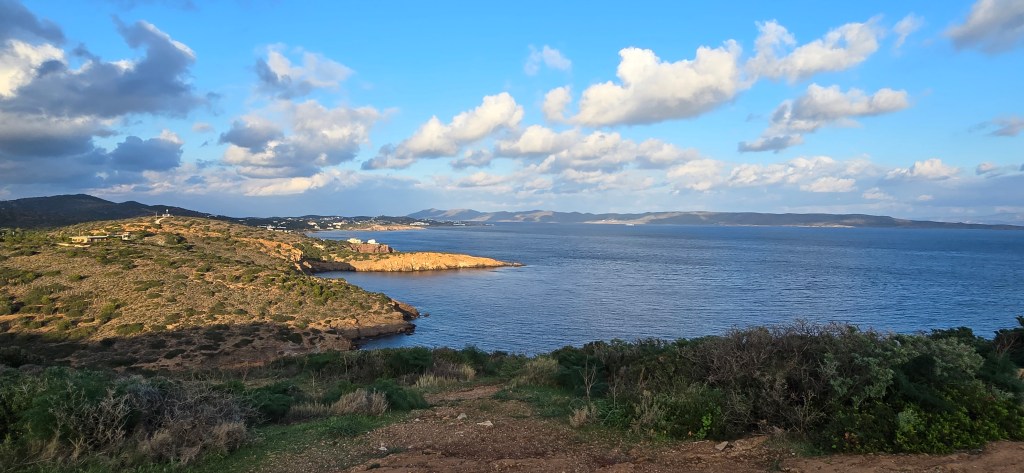
The cliffs below us were brushed in warm yellows and honeyed stone, their edges softened by the light. Sparse green vegetation clung stubbornly to the rock — resilient little bursts of life against the rugged earth. Beyond that, the sea stretched wide in a deep, inky blue — darker and steadier than the sky above it.
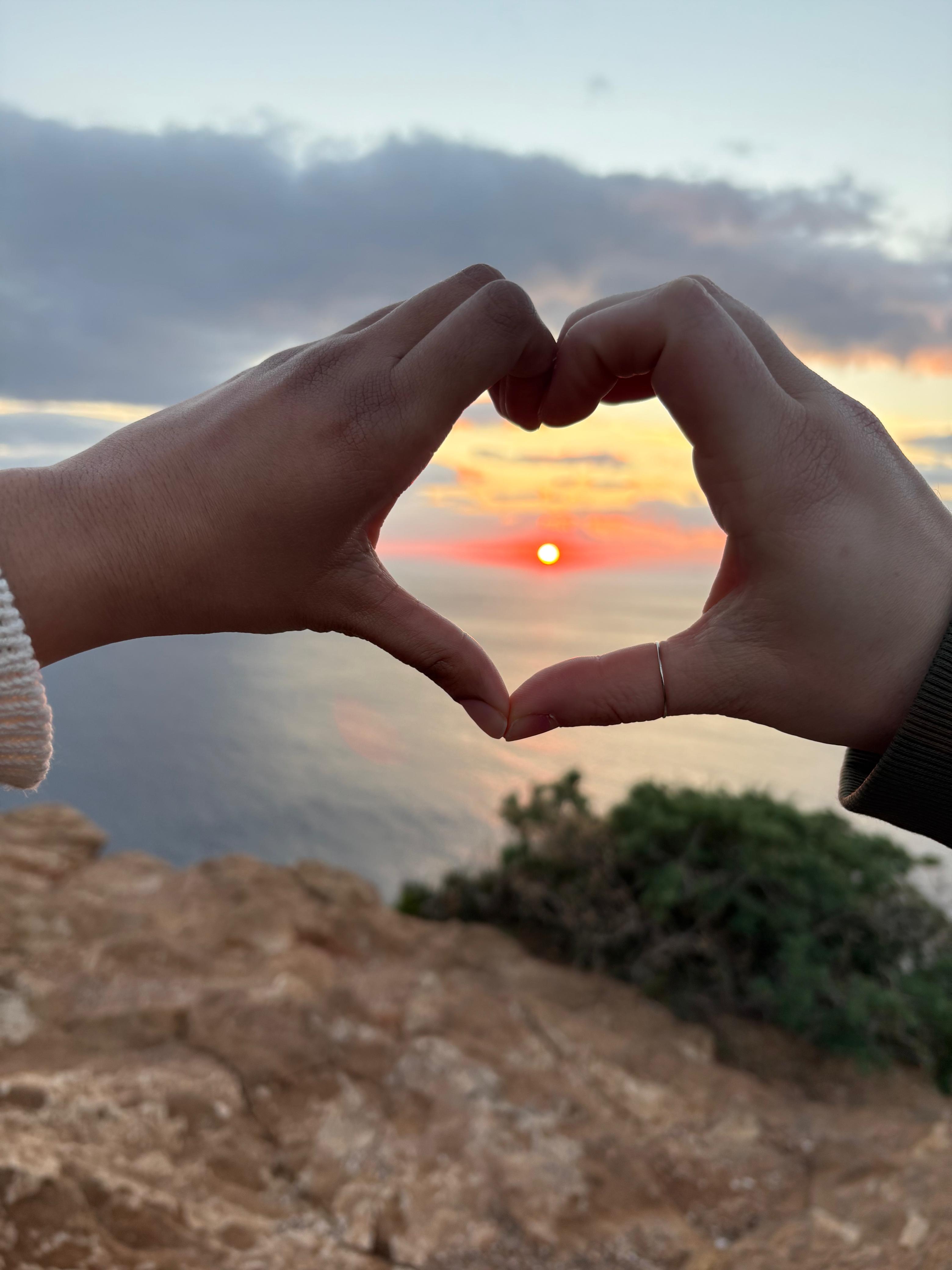
The sky itself held a softer blue at first, almost powdery near the horizon. Then the sun began its descent.
Yellow melted into gold.
Gold deepened into orange.
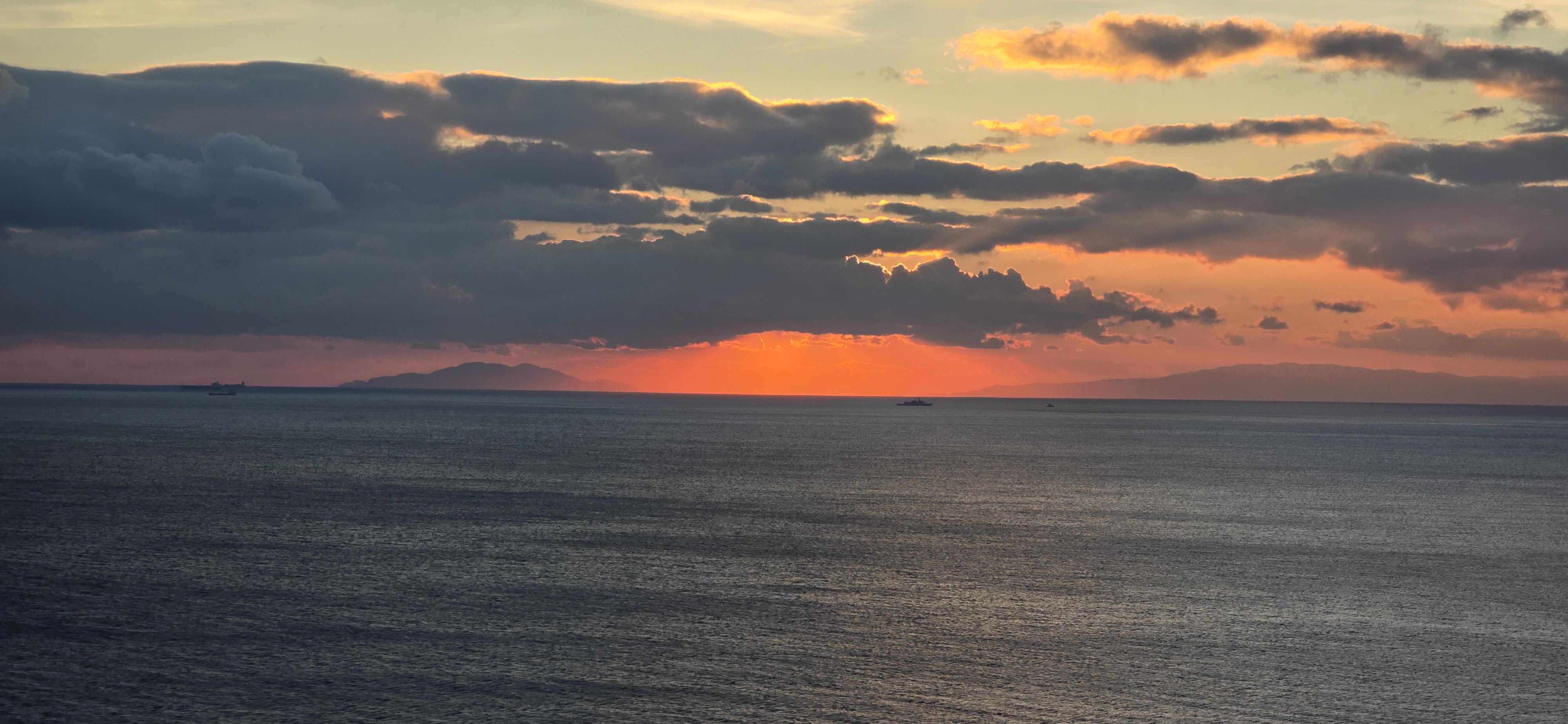
Orange bled into a glowing, almost molten red.
The yellow-orange light cast a warm halo against the cooler blues of the sky, while the Aegean below remained a heavier, richer shade — as if the water refused to surrender to the fire above it. It felt like watching two elements meet without ever touching.
For a moment, the sun slipped behind a cloud — and I thought that might be it. But then it emerged again, brighter, more intense, almost defiant, turning a fiery red before finally sinking beneath the line of the sea.
I couldn’t help but think of the legends that hover over this coastline — of sailors watching the horizon for safe return, of Odysseus passing these waters longing for home, of King Aegeus misreading the sails against a sky that may have looked just like this.
The colors felt ancient.
Like they had held witness to every myth told about them.
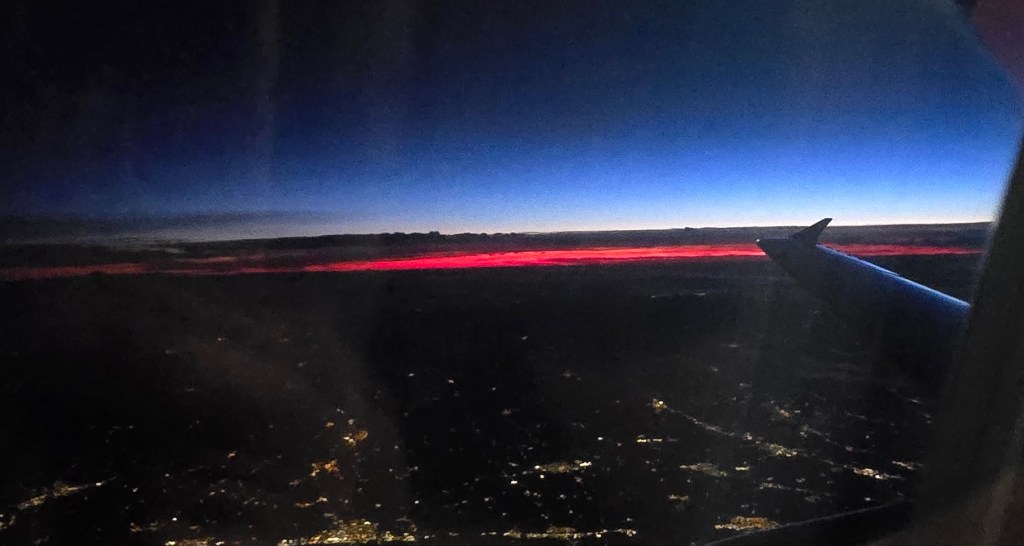
And even after the sun disappeared, the sky refused to go dark.
It glowed.
Soft coral. Lavender-gray. A fading wash of gold that lingered against the blues.
We walked carefully back toward the bus in that lingering light, surprised at how bright everything still felt — as if the day wasn’t quite ready to let go.
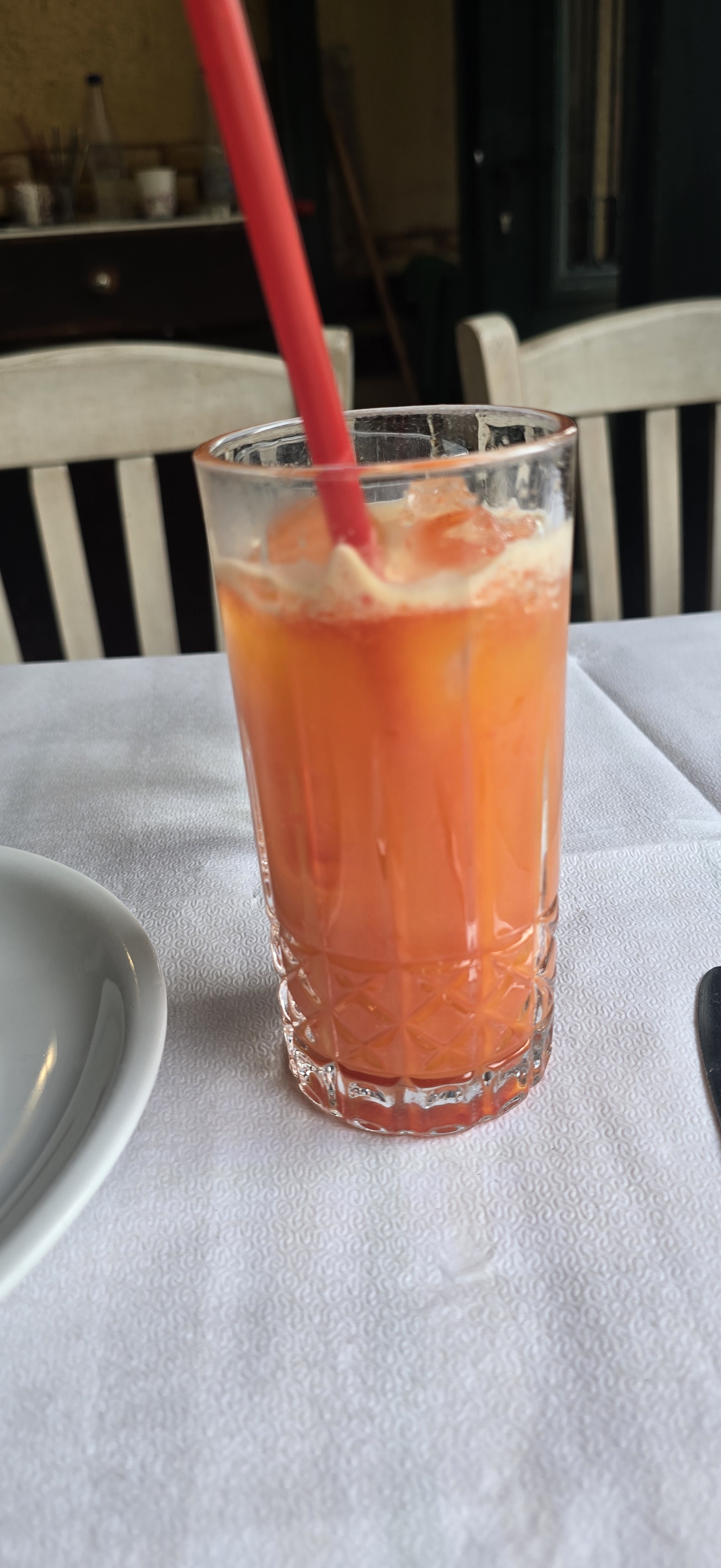
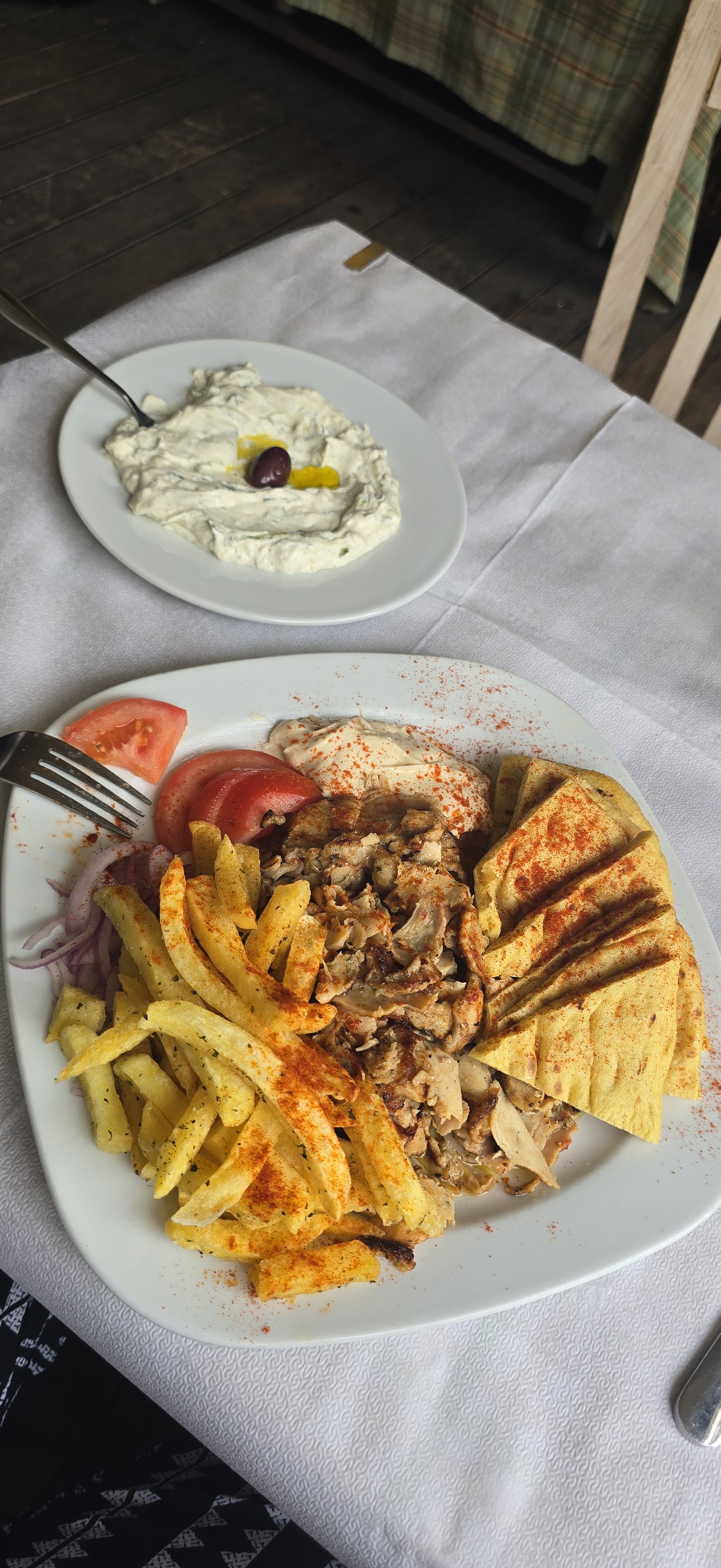
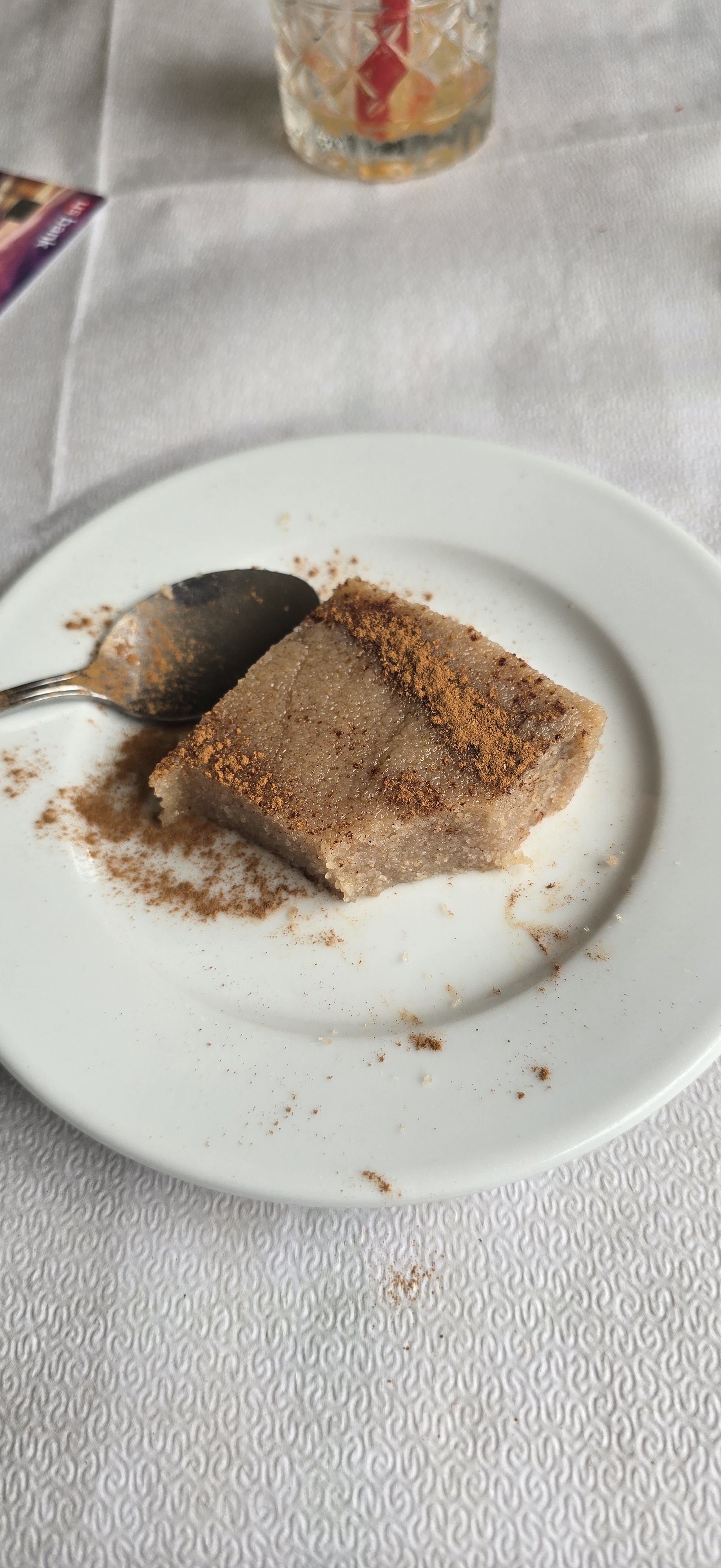
🍽 Full Circle
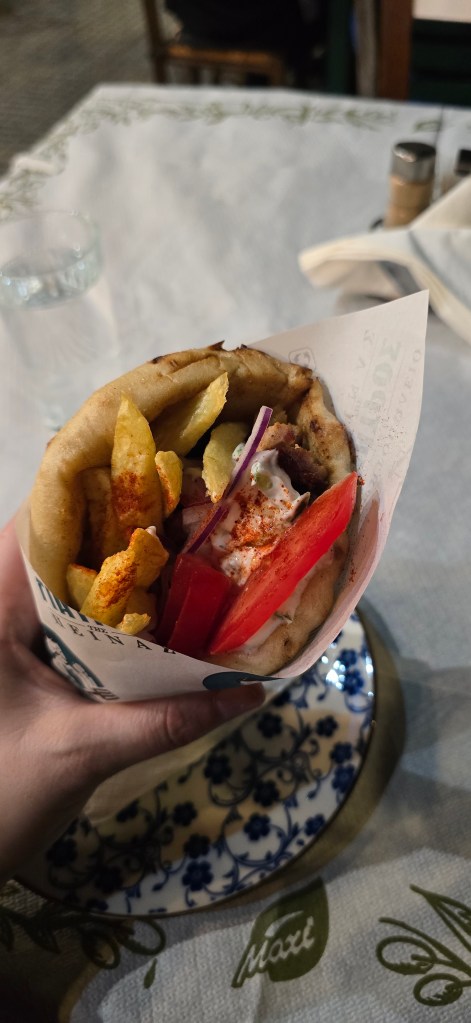
We decided to get dinner together — and where did we go?
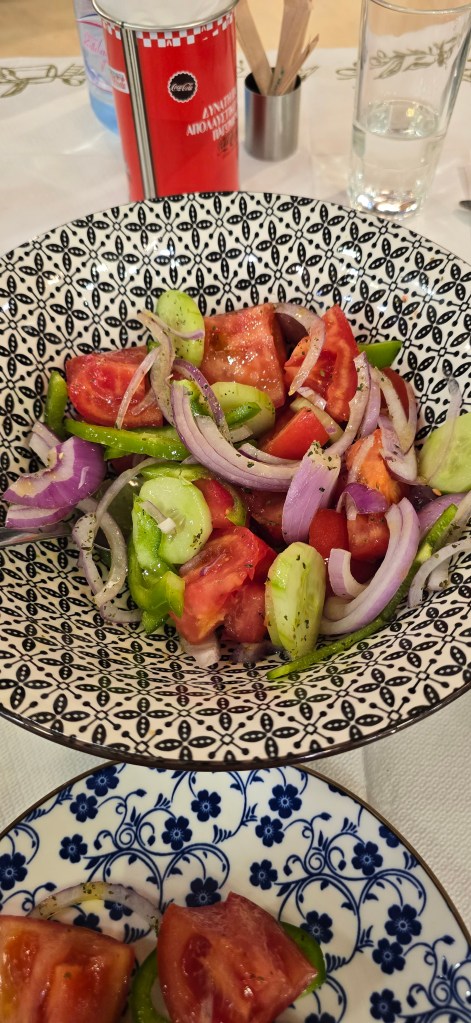
Back to the souvlaki spot from my first night.
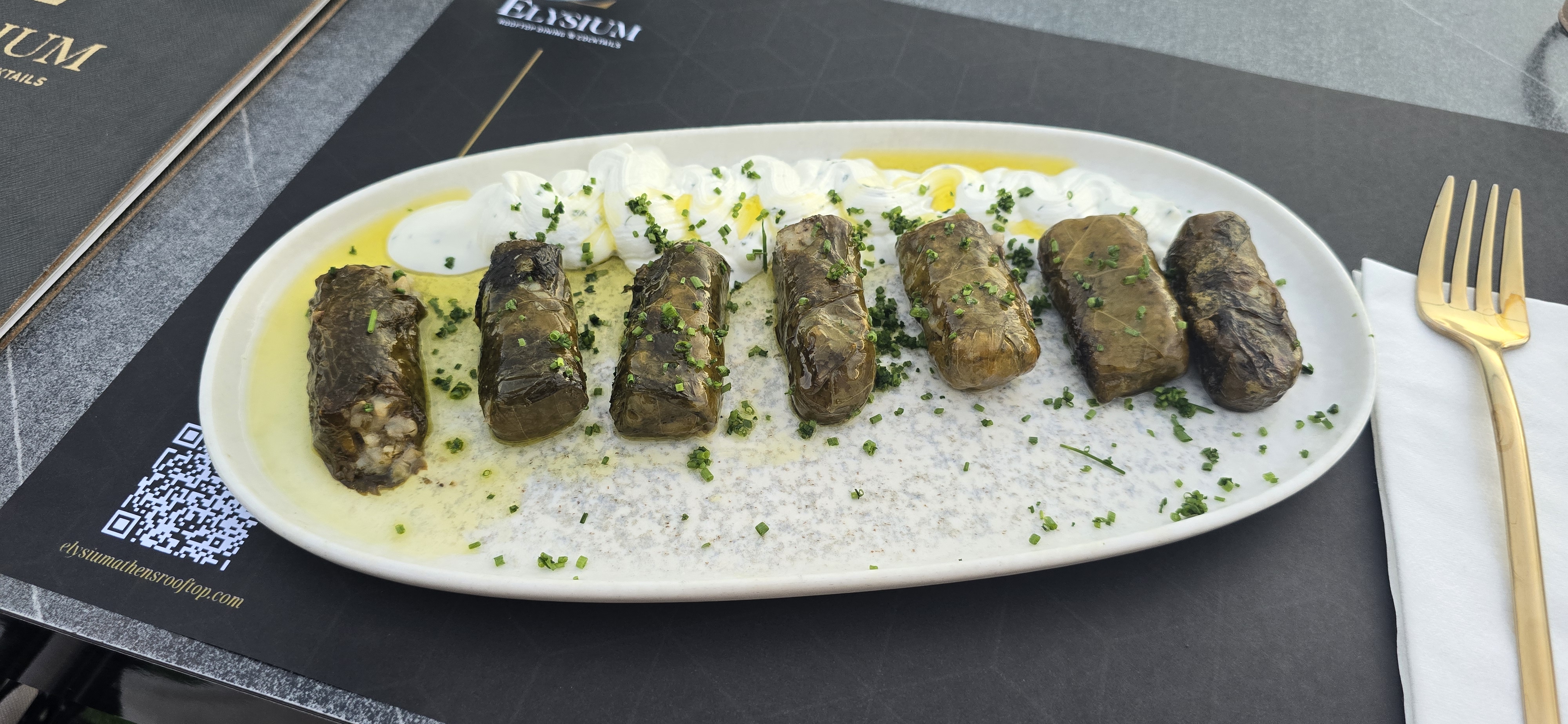
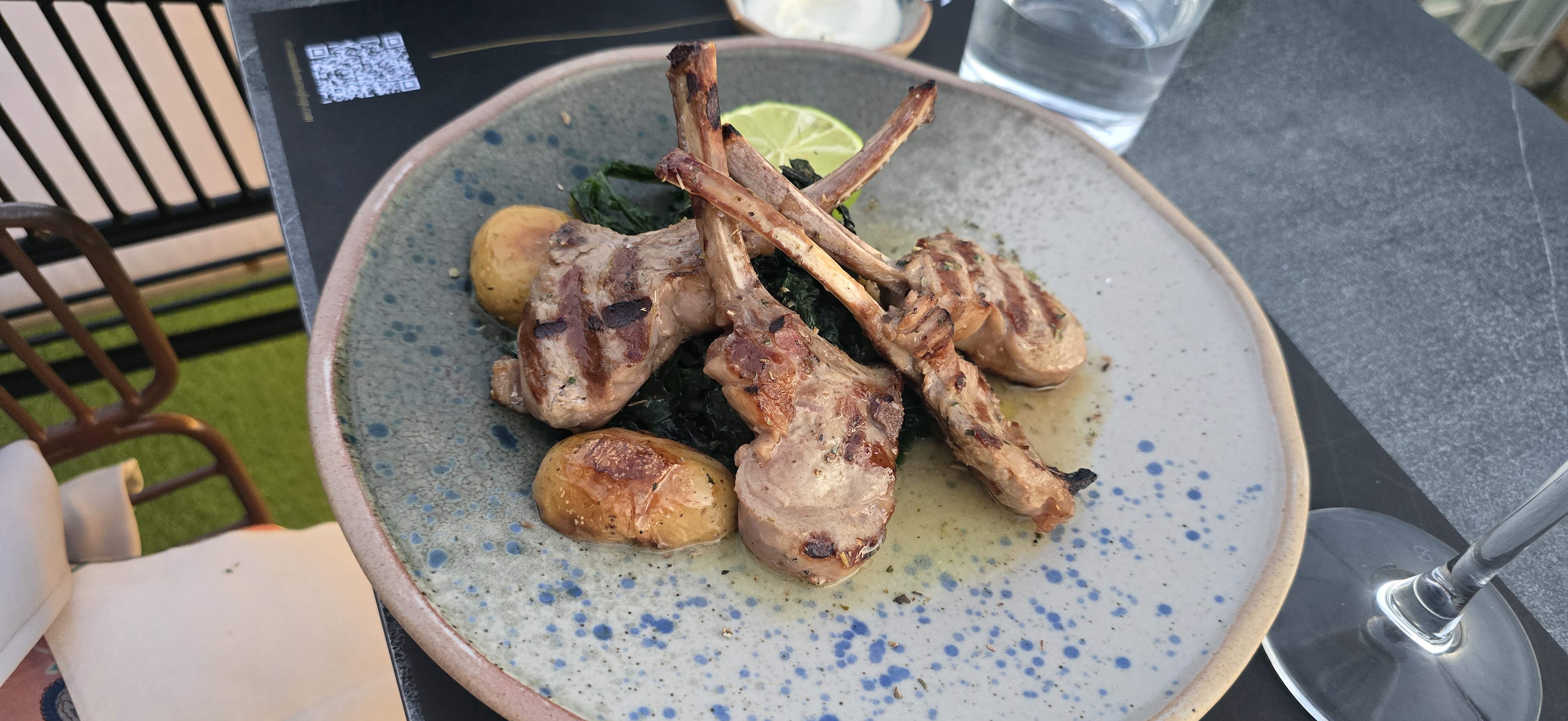
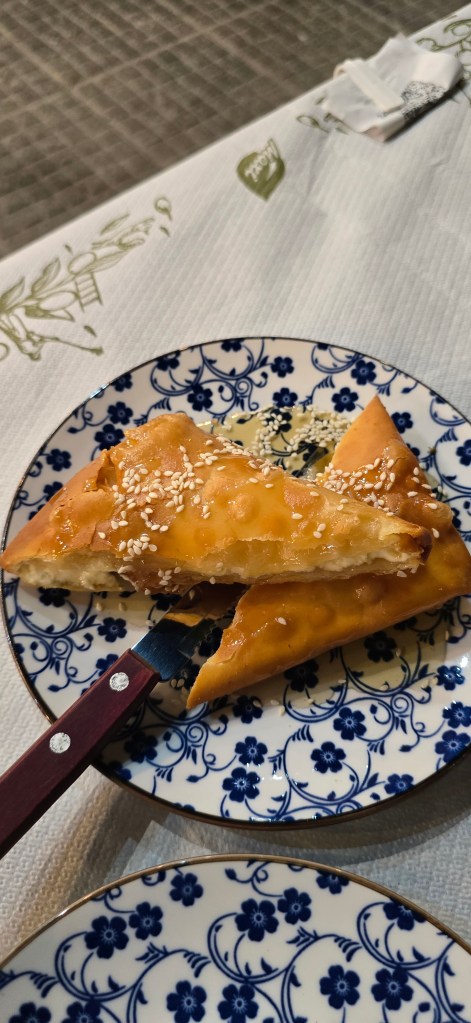
Because when something is that good, you return. And add a new appetizer to try.
And somehow, that felt fitting.





































































 Where in the World is Dakota?