• ☕ One Last Morning in Berlin

    After checking out of my hostel, I met back up with my new friend for breakfast and one final walk through the city.

    There is something especially nice about exploring a city with someone who actually lives there. The landmarks become less important. The hidden courtyards, favorite cafés, and streets you would have otherwise walked right past begin to matter more.

    🏙️ Beauty After Brokenness

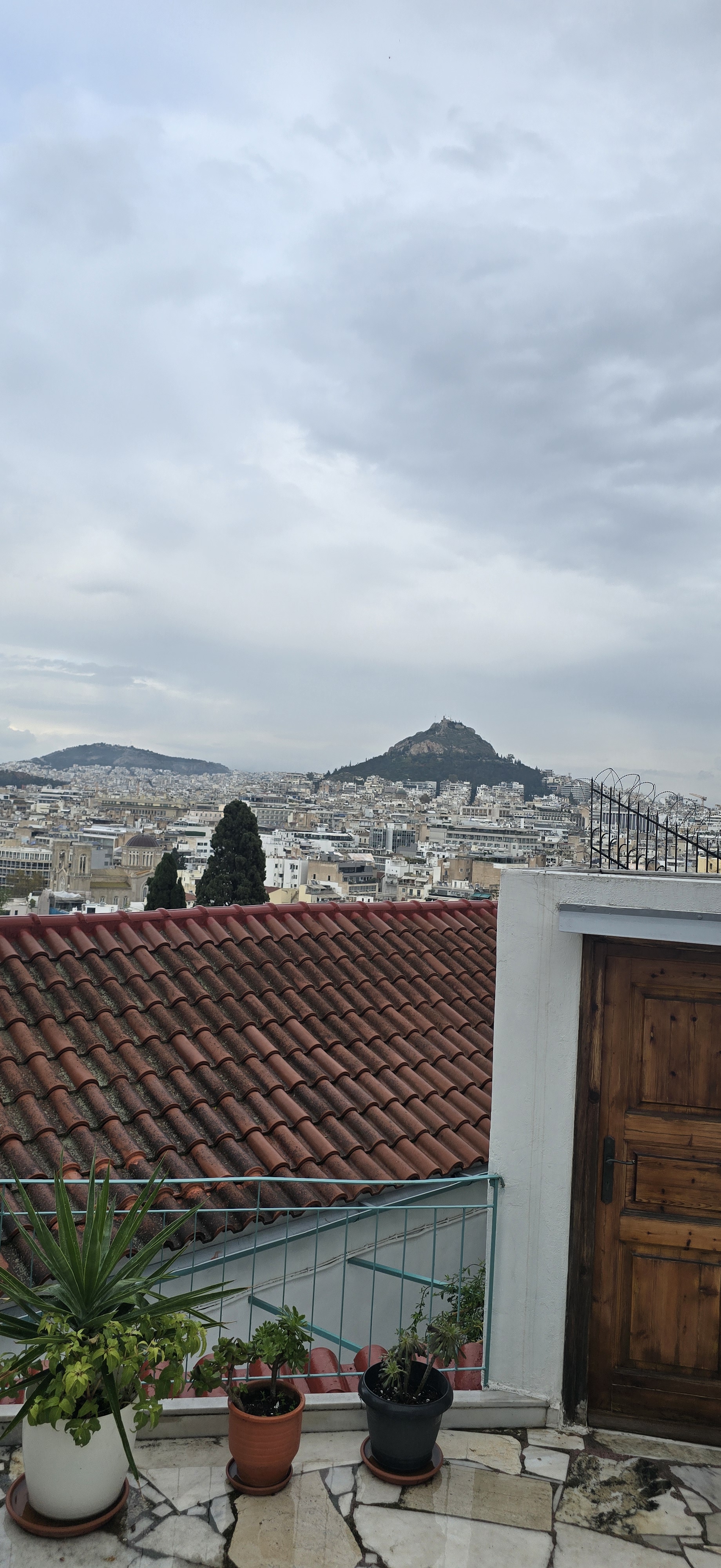
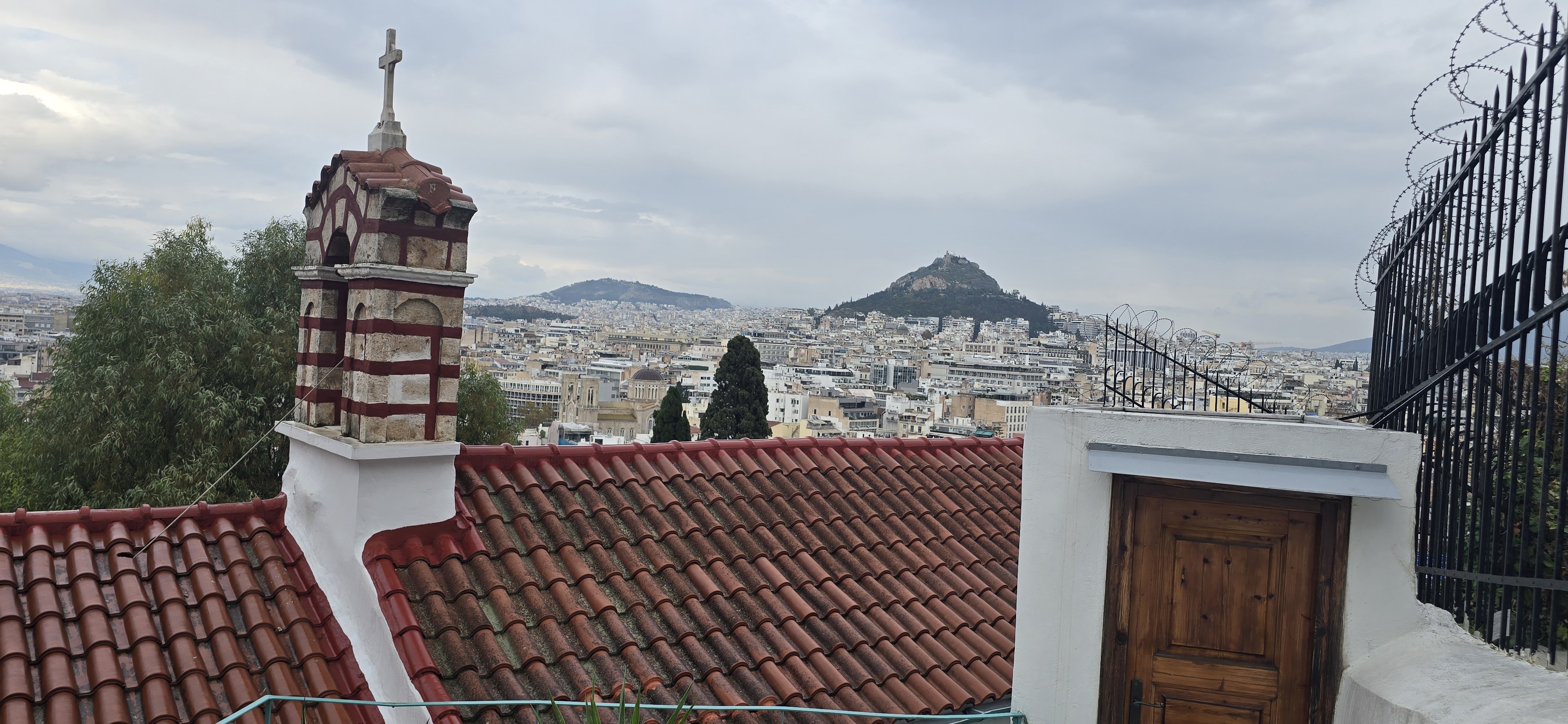
    Berlin felt unlike any other city I had visited on this trip. Ancient architecture stood beside modern glass buildings.Historic facades shared entire blocks with glass, steel, and modern construction. At first the contrast felt almost strange.

    But Berlin earned that contrast.

    Much of the city was heavily damaged during the war, and rebuilding became part of its identity. Walking through downtown felt like seeing multiple eras existing side by side — pieces that survived, pieces that were lost, and pieces that had been rebuilt.

    It became a quiet reminder that time changes things. Sometimes it leaves scars. Sometimes it breaks things in ways that never fully disappear.

    And yet beauty remains.

    Sometimes it even returns stronger than before.

    🚆 German Efficiency (Allegedly)

    Eventually, it was time to head toward the airport and continue on to Italy.

    The train, however, had other ideas.

    When the first train failed to arrive, I wasn’t especially concerned. Delayed trains feel almost expected in Italy.

    Germany, however, had developed a reputation in my mind for precision.

    The second train also failed to appear.

    This time, a message-in German- announced delays. Thank goodness someone there could translate!

    Okay. No problem.

    The third train never came either.

    At this point, the situation had moved beyond “slightly inconvenient” and entered the territory of “I may actually be stranded in Germany.”

    There was perhaps enough time to run back to their apartment, grab a car, and attempt a desperate drive to the airport, but probably not enough time to do any of those things successfully.

    🍝 An Italian Dinner in Germany

    The flight was gone.

    I was officially staying in Germany longer than originally planned.

    Oddly enough, this turned out to be far less dramatic than it sounds.

    While we searched for ways to get me back to Italy, dinner appeared.

    Not just dinner, either, but a home-cooked Italian meal in a German apartment while I sat stranded between countries trying to get back to Italy.

    Travel has a strange sense of humor sometimes.

    🇨🇭 Switzerland Was Not on the Itinerary

    One moment you’re carefully following train schedules and calculating airport arrival times. The next, you’re sitting in a German apartment eating Italian food, drinking wine, and discussing overnight bus routes south.

    Eventually, a solution emerged.

    The flight was gone, but the trip wasn’t.

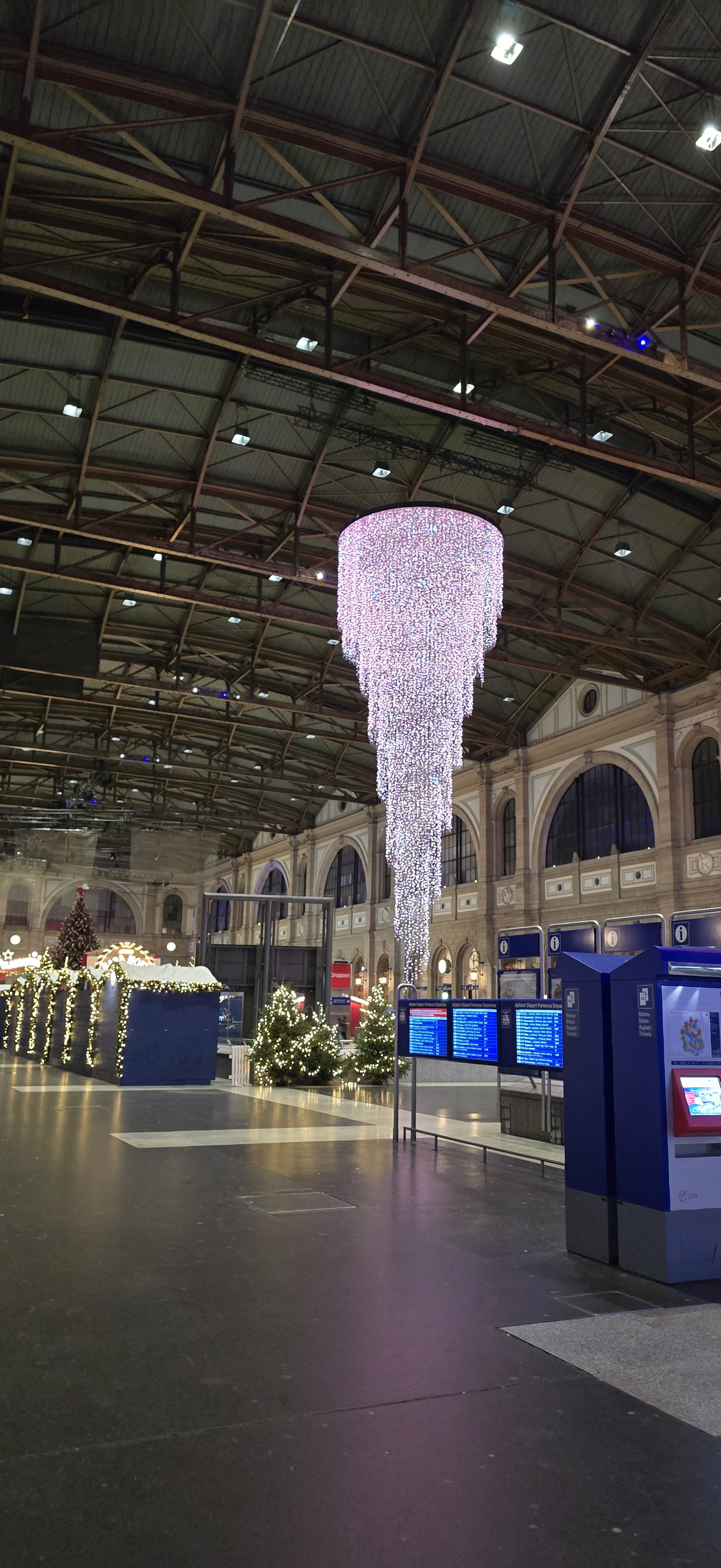
    The new plan involved buses and an unexpected stop in Switzerland. Somewhere along the way, I found myself wandering a Swiss train station, sitting in the cold a little longer than I probably should have, waiting for my connecting bus to arrive.

    ✈️ The Best Detours Never Are

    Travel has a way of dismantling your carefully made plans.

    But sometimes, in the middle of the inconvenience, it gives you something else entirely: kindness, hospitality, and stories you never would have found if everything had gone according to schedule.

  • ☕ Coffee, Confidence, and Mild Panic

    The day started off promising.

    I had my layers on, coffee in hand, boarded the train and Bavarian Castle tour energy activated.

    I made my way to the meet-up point for my booked tour feeling efficient and prepared — which, in hindsight, should have been my first clue that something mildly chaotic was coming.

    I left early, feeling prepared and slightly proud of myself for navigating public transportation in a language that I don’t know at all. The train, however, decided to linger at one stop for reasons known only to German rail logic. Not long enough to panic, juuuuust long enough to calculate how fast I could reasonably walk without looking like I was fleeing something.

    When I finally hopped off, I followed the signs — all in German, of course — up a set of stairs and toward what I confidently believed was the correct exit.

    And there it was-my bus.

    Across the street.

    Mocking me.

    Between me and the bus stood a rib-high metal barrier running along the entire sidewalk. No opening. No crosswalk. No obvious solution. I scanned left. Right. Nothing.

    How, exactly, was I supposed to reach the bus I could literally see sitting twenty feet away?

    For a brief and deeply irrational moment, I considered just swinging a leg over the barrier and sprinting across traffic like some sleep-deprived action heroine. Castle tour: cancelled. Bavarian headlines: dramatic.

    Thankfully, one of the drivers spotted me mid-crisis. I gestured helplessly toward the bus. He yelled across the traffic that I needed to go back down a different set of steps, cross underneath the road, and come up on the other side.

    Of course.

    Phew.

    I ran — because at this point, time had officially moved from “comfortable” to “we’re doing cardio now.” I emerged on the other side to find four men standing together: two tour guides and two drivers.

    Apparently, both tours were each missing exactly one person.

    Me.

    One of the guides said something in Italian — casual, amused, confident.

    “Lei è bellissima, è sul mio autobus.”

    Little did he know… I understood.

    (She’s beautiful. She’s on my bus.)

    So I stepped forward, met his eyes, and replied just as lightly:

    Sono Dakota, per il tour.

    (I’m Dakota, for the tour).

    There was a pause, a blink, a recalibration, a chuckle. In English: “So, she understands”. 

    I boarded and found the last empty seat-just for me-near the front of the bus. I took my seat, mildly victorious. It’s not every morning you’re called beautiful before breakfast — in Italian, no less…. especially in German.

    Within minutes, we were pulling out of Munich.

    And just like that, the day had acquired a little enchantment — long before the towers appeared.

    🚌 Into the Bavarian Storybook

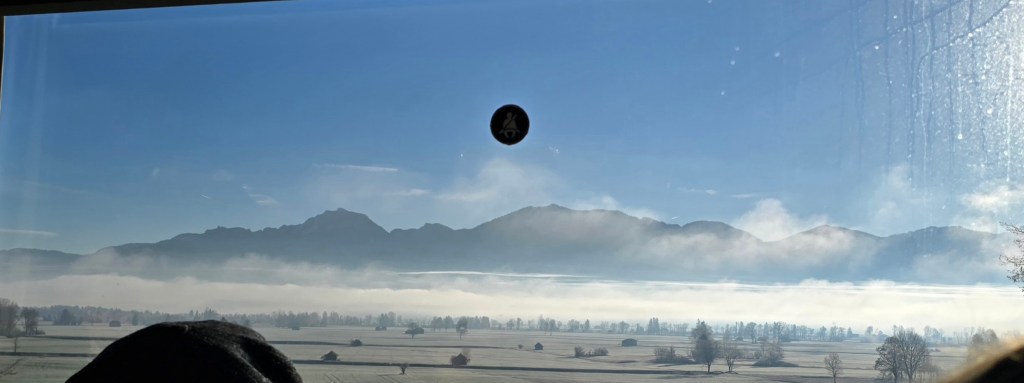
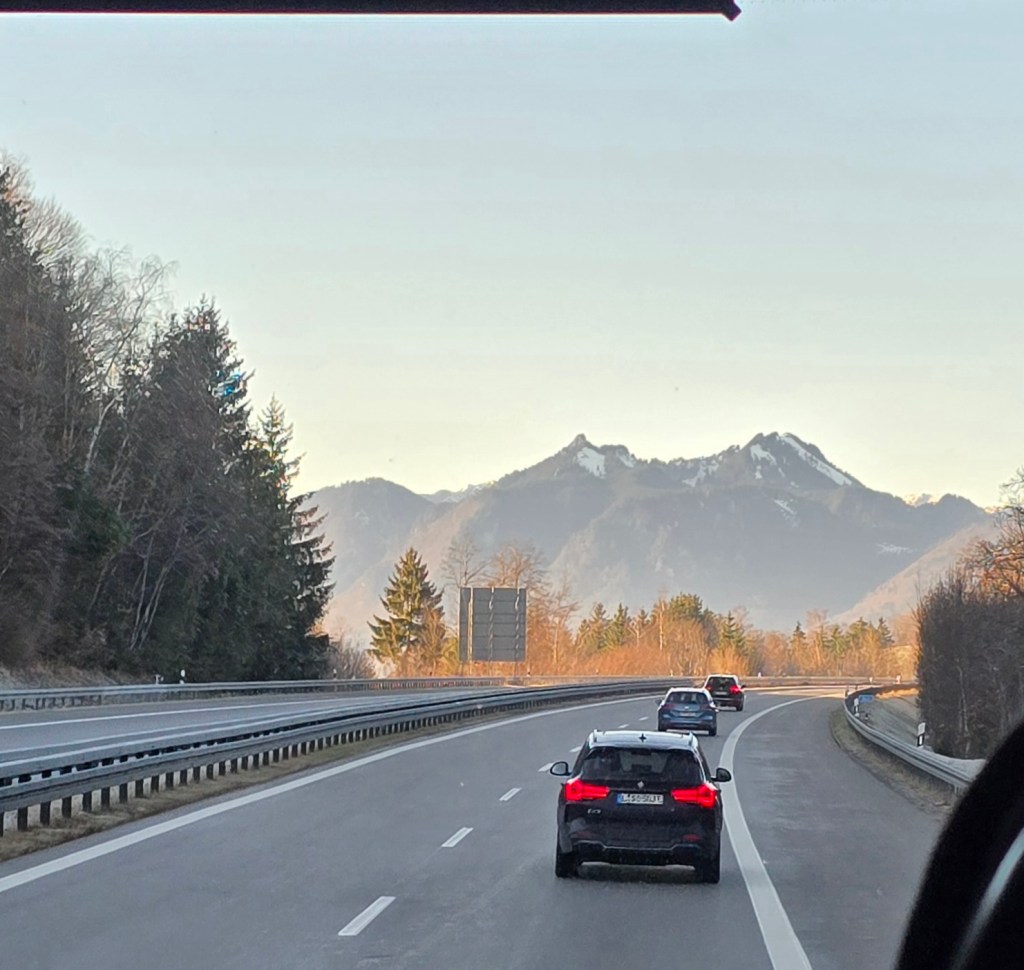
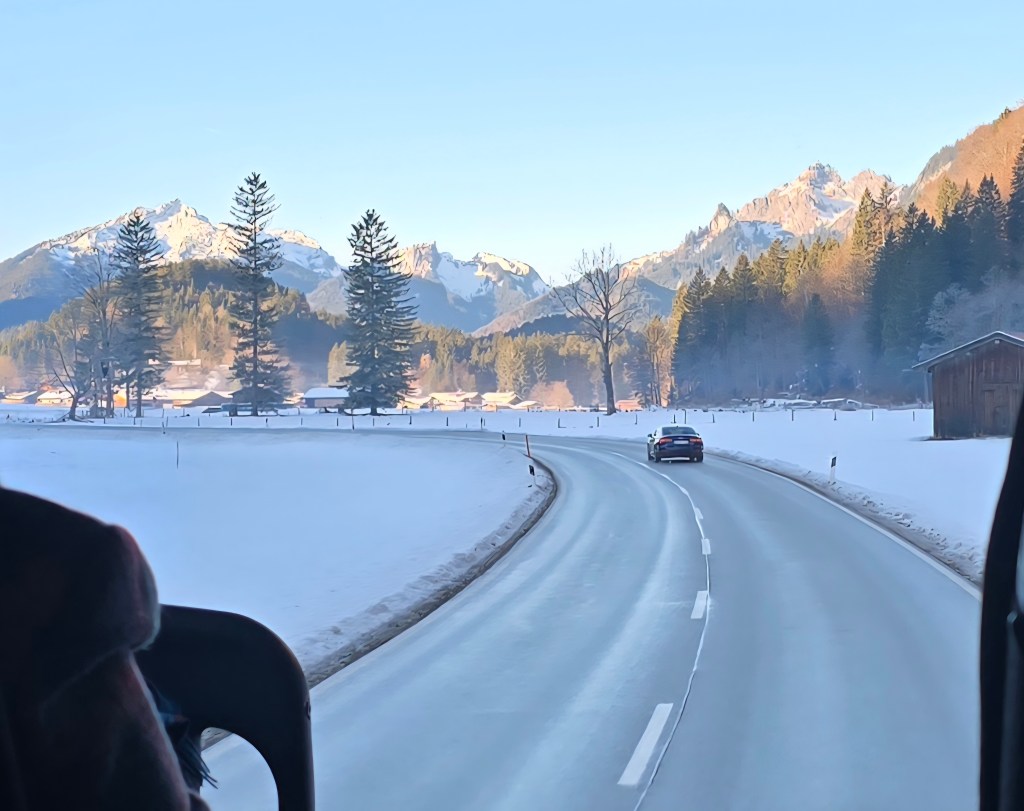
    Munich gave way gradually. The city thinned into suburbs. The suburbs thinned into open fields. And then, almost without announcement, the horizon began to lift.

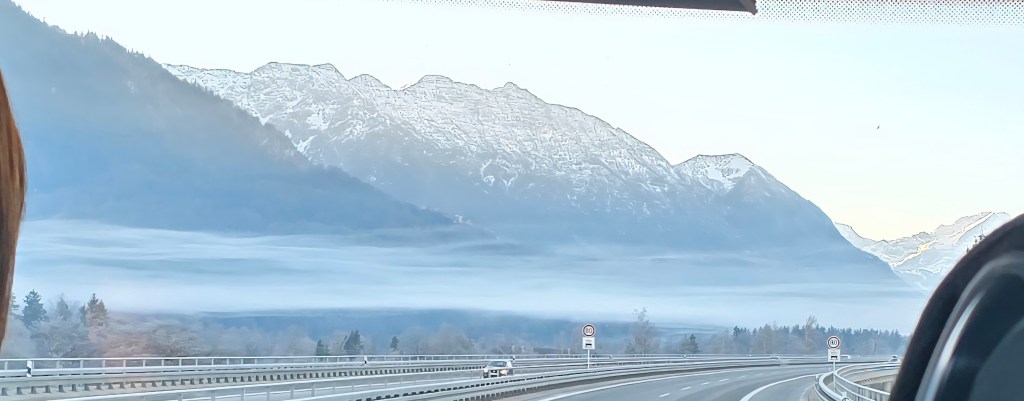
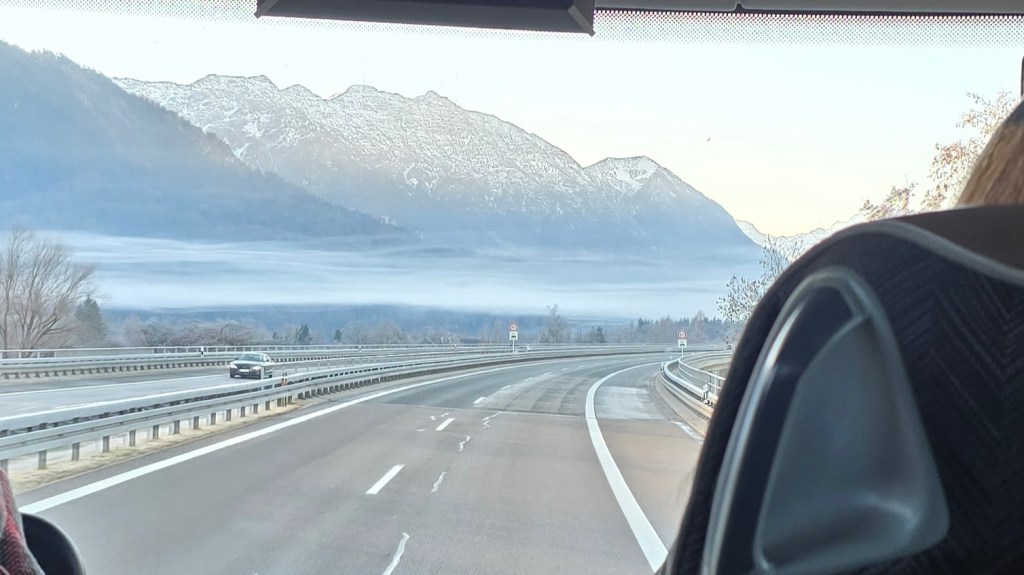
    At first it was just a darker line against the sky. Then the shapes sharpened. Peaks layered behind peaks; snow catching light in quiet streaks.

    The mountains didn’t arrive dramatically.

    They assembled.

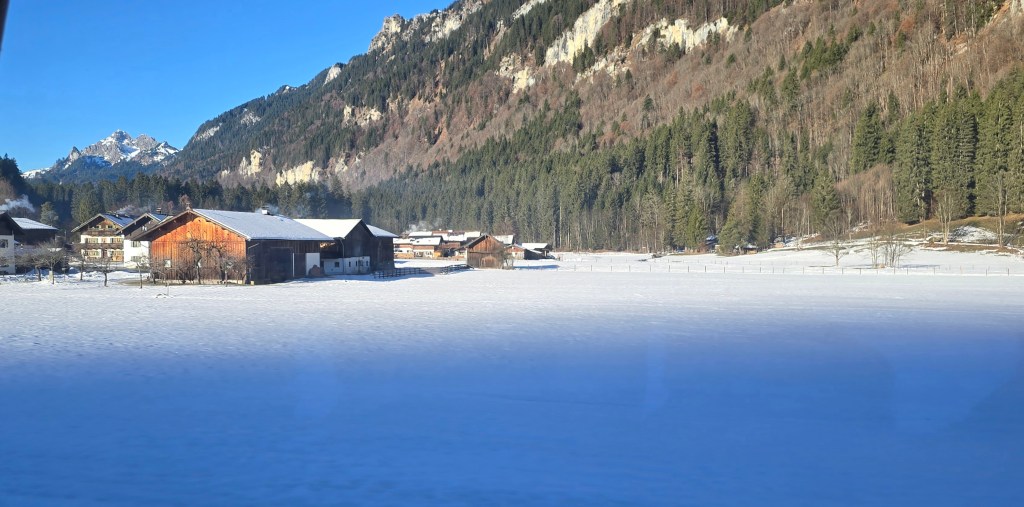
    Frost clung to the fields like powdered sugar. Low mist hovered just above the ground, a soft ribbon of white stretching across farmland. Wooden barns sat scattered in the distance — small and deliberate, like someone had placed them there for scale.

    It looked unreal. Not in a fantasy way. In a storybook illustration way. The kind you turn the page and linger on.

    Our guide narrated as we drove — history, geography, anecdotes layered with humor. He was knowledgeable without being dry, animated without being theatrical. Occasionally pausing to field questions, occasionally pausing to diffuse the energy of a few disgruntled passengers who seemed personally offended by traffic patterns and winter weather.

    He handled it with patience.

    Which, I noted, is a skill far more impressive than speaking multiple languages when traveling.

    As the bus curved deeper into Bavaria, the Alps grew closer. Snow thickened along the shoulders of the road. Sunlight caught on jagged peaks, turning them pale gold against the blue.

    It felt crisp, clean, ordered, and very different from Greece’s wind and cliff edges. This felt like the opening scene of something structured and deliberate — as if the landscape itself believed in symmetry.

    Somewhere between the frost-covered fields and the rising mountains, I stopped thinking about schedules, train delays, and whether I’d make the tour.

    I was simply there. Fully awake and not because of the coffee but because of the view.

    🏰 Linderhof — Intimate Opulence

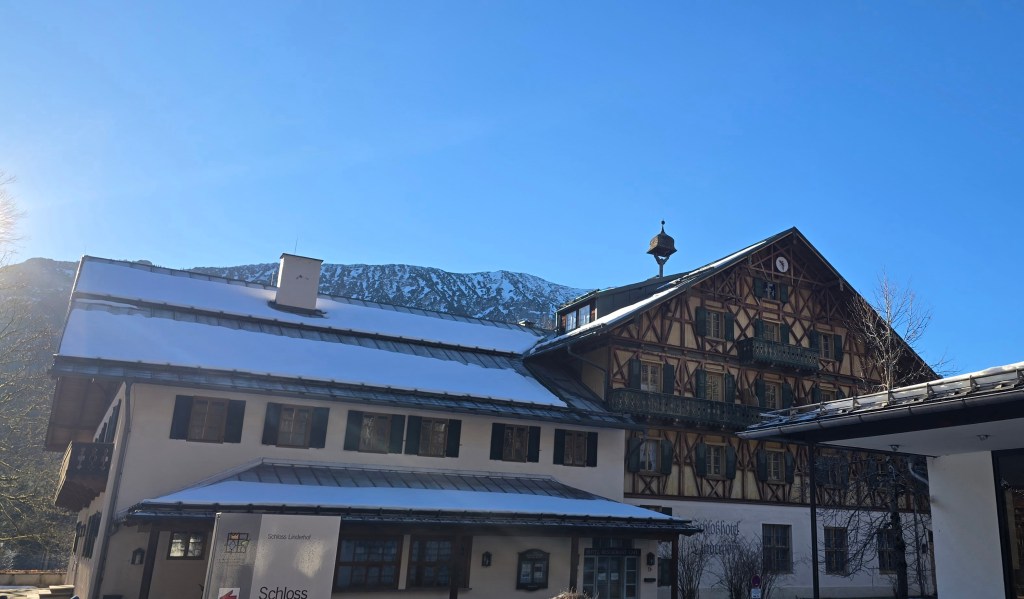
    Our first stop was Linderhof Palace.

    Neuschwanstein is the celebrity of Bavarian castles while Linderhof feels like its quieter, more refined sibling.

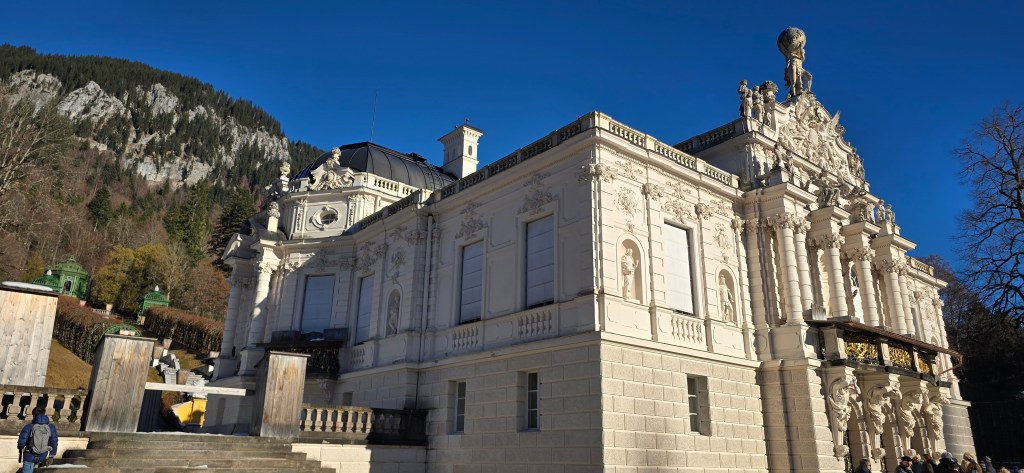
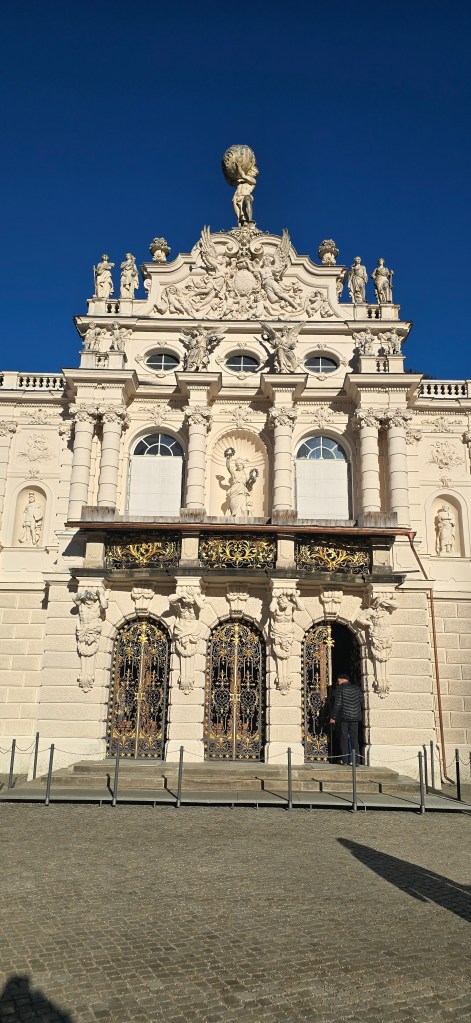
    From the outside, it wasn’t what I expected. When someone says “castle,” I tend to picture towering walls, dramatic silhouettes, and enough stone to withstand a siege. Linderhof felt different- elegant, deliberate, almost delicate.

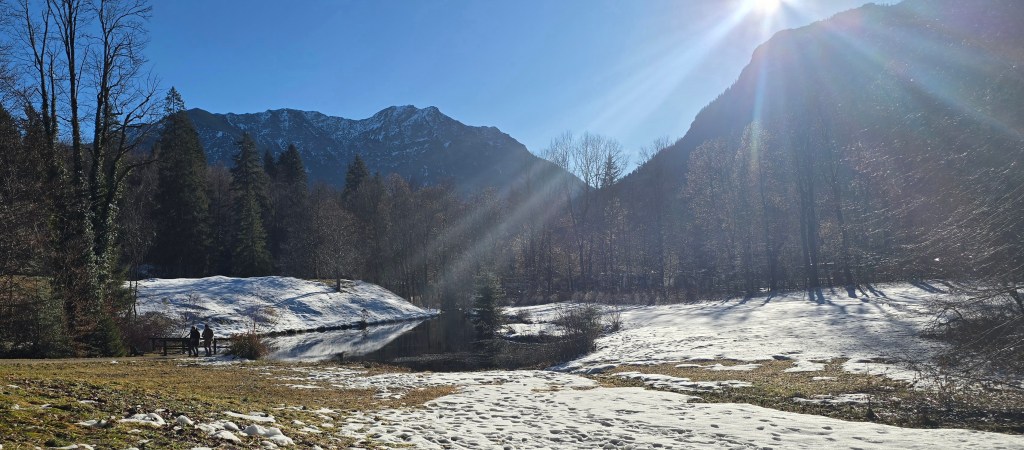
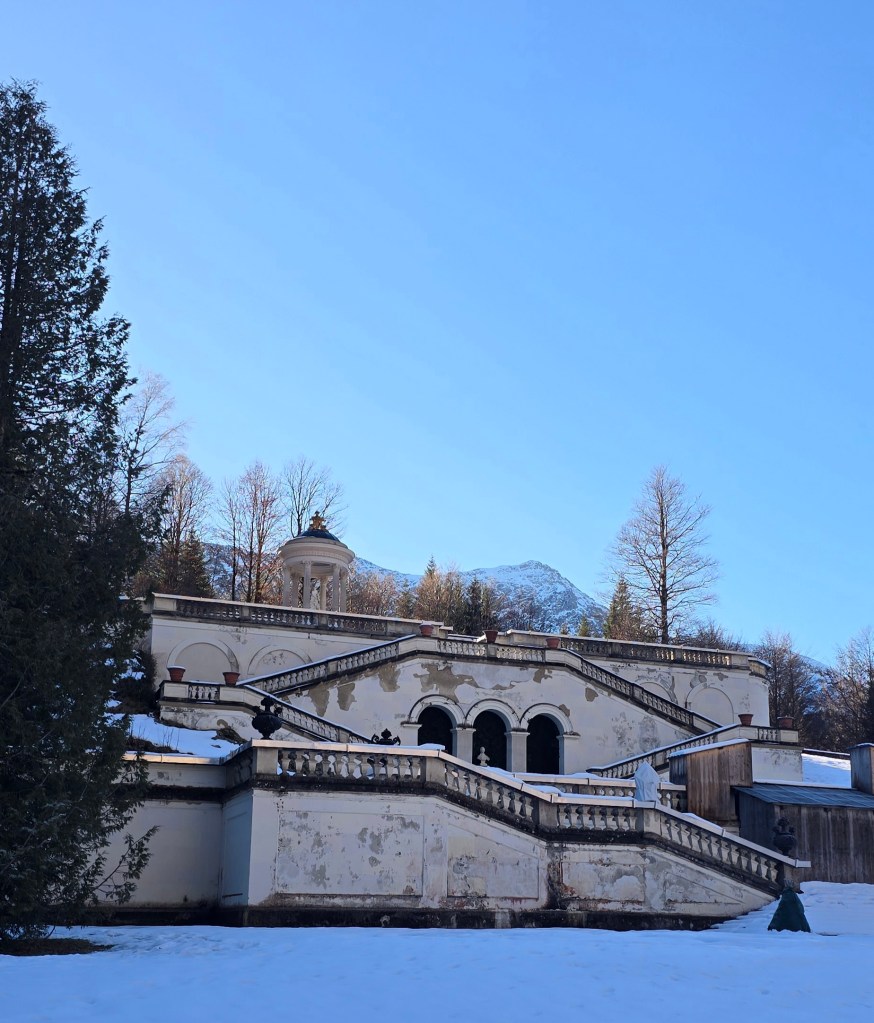
    Snow dusted the gardens. Ornate fountains stood frozen in place. The Alps rose quietly in the background, somehow making the entire scene feel even more composed.

    Inside, photography wasn’t allowed which oddly enough made it feel more special.

    The palace wasn’t large by castle standards. In fact, it was probably the smallest palace I’d ever toured. Yet, every room seemed determined to prove that size was entirely beside the point.

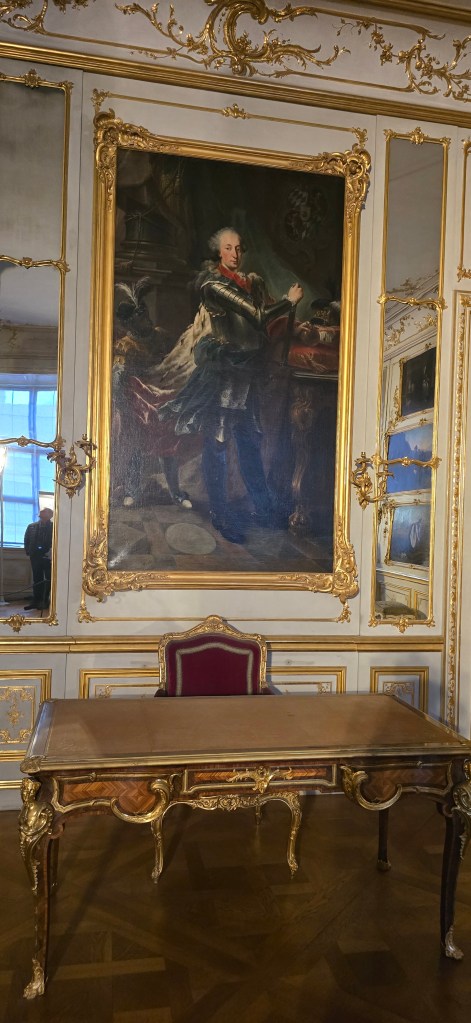
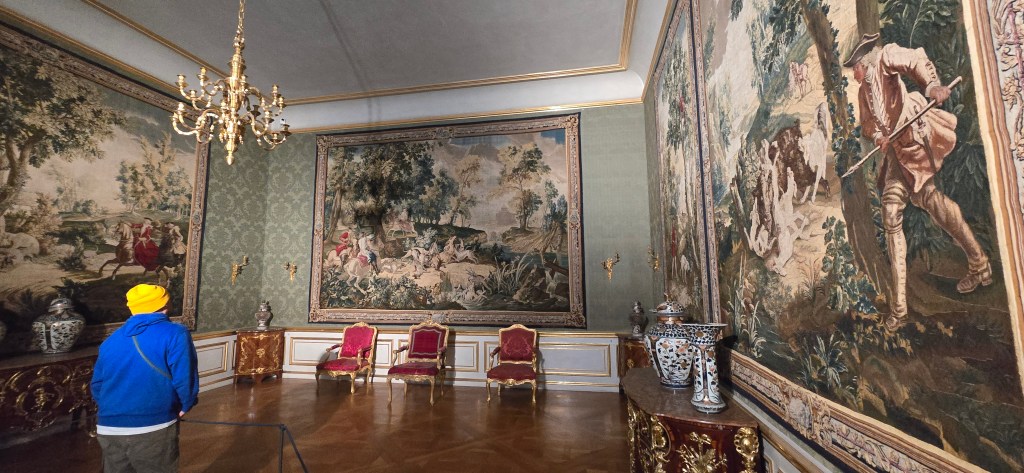
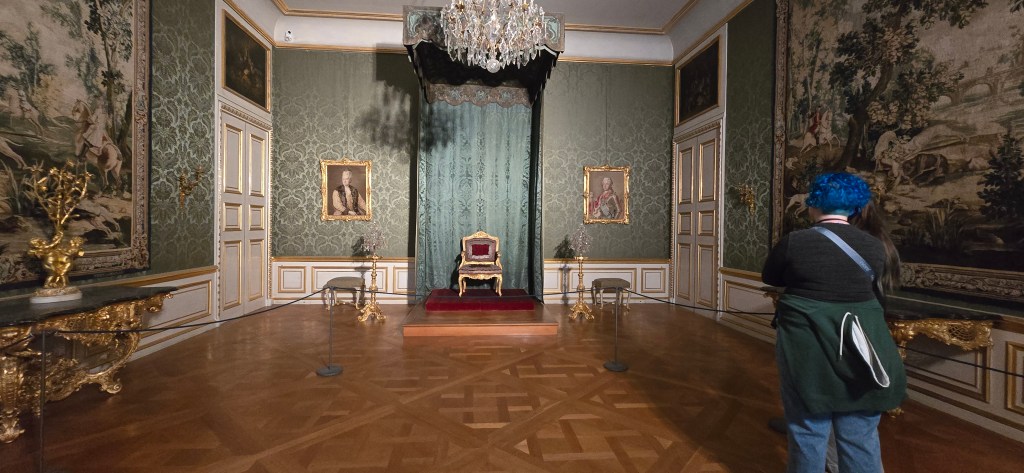
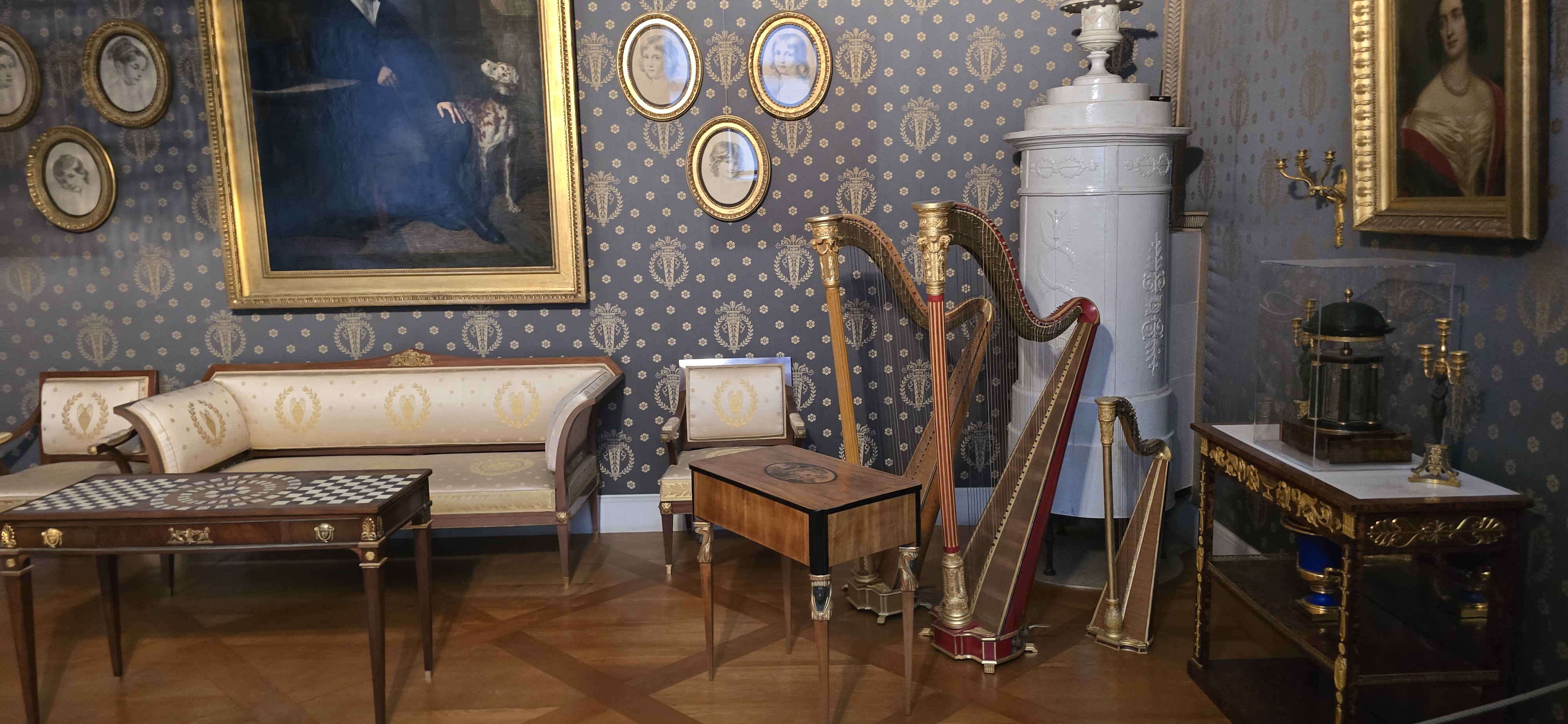
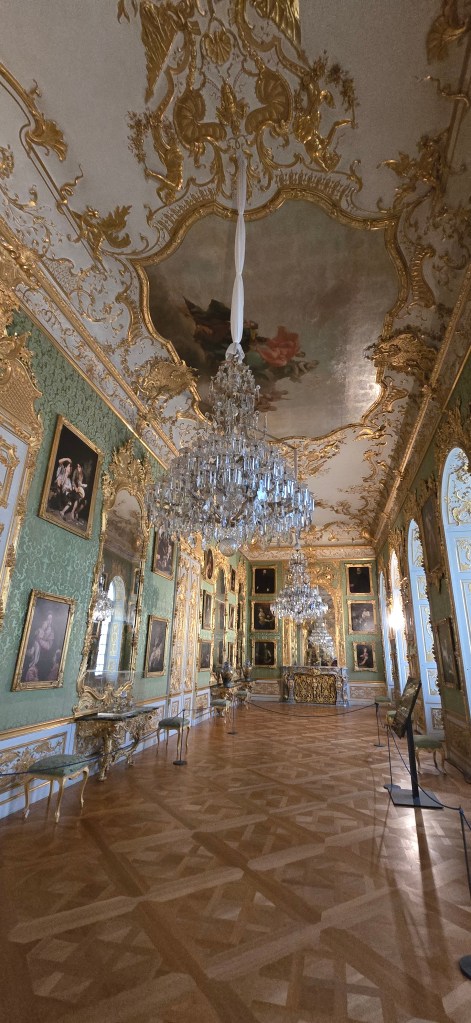
    Gold detailing traced nearly every surface. Mirrors reflected chandeliers which reflected more mirrors- creating the illusion that each room extended far beyond its actual dimensions. Every corner felt intentional. Every decorative choice felt precise.

    Nothing seemed accidental. It wasn’t grand because it was large- it was grand because it was meticulous.

    Walking through Linderhof felt less like visiting a royal residence and more like stepping inside someone’s carefully curated fantasy. A place built not out of necessity, but out of imagination.

    By the time I returned to the bus, I found myself wearing the same expression I often seem to develop in Europe: a mixture of disbelief, admiration, and the growing realization that photos rarely do these places justice.

    🌉 The Climb Toward Fantasy

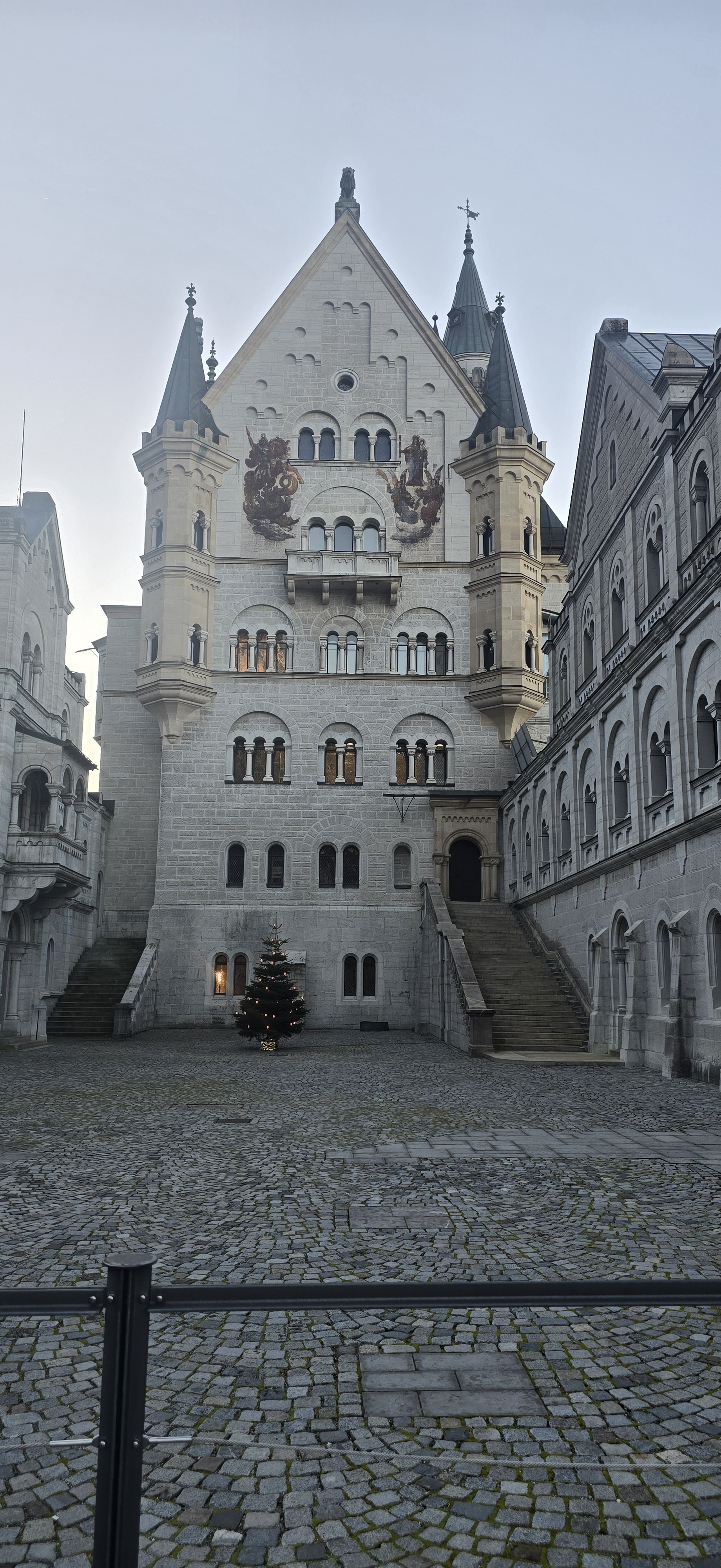
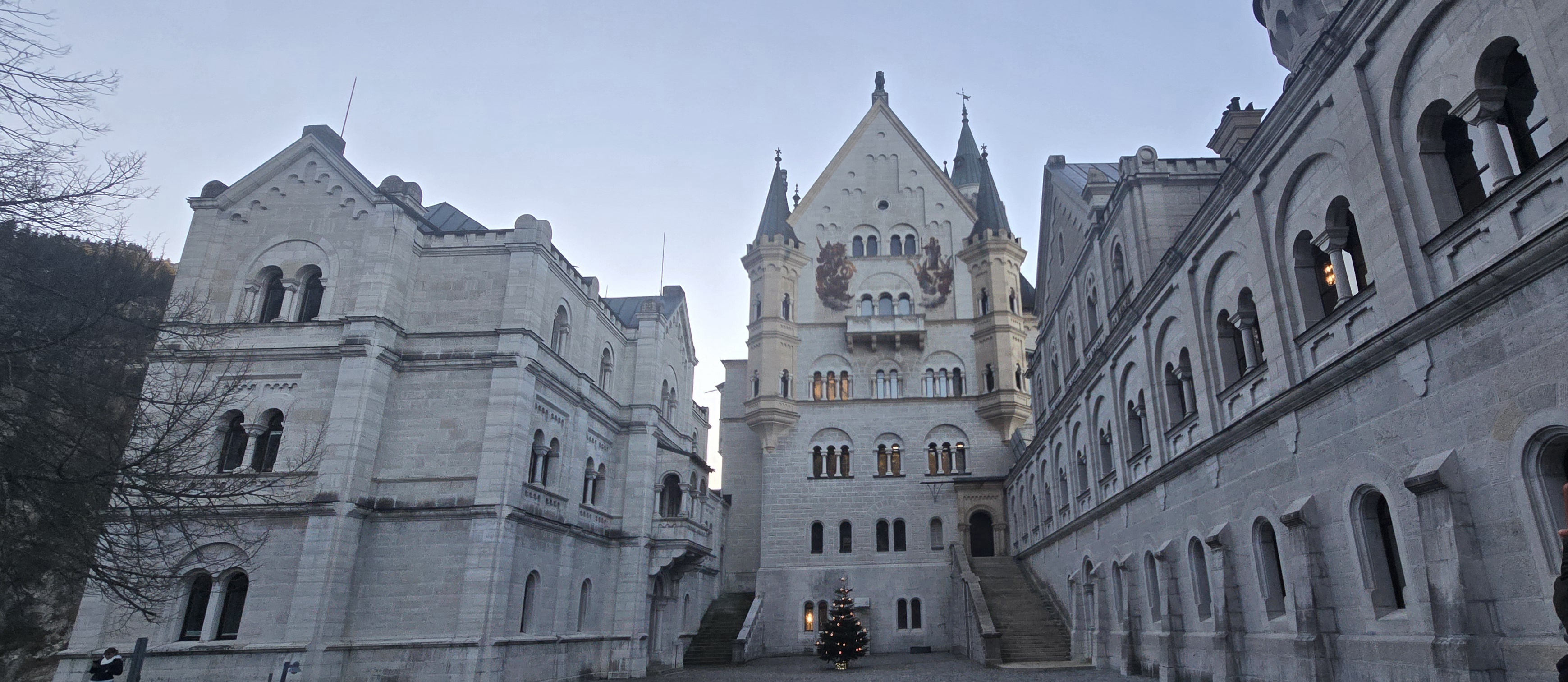
    Then came Neuschwanstein.

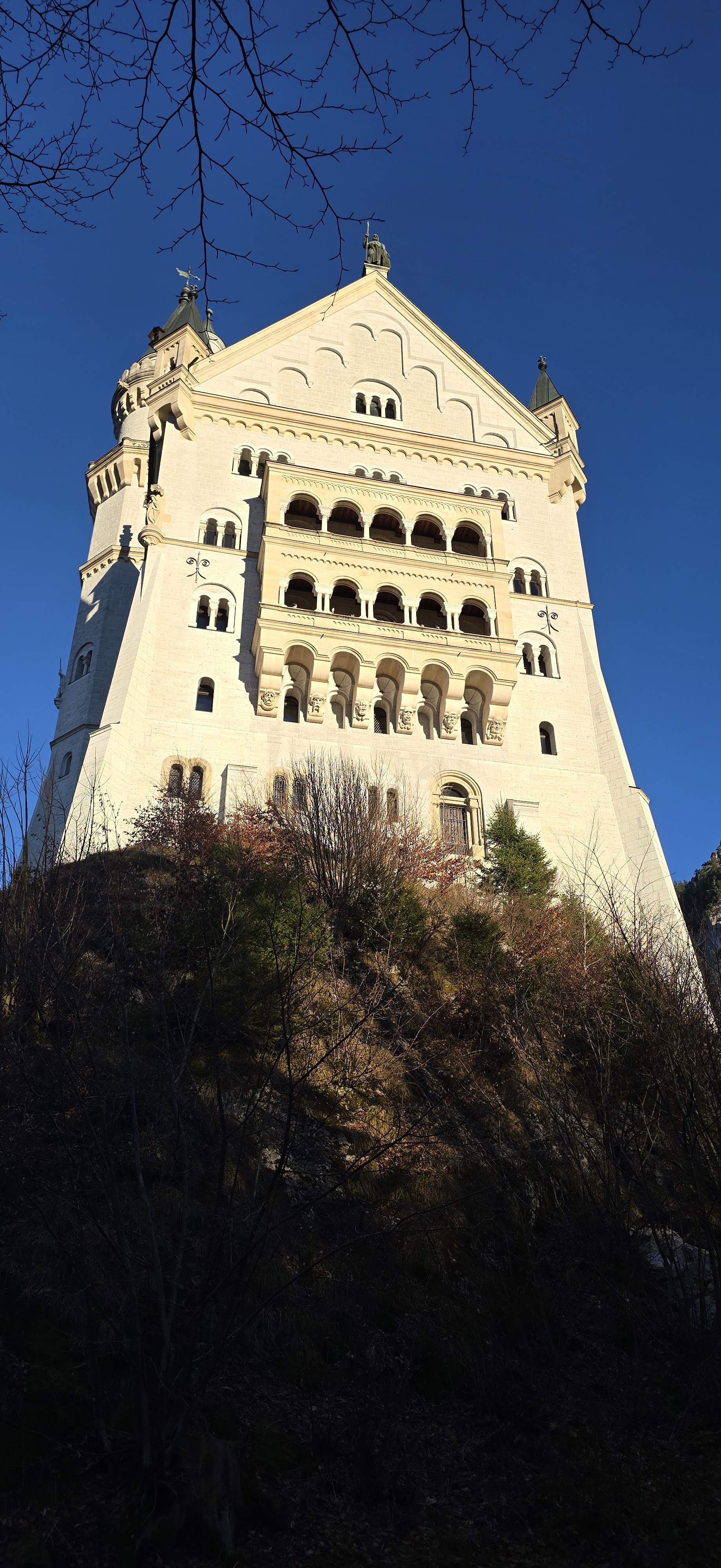
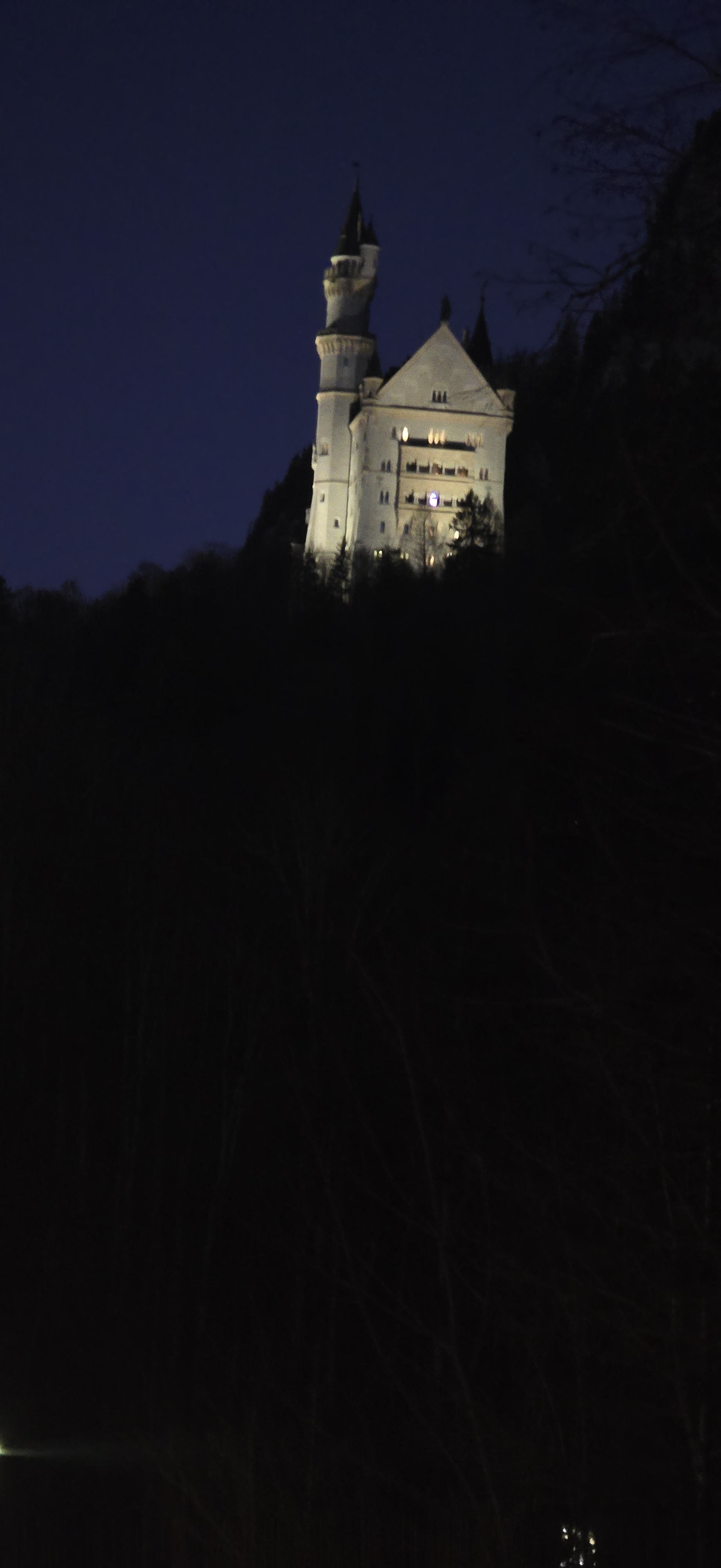
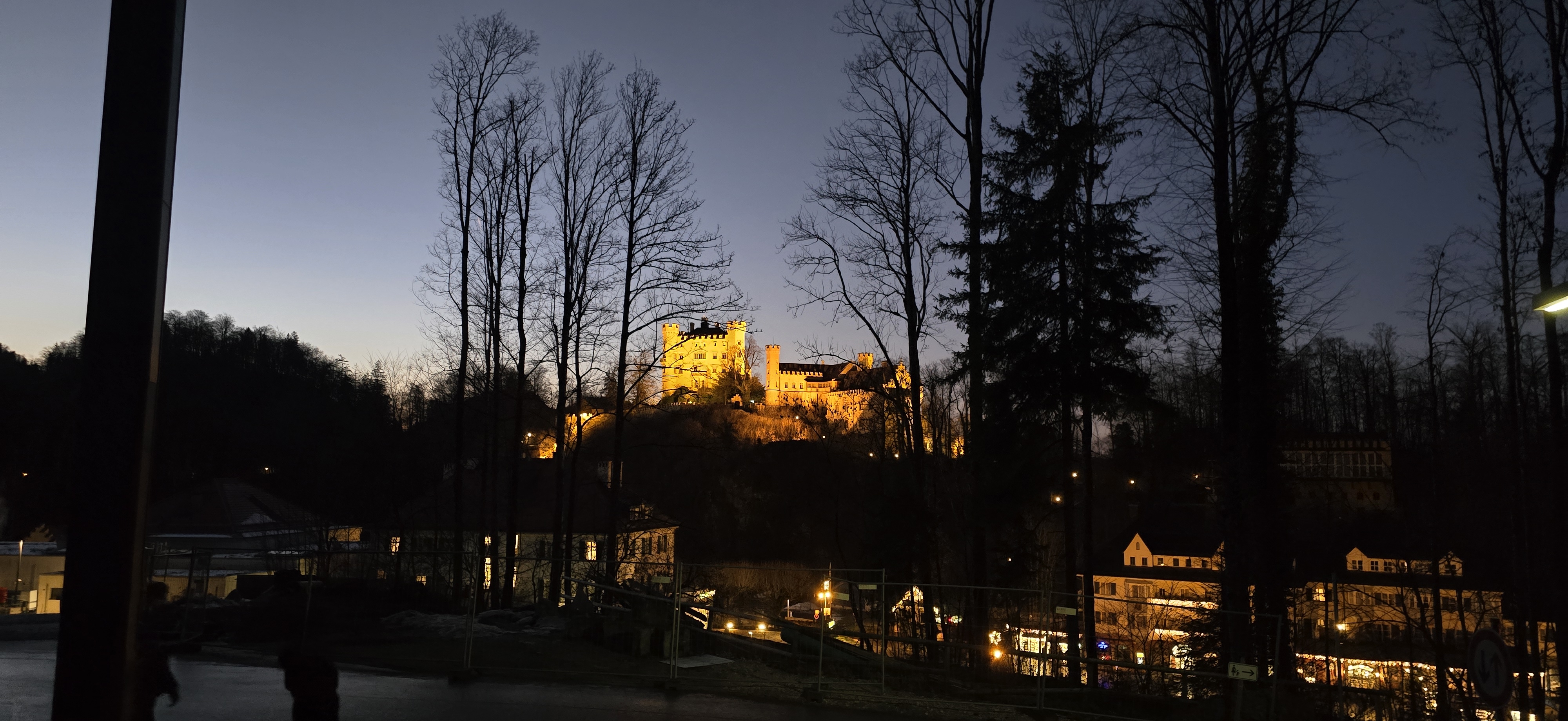
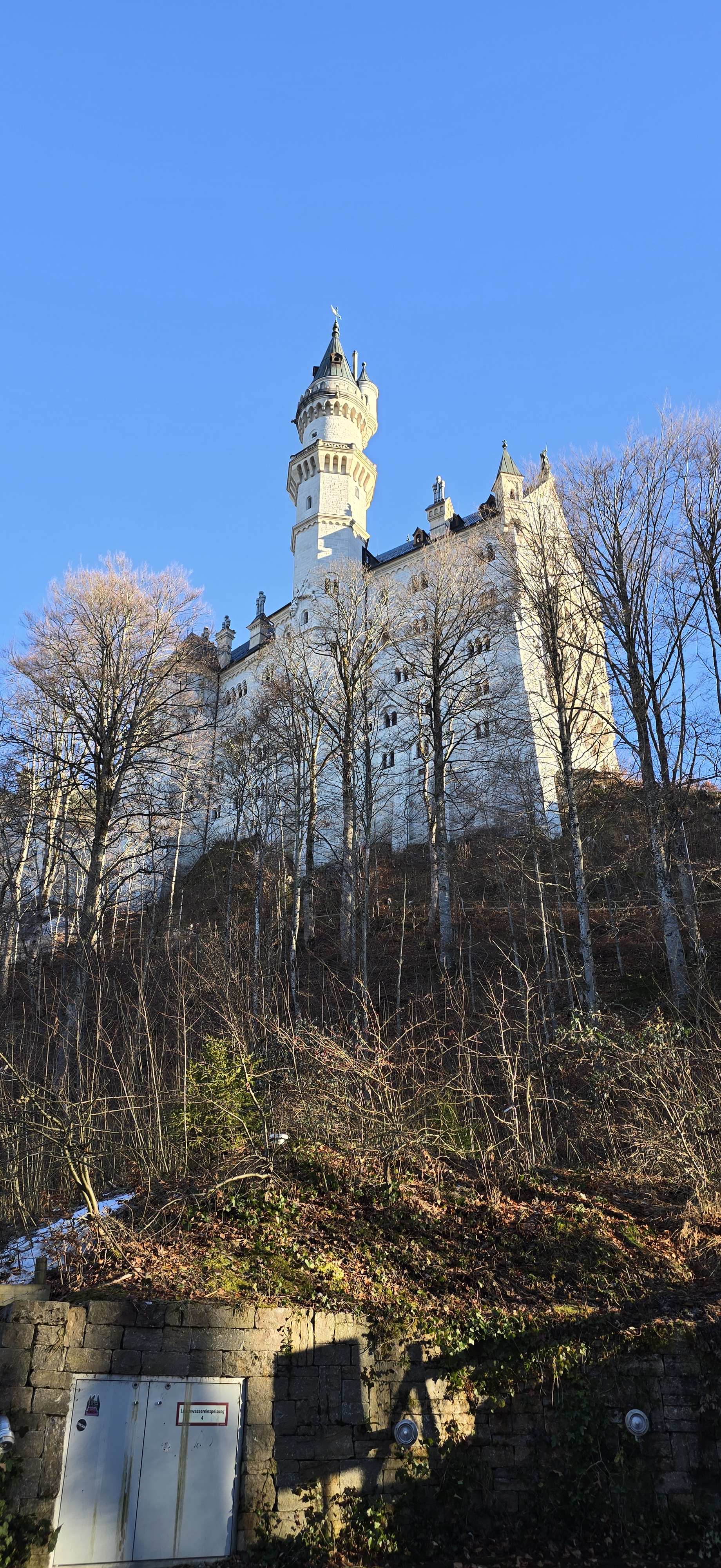
    Even from a distance, it felt unreal. The bus wound through the mountains, and every so often we’d catch a glimpse of it through the trees — a tower here, a pale wall there — just enough to remind us it was waiting.

    Then suddenly, there it was.

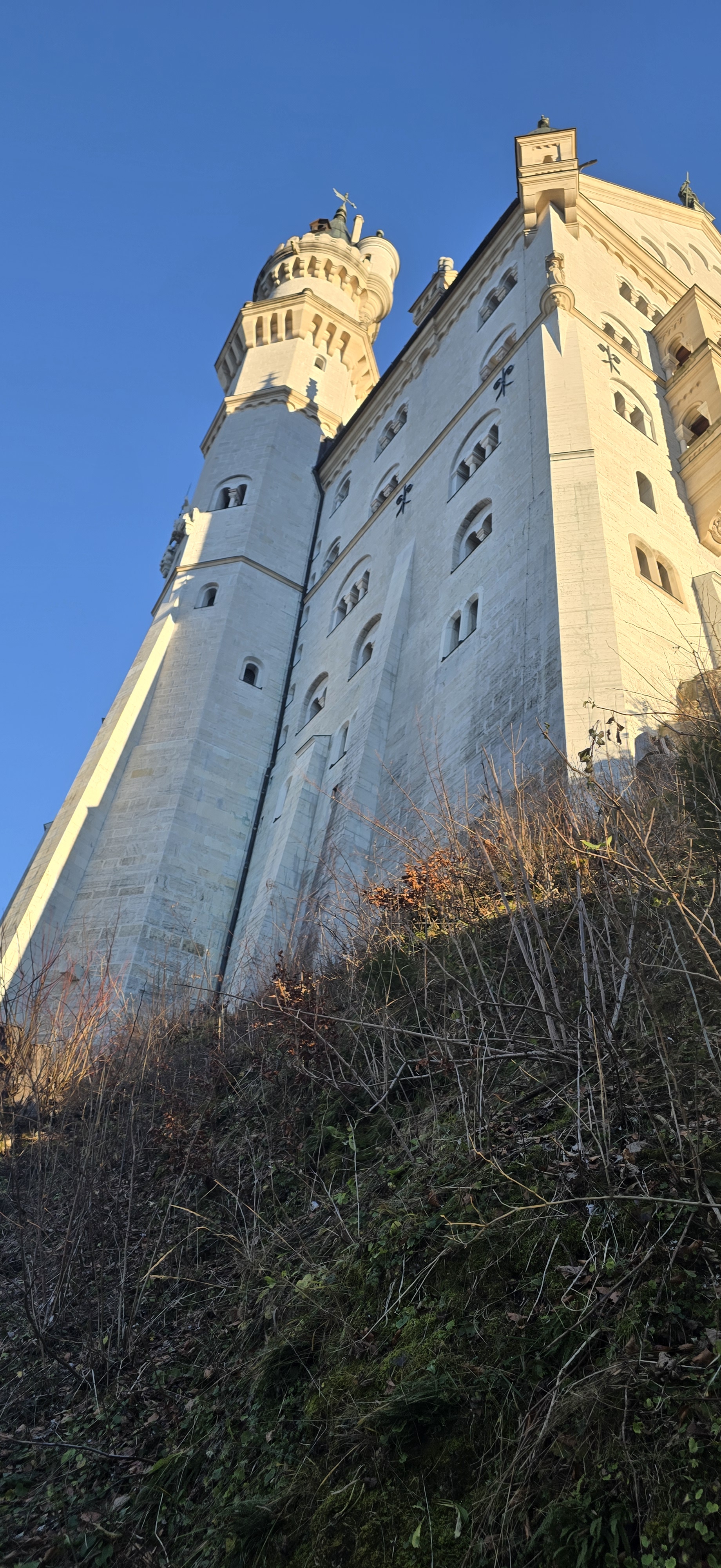
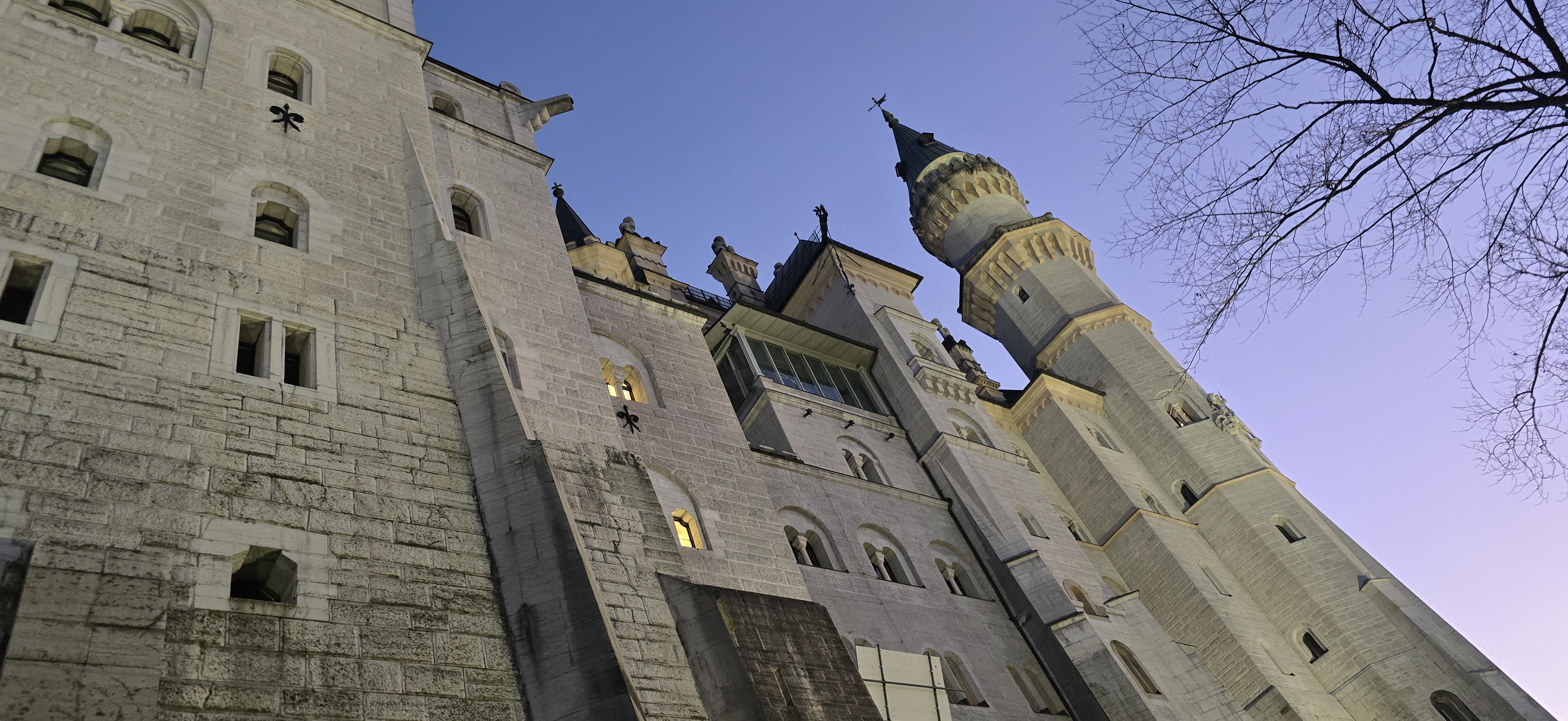
    Perched high against the mountainside, pale stone rising from the forest as though someone had sketched it into existence and forgotten to erase the pencil lines.

    Getting there required a climb, which felt entirely appropriate. A castle this dramatic shouldn’t be easy to reach.

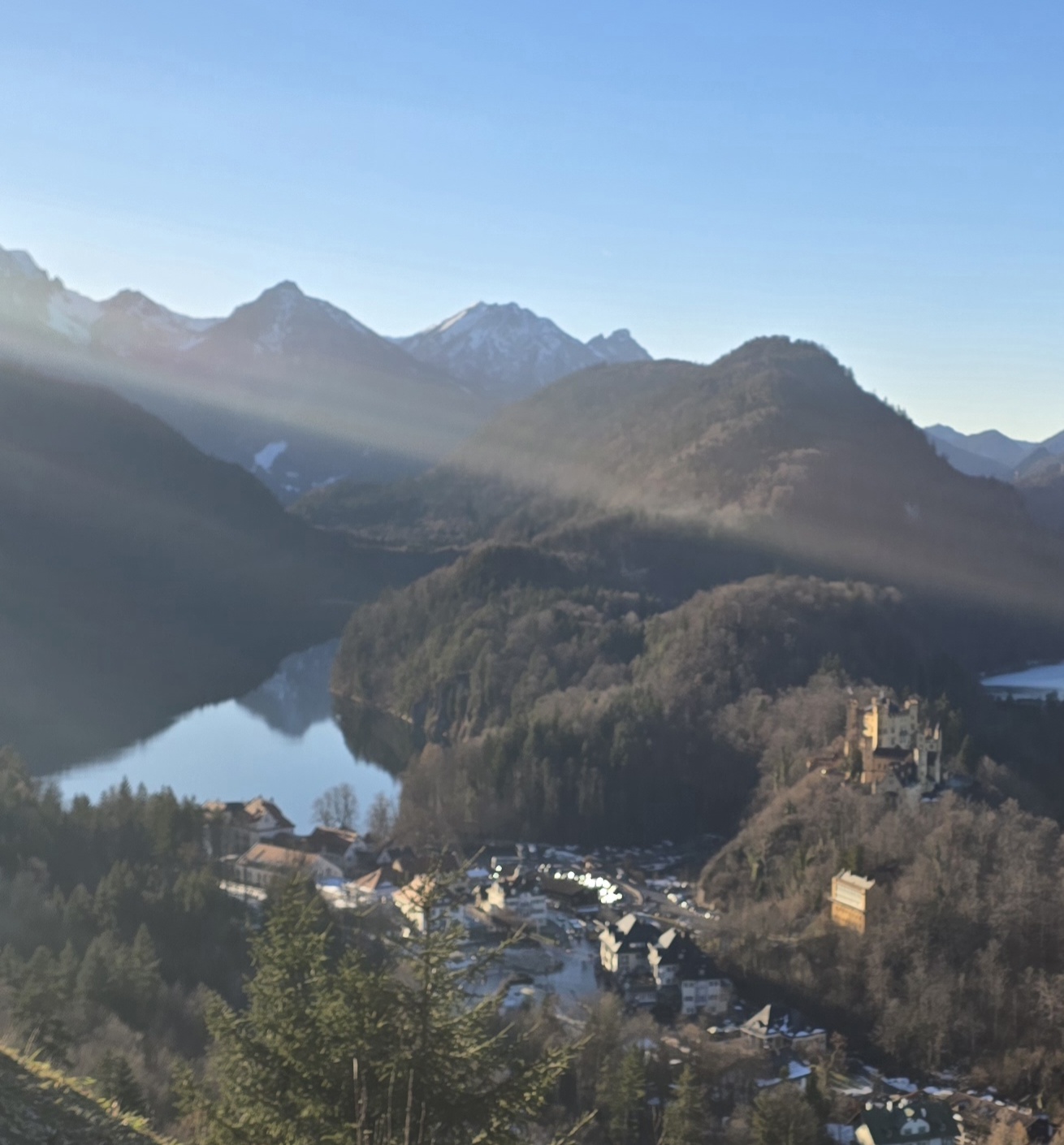
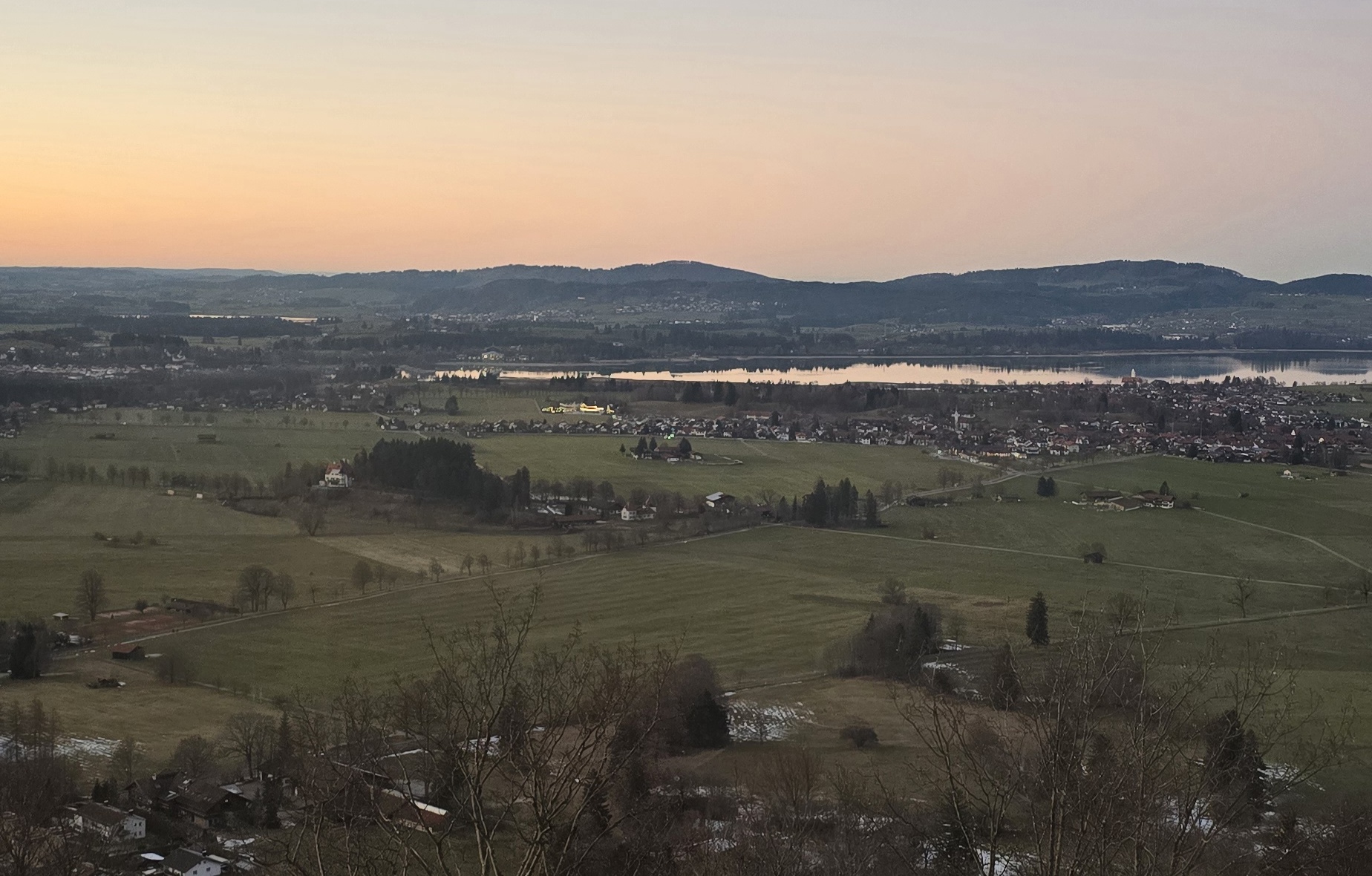
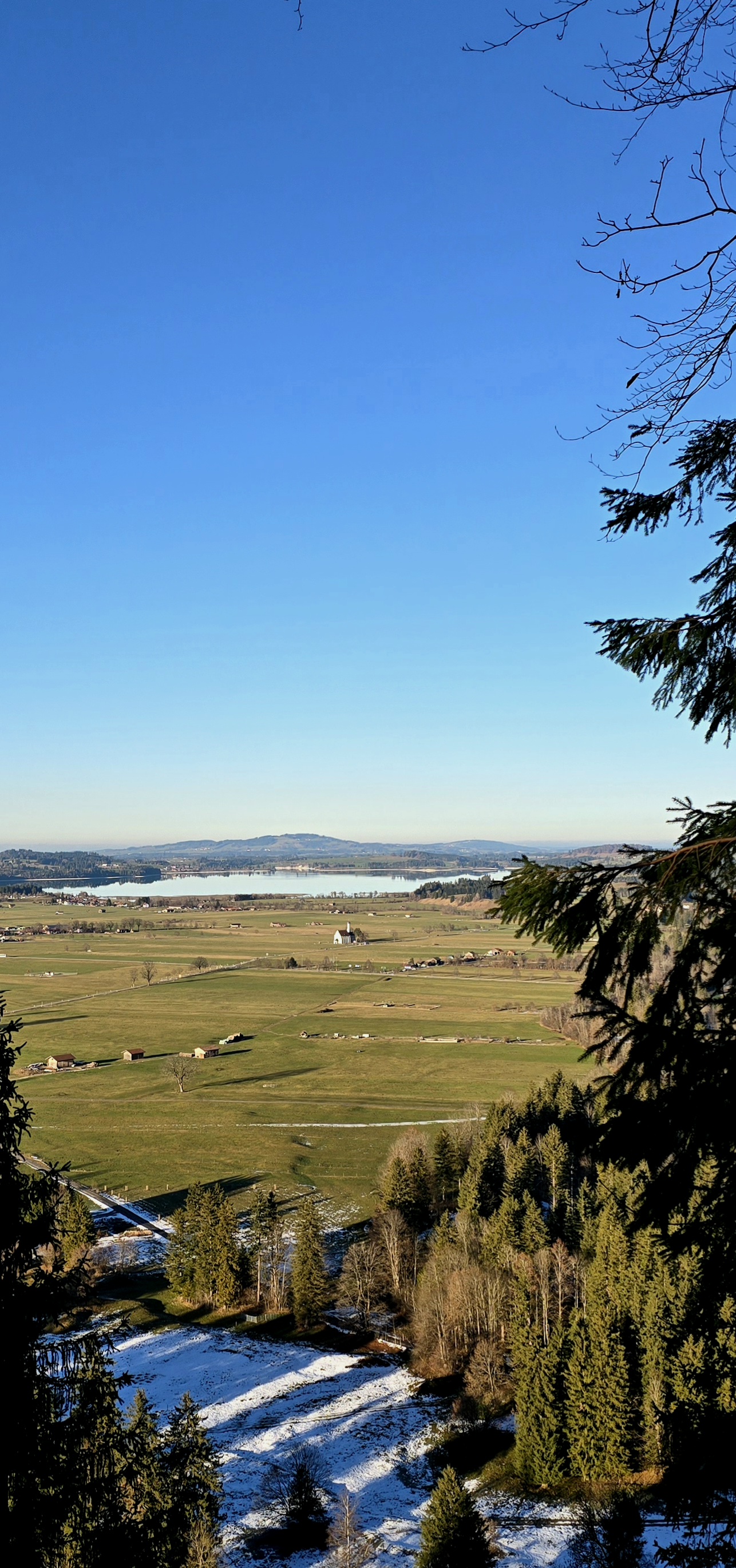
    As we made our way upward, the views only became more ridiculous. Snow-covered peaks stretched across the horizon. Pine trees blanketed the hillsides below. Every turn seemed determined to outdo the last.

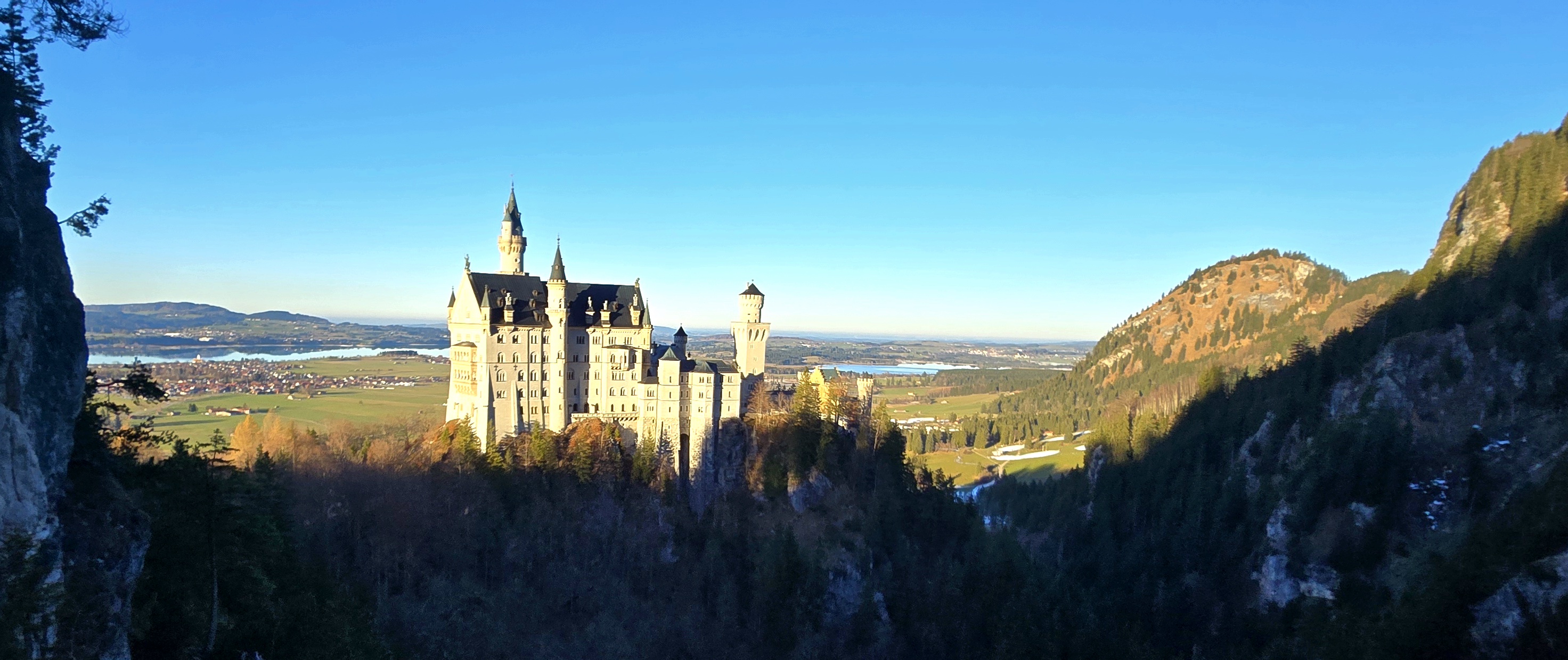
    And then we reached the bridge.

    The bridge.

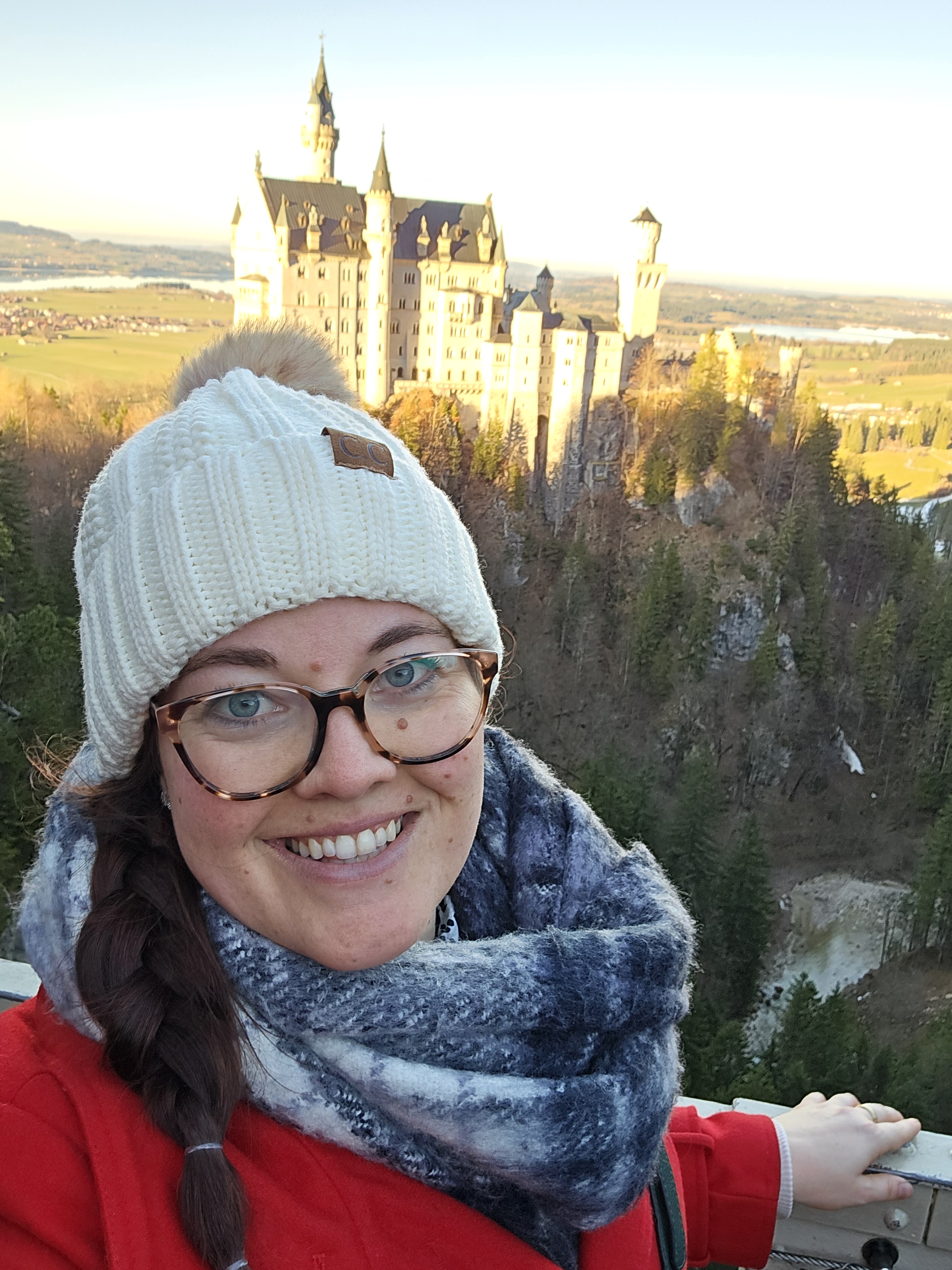
    Wind tugged at coats and scarves as visitors crowded along the railing, cameras raised in every direction. Yet somehow, despite the crowd, the castle still managed to command every ounce of attention.

    I walked to the edge and looked out.

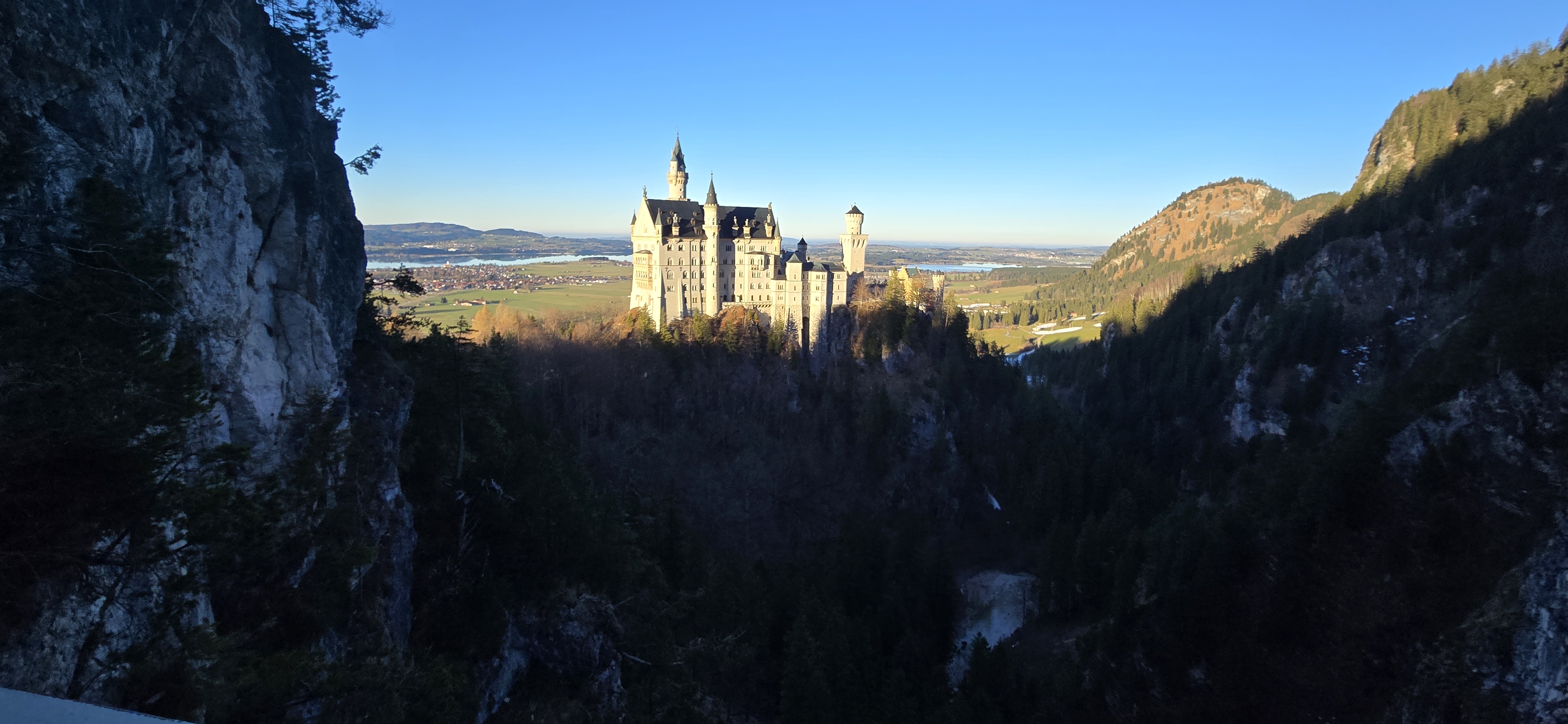
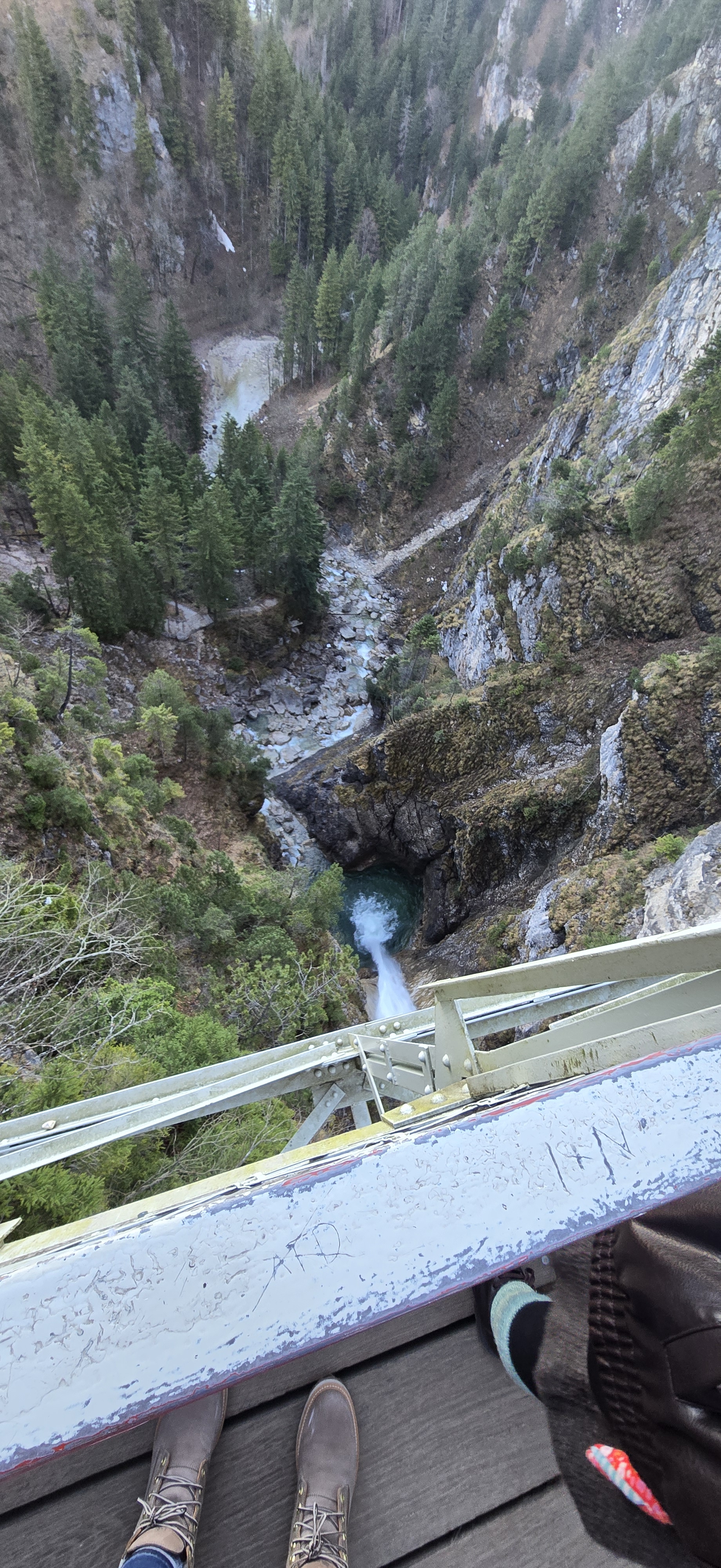
    The view was breathtaking. The height was also breathtaking, though in a very different way. I kept one hand firmly wrapped around the railing- just in case. The castle may have looked like a fairytale, but my confidence in my balance remained firmly rooted in reality.

    And genuinely thought: This is absurd-it’s where Disney got it. This is not a real place. And yet, there it was. 

    The towers rose against the mountains exactly as every fairytale illustration had promised they would. Too perfect. Too dramatic. Too storybook to seem possible. Not on a postcard, not in a movie, not in a history book- right in front of me.

    For all the photographs I’d seen over the years, none of them quite prepared me for the scale of it, or the setting. Or even the strange feeling of standing there and realizing that something can be both wildly famous and still exceed expectations.

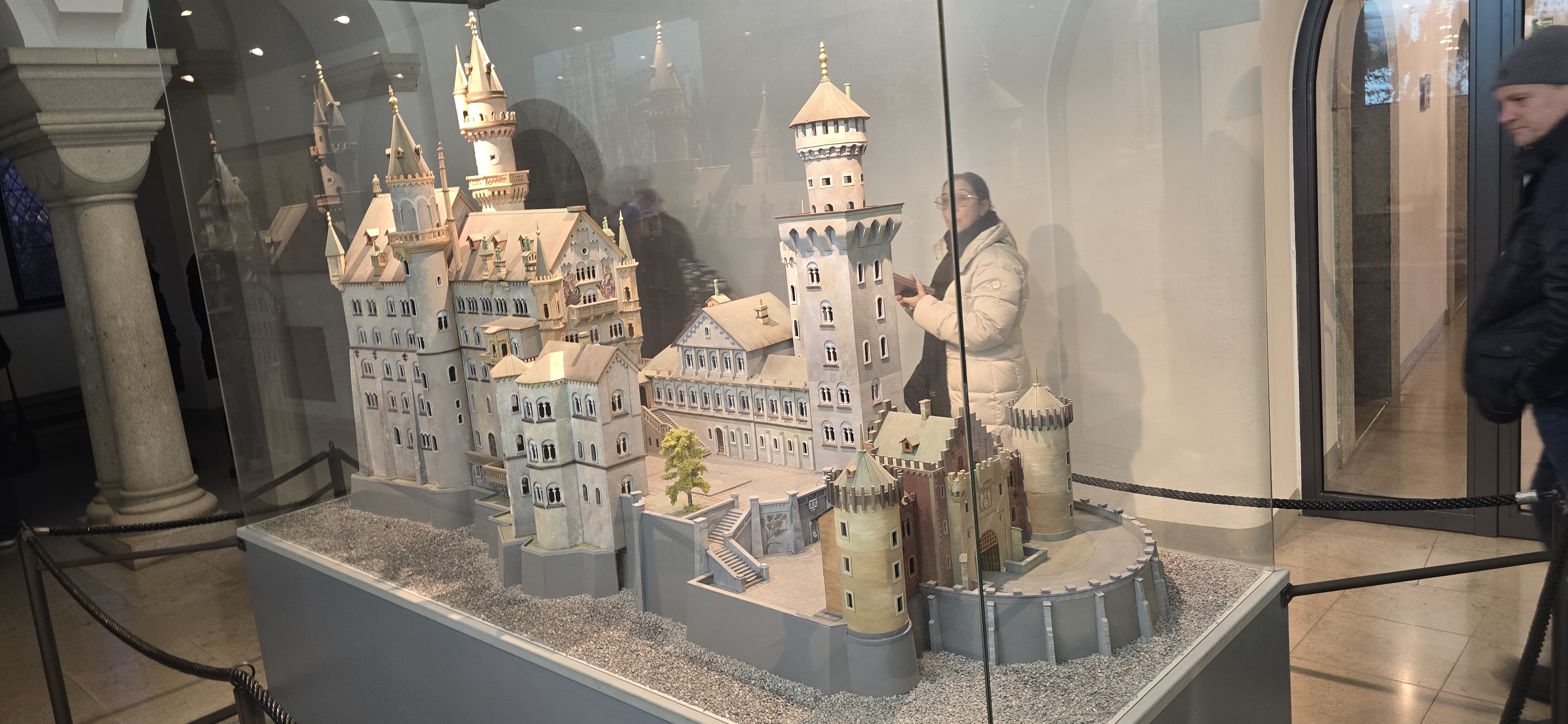
    Neuschwanstein wasn’t just beautiful. It was unapologetically imaginative. A castle built because someone believed castles should look like castles.

    👑 Once Upon a Princess (Briefly)

    Inside Neuschwanstein, the fairytale energy intensified.

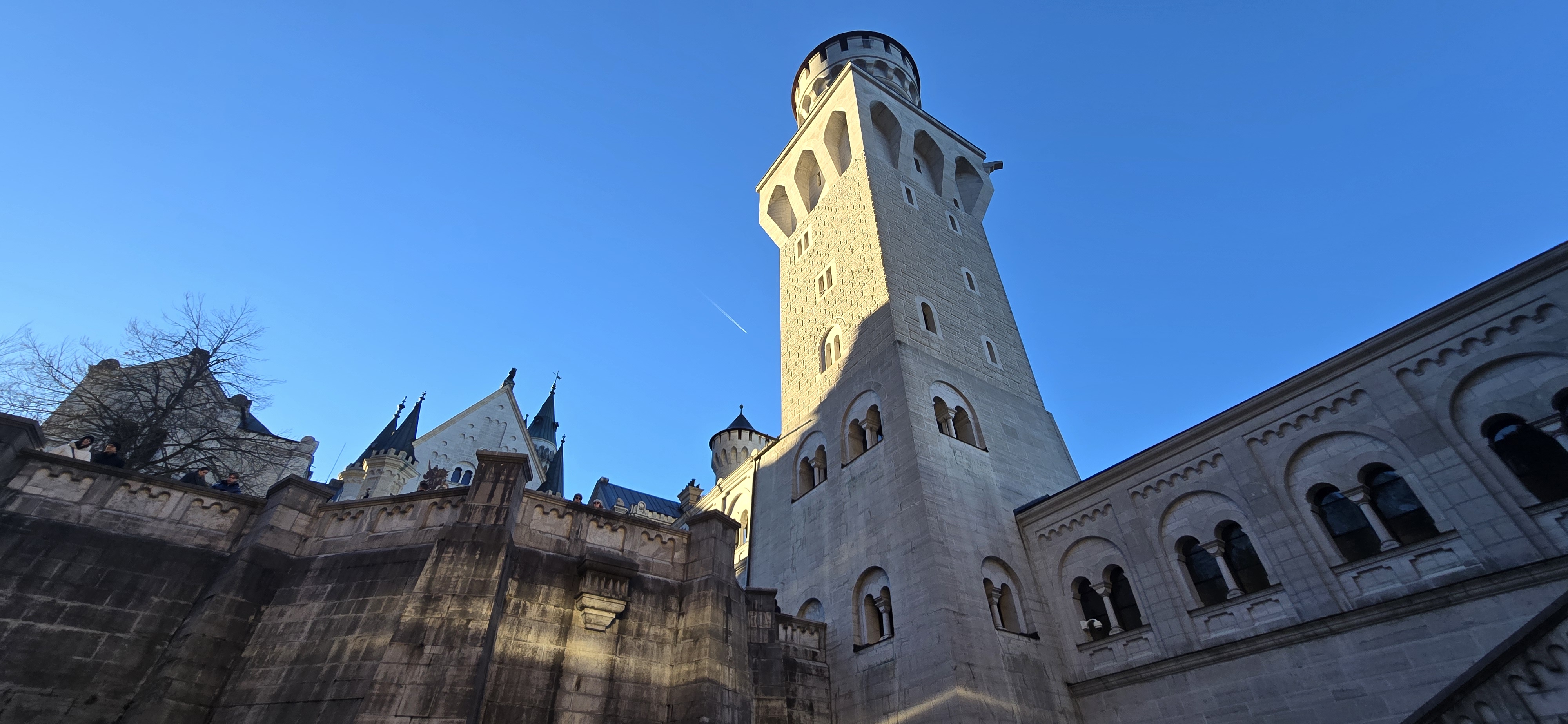
    Vaulted ceilings stretched overhead. Walls were covered in elaborate murals depicting legends and folklore. Dark carved wood framed doorways and corridors. Every room felt designed not simply for living, but for spectacle.

    King Ludwig II clearly wasn’t interested in subtlety. 

    And honestly? I respected that.

    As we moved from room to room, I found myself becoming increasingly immersed in the atmosphere. The castle wasn’t merely beautiful—it was theatrical. Every detail seemed designed to transport visitors into a world slightly removed from reality.

    Somewhere between the chandeliers, the painted legends, and the endless displays of royal grandeur, I made a fatal internal error.

    I started thinking of myself as graceful, regal even. The sort of woman who glides effortlessly through castles; elegant posture, measured steps, perfectly composed. The kind of person who belongs in a fairytale rather than merely visiting one.

    You can probably see where this is going…

    🤦‍♀️ The Royal Downfall

    Unfortunately, the fairytale ended on a staircase.

    On the way down — mid-descent, mid-princess narrative, fully committed to the idea that I was carrying myself with royal grace and dignity — my foot misjudged a step.

    At least, I think it did. To this day, I’m still not entirely sure what happened.

    Not by much, but just enough that gravity was winning. The problem was that there was a woman directly in front of me.

    In the split second that followed, I had a choice:

    Take her down with me or sacrifice myself for the greater good.

    I chose the latter.

    Instead of reaching forward and turning this into a multi-person incident, I threw an arm out to the side and performed what can only be described as a highly ungraceful baseball slide down several stairs.

    There was no dignity.

    There was no princess.

    There was only momentum.

    Somehow, I managed to stop myself without taking anyone else out in the process, which felt like a personal victory.

    My pride, however, suffered catastrophic losses.

    One moment I was mentally casting myself as Bavarian royalty.

    Next, I was discovering that gravity remains unimpressed by self-confidence, fairytale castles, and main-character energy.

    If you’re going to imagine yourself as a princess, Bavaria is more than willing to remind you that you’re actually a tourist in winter boots.

    🌲 The Great Bavarian Escape

    Whether by chance or design, I once again found myself in one of the later entry groups for this tour.

    This meant that while most of the group was making a leisurely descent back toward the bus, my companions and I were operating under a slightly different set of circumstances.

    Namely, we had an entire Bavarian mountain standing between us and our departure time.

    Adding to the challenge was the fact that I had very recently conducted an unscheduled experiment involving gravity and a castle staircase.

    The results had been conclusive.

    We were not going to miss the bus.

    So, my seatmate and another woman I had spent much of the day touring with took one look at the situation and collectively decided that we were getting down that mountain.

    What followed was a surprisingly determined trek through the dark German forest.

    Down the path we went.

    Three women emerging from the Bavarian wilderness like a very specific and slightly chaotic expedition team.

    One of us was hobbling.(I will not be naming names.)

    By the time we reached the bus, both the driver and our tour guide looked genuinely concerned.

    We, meanwhile, could not stop laughing.

    As my companions enthusiastically recounted the details of my recent encounter with gravity, concern slowly gave way to amusement.

    The story sounded significantly more dramatic when told by witnesses.

    At that point, there was nothing left to do but reclaim my seat, accept that Bavaria had thoroughly humbled me, and mourn the brief reign of the graceful princess I had imagined myself to be.

    Although, in fairness, I’m still not entirely sure whether princesses are allowed to publicly baseball-slide down staircases.

    🚌 Down the Mountain

    The ride back felt different. Partly because the hardest part of the day was behind us. Partly because I was now sitting comfortably on a bus instead of conducting physics experiments on historic staircases.

    Outside, the mountains had disappeared into darkness. The windows reflected more of the bus than the landscape beyond it, turning the glass into a mirror of tired travelers, winter coats, and the occasional glow of a phone screen.

    The castles were behind us now, but the fairytale atmosphere lingered. Conversations drifted in and out around me, a joke here, a comment there,  light teasing that seemed to have become a theme throughout the day.

    Easy and uncomplicated. The kind of interaction that makes a long bus ride feel surprisingly short. I settled back into my seat and watched the reflections move across the darkened windows. By the time the lights of Munich appeared ahead of us, I found myself smiling.

    The castles had certainly exceeded expectations. The day itself had too.

    🍷 Glühwein & The Unwritten Chapter

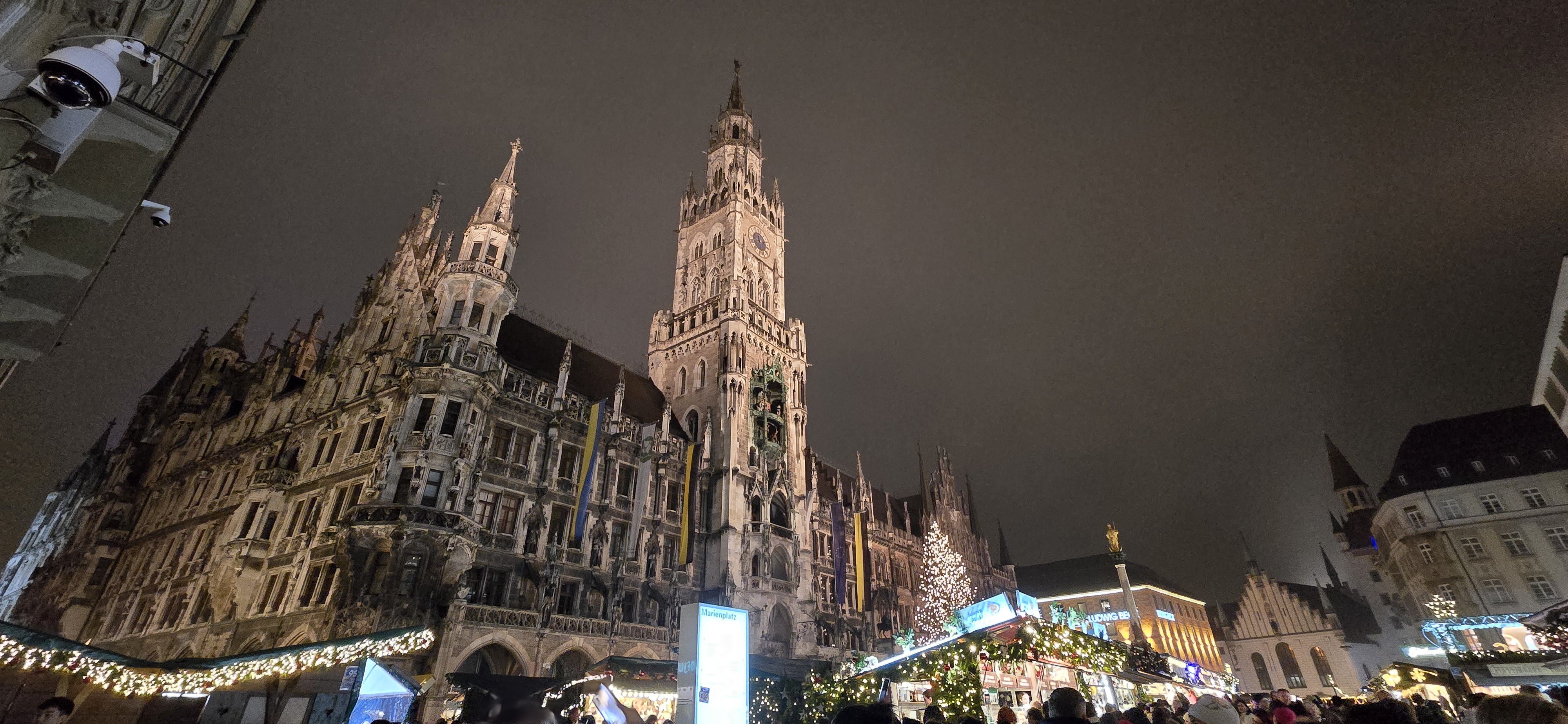
    By the time we returned to Munich, the city had transformed. Christmas lights glowed against the darkness. Wooden market stalls lined the streets. Music drifted through the cold air alongside the scent of roasted nuts, pastries, and something warm and spiced that seemed to follow us from one market to the next.

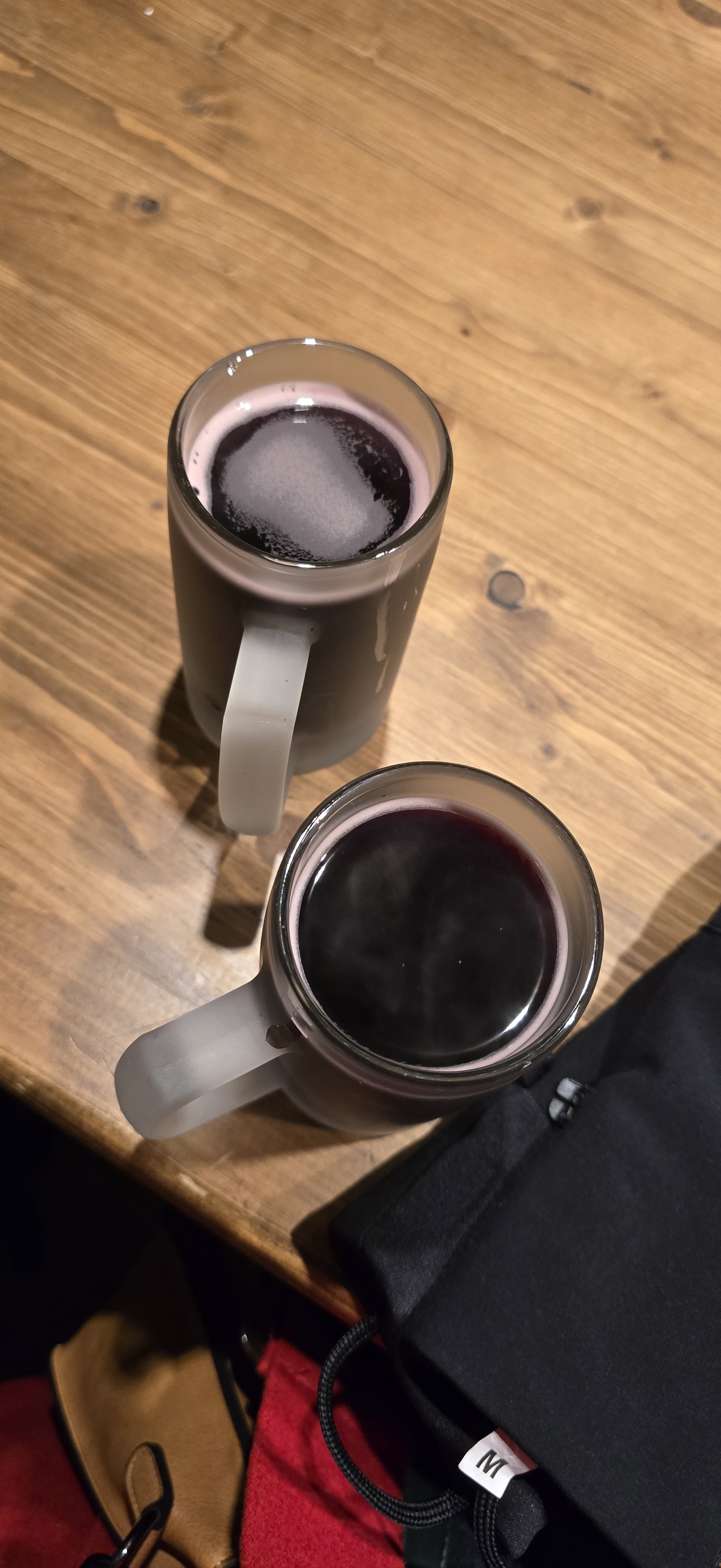
    I was informed that a proper visit to a German Christmas market required Glühwein. This was presented less as a suggestion and more as a matter of cultural responsibility.So naturally, I agreed.

    Warm. Spiced. Sweet. Also considerably stronger than it tasted.

    We wandered from one market to another, weaving through crowds, laughter, and strings of lights that made the entire city feel softer around the edges.

    The cold only seemed to make the warmth of the cup in my hands more noticeable.

    Somewhere between the lights, the music, and the smell of cinnamon drifting through the cold air, I started to feel as though I’d accidentally wandered into a Hallmark Christmas movie.

    Despite the long day, no one seemed particularly eager for the evening to end. Which led to an unexpected challenge: finding a bar in Munich that was actually open at 10 p.m. on a Saturday.

    This proved far more difficult than anticipated. After an hour of wandering through the city, we finally succeeded in finding a spot outside one place. We ordered drinks and just talked.

    The kind of conversation where you stop checking the time because it no longer feels relevant. Eventually, I glanced at my phone and realized hours had passed without me noticing.

    The castles were beautiful. The mountains had been unforgettable. But some of my favorite moments from that day hadn’t happened inside a palace at all.

    They happened somewhere between the Christmas lights, the Glühwein, and a conversation I wasn’t ready to end.

    💫 Fairytales & Footing

    The day began with me nearly vaulting a traffic barrier in pursuit of a bus. It included royal interiors, mountain views, an unscheduled experiment with gravity, and a reminder that staircases remain undefeated. And ended beneath Christmas lights, warming my hands around a cup of Glühwein in a city that somehow felt pulled from a postcard.

    The castles- beautiful.

    The mountains- unforgettable.

    But what stayed with me most wasn’t the architecture.

    It was the feeling: the laughter, the conversations, the moments that weren’t on the itinerary. For one winter day, Bavaria felt a little like a fairytale. Not because everything went perfectly. Quite the opposite.

    But because sometimes the best travel memories aren’t the ones you plan- they’re the ones that surprise you.

    Even if they occasionally involve a staircase.

  • ✈️ Laundry and Launch

    Greece had barely settled into memory before I was moving again. 

    There wasn’t much time between ancient cliffs and departure gates-just enough to reset, repack, and convince myself that yes, this was sustainable behavior. Apparently, I don’t do “ease back into normal life.” I do “laundry and launch.”

    So, instead of easing gently into Germany, I found myself boarding one of the last trains of the night toward Malpensa Airport – because if you know ANYTHING about Italian trains, you do NOT risk the final one. Not when your fight leaves before the first morning train even thinks about running. 

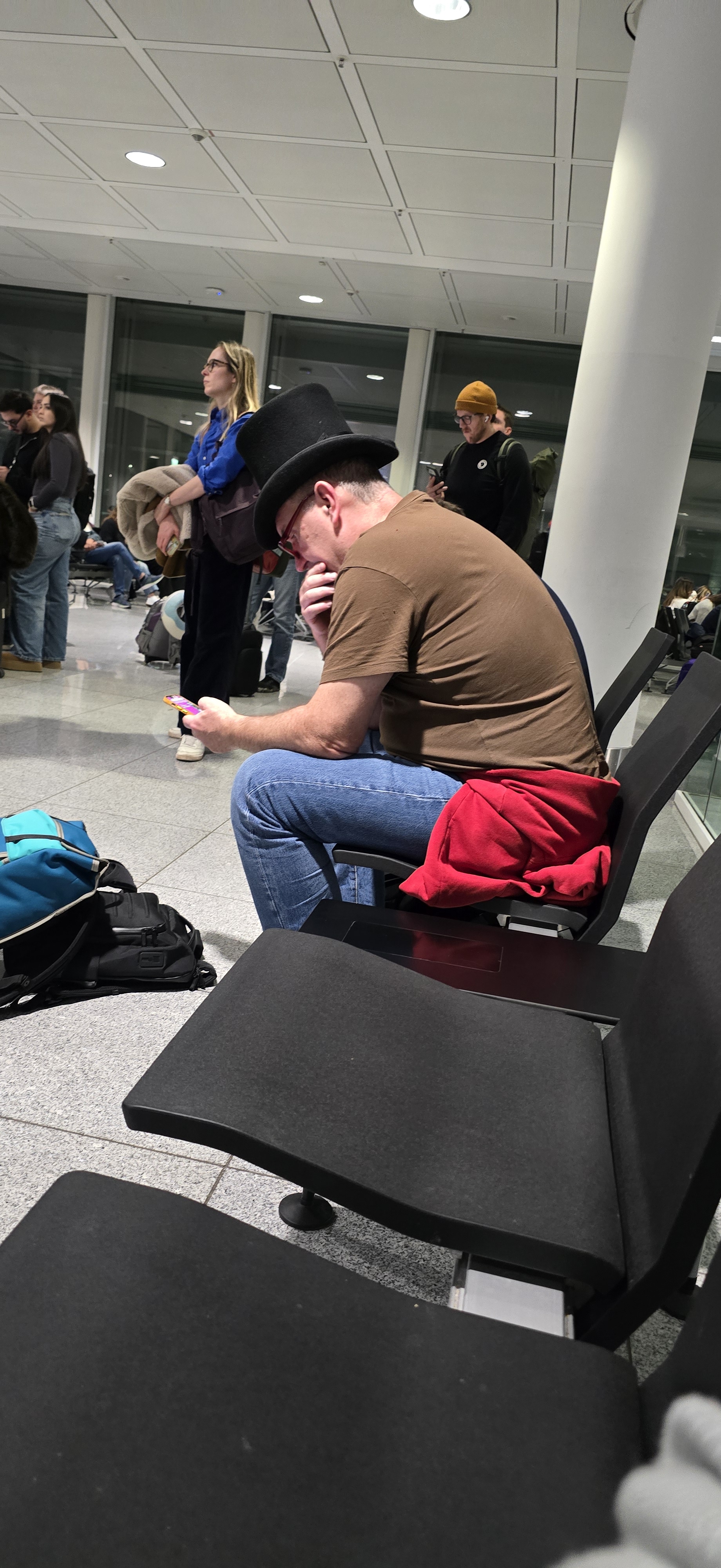
    Which is how I ended up spending the night in an airport. 

    I’ve done unexpected airport time before – once stranded an entire extra day trying to leave Florida, which somehow feels very different in daylight. Day delays feel inconvenient. Overnight airport floors feel…existential. Not in a cozy “travel influence aesthetic” way. 

    But in a hallway near an emergency exit because all the good benches were taken. And half of MXP was under construction – allegedly in preparation for the Olympics. I’ll believe that timeline when I see it. 
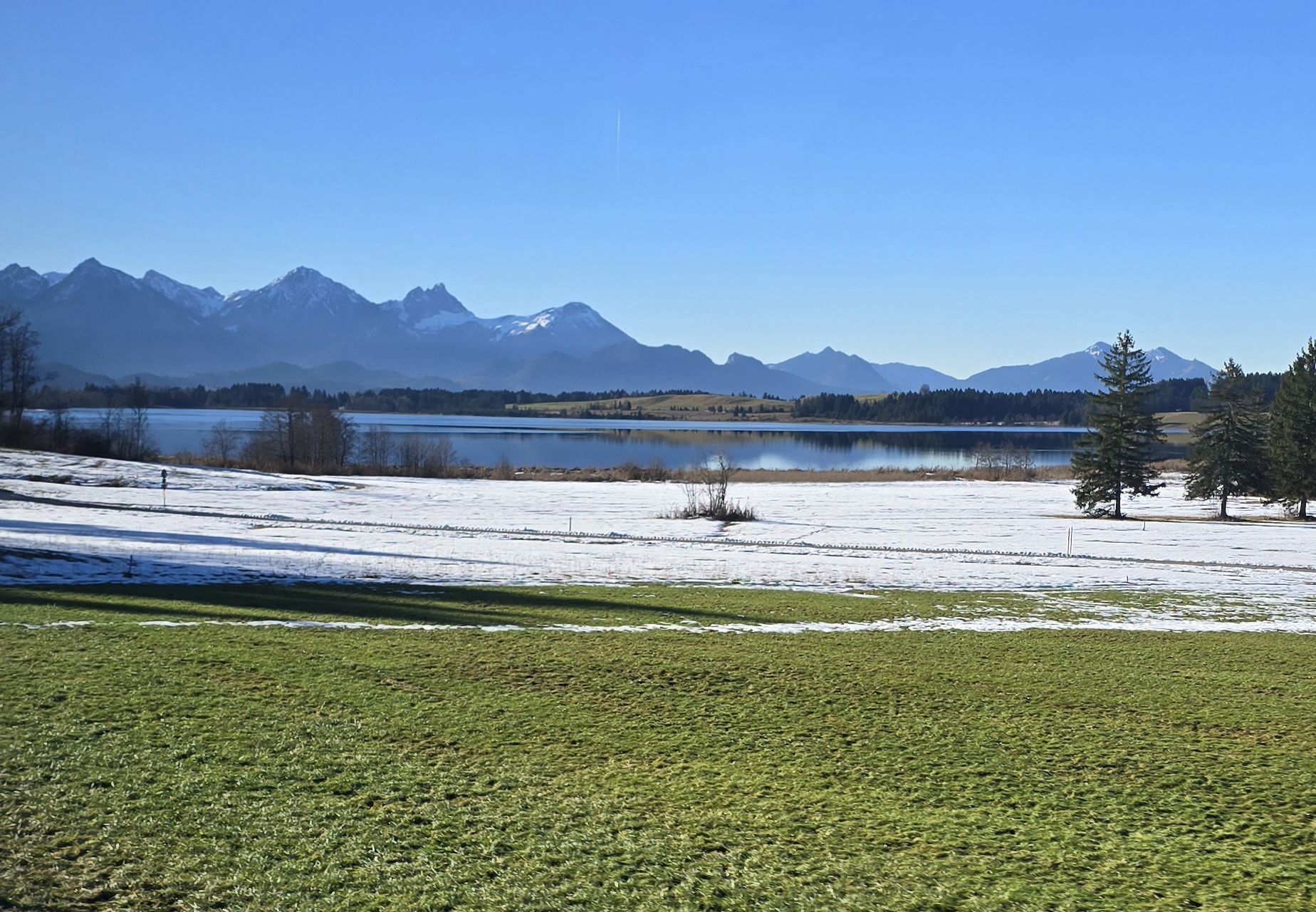
    Thankfully, Italy does not fail where it matters: tiny coffee vending machines dispensing actual, drinkable Italian coffee. (Longs. Bless them.) Between those –  three…four.. or was it five? – and video calls with friends back to the U.S (blessed, truly, by the time difference) the night felt less like survival and more like a strange, jet-lagged limbo. 

    By the time my 6:52 a.m flight boarded, I had officially crossed into the “no sleep but still functioning” category of human existence. 

    Munich awaited. 

    ☕ Running on Espresso and Stubbornness

    After landing, I made my way straight to my hostel to drop my bag- the room wouldn’t be ready for hours, but at least I didn’t have to drag my suitcase through the city on no sleep. 

    I’ve done that before.

     New York City. Late at night. A suitcase wheel that simply…gave up. 

    Some lessons stay with you-drop the bag when you can. 

    Next stop: coffee. Again. 

    I found a nearby cafe, ordered something warm and strong, and added breakfast to the situation because at that point I was running on vending-machine espresso and stubbornness. I still hadn’t slept. 

    It had officially been over 24 hours. And I knew if I sat too long, I would fold. So instead of resting, I did what I apparently do best-I went exploring. 

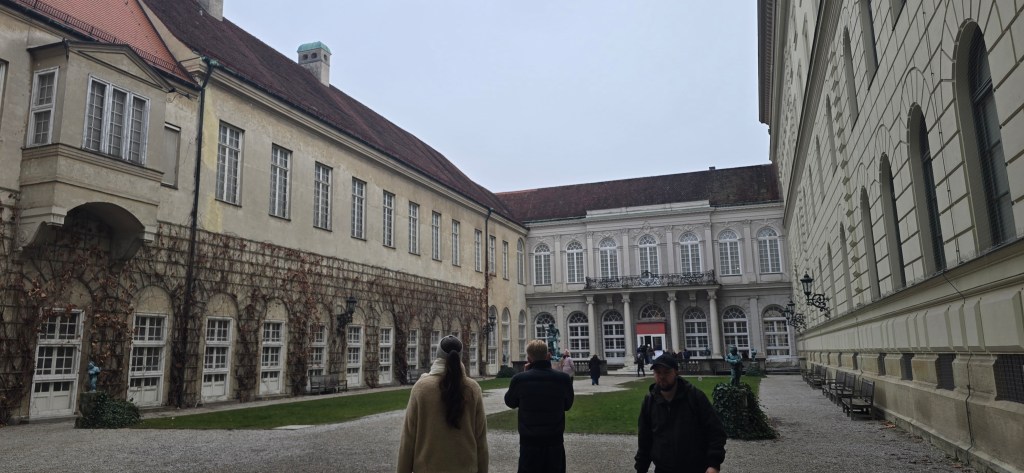
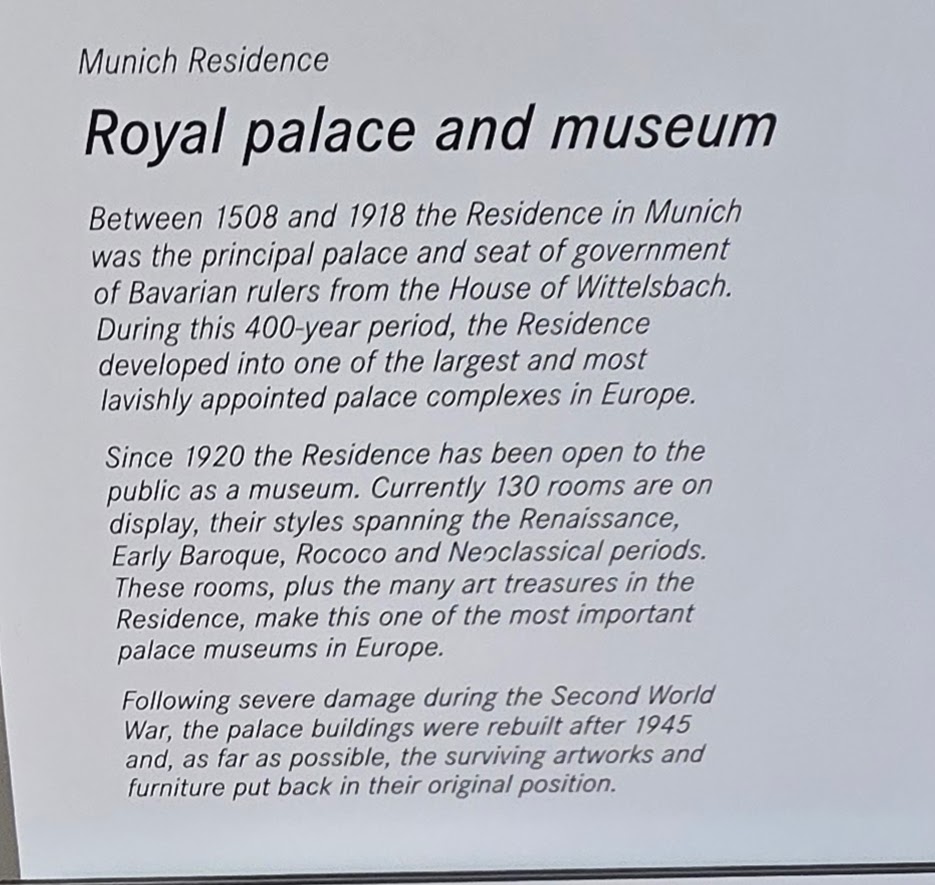
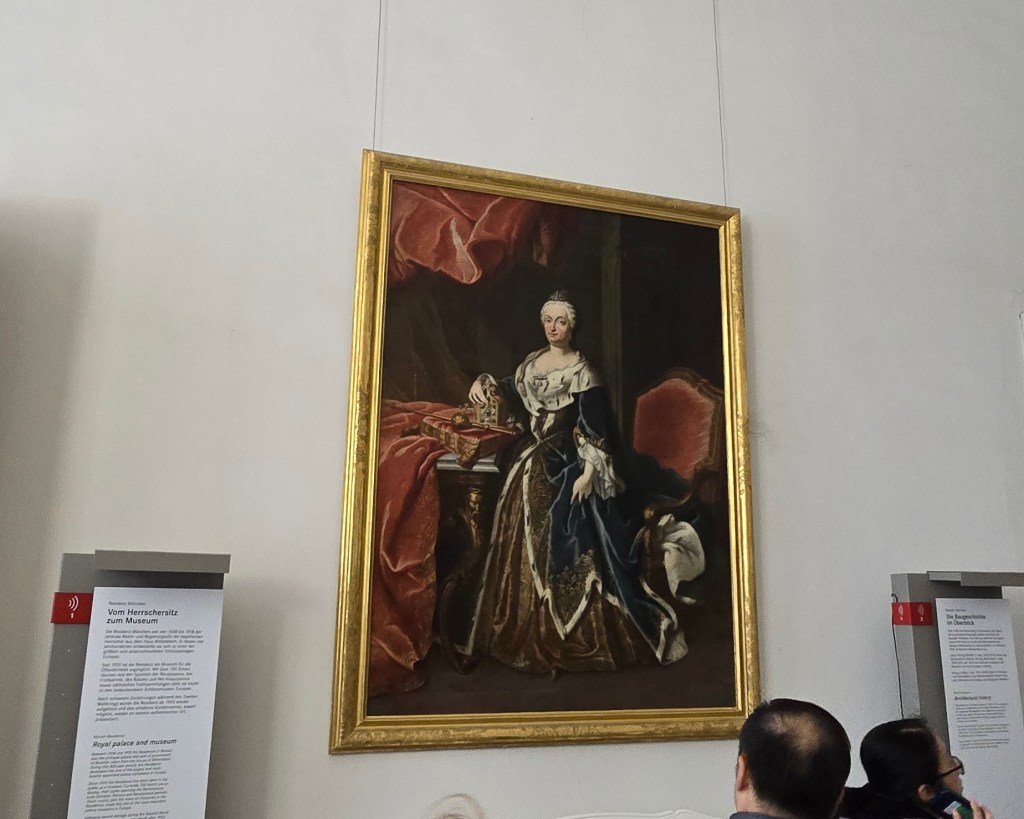
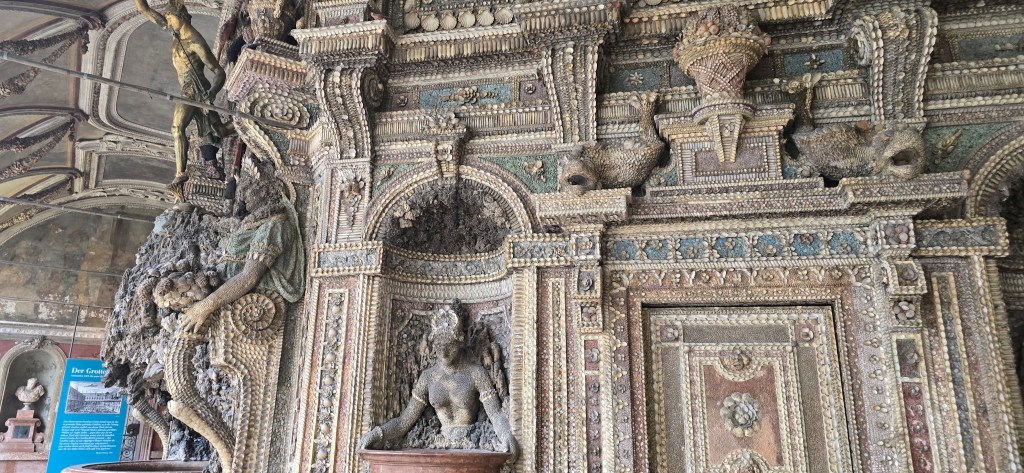
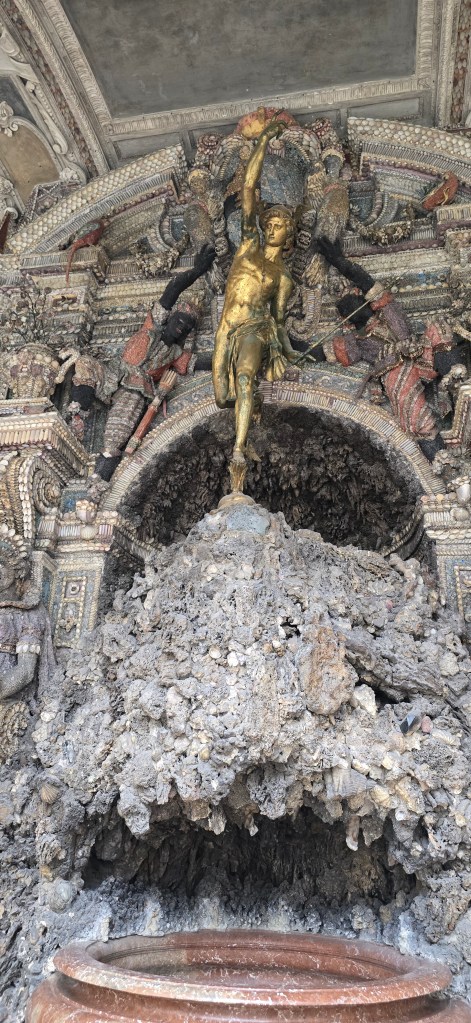
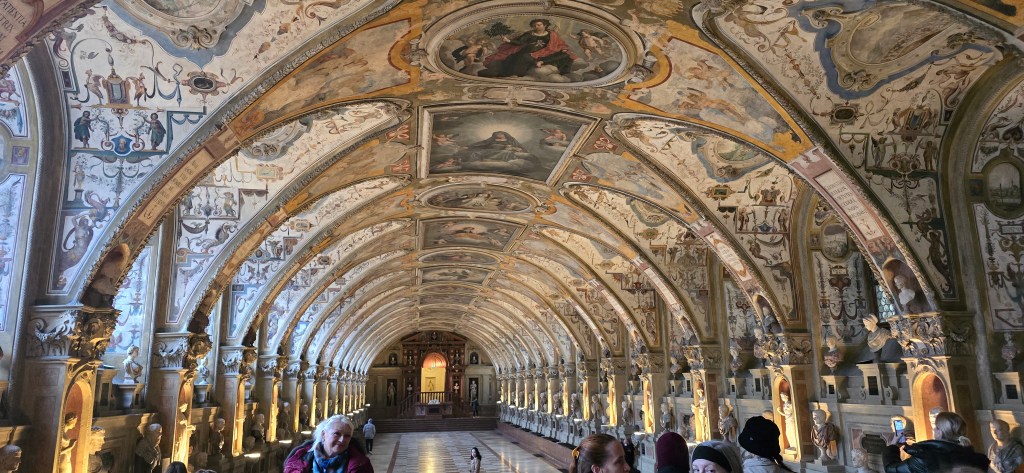
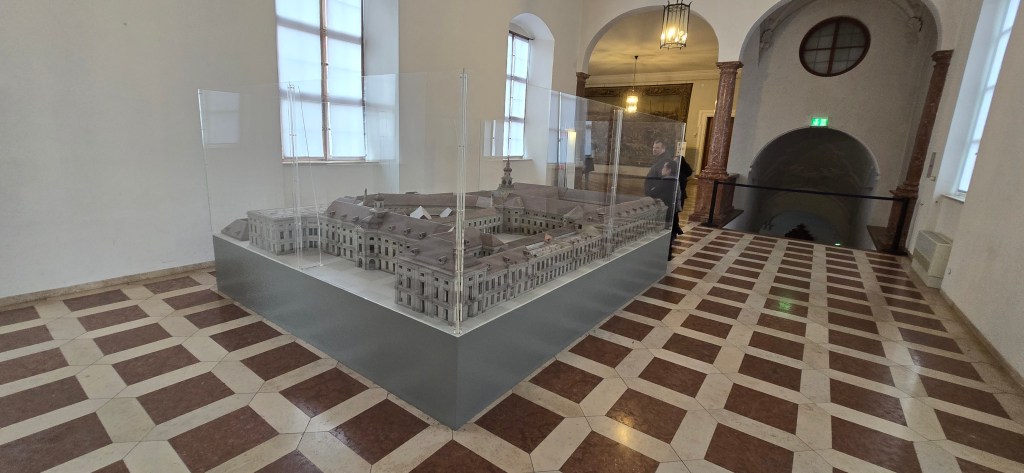
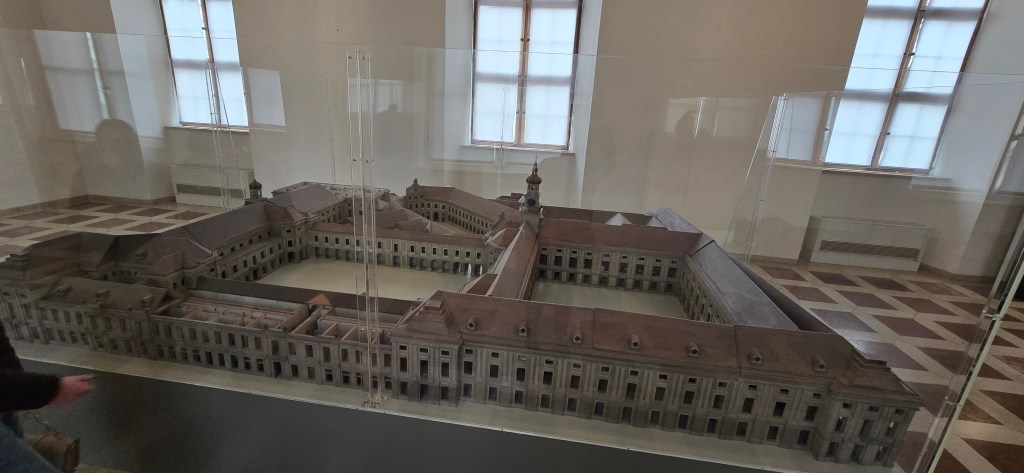
    My destination: the Royal Palace and Museum. 

    🏰 Finding the Door

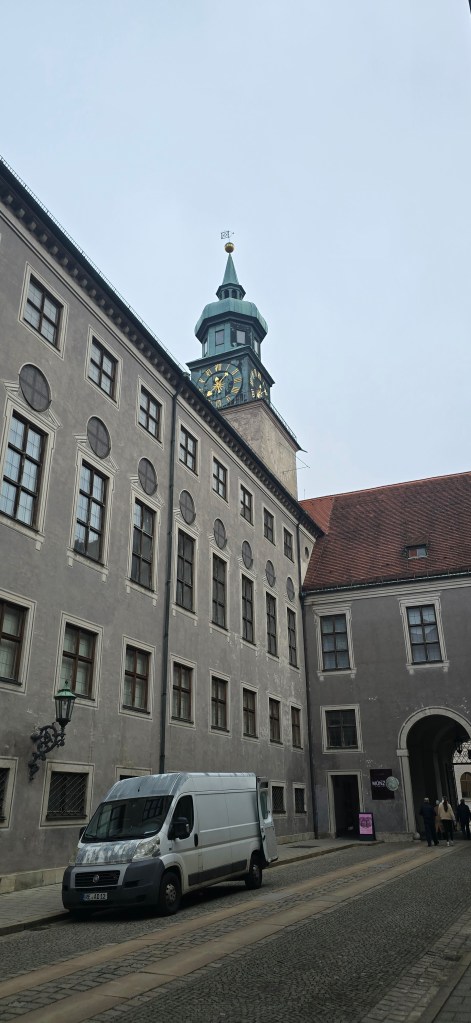
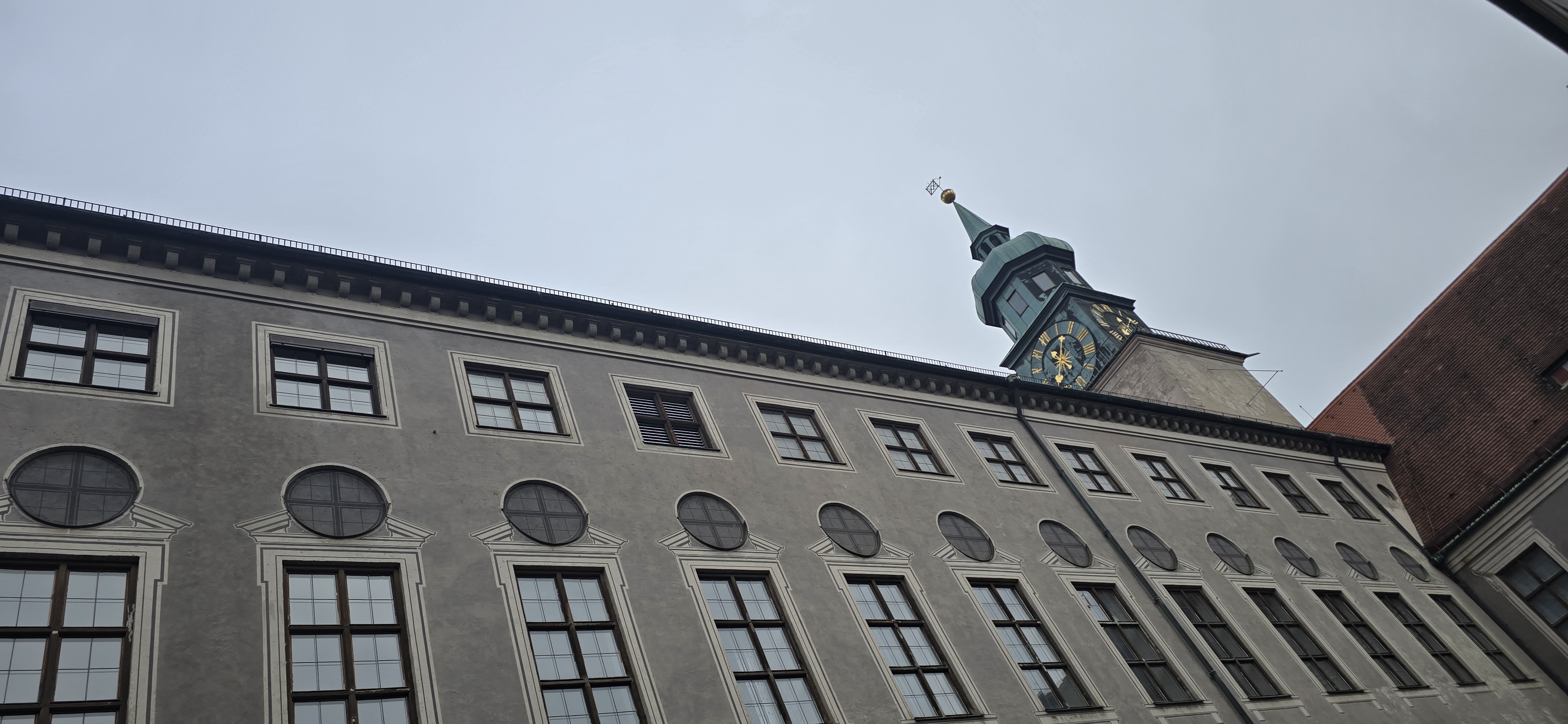
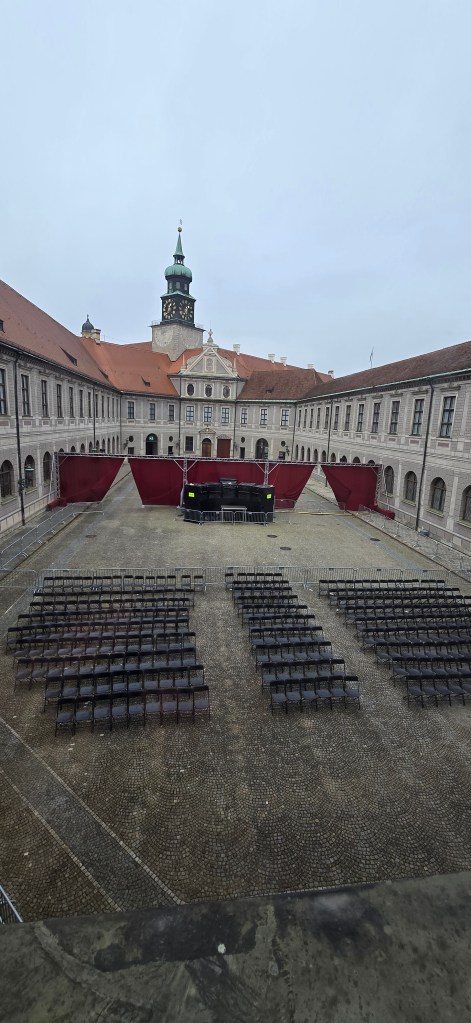
    If Greece had been wind and open sky, Munich felt structured. Contained. Ornate. The kind of city where buildings don’t erode into cliffs – they stand squarely and wait for you to notice them. 

    Finding the entrance to the palace, however, was… not quite so structured. 

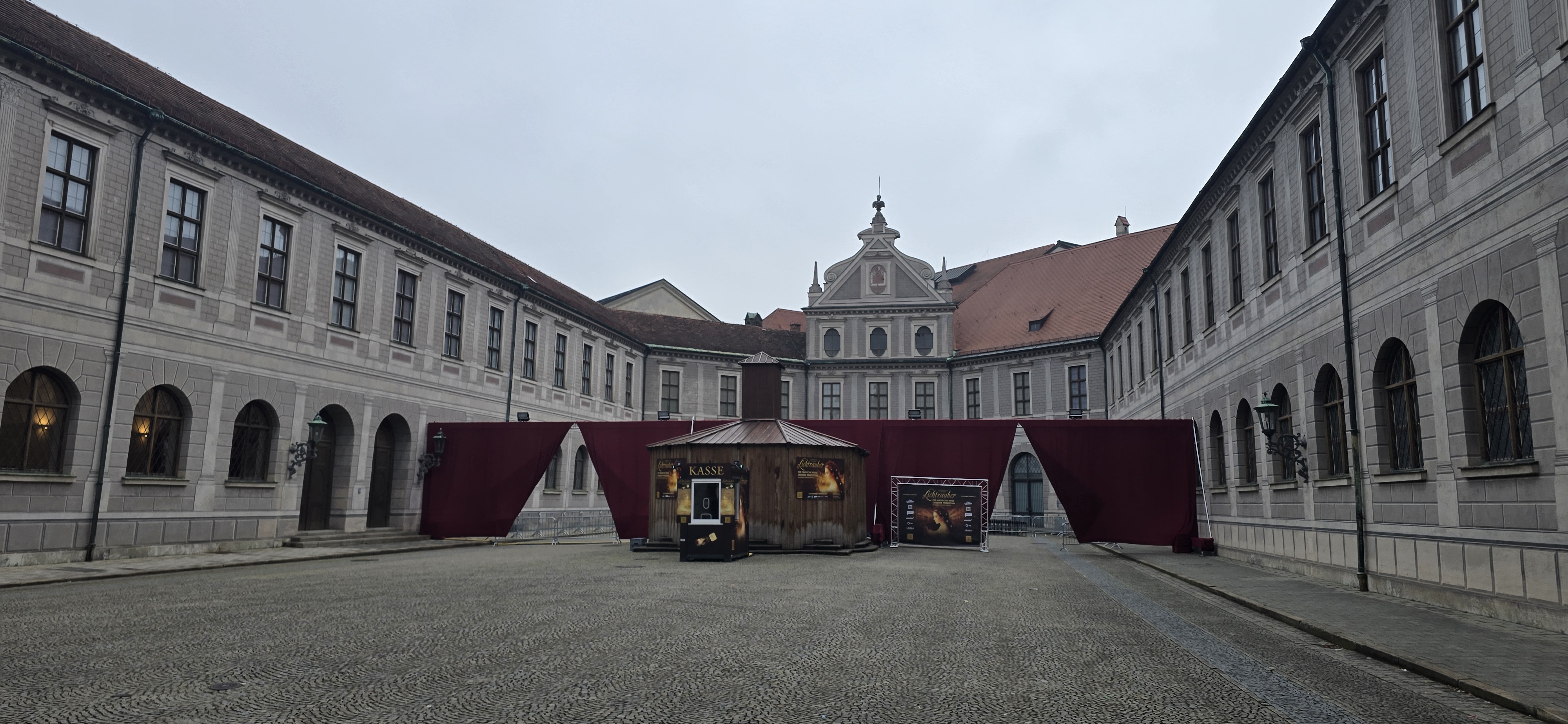
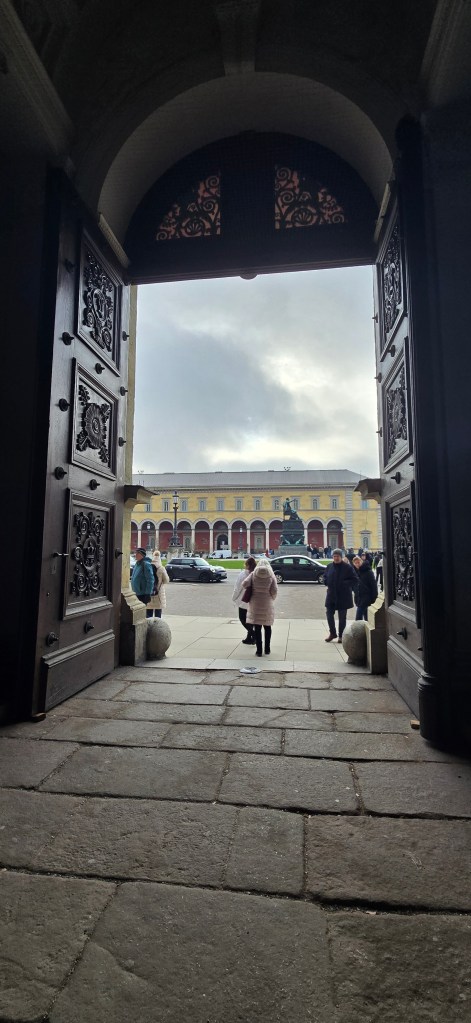
    I followed signs through a large garden courtyard. A few other people did the same. We all confidently approached a set of doors. 

    Not the door. 

    Back out. Around another corner into another garden- beautiful, but… still not the entrance. At this point it felt less like a museum visit and more like a royal scavenger hunt. 

    Somewhere between garden number two and garden number three, I pulled out my phone and bought my ticket online- because if I was going to wander in circles, I might as well at least skip the line once I found the correct door. 

    Eventually, I did. 

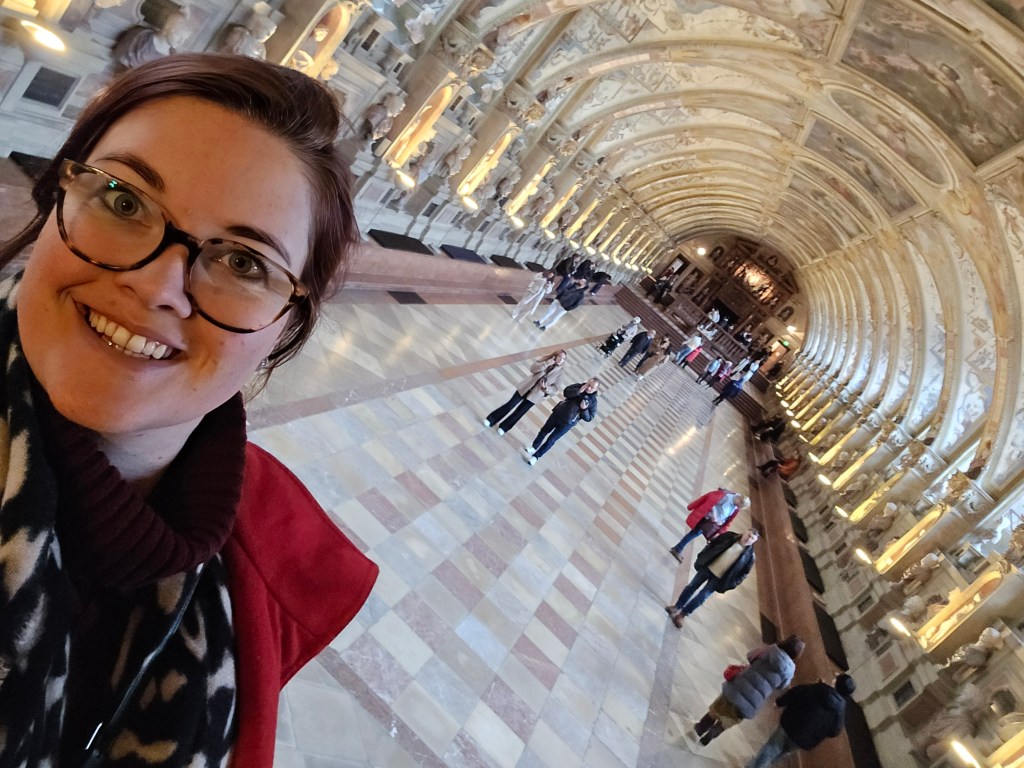
    👑 Once Upon a December

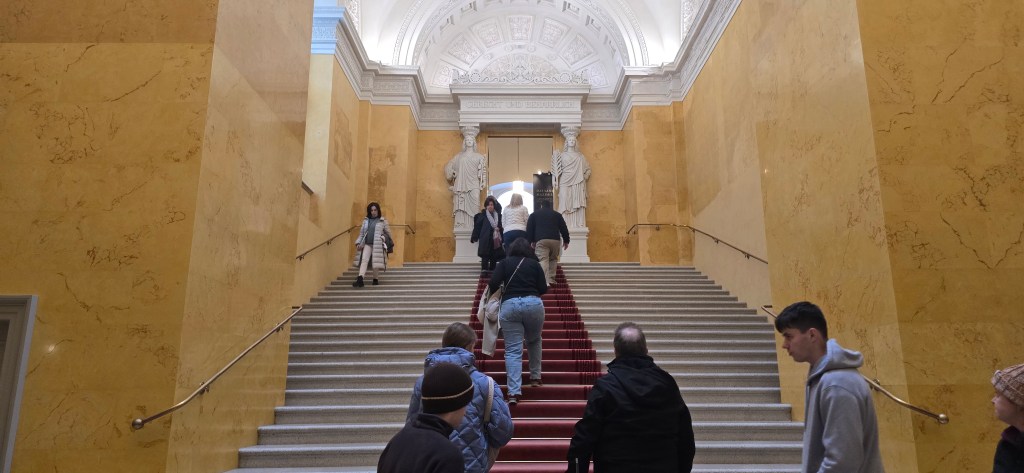
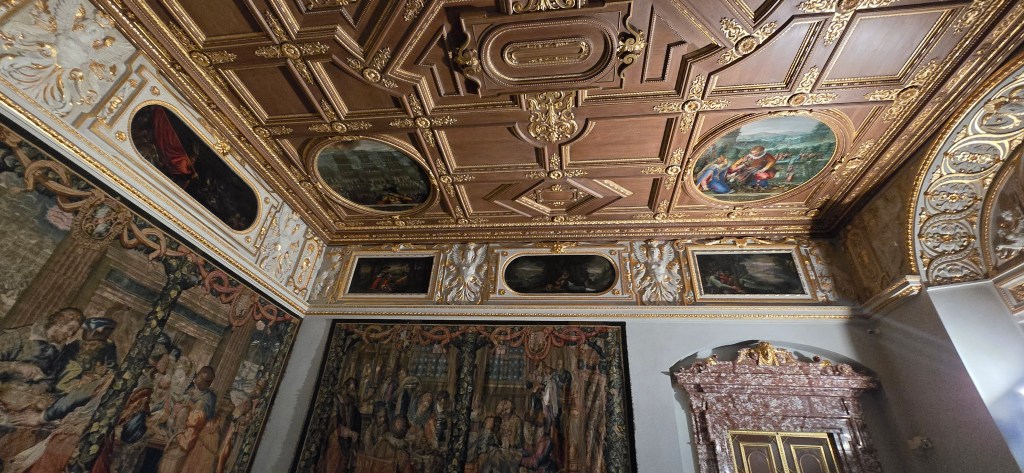
    Inside the palace, sleep deprivation gave way to something else entirely – awe, maybe. Or déjà vu from a dream I never actually had.

    There are rooms you walk through. And then there are rooms that feel like they’re walking through you. 

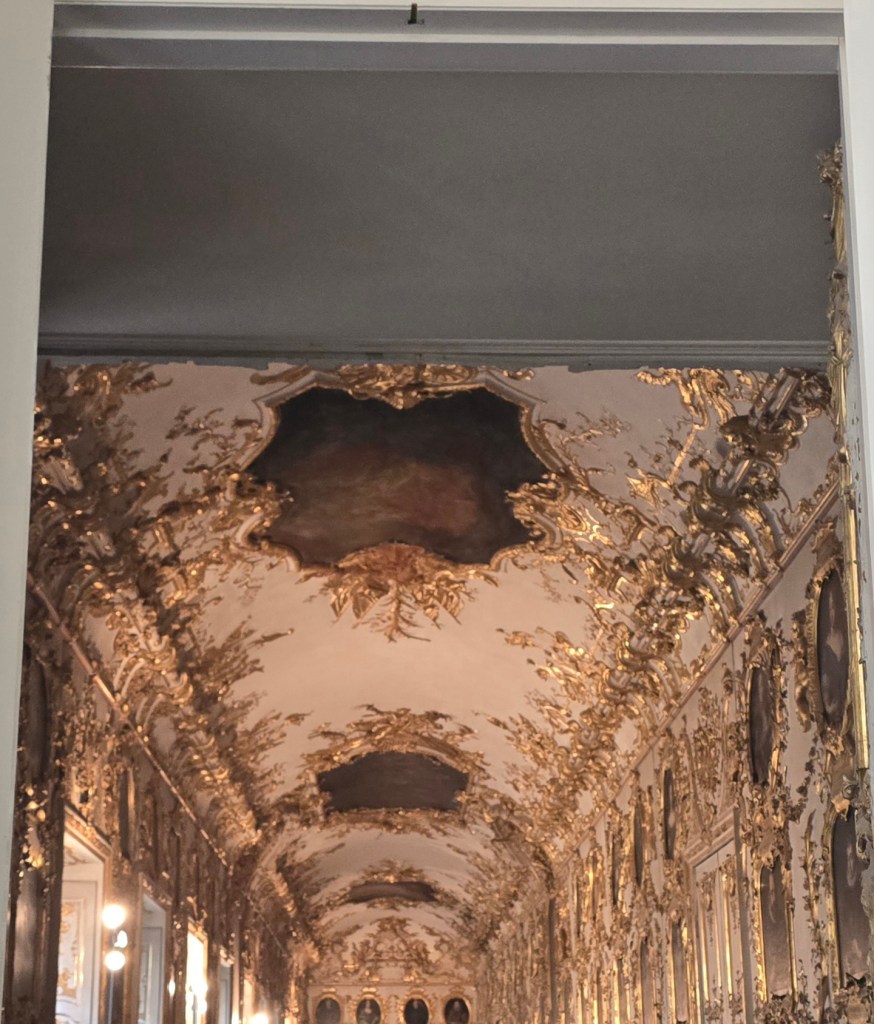
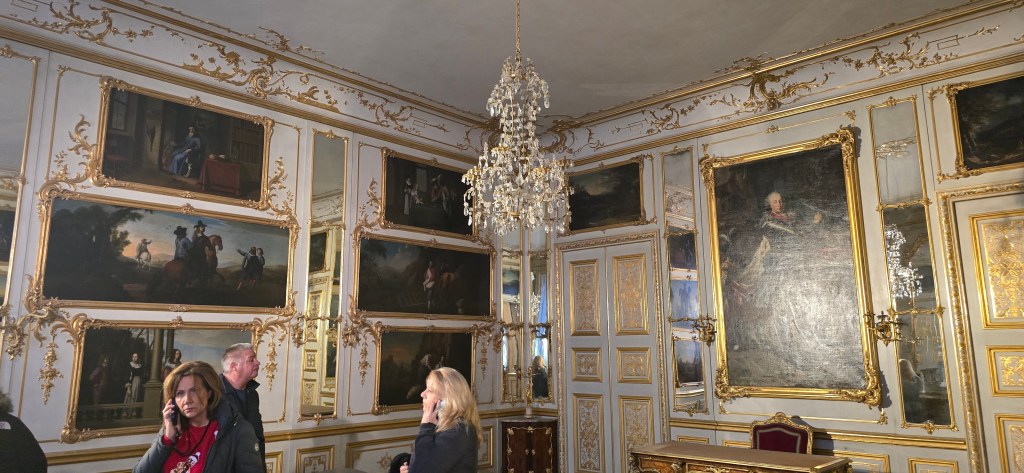
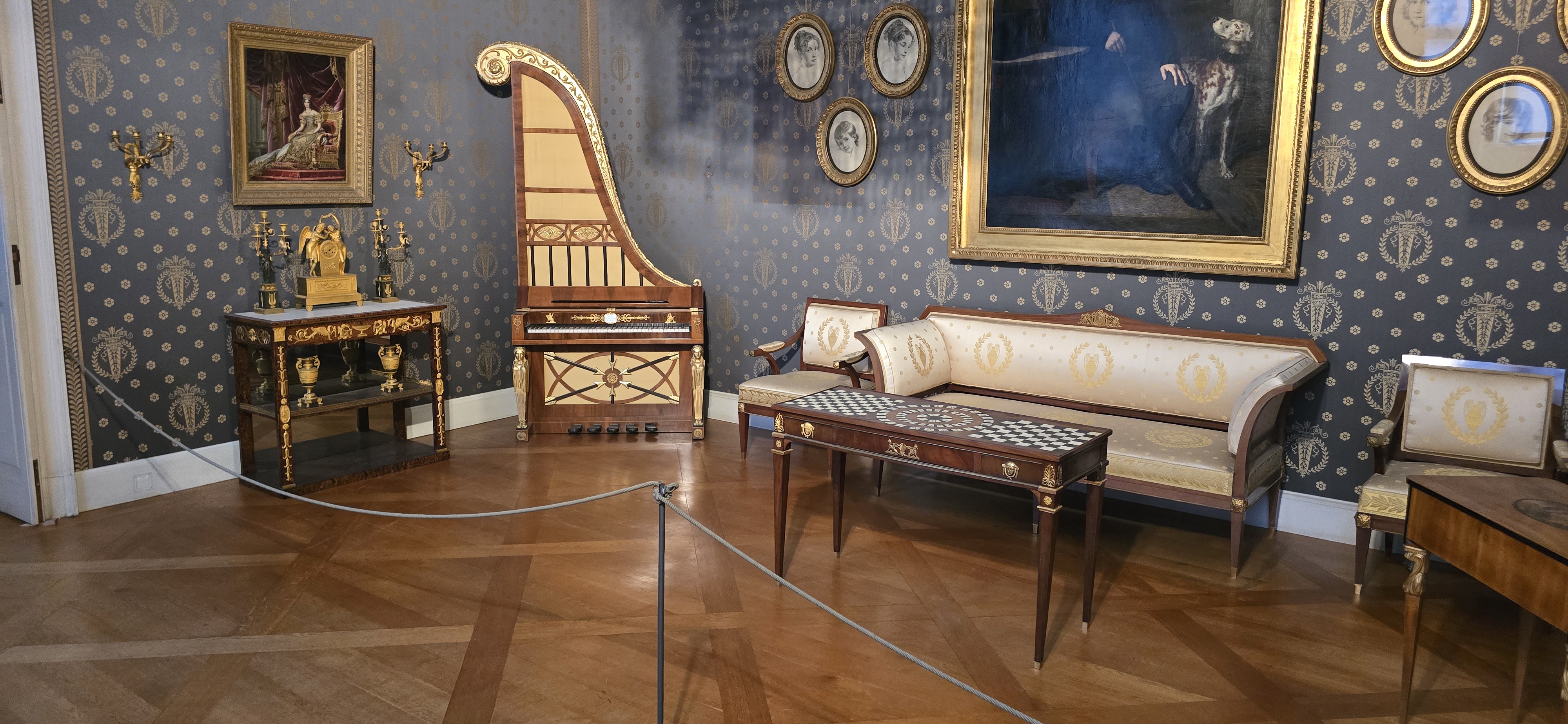
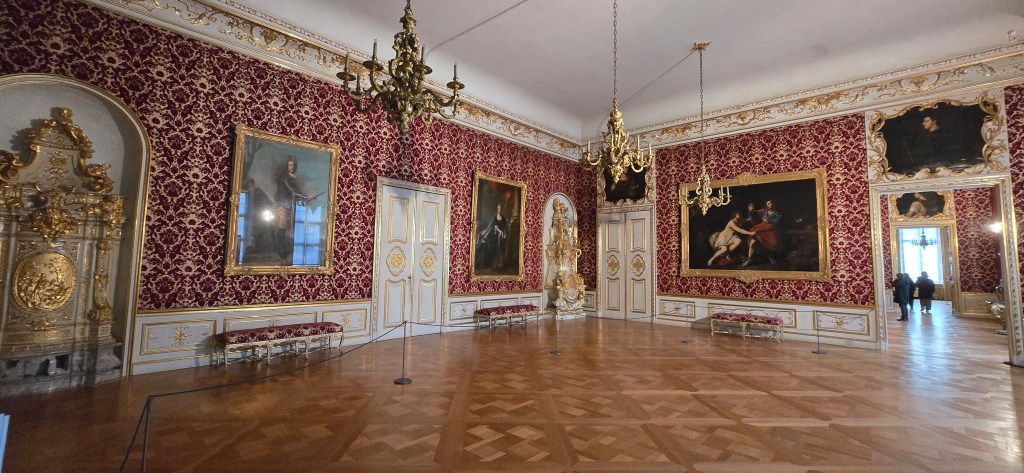
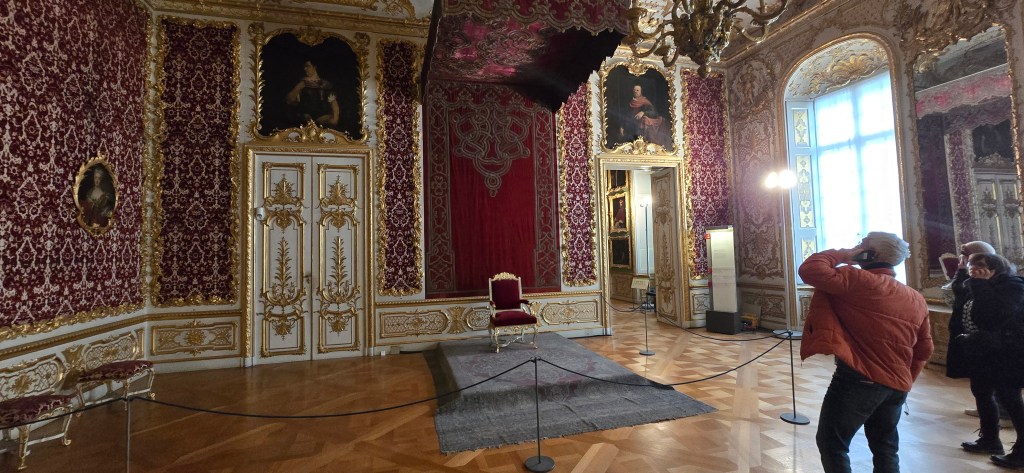
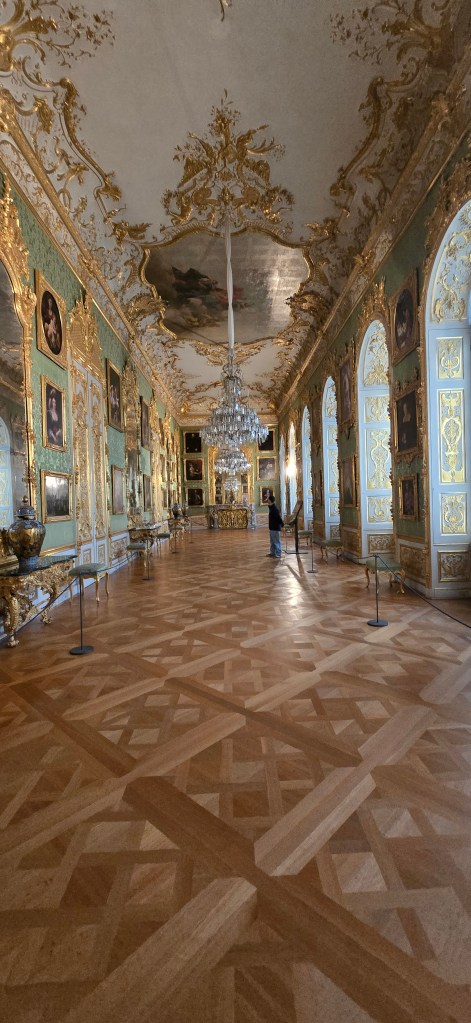
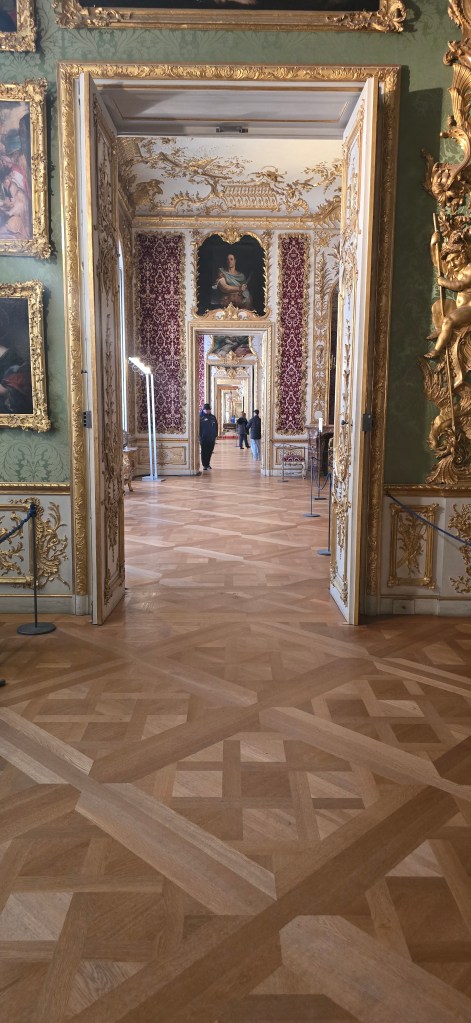
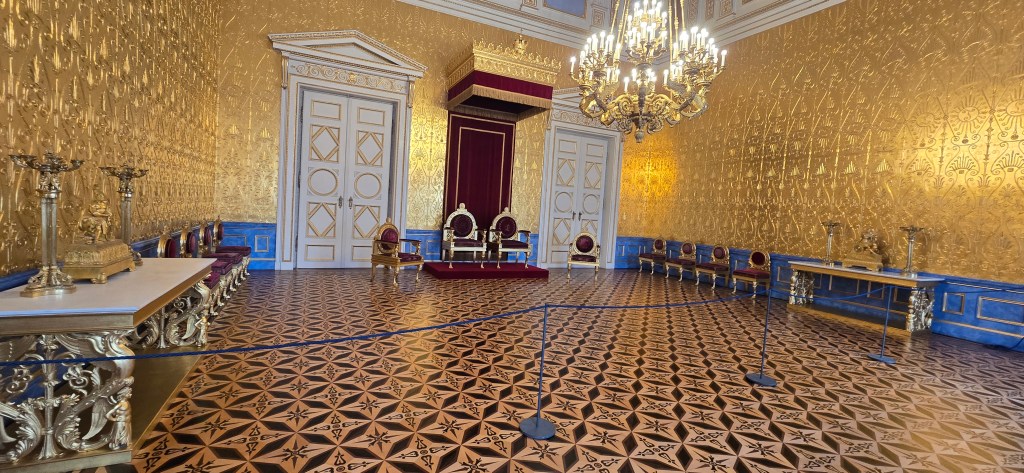
    One in particular stopped me in my tracks. Gold detailing climbing the walls. Crystal chandeliers casting light that felt almost theatrical. Mirrors reflecting mirrors reflecting mirrors.  For a split second — sleep deprivation fully engaged — I felt like Anastasia.I had to stop myself from breaking into Once Upon a December right then and there. (If you know, you know.)

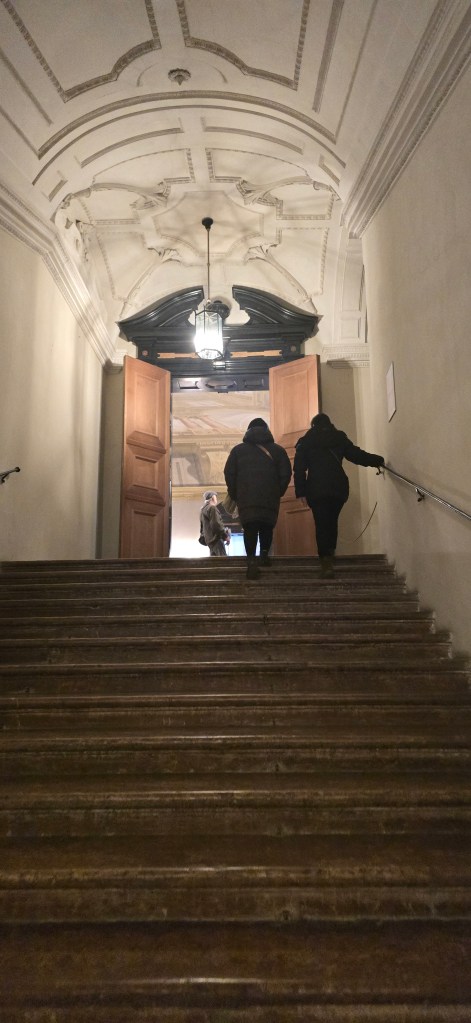
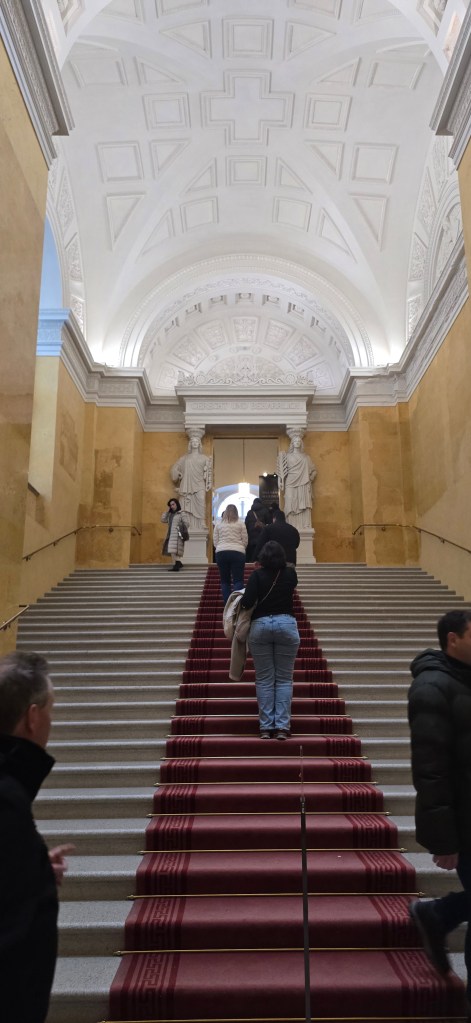
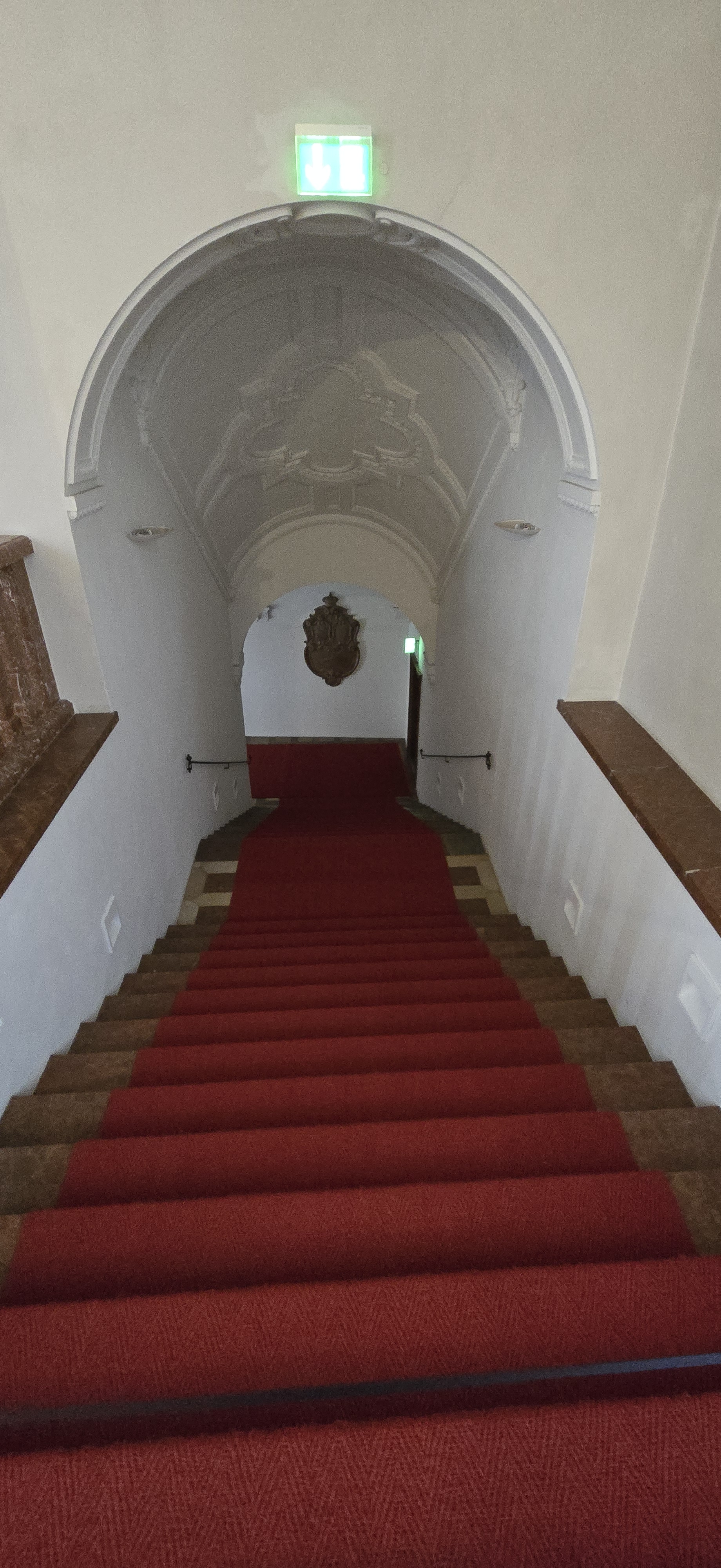
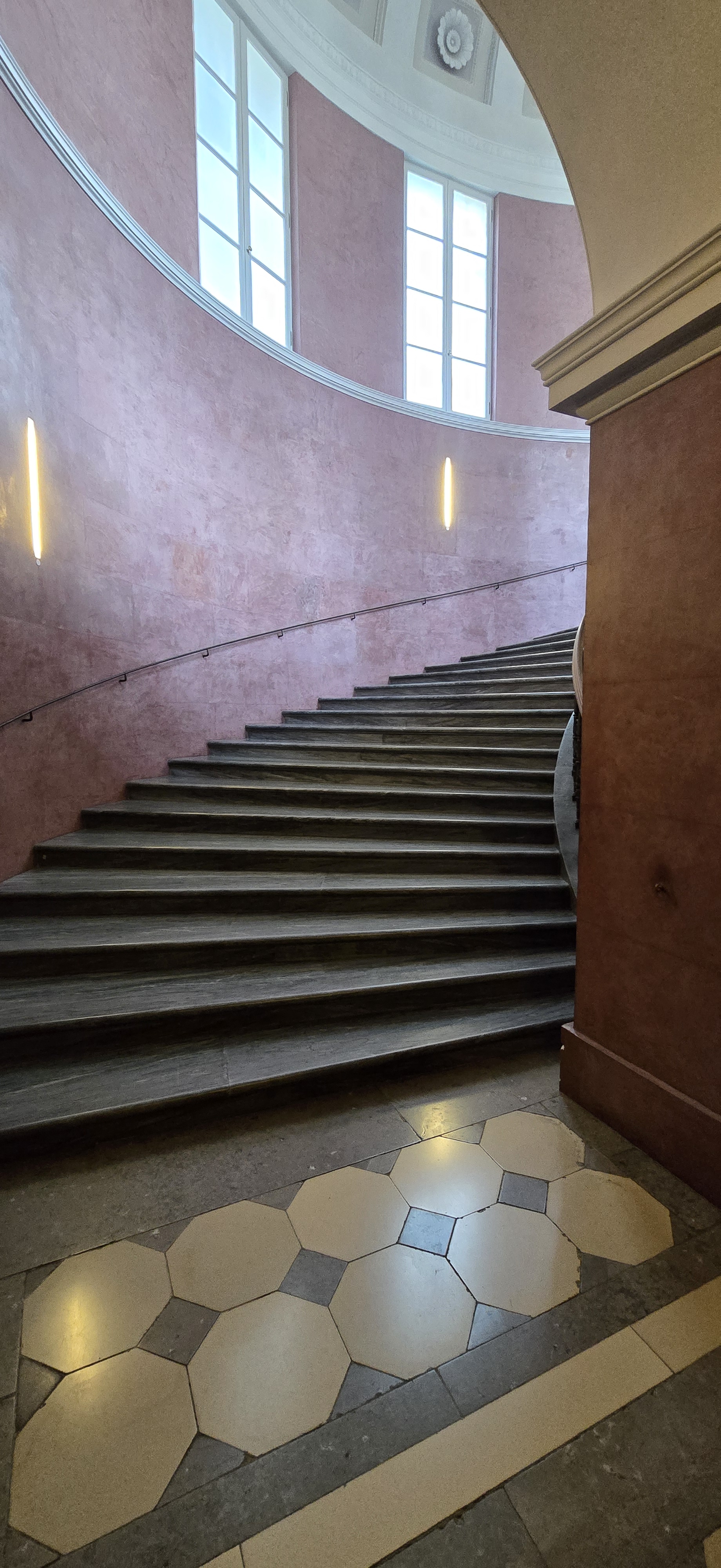
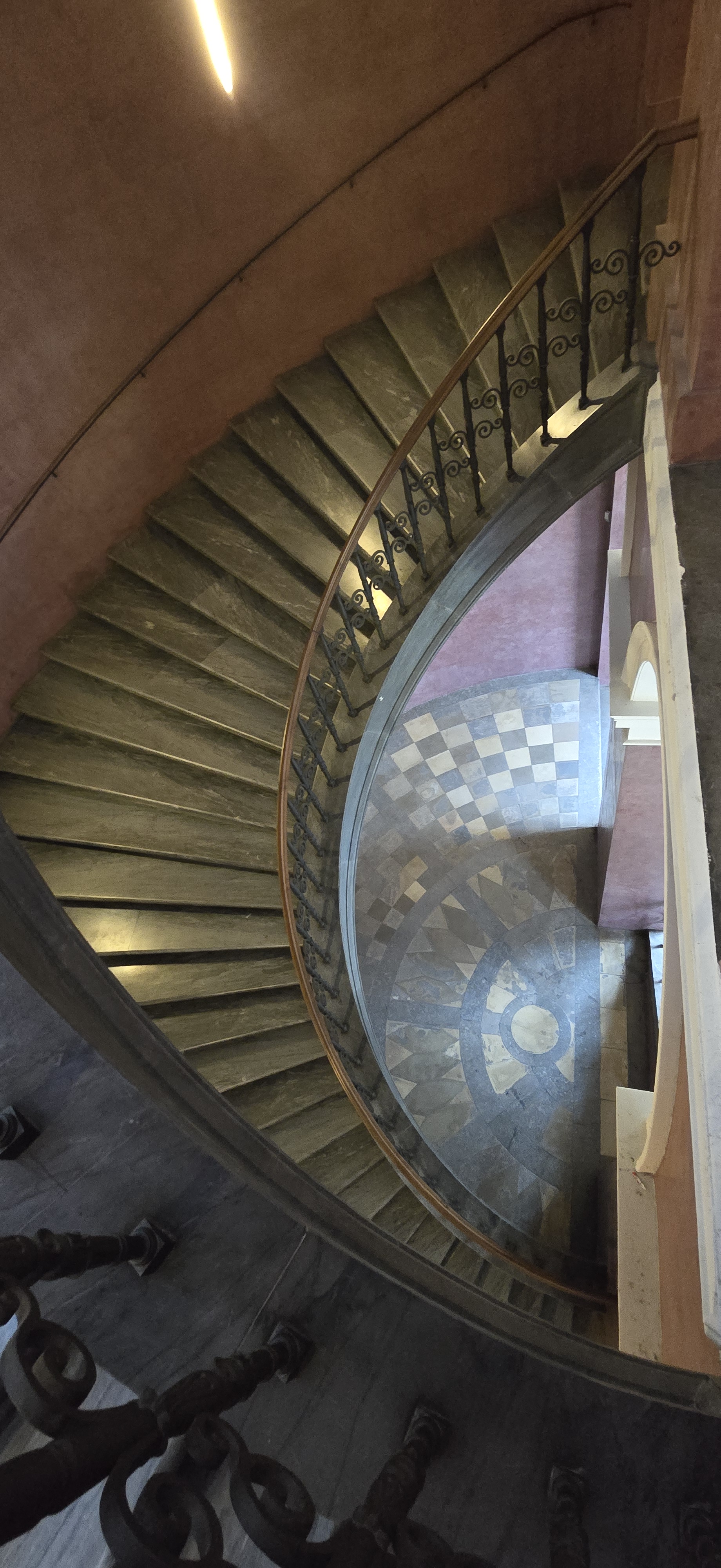
    The stairs alone were an event. Grand doesn’t even feel like a big enough word. They curved and climbed with intention — meant to be ascended slowly, dramatically, with fabric trailing behind you. Not in sneakers on 26 hours of no sleep.

    And then the details. 

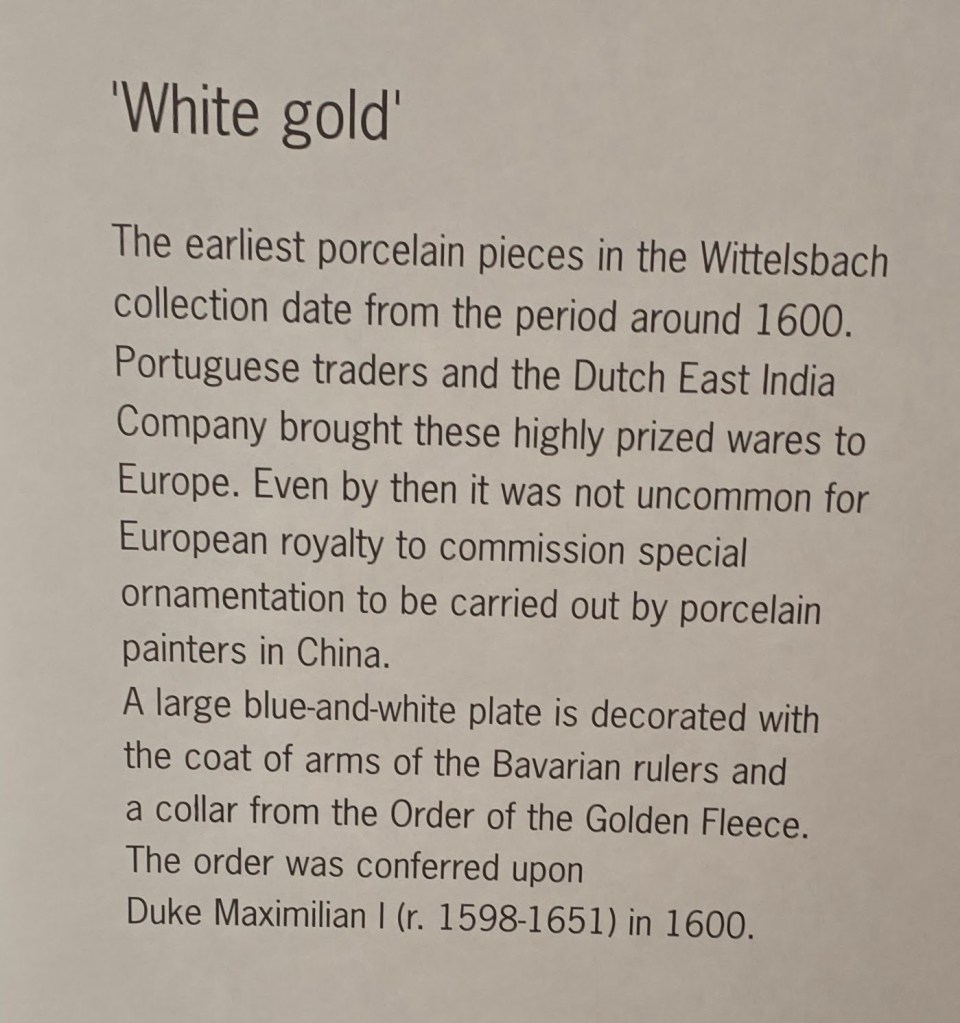
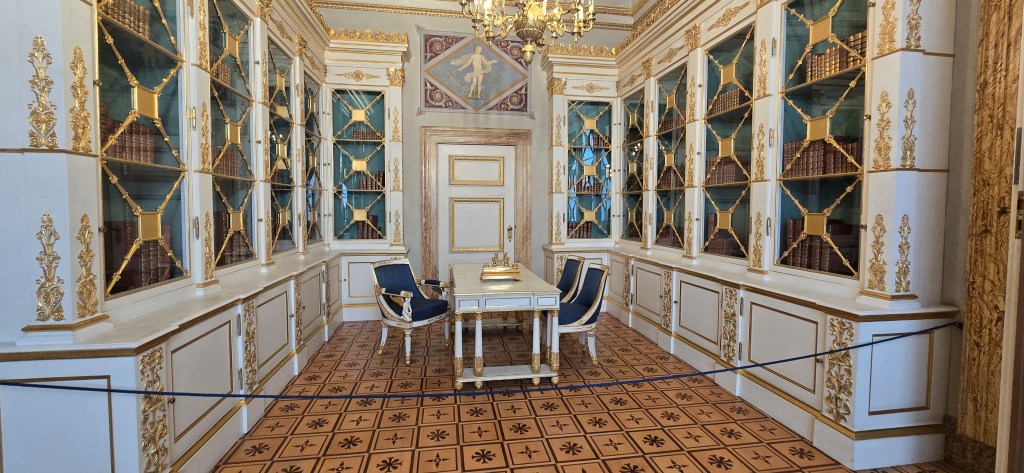
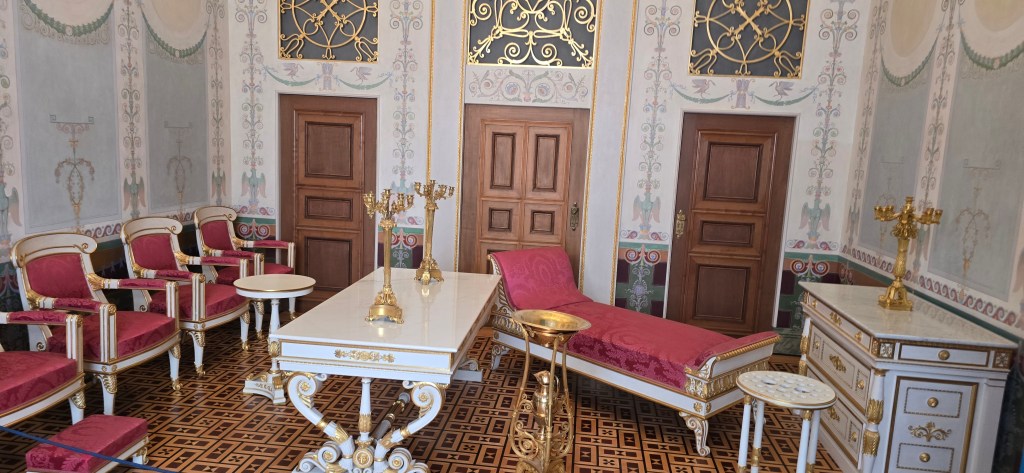
    White gold — which I learned isn’t white at all, but gold painted over wood- layered into moldings and trim so intricately it almost looked embroidered into the walls.

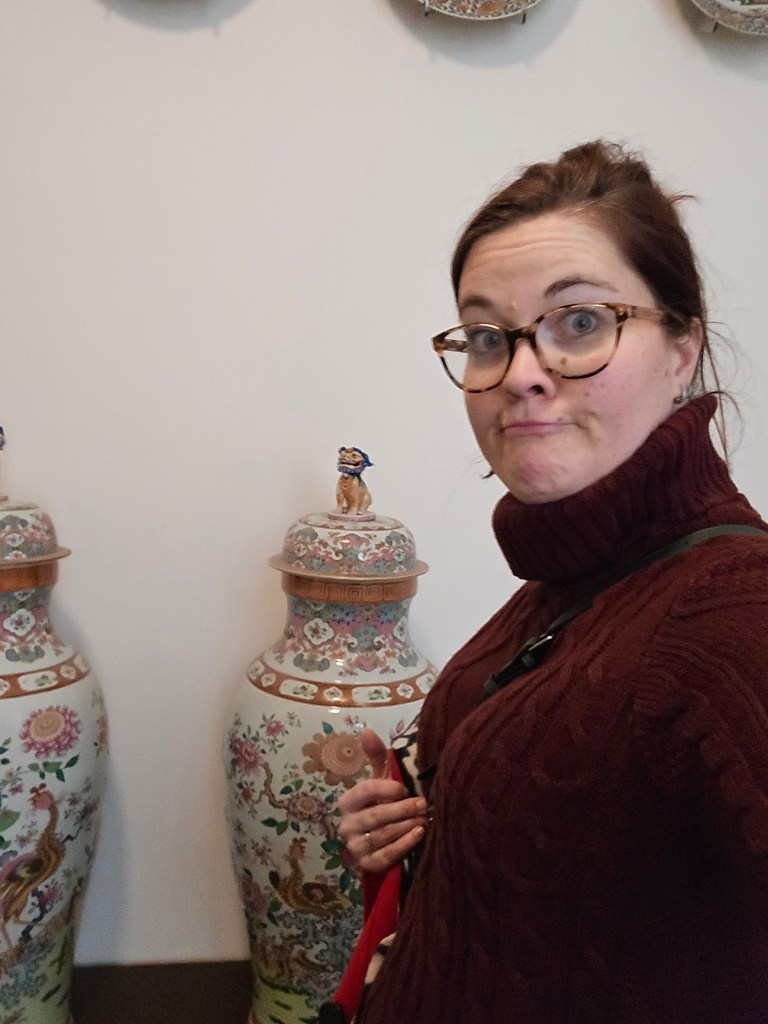
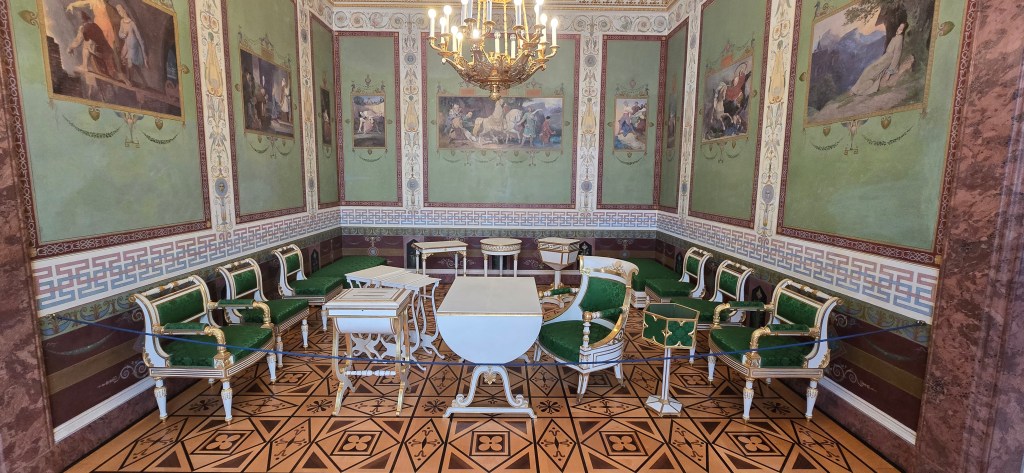
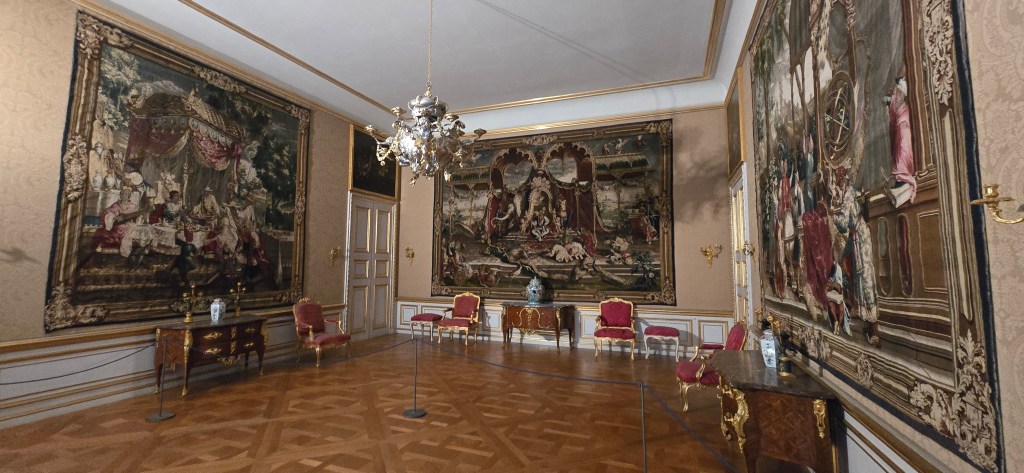
    I moved slowly, letting each space tell its story. The preserved pottery. The painted panels. The soft gleam of velvet and silk behind glass — some forgotten woman’s everyday now frozen behind museum rope.

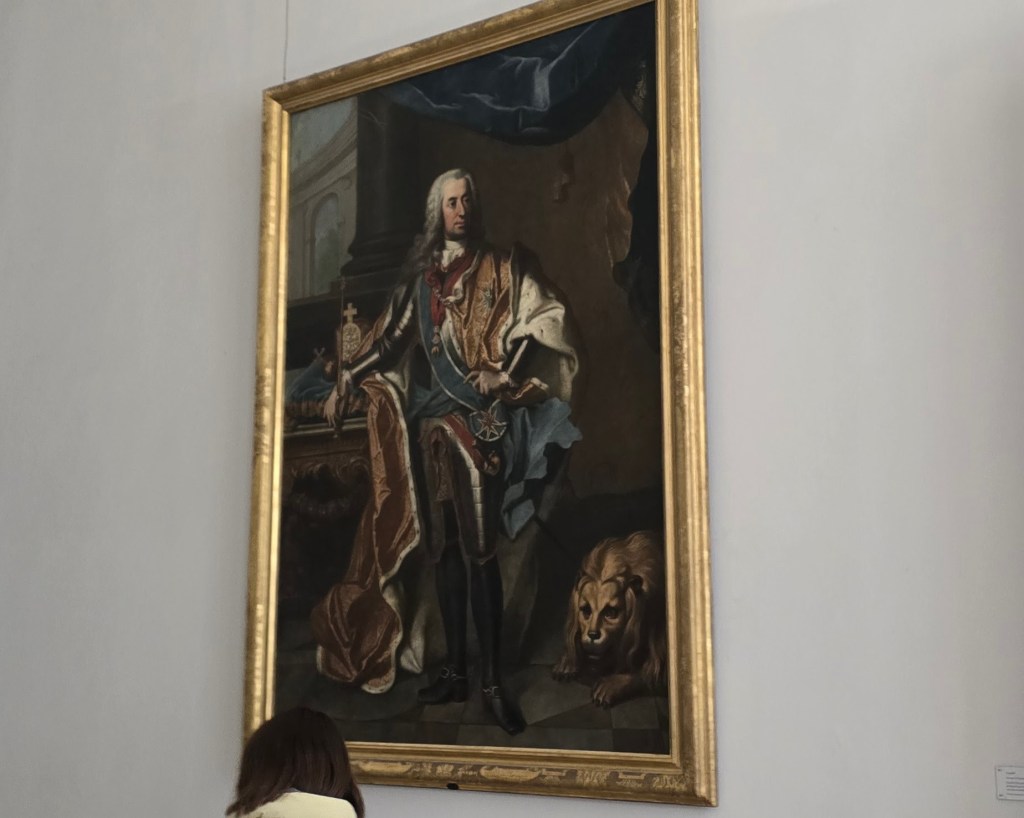
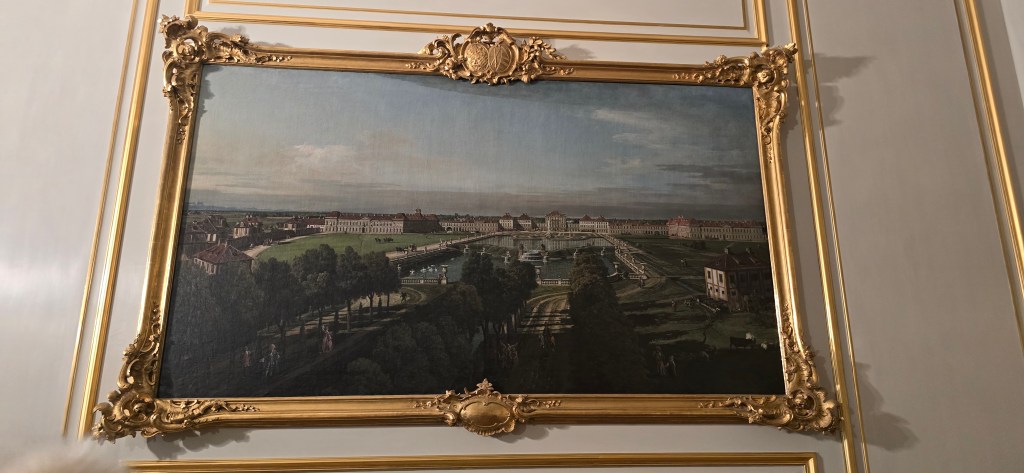
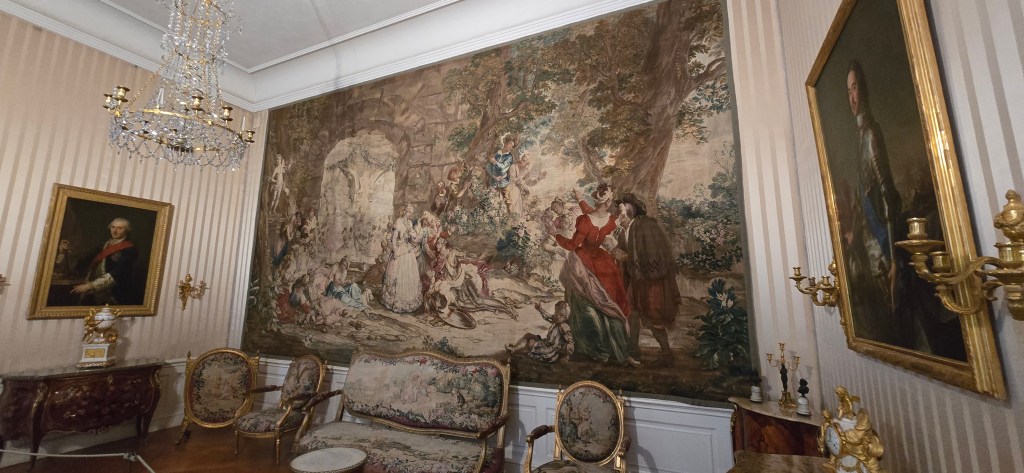
    Ornate décor. Room after room of paintings. So many paintings. 

    One painting, though, held me longer than the others.

    🎨 Light Against the Dark

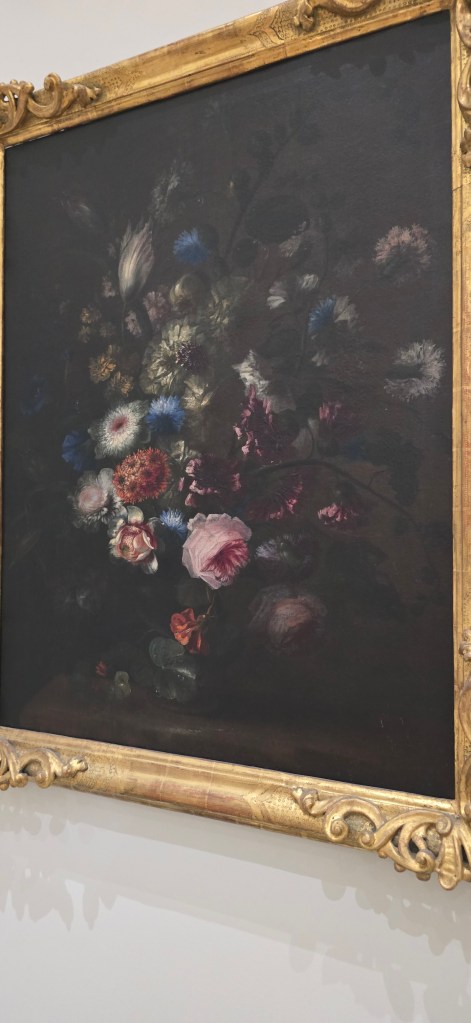
    A still life — flowers gathered in a darkened space, the background so deep it almost disappeared into shadow. At first glance it seemed muted. And then your eyes adjusted.

    The pink rose near the center caught the light first — soft but luminous, its petals unfolding like silk. Around it, bursts of blue and red punctuated the darkness. Not loud. Not chaotic. Just deliberate. The blues were almost electric against the black, small sparks of color. The deeper reds felt heavier — velvety, grounded.

    It wasn’t just the flowers. It was the contrast.

    The way the light seemed to fall from one unseen direction, touching certain petals while letting others remain half-hidden. The way life felt suspended in shadow.

    Everything around it in the palace shimmered — gold leaf, chandeliers, carved moldings.

    This painting didn’t shimmer.

    It glowed quietly.

    Maybe that’s what made it beautiful. 

    Because without the darkness, the color wouldn’t feel so alive. The light wouldn’t feel so intentional. It reminded me that contrast doesn’t diminish beauty-it defines it. THat sometimes what draws you in isn’t brightness alone, but the courage of it-daring to exist against something heavier. 

    Beauty doesn’t disappear in the dark. It just waits for the right eyes to notice it. 
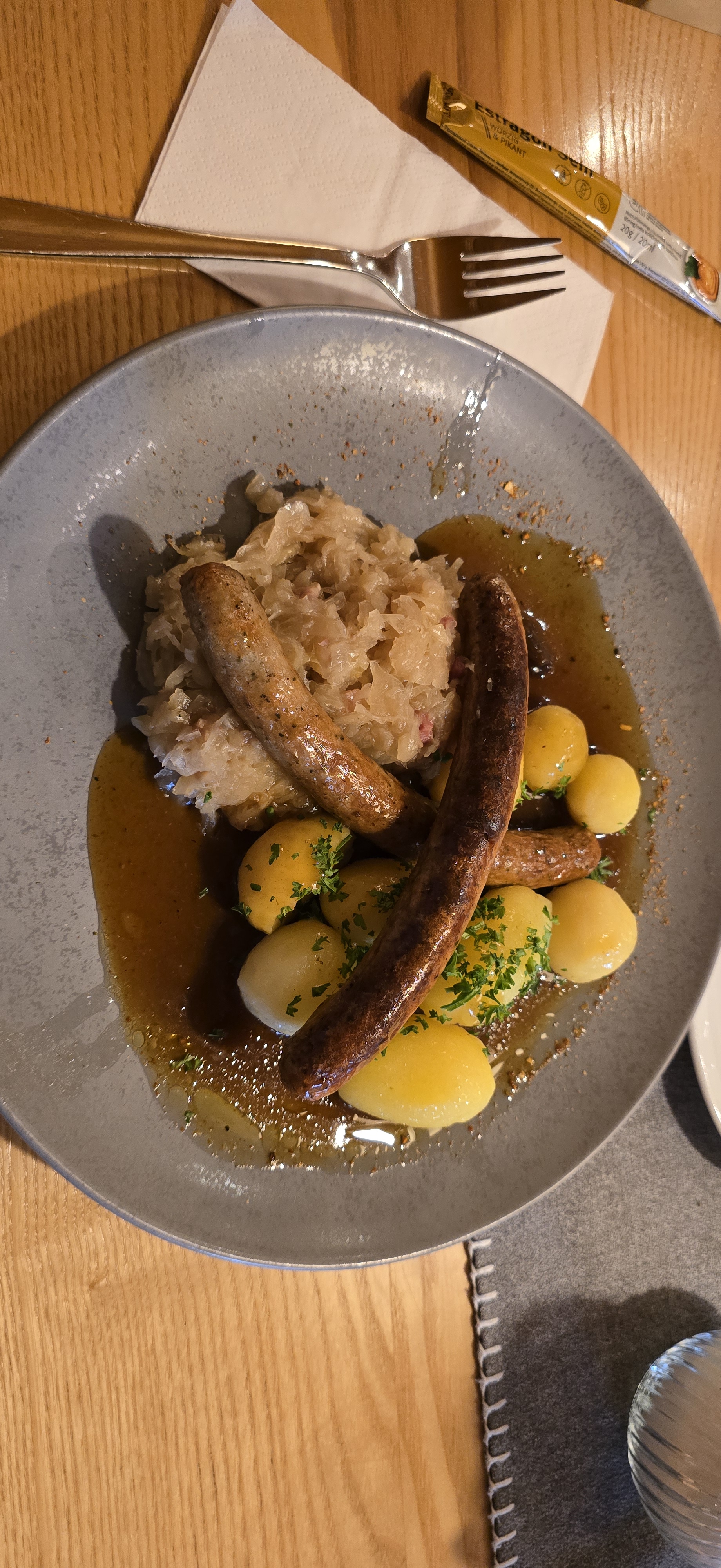
    After rooms of white gold and imperial scale, there was something almost intimate about this piece — color daring to exist against darkness.

    🚪 Spectacle & Secrecy

    But the palace wasn’t finished with me yet. 

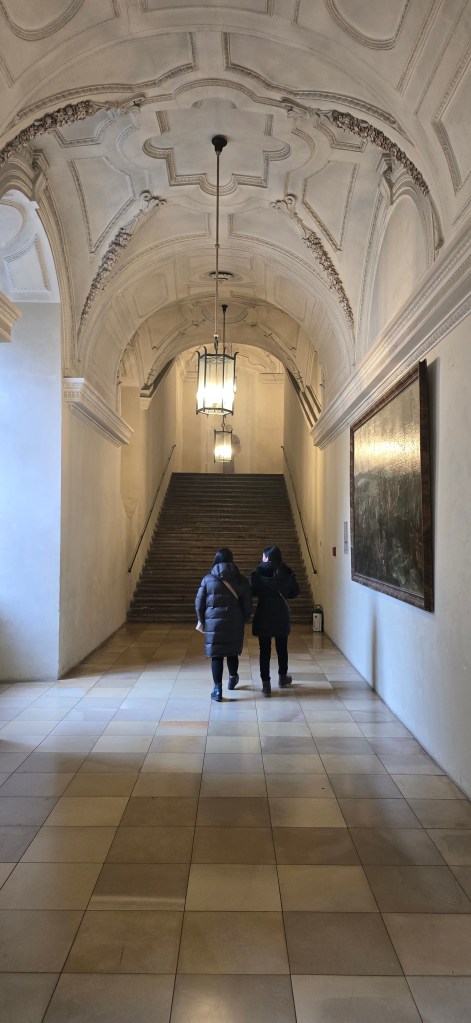
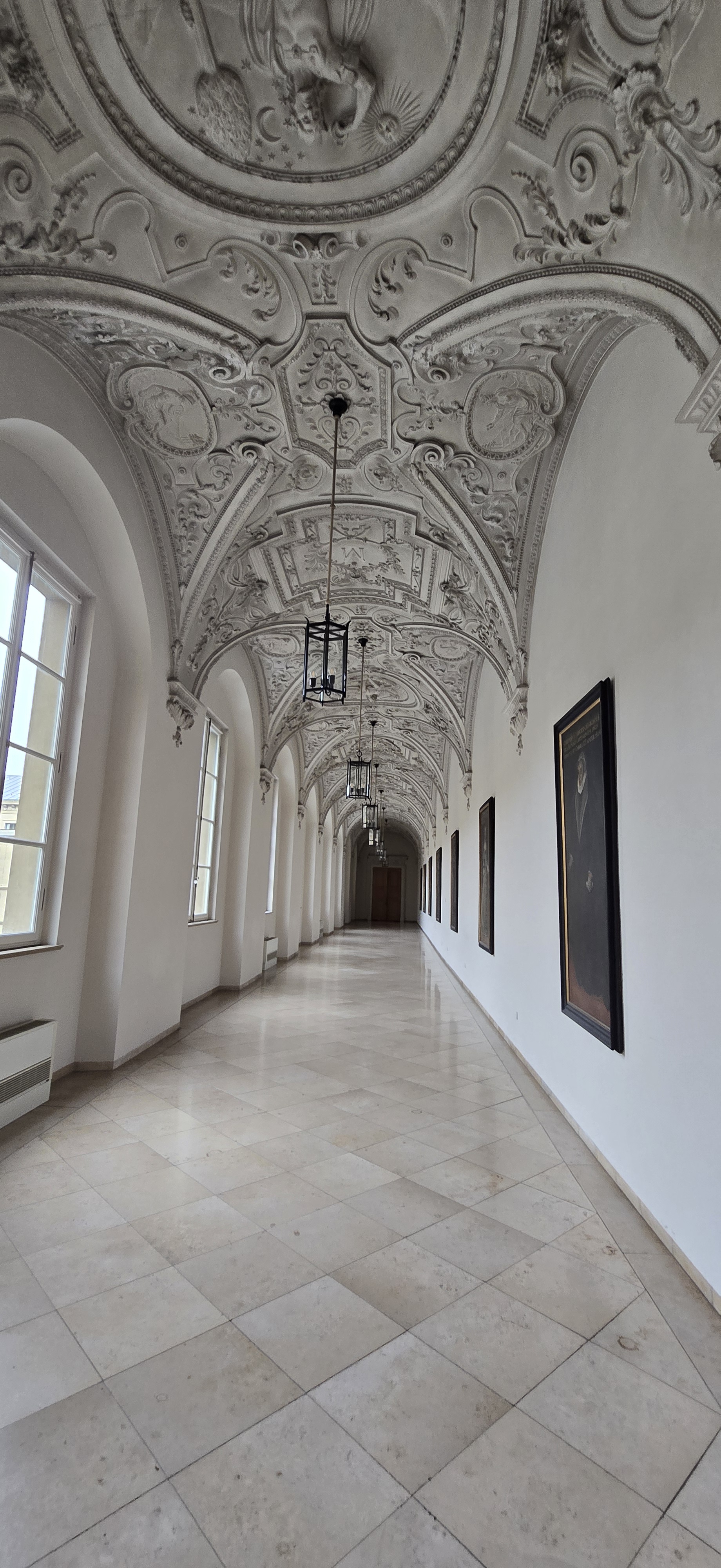
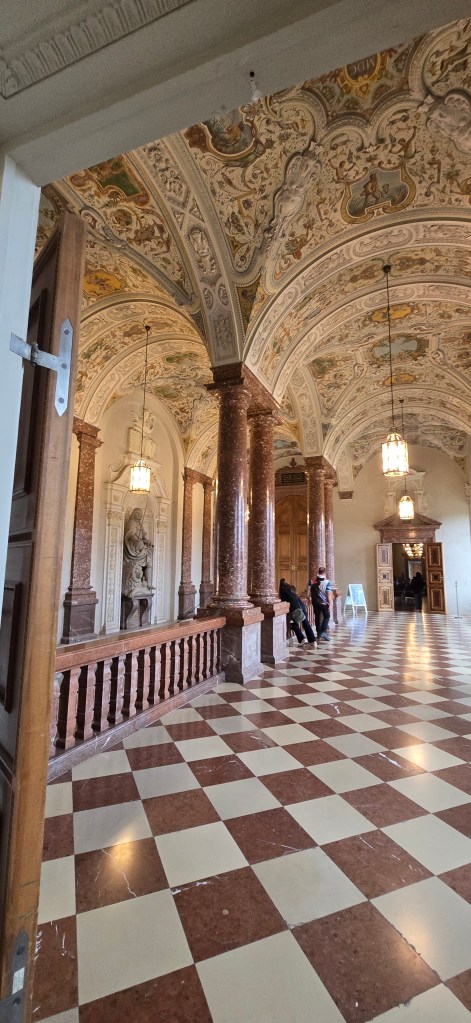
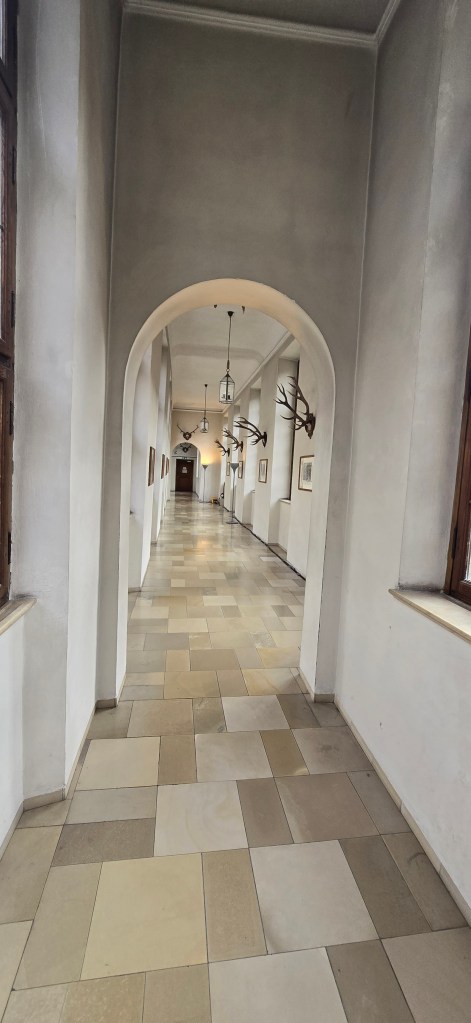
    The rooms continued – unfolding into one another without the kind of hallways we’re used to. No clear separation between “private” and “public” the way modern homes pretend to have. One chamber simply opened into the next, and then the next, and then the next. 

    It blurred the line between spectacle and secrecy. 

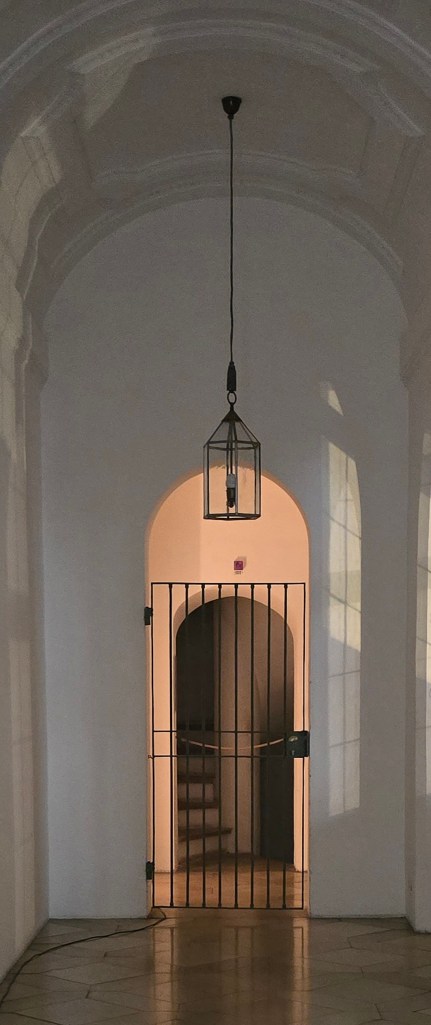
    And then there were the servant corridors.

    Narrower. Quieter. Hidden pathways running parallel to grandeur.

    I couldn’t help but wonder what they witnessed. The quiet observers of royal life. What they say. What they overheard.  Who they saw slipping into rooms unannounced. Midnight conversations. Unchaperoned strolls. If Bridgerton has taught us anything, it’s that the ton would absolutely have opinions.

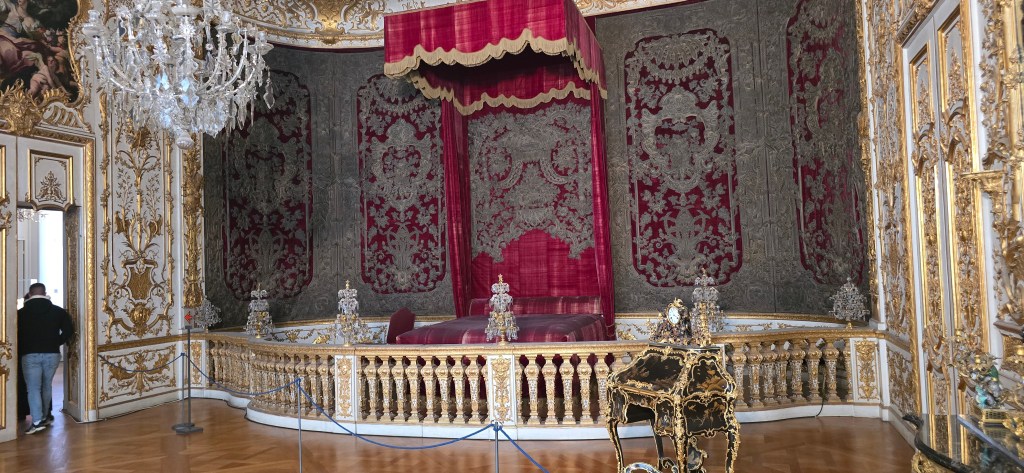
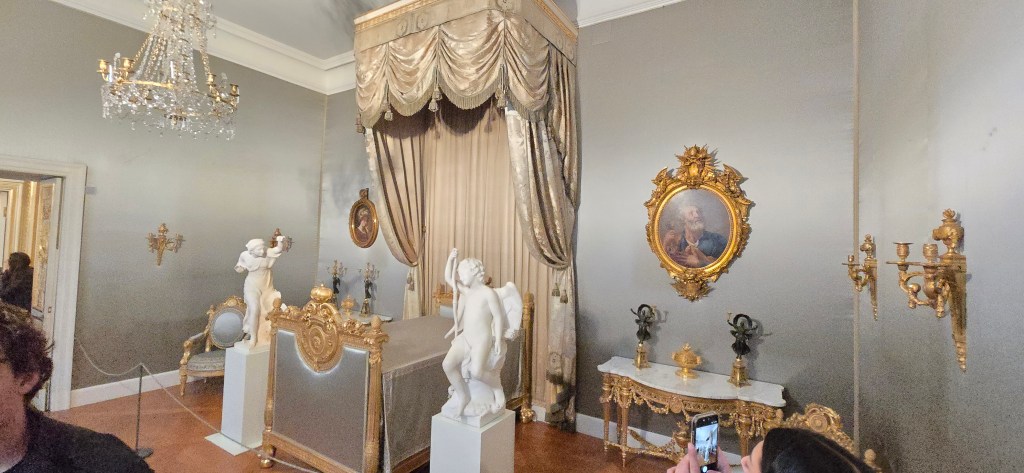
    The beds were another surprise. Elevated so high I would have needed a committed hop to climb into one. Suddenly, The Princess and the Pea felt less like fairy tale exaggeration and more like architectural realism.

    I leaned over a stairwell railing at one point, peering down into levels I couldn’t access. The pull to wander further was strong. I wanted to know where every corridor led. Who had descended them in silk, who had scrubbed them in silence. What secrets were swallowed by those walls.

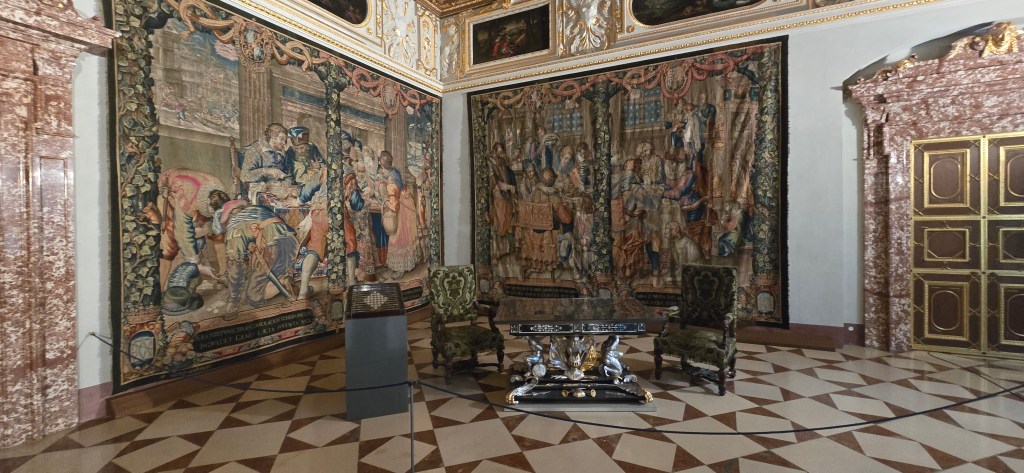
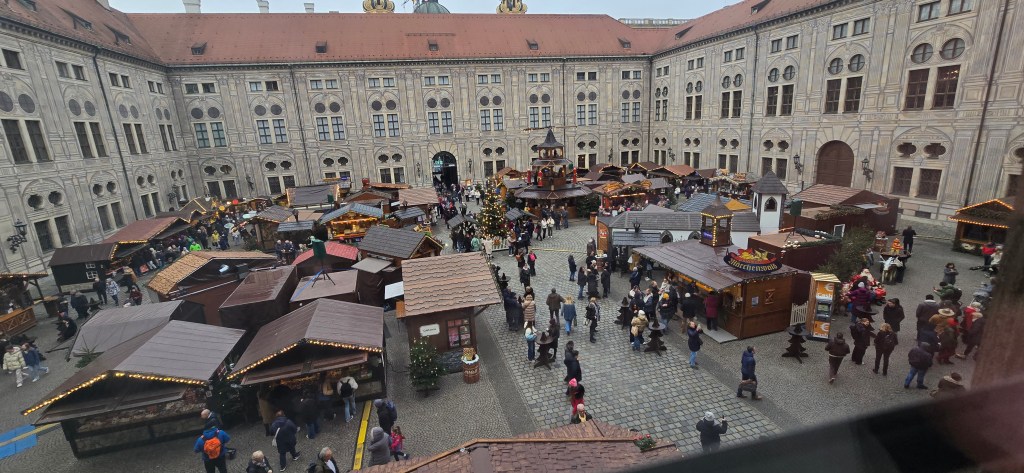
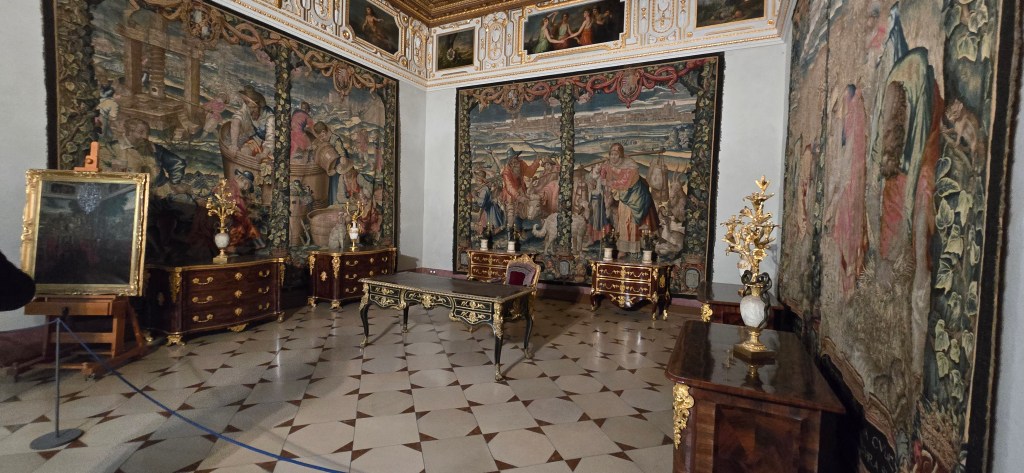
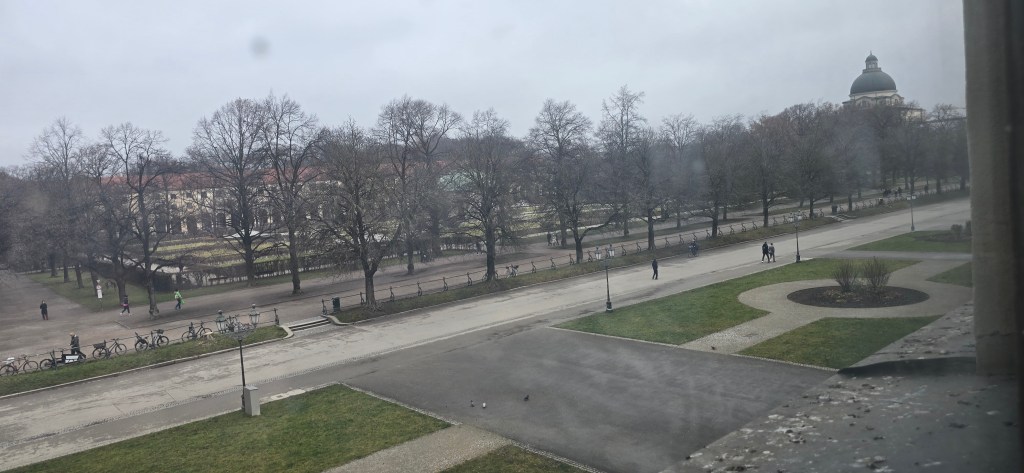
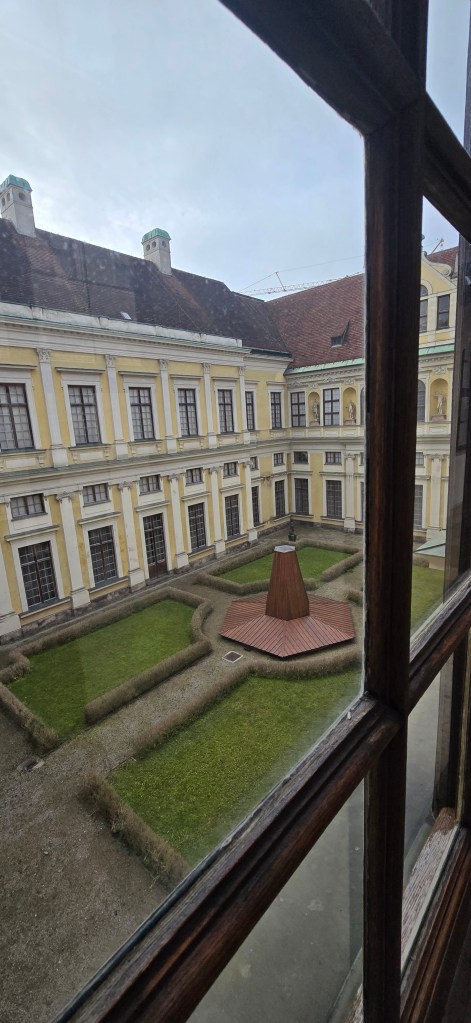
    There were tapestries in one dining hall that felt heavy with history — scenes frozen in thread. Windows looking out over gardens where vendors had set up booths below. Another window revealed the very garden I had wandered earlier, and I tried to imagine it in full green bloom instead of winter’s restraint.

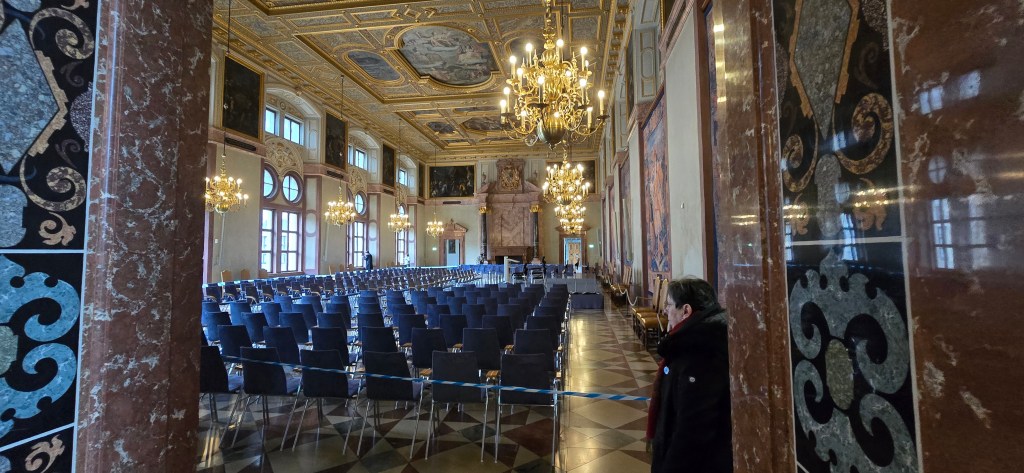
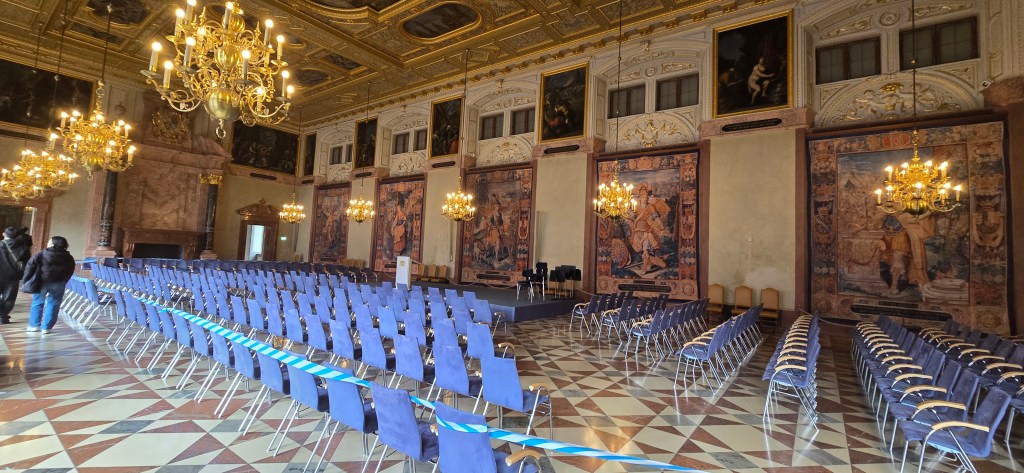
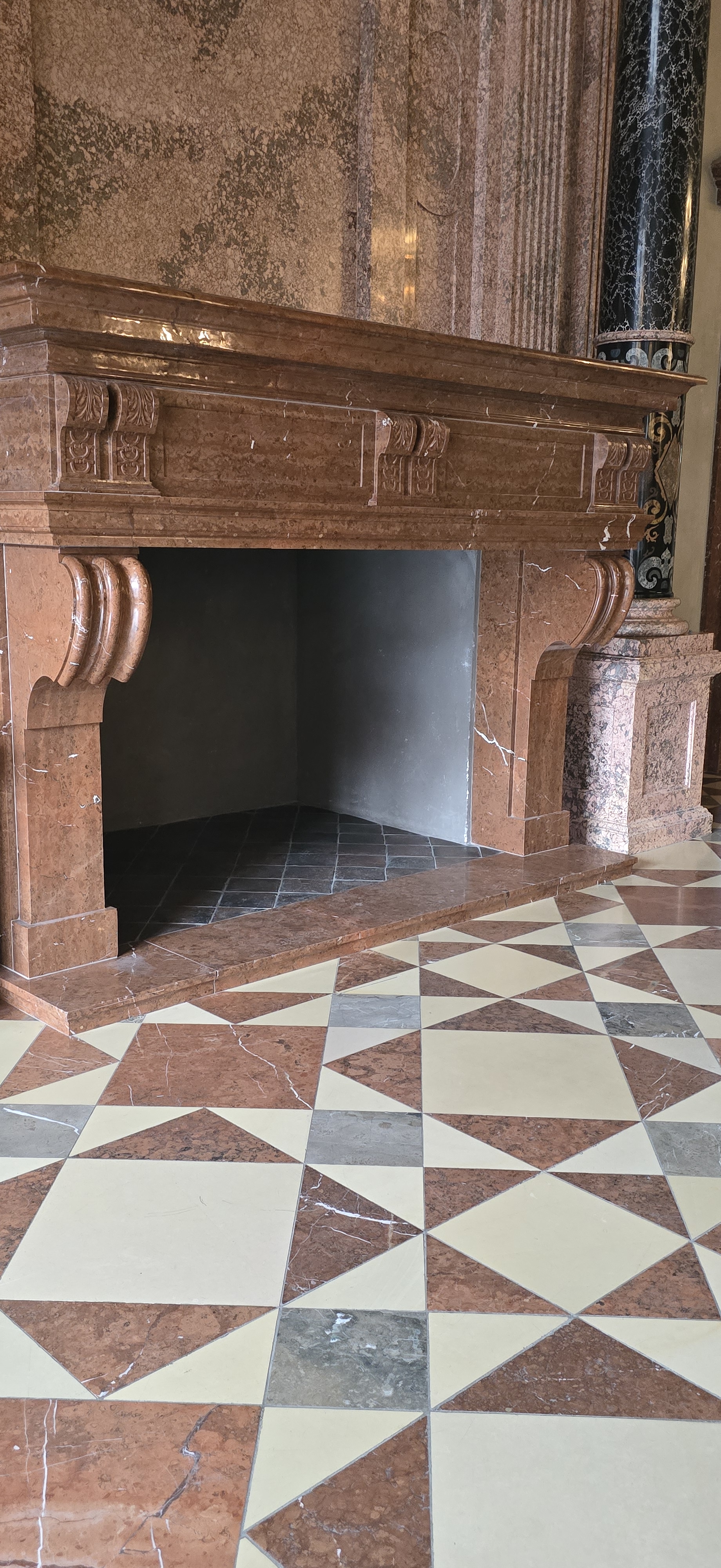
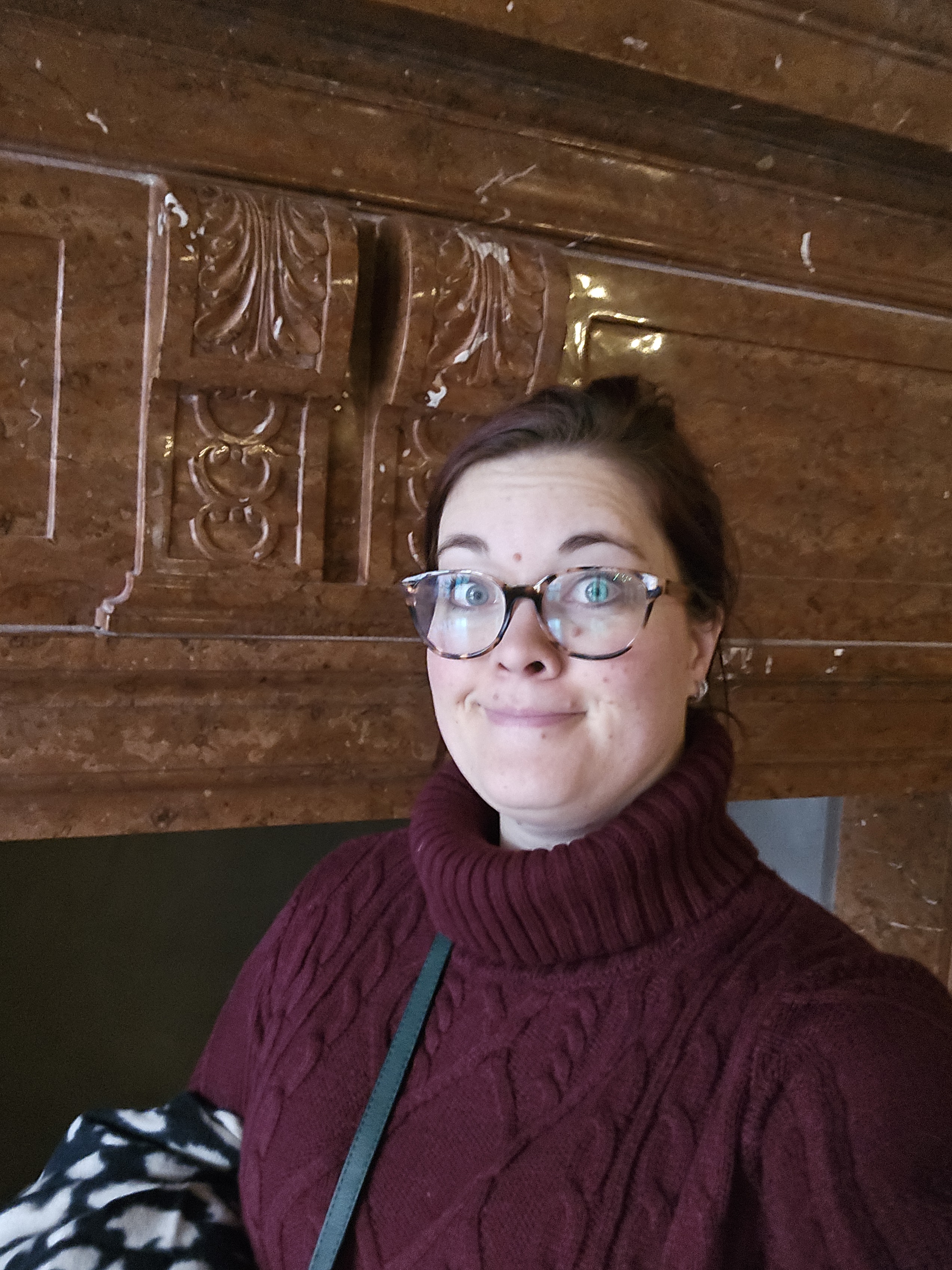
    The Emperor’s Hall was massive — the kind of room that swallows your footsteps whole. And the fireplace? Monumental. The sort of structure you don’t gather around — you gather beneath.

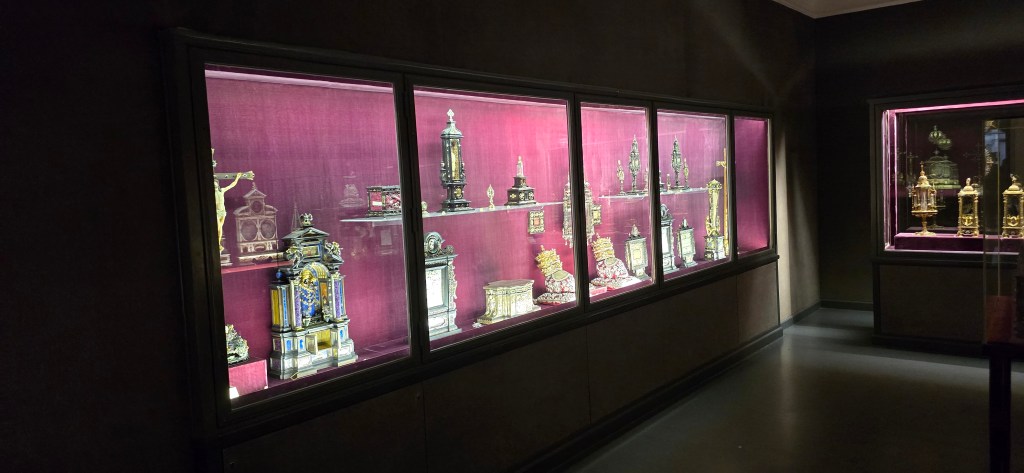
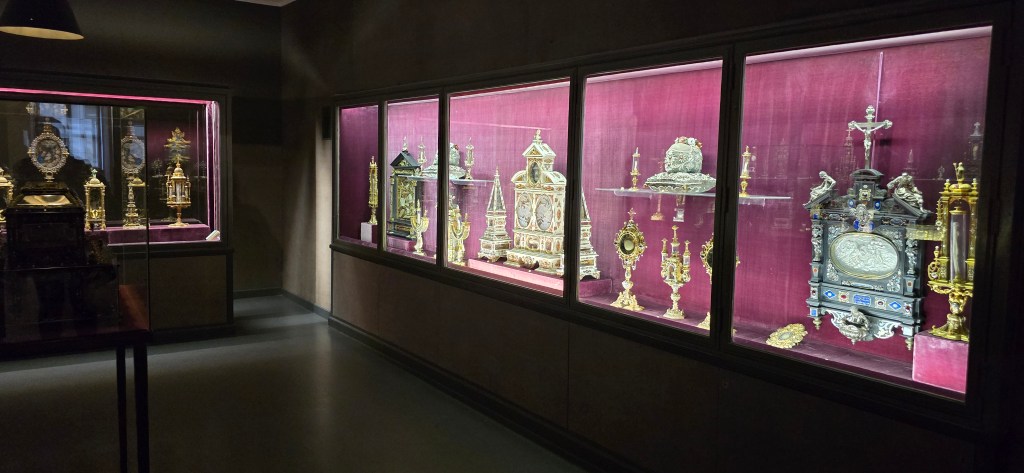
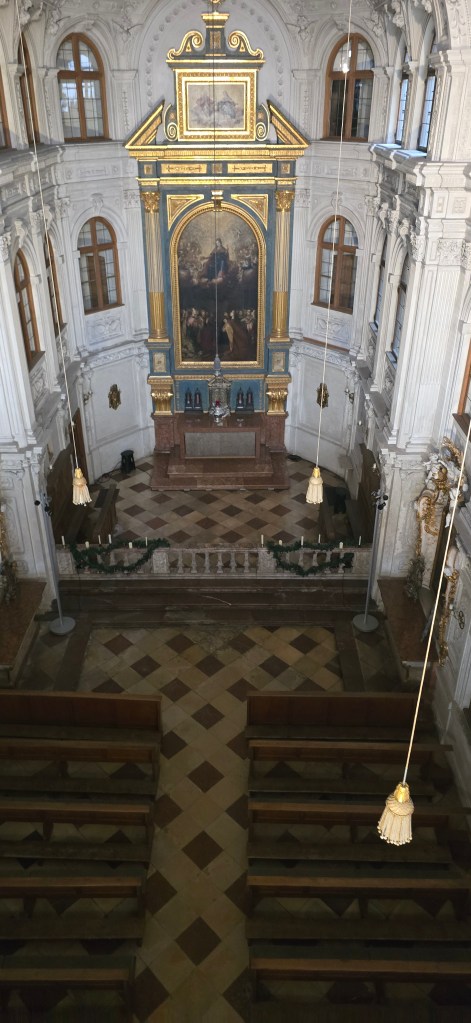
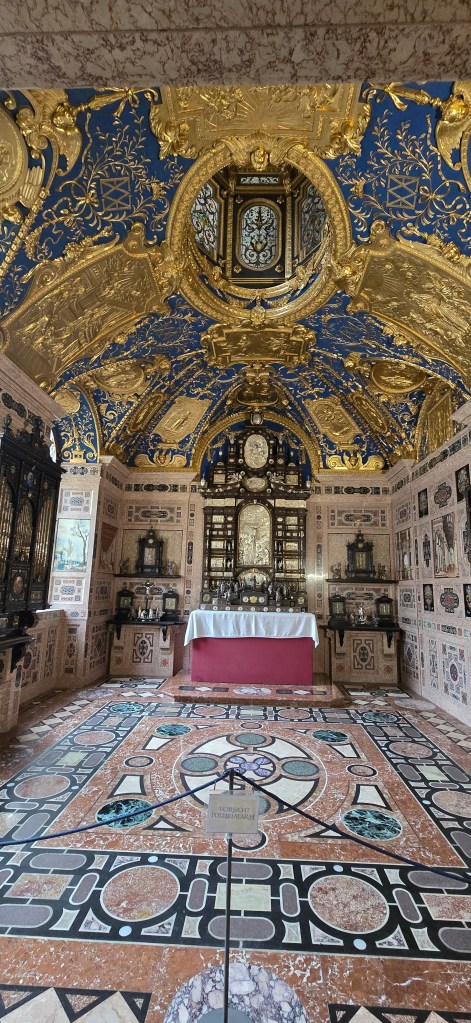
    A chapel quietly tucked into opulence. A reliquary vault heavy with preservation. Room after room layering dynasty over dynasty. 

    My desire to know where this leads is strong.

    🕯 Altered, Not Erased

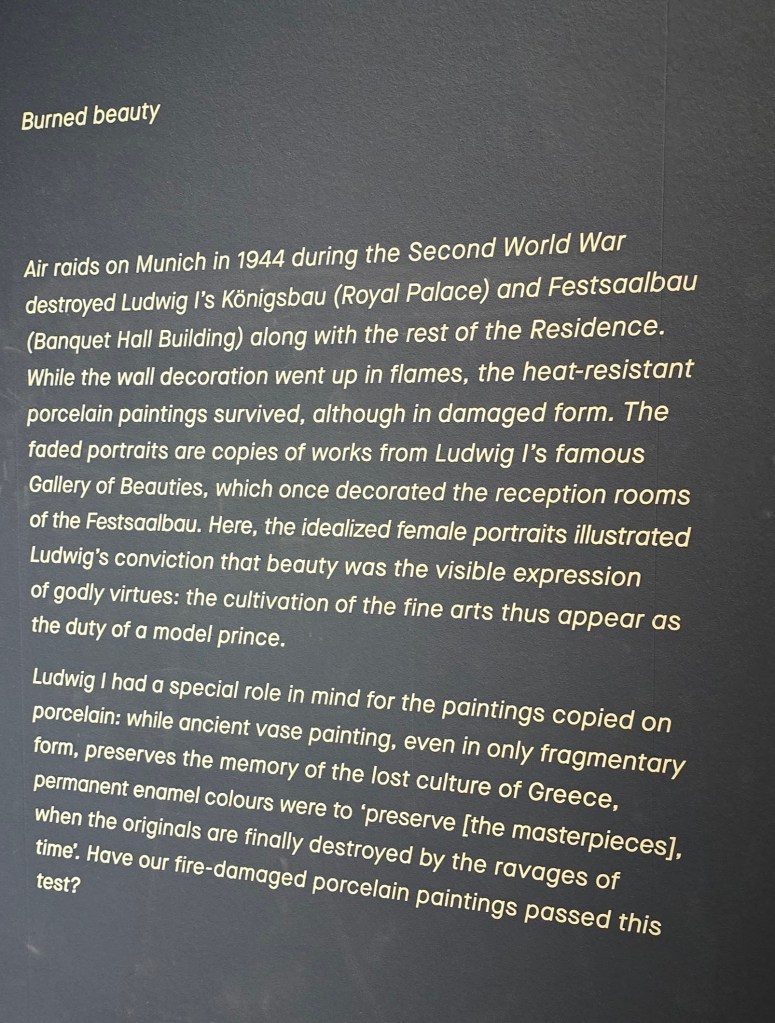
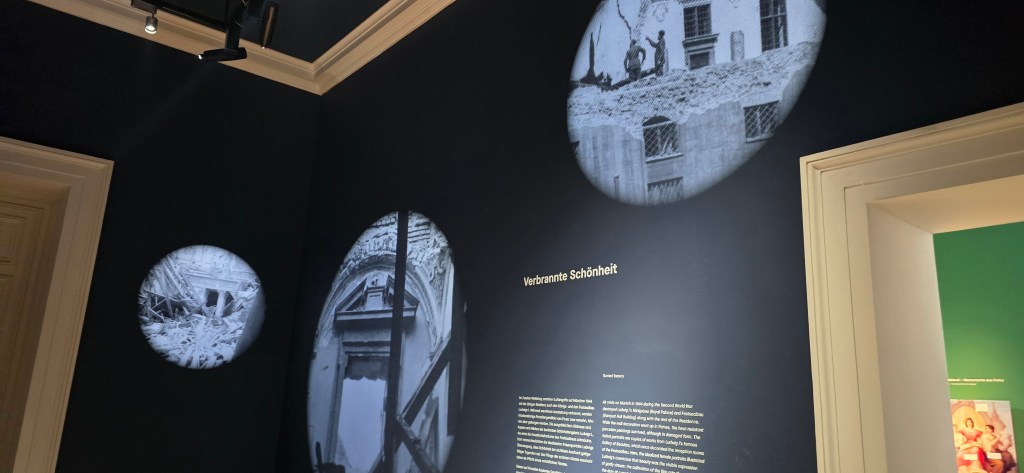
    Even World War II left its mark here – Opulence interrupted. The palace, like so much of Europe, had not been untouched. It had been altered. Opulence interrupted. Restoration stitched back together.

    Eventually, imperial ceilings gave way to fresh air.

    🌭 Street Food & Recalibration

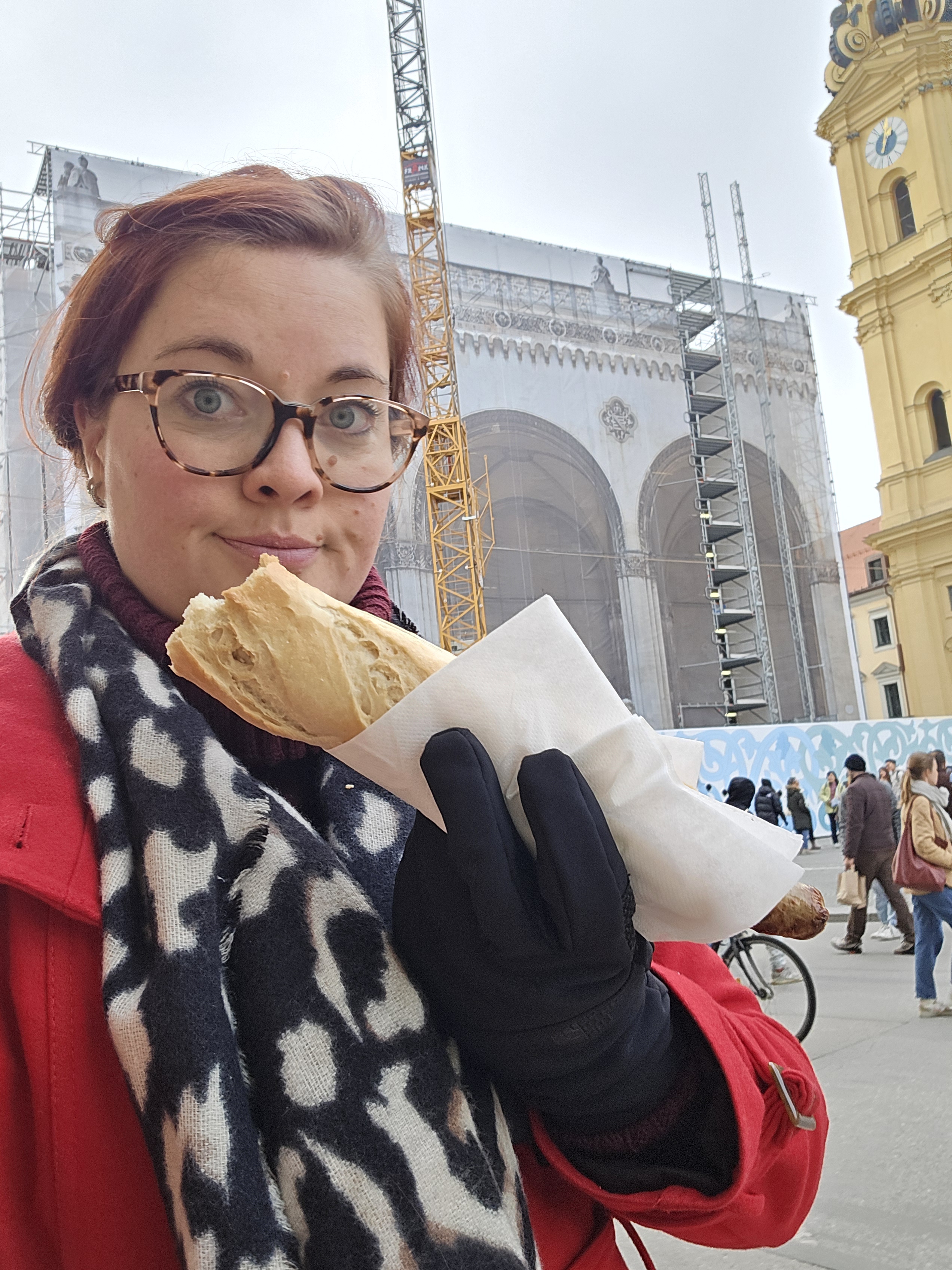
    On my walk back to the hostel, I grabbed a foot-long bratwurst — because after imperial ceilings and gold leaf, nothing says balance like street food in one hand and architectural awe still buzzing in your head.

    At 1:55 p.m., my room was finally ready.

    And this hostel was different.

    Not a bunk. Not a curtain. Not a shared shuffle of strangers.

    An entire little room to myself. Two twin beds. A small table. A dorm-sized fridge. A wardrobe. I could spread my bag open on one bed and not have to repack it every time I needed socks.

    After thirty-something  hours awake, a warm shower felt like quiet recalibration.

    And the bed — no staircase required- might have been the most luxurious room I entered all day.

  • Not every ending needs a crescendo.

    Some end with an alarm clock in the dark and a suitcase zipped quietly so you don’t wake anyone.

    Athens was still stretching awake when I made my way to the airport. The streets felt softer somehow — like the city understood departures without dramatics.

    Fun fact I learned in  Greece: you don’t throw toilet paper in the toilet — it goes in a trash can.
    Cultural adjustments: humbling. 😂

    On the train to the airport, a man moved through the car playing music. Gentle, familiar, hopeful. He was clearly hoping for tips, and I had no small cash to offer — which made me feel badly — but I gave him a smile and steady eye contact. Sometimes acknowledgment is the only currency you have.

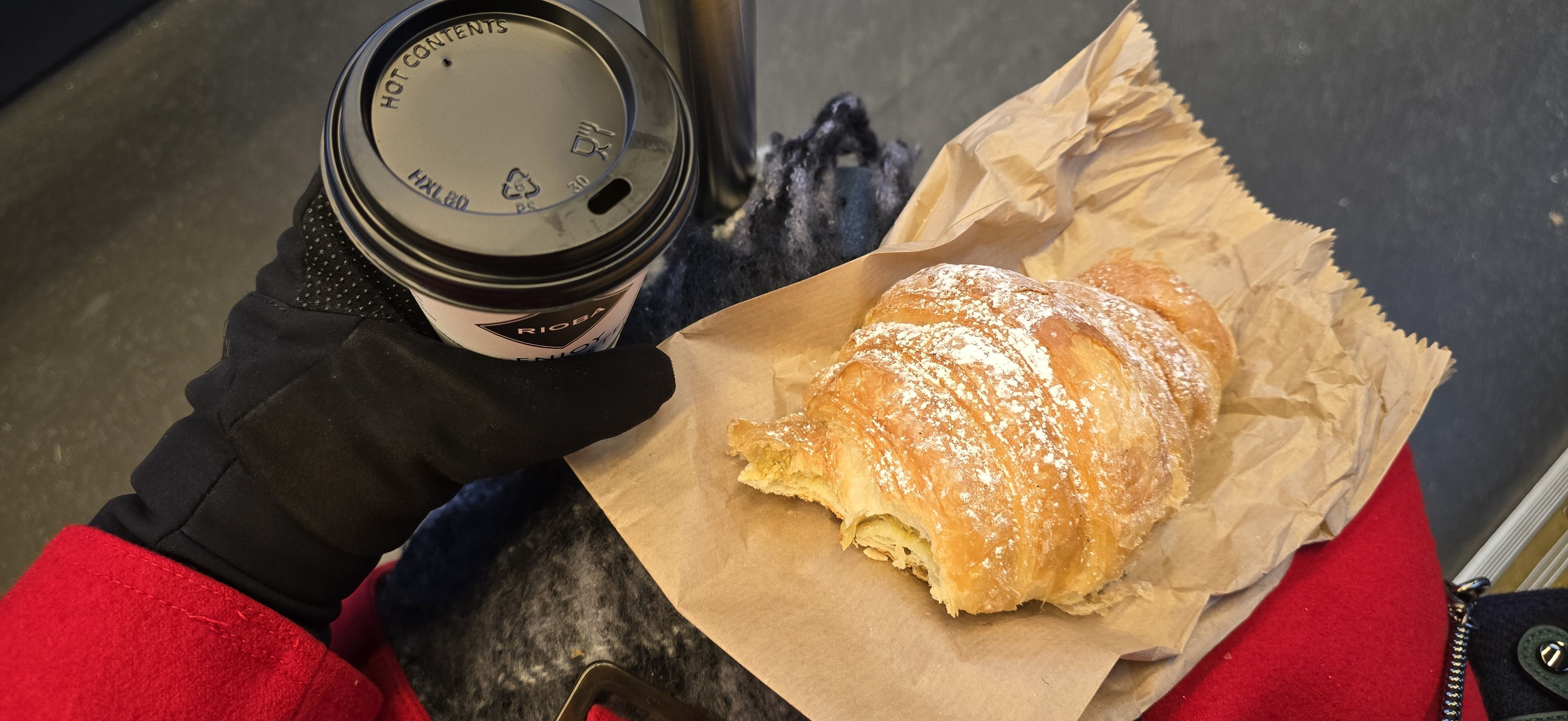
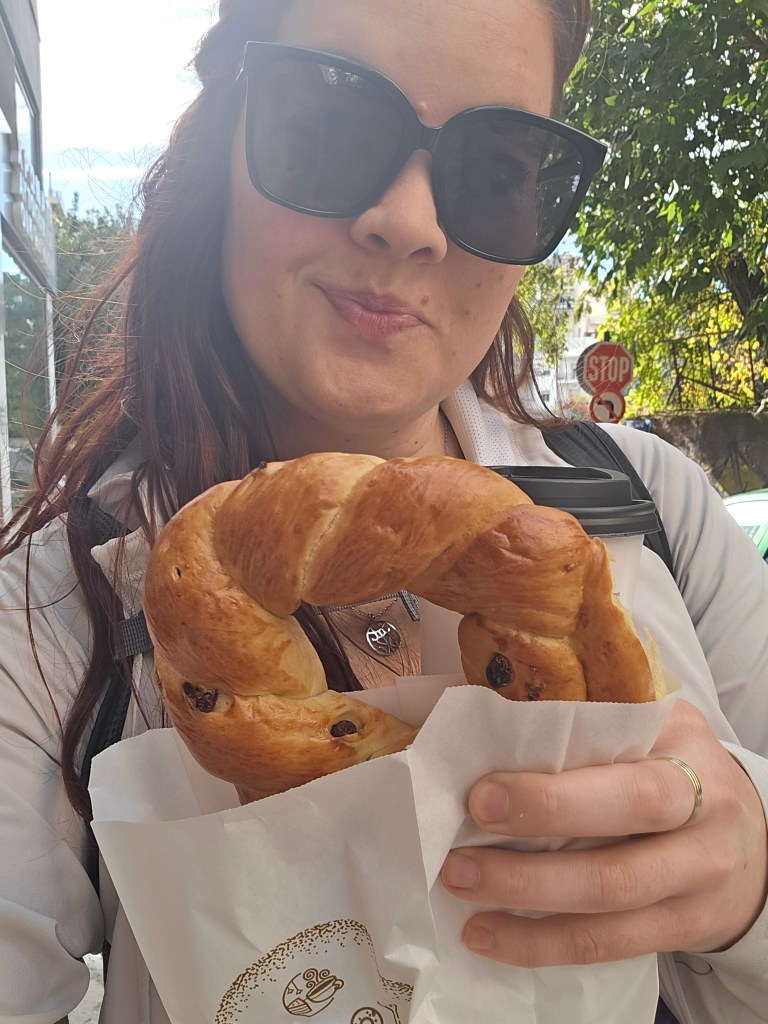
    At the airport, I grabbed a Cinnabon for breakfast. Not particularly Greek. Not particularly poetic. But warm and sweet and exactly what the morning called for.

    The flight itself was uneventful — and that might have been the most surprising part. No missed gates. No sprints. No dramatic tumbles off buses. I suppose I had already used my “travel chaos” quota the day before.

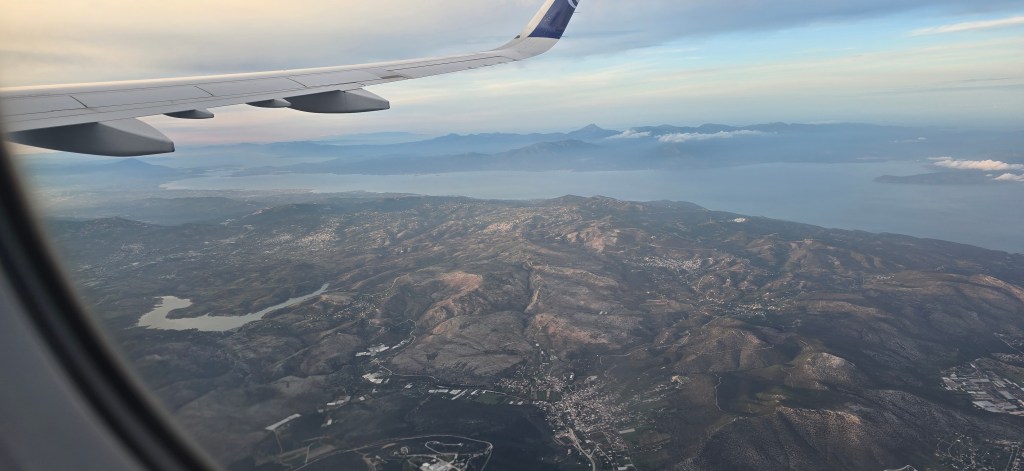
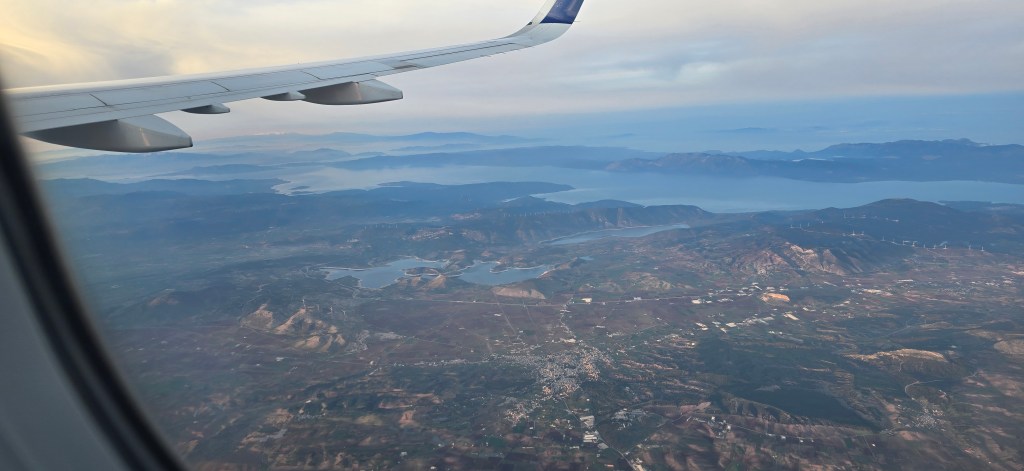
    As the plane lifted, I watched Greece fade into blue — islands scattered like brushstrokes across the sea.

    And tucked safely into my bag was a small magnet I’d bought from an old peddler on a quiet back street days before. He had been sitting beside a folding table, selling little pieces of memory to passersby. It wasn’t flashy. It wasn’t expensive. But something about buying it from him felt right — like choosing to carry a story instead of just a symbol.

    That magnet will sit on my fridge.

    But what it will really hold is cliffs and wind and ancient marble and pink sunsets over the sea. It will hold laughter after falling. Wind against temple columns. Blue against gold against red.

    Because some stories aren’t meant to stay where they happened.
    Some stories are meant to travel with you.

    This day was short. Quiet. Ordinary.
    But after myth and resilience and fire-colored skies, that felt right.

    And some chapters close quietly — but not permanently.

    Cinnamon roll bites for breakfast before the flight!
    Later Greece!
  • ✨ Intro

    Not every sacred place sits quietly in the center of a city.
    Some cling to cliffs. Some watch the sea.

    On December 9, after walking through centuries on the Acropolis before breakfast, I found myself heading through more history and then toward Cape Sounion-where myth, memory, and wind all meet the edge of the world.

    There would be ancient gods, Homeric echoes, an unexpected tumble off a bus (not my finest moment), and one of the most unforgettable sunsets I’ve ever witnessed.

    🌿 Where Paul Stood

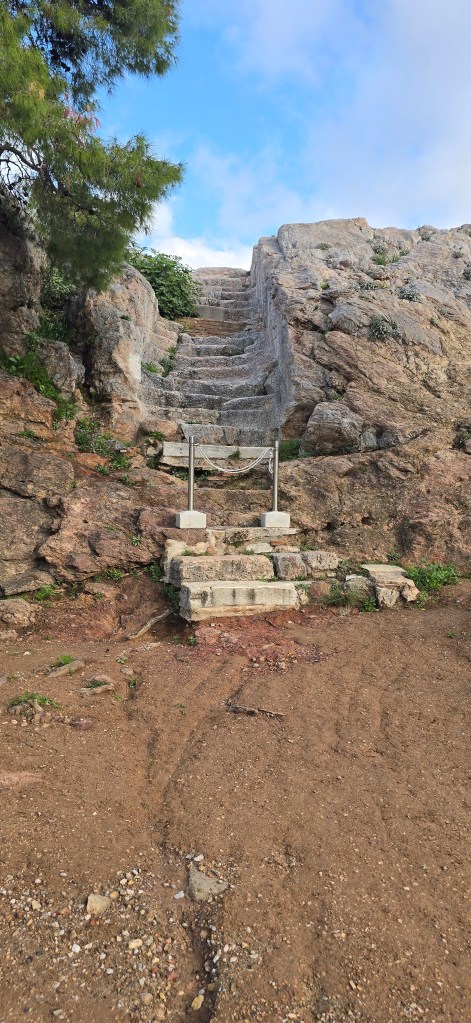
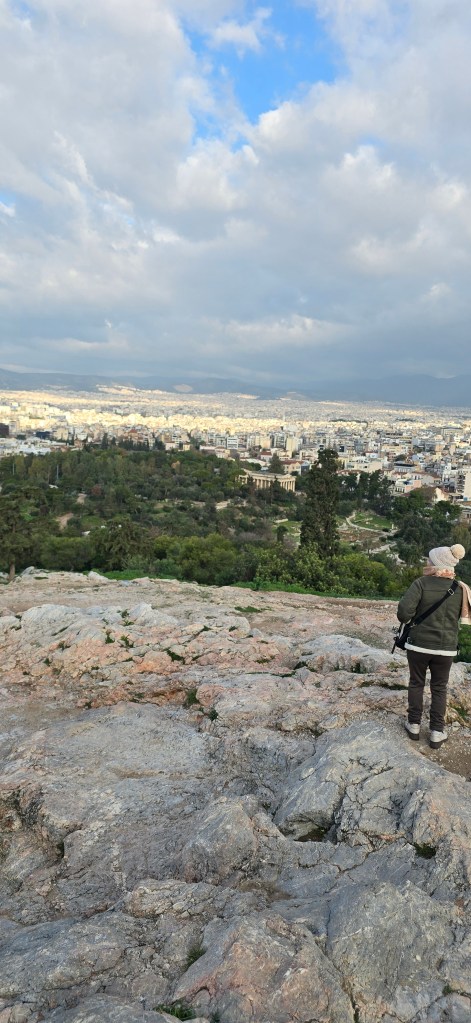
    Leaving the Acropolis behind, I walked toward the place where St. Paul once stood and spoke.

    Not in a dramatic, cathedral-like way.
    Just… another rocky hill in Athens.

    Paul arrived here around 50 AD, during his missionary journeys. Acts 17 tells us he walked through the city, deeply unsettled by the number of idols he saw. Eventually he was brought before the Areopagus — Mars Hill — and invited to explain this “new teaching” he spoke of.

    Standing there, I tried to imagine it.
    A former persecutor of Christians.
    A Roman citizen.
    A scholar.
    A man who had once been called Saul.

    Not preaching in a church — but reasoning in public. Quoting Greek poets. Referencing their altar “To an Unknown God.”

    It struck me how bold that must have been.
    To speak about truth in the middle of competing beliefs.
    To stand calmly where philosophy and power met.

    And there I was — just walking it casually, sneakers on ancient stone.

    🏛 Around the Ancient Agora

    From there, I wandered — off the main route, of course. Apparently this is just who I am now.

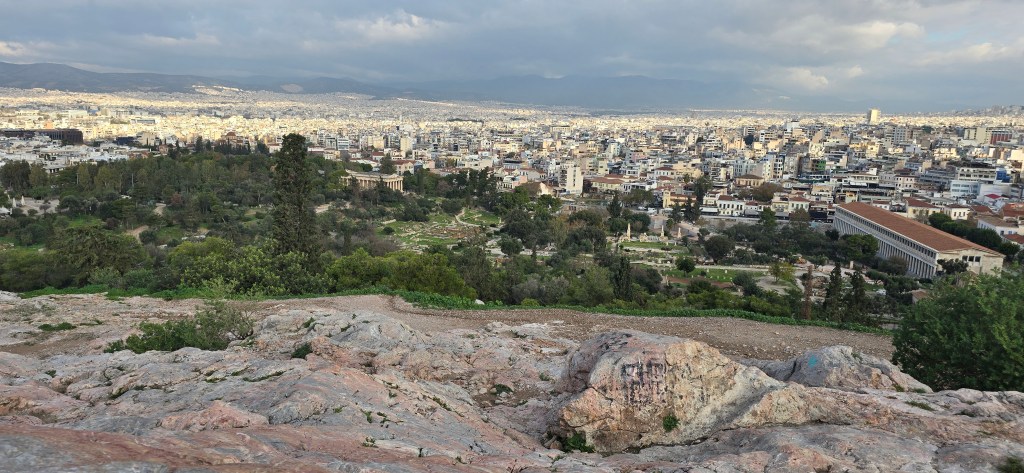
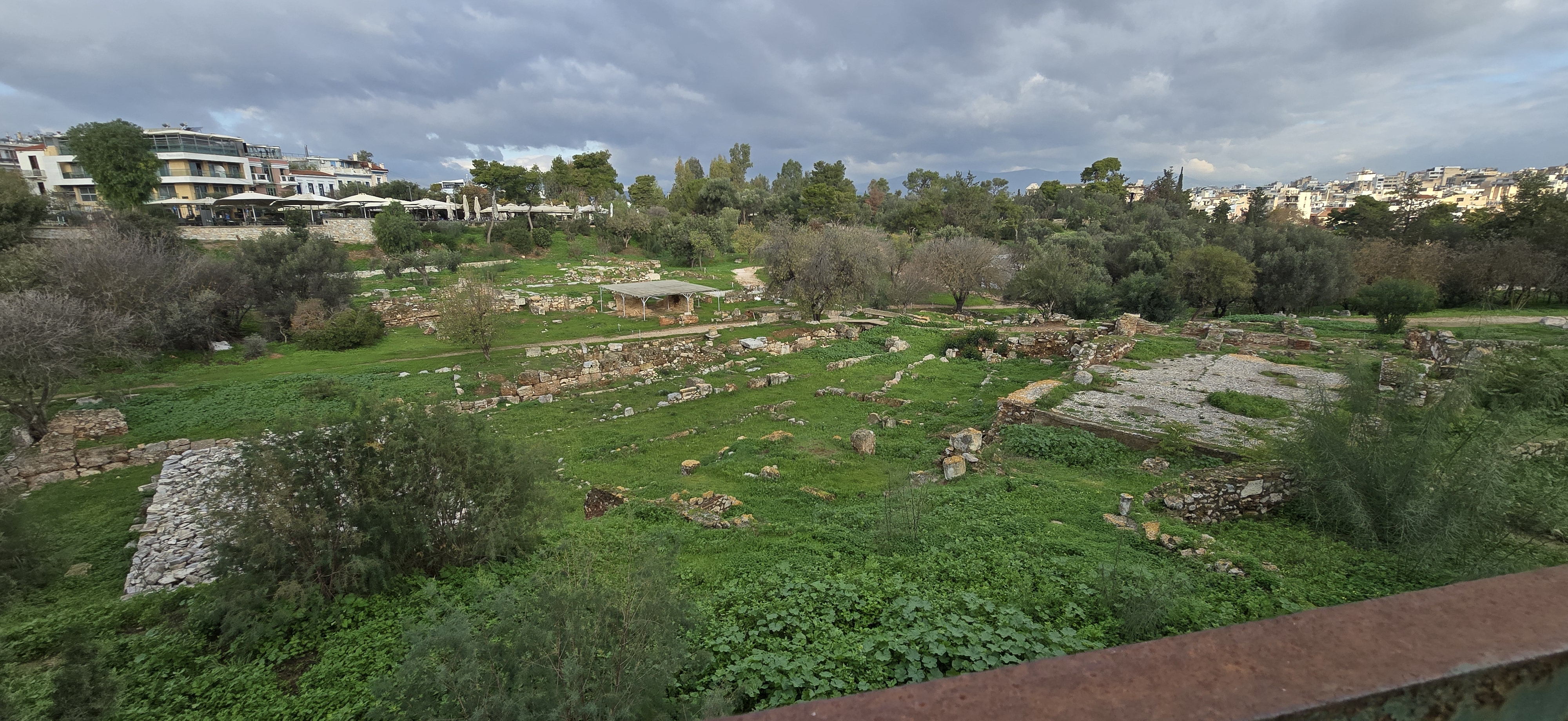
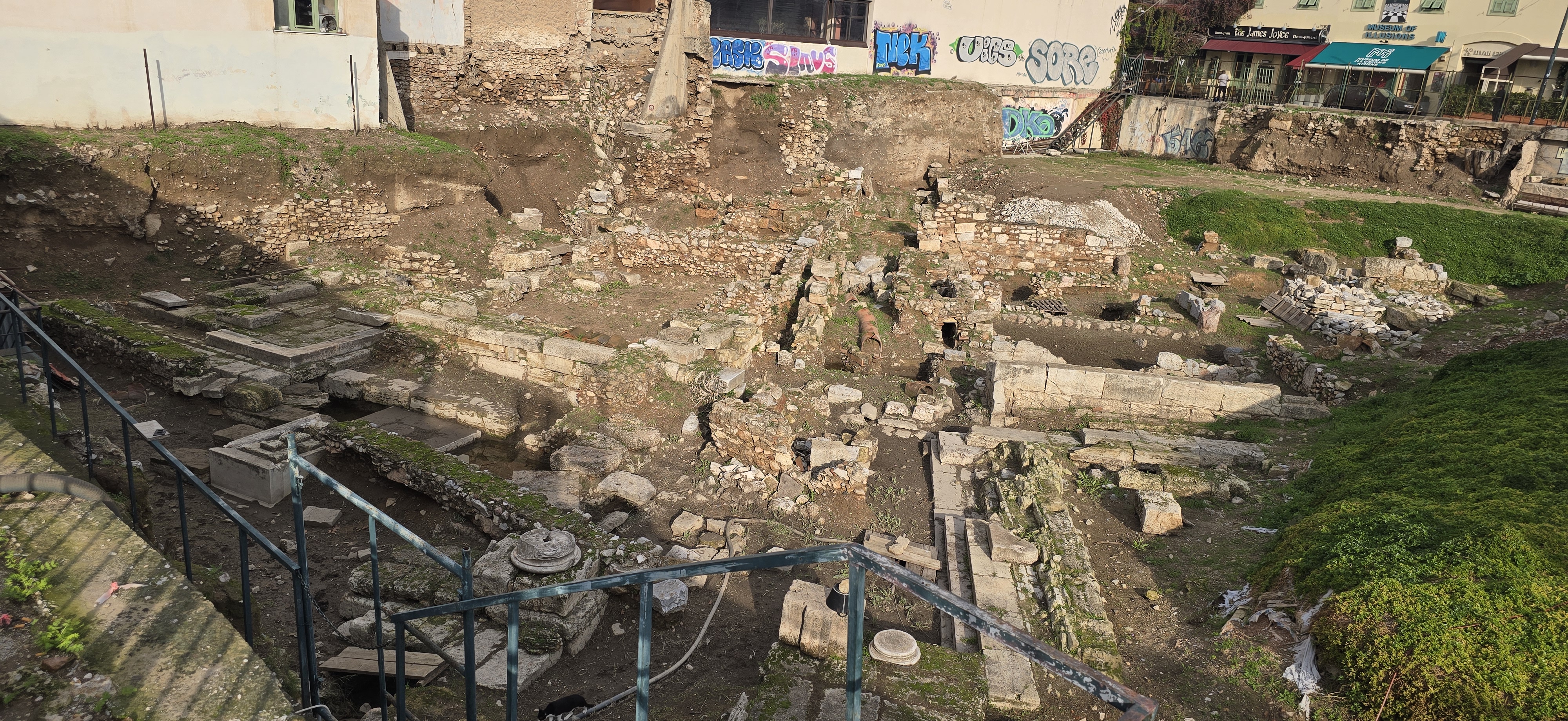
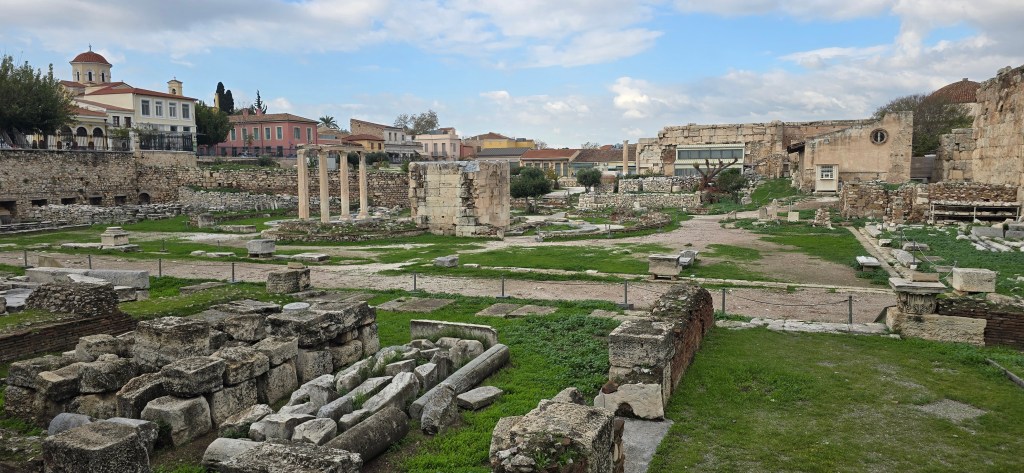
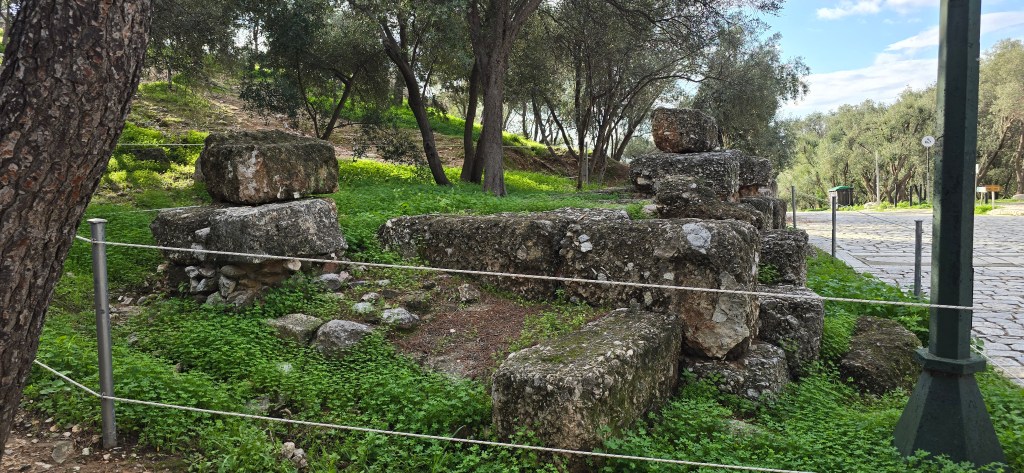
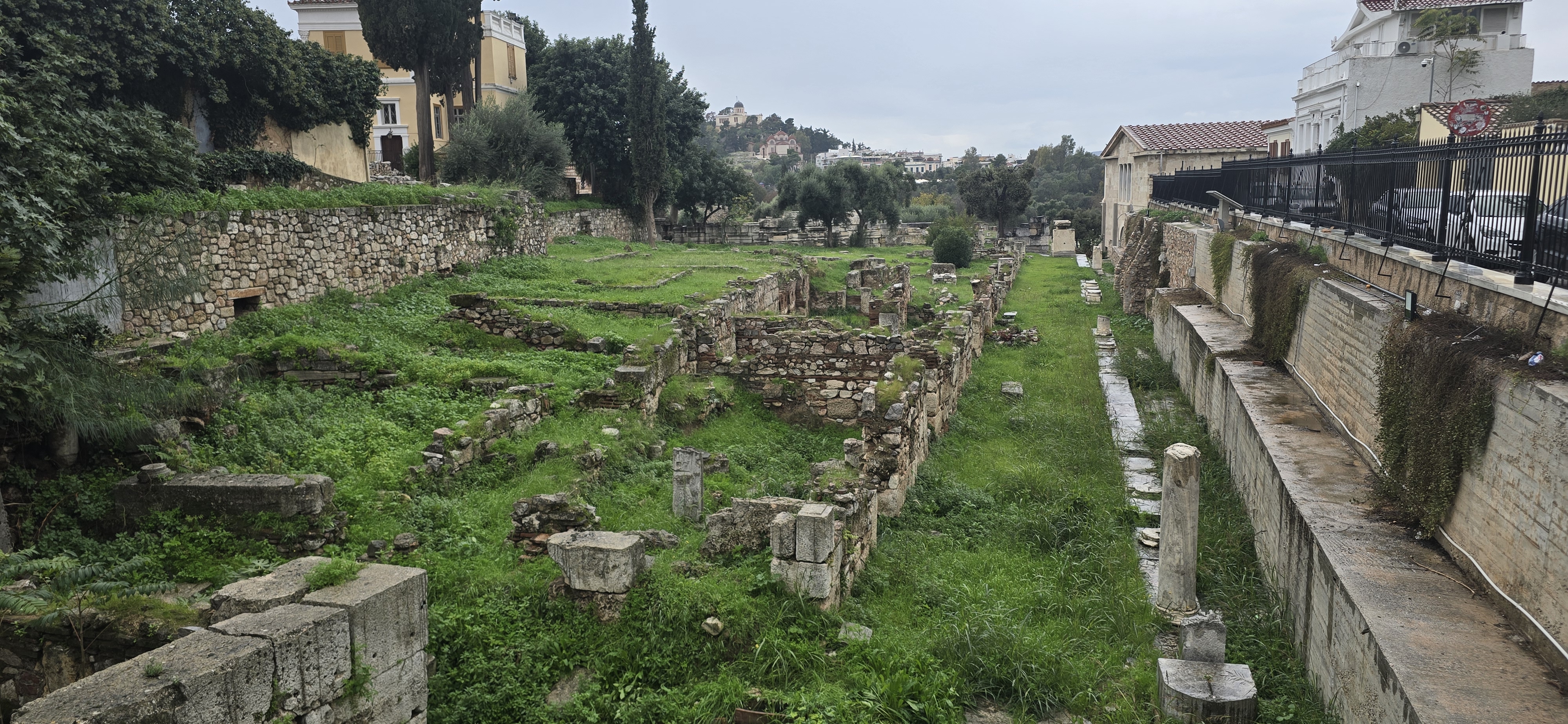
    I passed uncovered stone foundations — what were likely ordinary homes once. It’s strange how history often highlights kings and temples, but entire neighborhoods once lived here quietly.

    The Ancient Agora was the heart of Athens — political center, marketplace, courtroom, meeting place. Democracy was practiced here. Philosophers debated here. Citizens argued, traded, gathered.

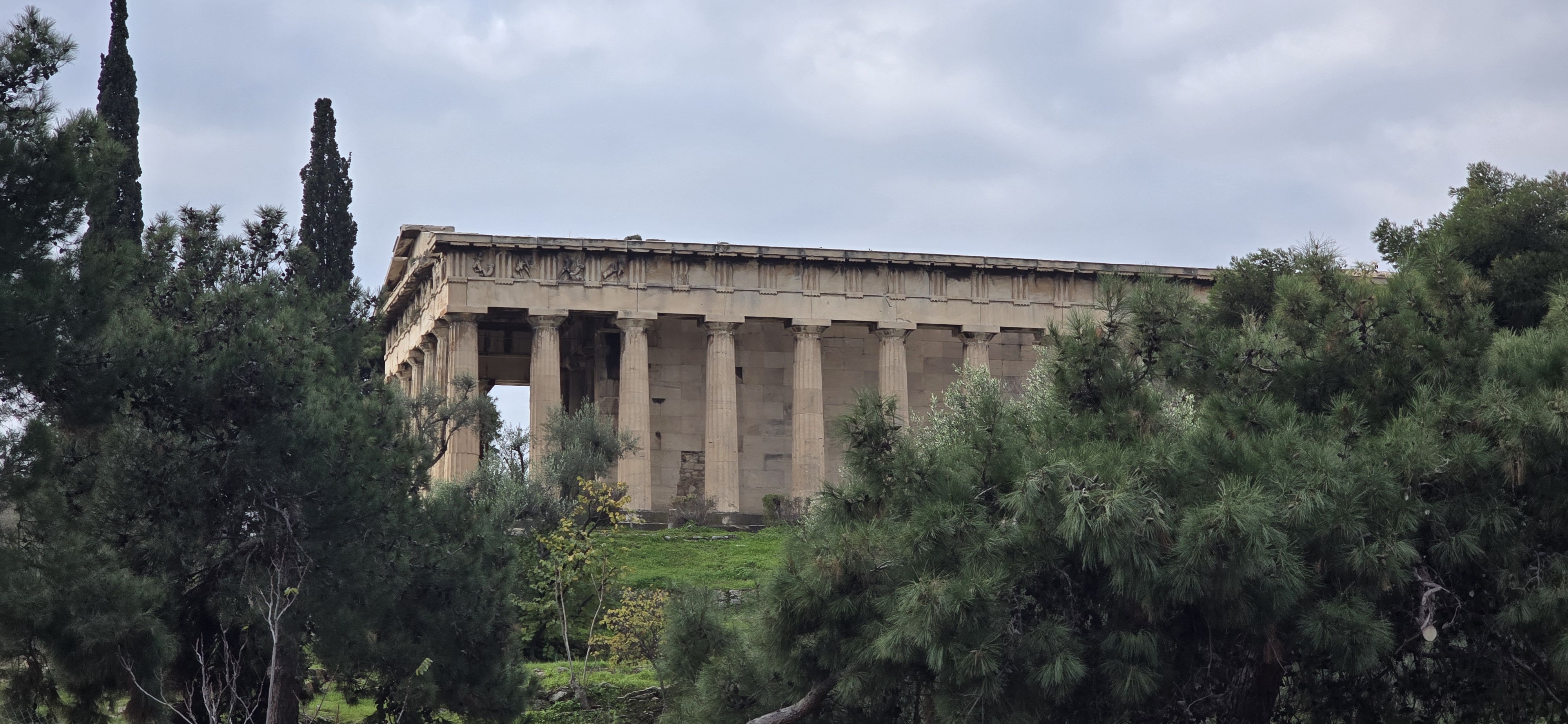
    I didn’t go inside the fenced area, but I walked along three sides of it — enough to feel its scale. The Temple of Hephaestus stands almost impossibly preserved above it, steady and symmetrical.

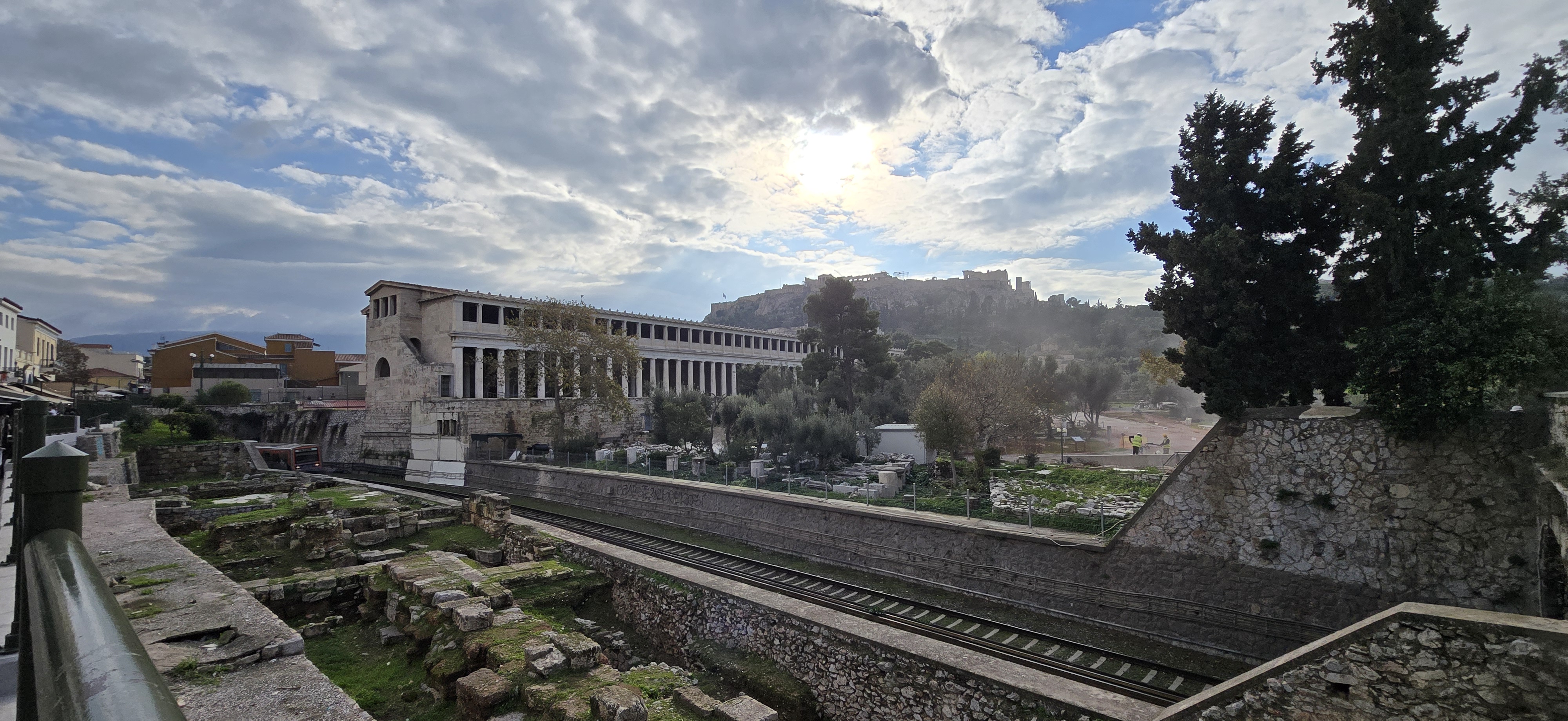
    And then — a modern train rattled straight through the edge of the landscape.

    I laughed.

    Of course Athens would casually run a train past democracy’s birthplace. History and present day refusing to take turns.

    To the east stands the Stoa of Attalos, reconstructed in the 1950s. Once a two-story colonnade for commerce and gathering — now a museum. Again: ancient bones, modern rebuilding.

    📚 Roman Layers — Hadrian & Pancakes

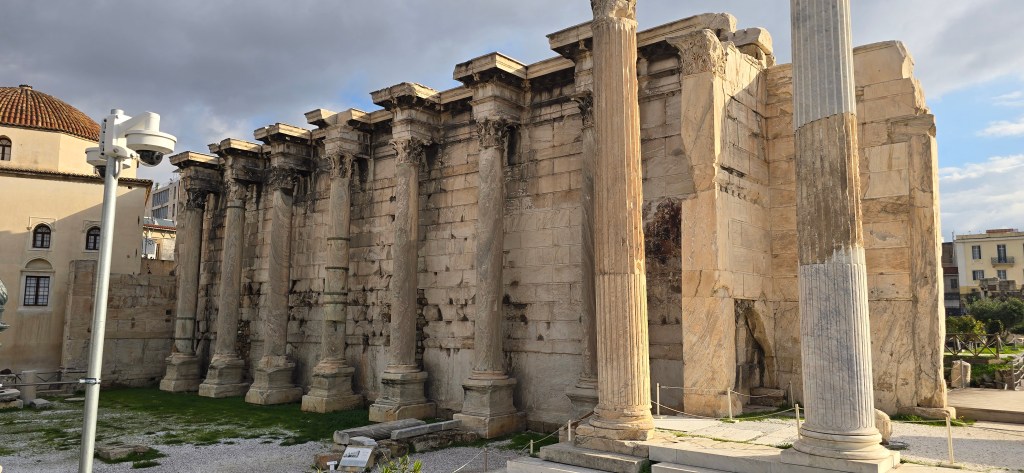
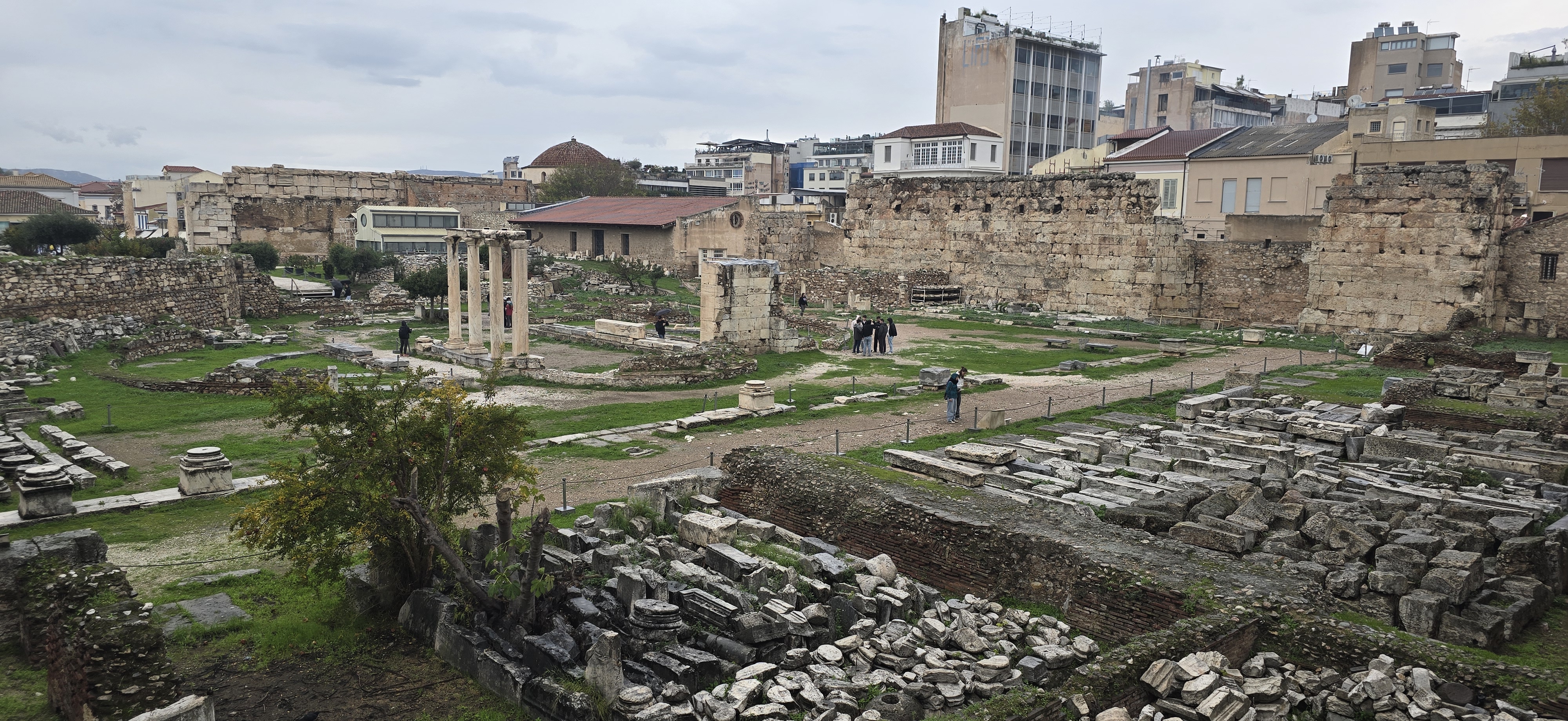
    Nearby is Hadrian’s Library, built in 132 AD by Emperor Hadrian — a Roman love letter to Athens. A massive complex that once held scrolls, lecture halls, and courtyards.

    I didn’t go inside — just admired it from afar. Sometimes seeing the structure is enough.

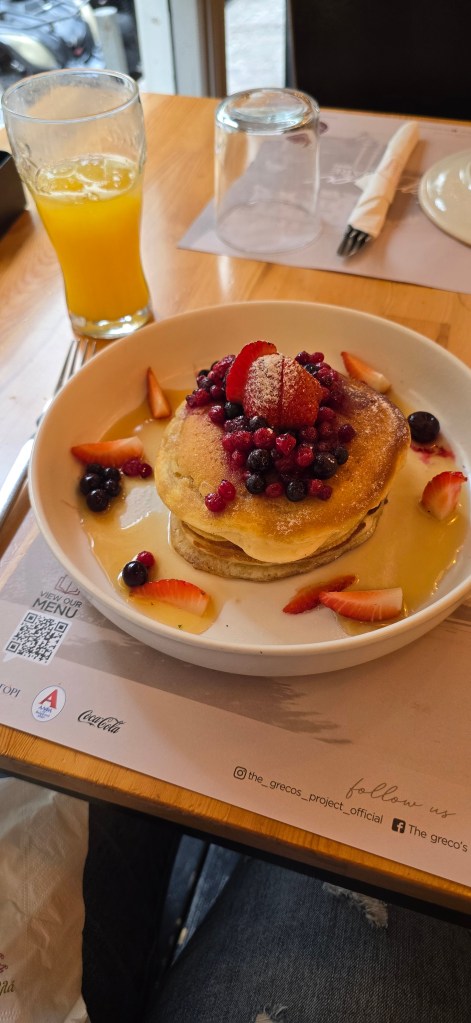
    And then: pancakes.

    Yummy, fruit-loaded, absolutely deserved pancakes.

    There is something humbling about eating modern brunch within walking distance of 2,000-year-old ruins.

    🚐 Toward the Edge of the Sea

    By late afternoon, it was time for my sunset tour to Cape Sounion.

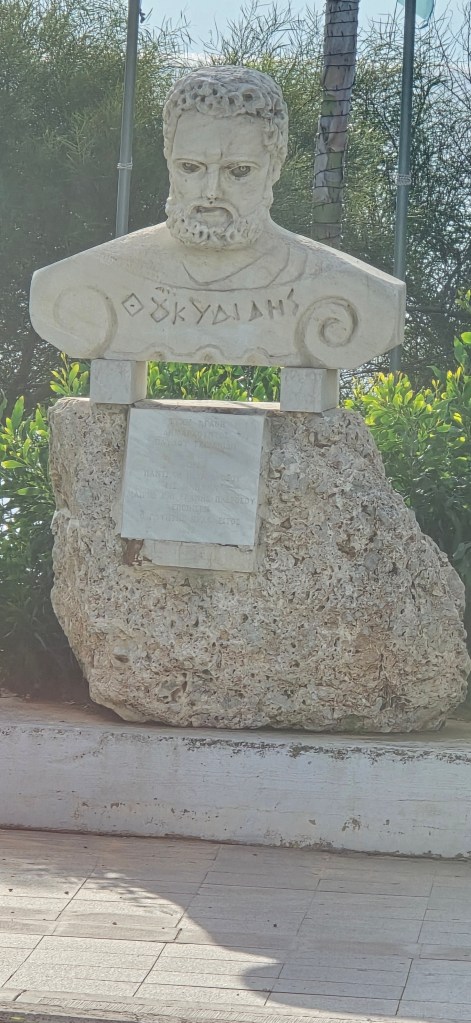
    On the drive, I spotted a carving of Odysseus — and it made me grin. Apparently, when you spend the day with Homer, he sends a reminder you’re still in his story.

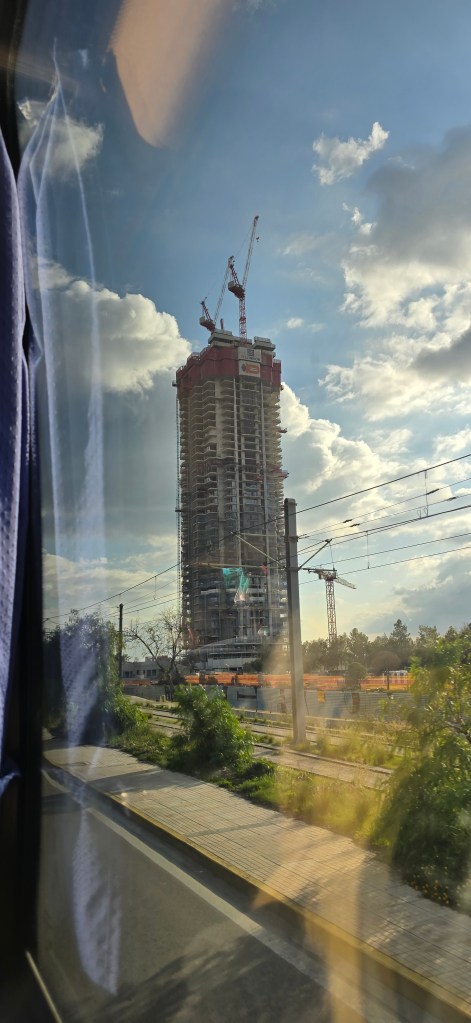
    We passed Athens’ first skyscraper under construction — cranes rising into the skyline. Ancient columns and modern steel, still coexisting.

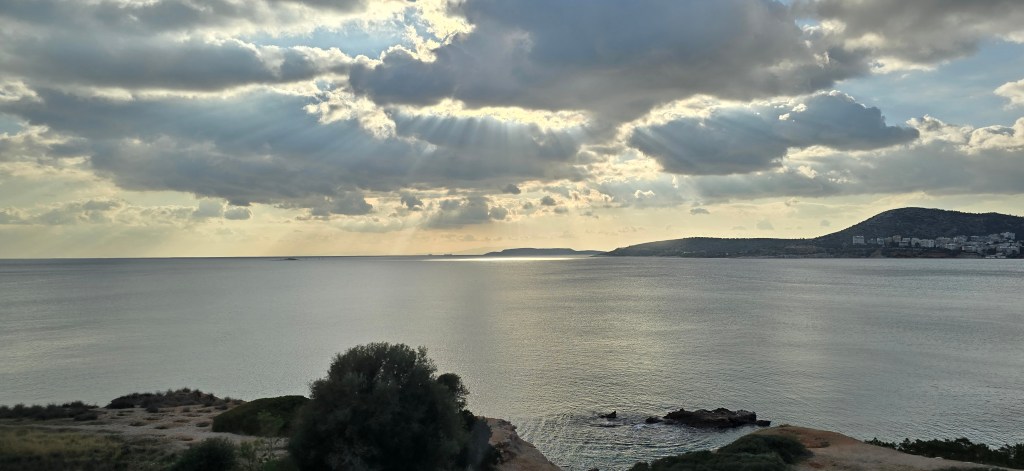
    Then the coastline appeared.

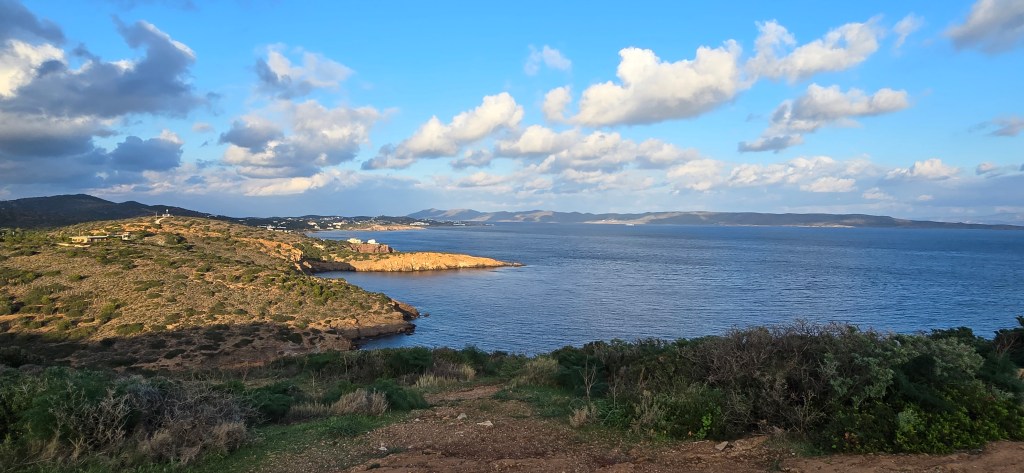
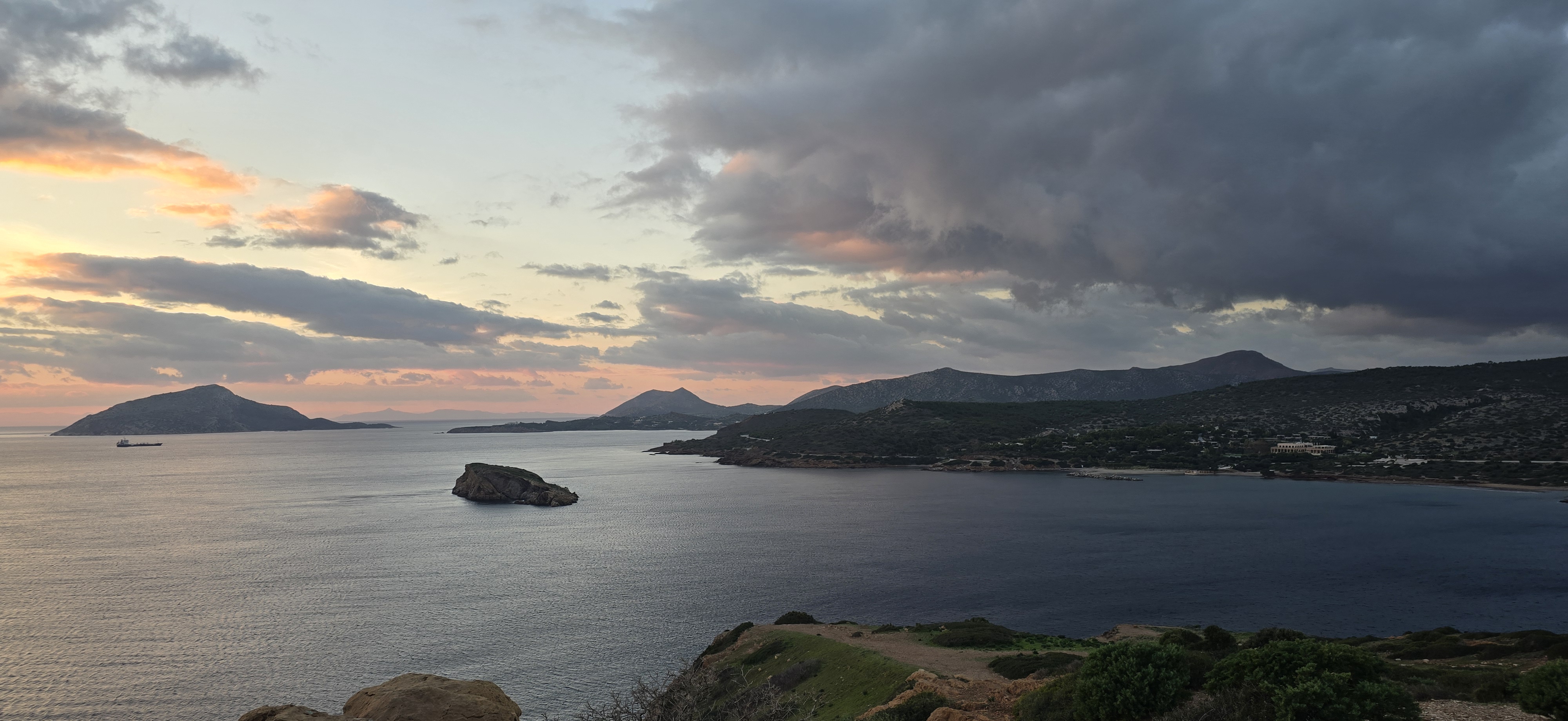
    The Aegean stretched out in blues that don’t quite exist in crayon boxes. Islands dotted the horizon — some close, some hazy in the distance.

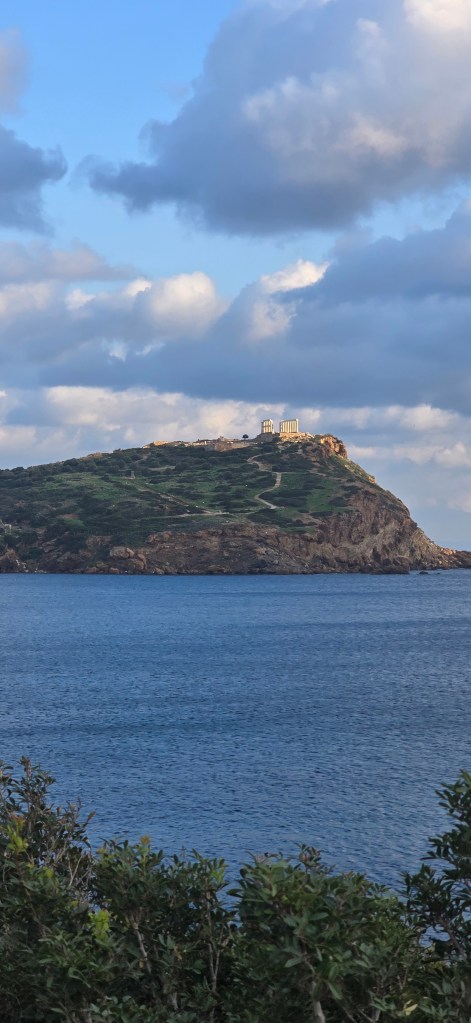
    As we pulled over at a scenic viewpoint to glimpse the Temple of Poseidon in the distance…

    …I fell.

    Not gracefully.
    Not subtly.

    One second stepping off the bus.
    Next second — pavement.

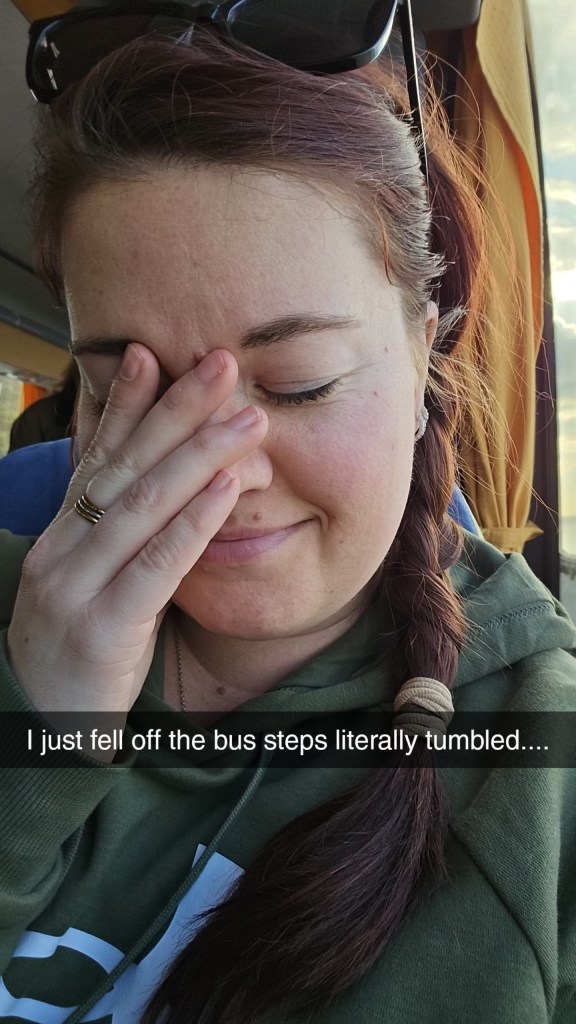
    I literally tumbled down the bus steps. Right in front of the entire group.

    Spectacular.

    There was that split second of silence — the universal “Is she okay?” pause — and then I just started laughing. What else are you going to do?

    The tour guide rushed over, visibly concerned and incredibly kind. After reassuring her (and everyone else) that I was fine — truly fine — I let the rest of the group continue disembarking while I regained both my balance and my dignity.

    Twisted ankle. Red face. Pride slightly bruised.

    But still determined.

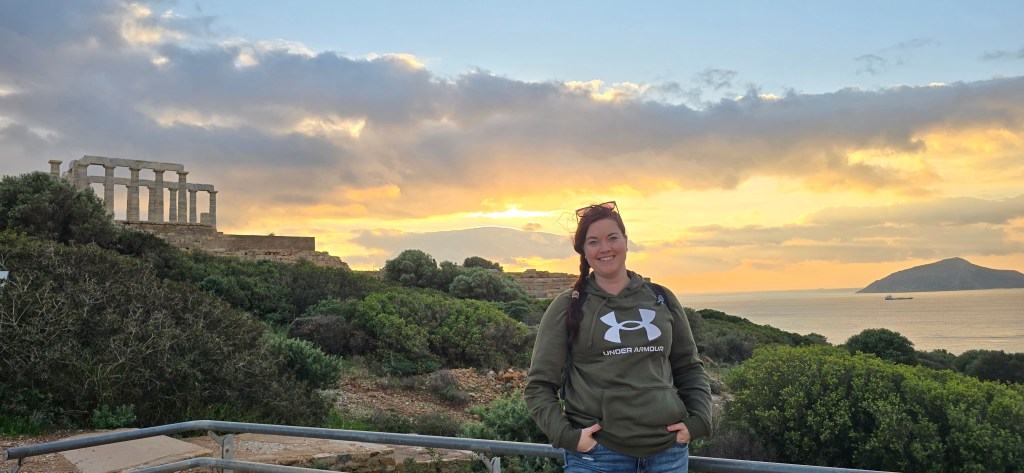
    After a moment, I stood up, tested my footing, and took a few photos from the overlook — because if you’re going to fall at Cape Sounion, you might as well document it.
    🌅 Temple of Poseidon — Where Land Ends & Stories Begin

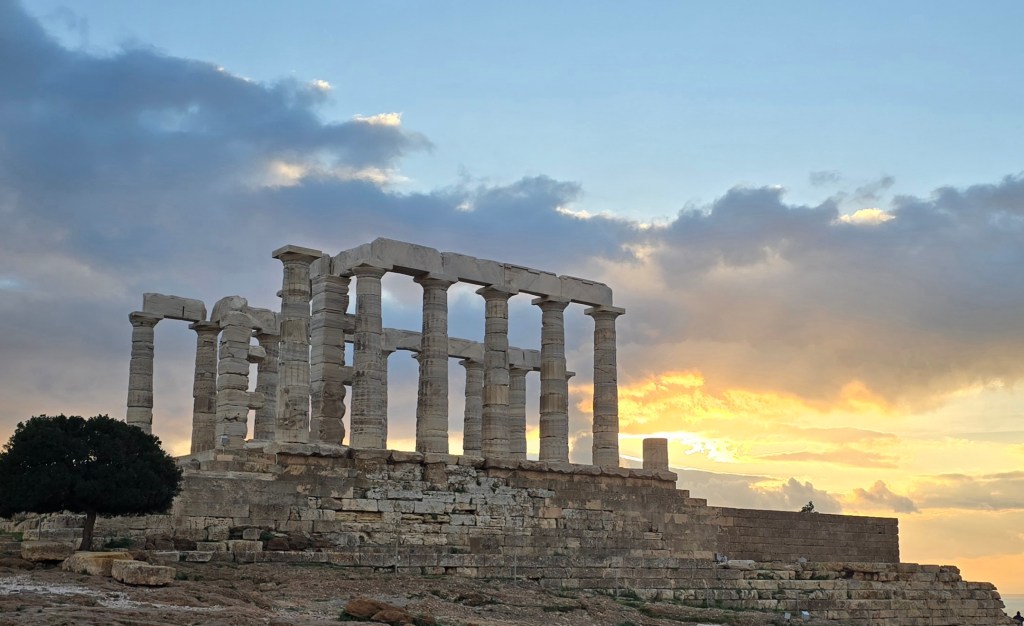
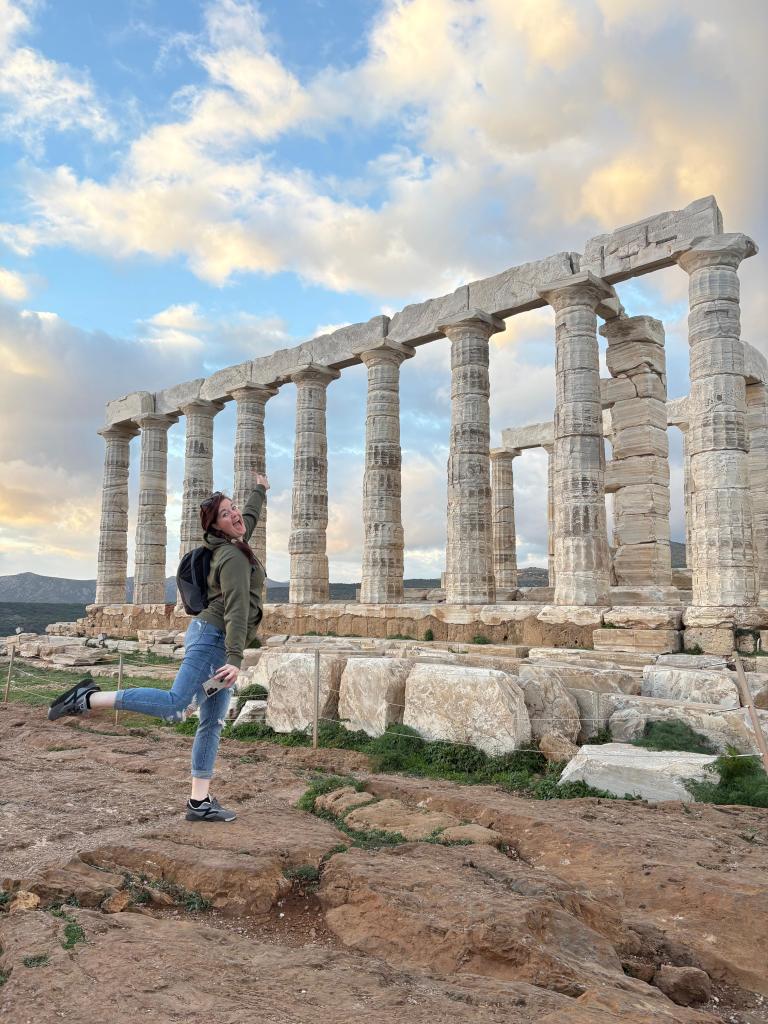
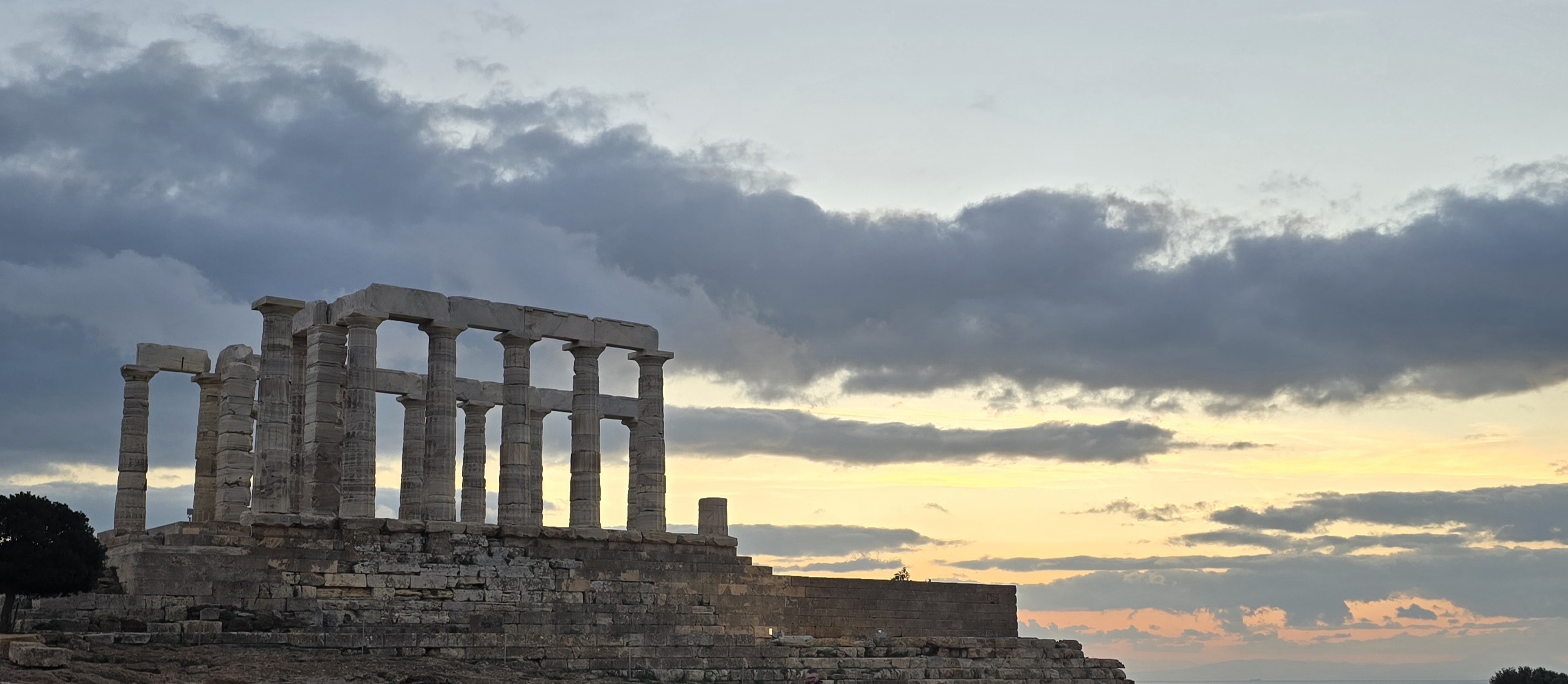
    The Temple of Poseidon stands at Cape Sounion, perched high above the Aegean Sea. Built in the 5th century BC during the Golden Age of Athens, it wasn’t just decorative — it was strategic, symbolic, and sacred. Sailors leaving Athens would round this cape and offer prayers to Poseidon for safe passage. Those returning home would look for these columns as their first glimpse of land.

    For men who lived by the sea, this was reassurance.

    And yes — it’s mentioned in Homer’s Odyssey. As Odysseus sails home after the Trojan War, he passes Cape Sounion. Even in epic poetry, this place marked transition — between danger and safety, between exile and return.

    Then there’s the myth of King Aegeus. He stood here watching the horizon for his son, Theseus. The signal had been agreed upon: white sails if victorious, black if dead. When he saw black sails approaching, he believed his son had perished — and threw himself into the sea below. That sea would bear his name forever.

    So yes — this place carries drama.

    But standing there as the sun lowered, what struck me wasn’t tragedy.

    It was the view.

    The cliffs fall sharply into endless blue. The temple’s marble columns rise — weathered, fractured, but steady. The wind moves differently there — steady and insistent, though not nearly as fierce as Scotland’s. It feels less wild, more watchful.

    Cape Sounion has always been a threshold. A lookout. A place of departure and return. Standing there, I understood why.
    I walked the perimeter slowly, golden light catching in the stone, shadows stretching longer across the ground. And just as I reached the main columns, my rooftop dinner friend arrived with her tour group.

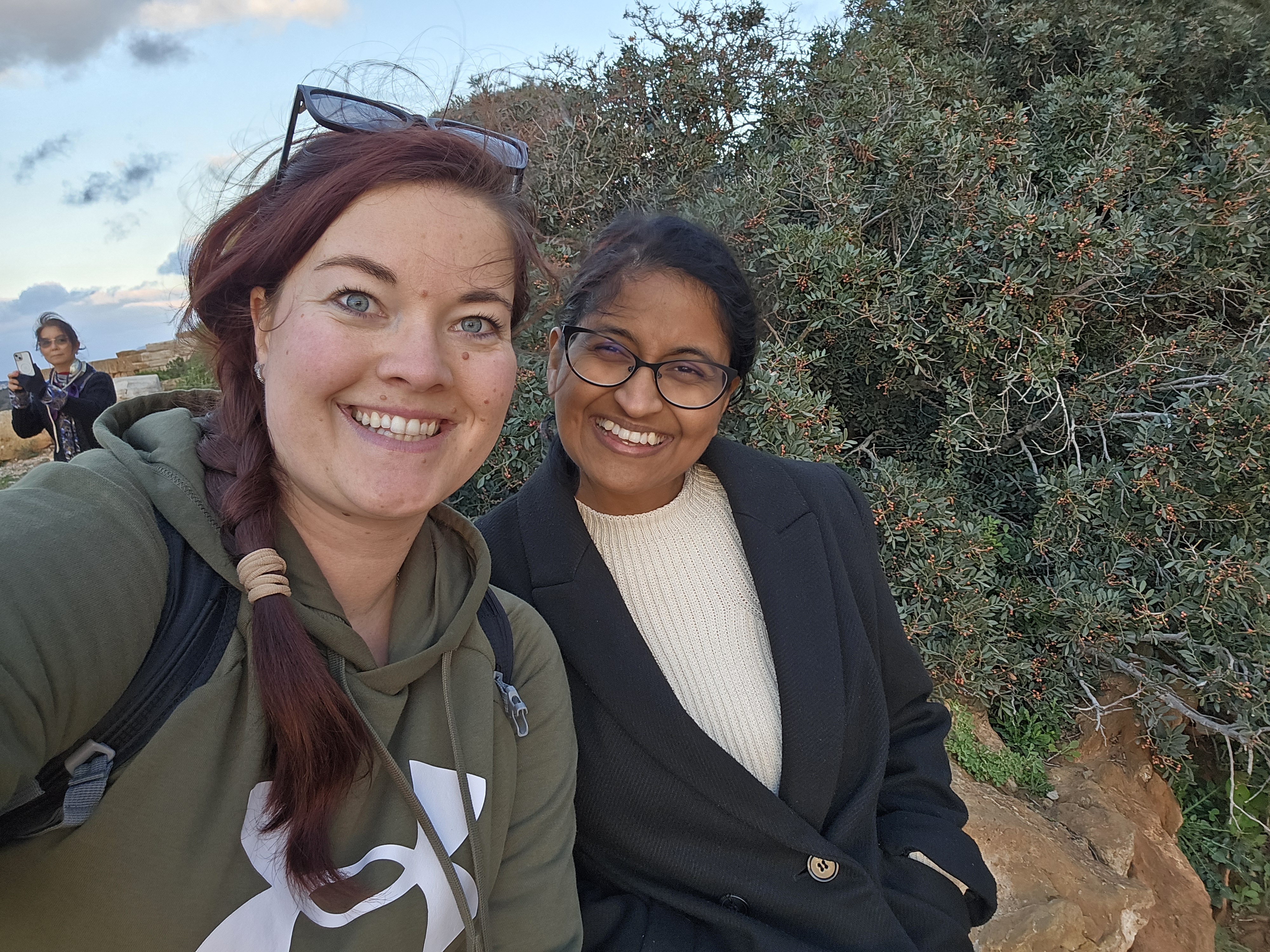
    We had both booked tickets for the same sunset — different companies, same destination.

    🌇 Claiming a Rock

    As sunset approached, we picked a rock and sat down — claiming our spot like it was front-row seating to something holy.

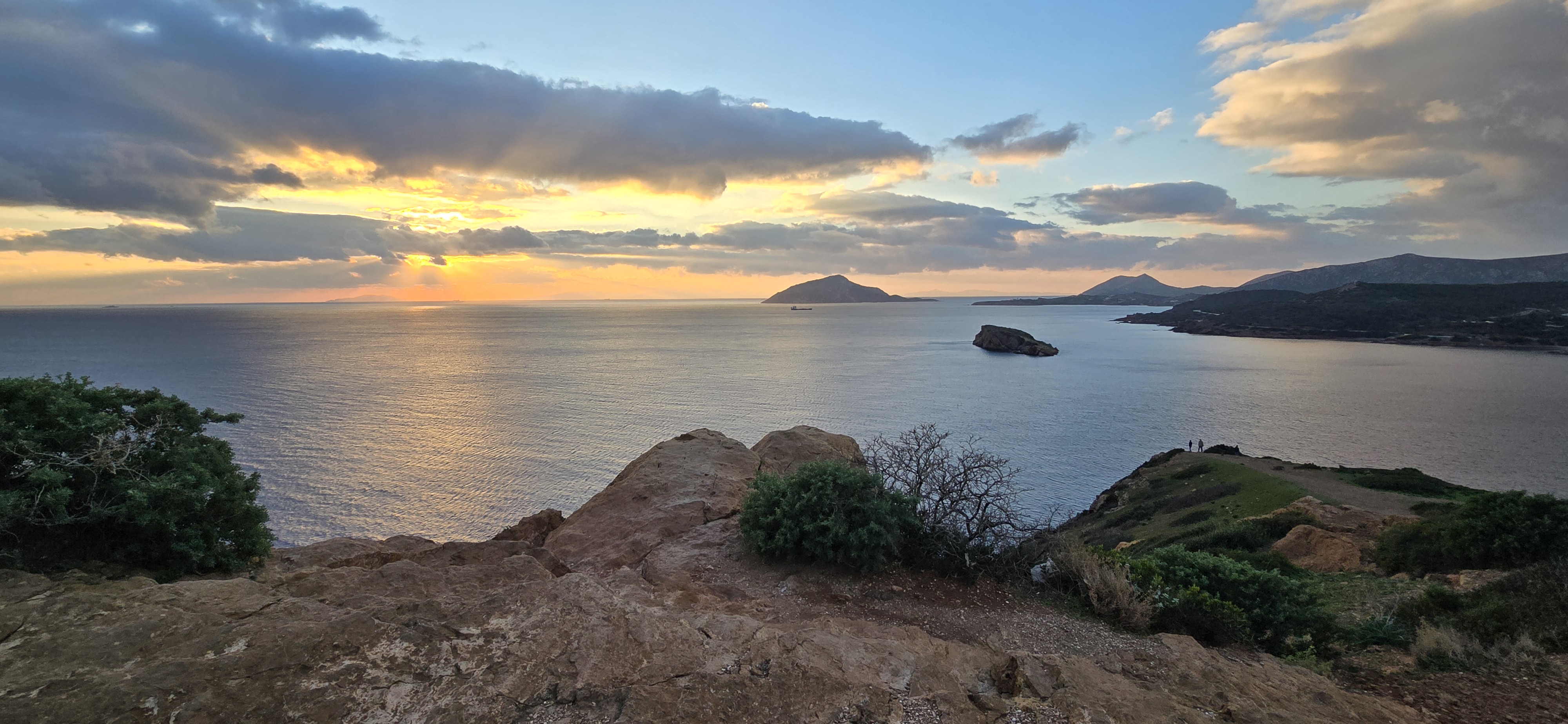
    The cliffs below us were brushed in warm yellows and honeyed stone, their edges softened by the light. Sparse green vegetation clung stubbornly to the rock — resilient little bursts of life against the rugged earth. Beyond that, the sea stretched wide in a deep, inky blue — darker and steadier than the sky above it.
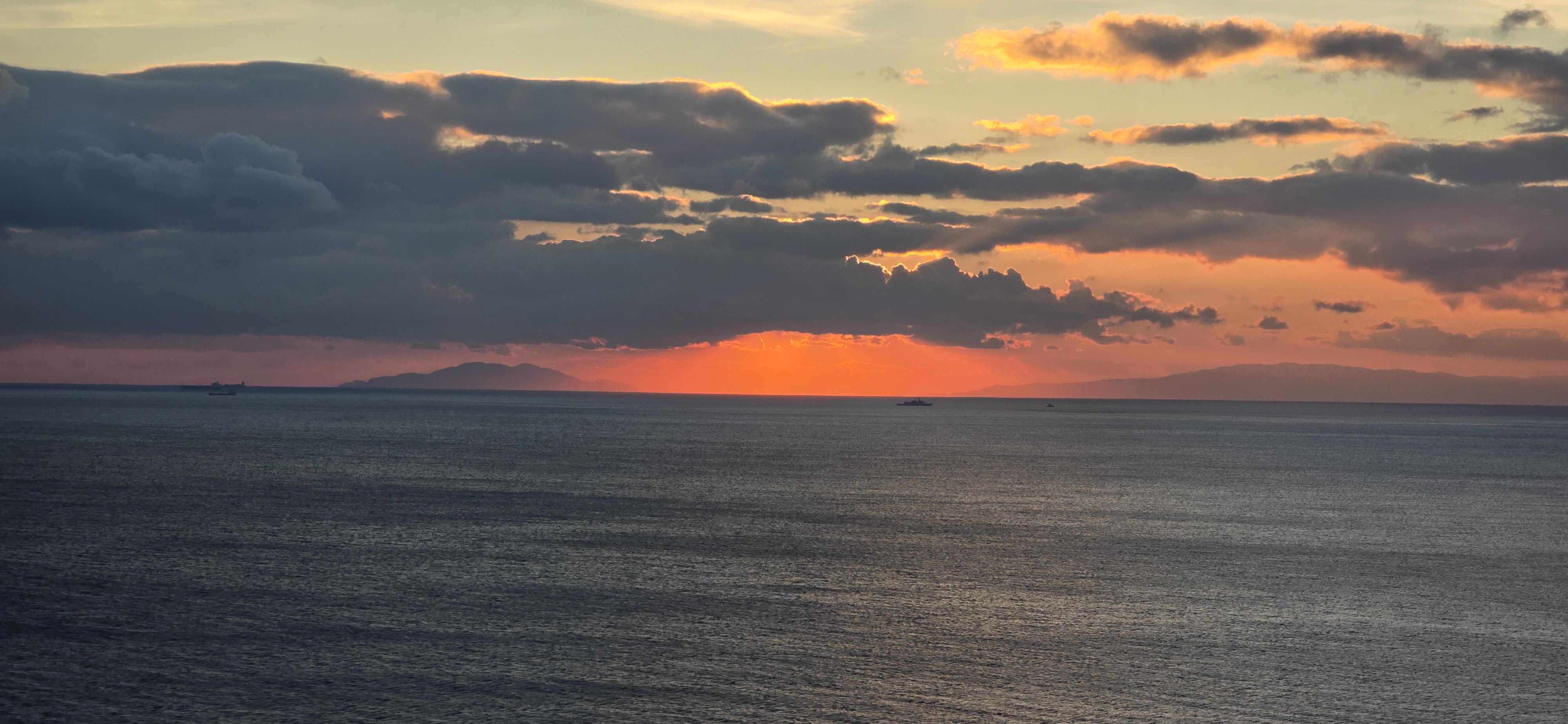
    The sky itself held a softer blue at first, almost powdery near the horizon. Then the sun began its descent.

    Yellow melted into gold.
    Gold deepened into orange.
    Orange bled into a glowing, almost molten red.

    The yellow-orange light cast a warm halo against the cooler blues of the sky, while the Aegean below remained a heavier, richer shade — as if the water refused to surrender to the fire above it. It felt like watching two elements meet without ever touching.
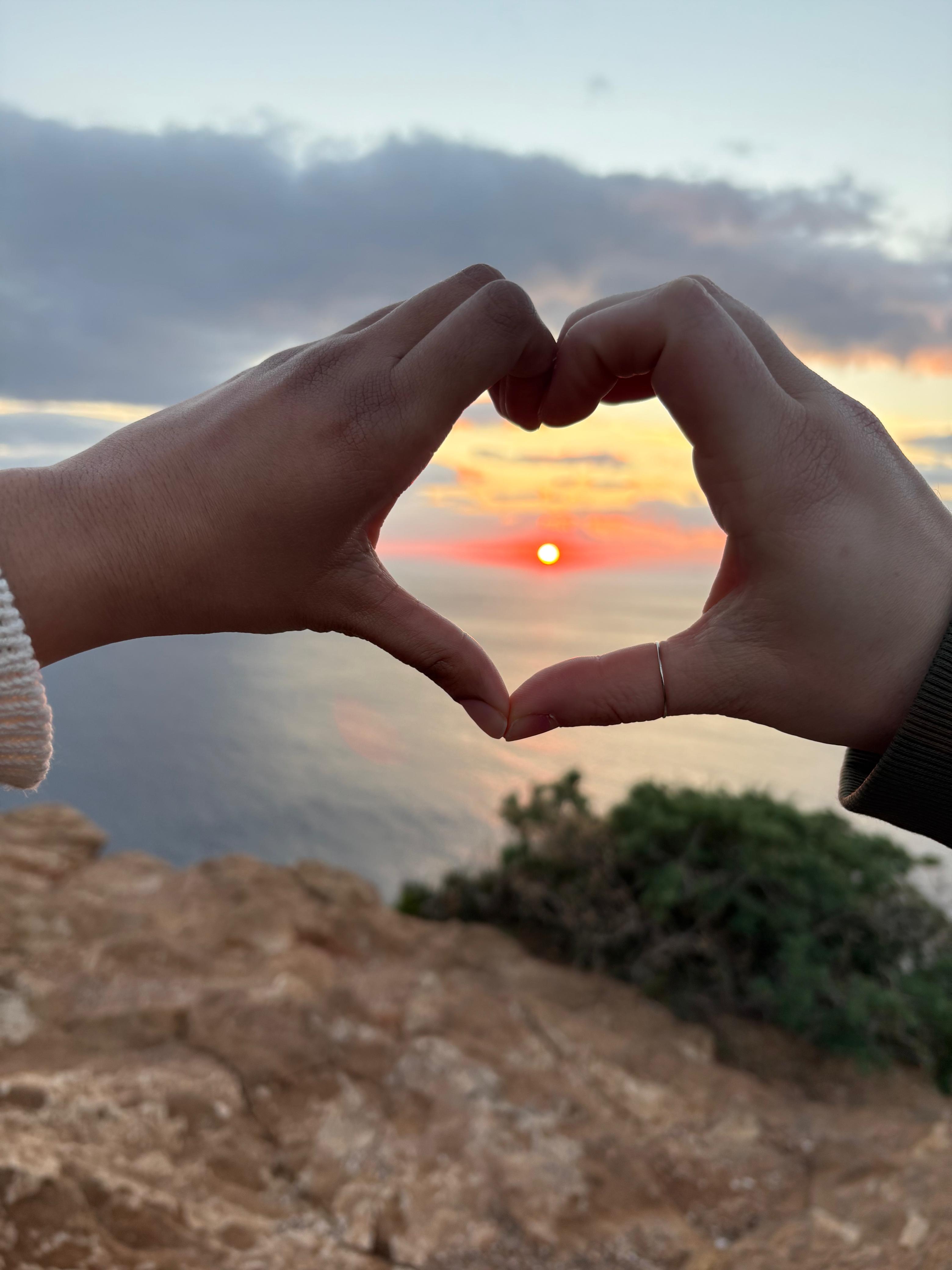
    For a moment, the sun slipped behind a cloud — and I thought that might be it. But then it emerged again, brighter, more intense, almost defiant, turning a fiery red before finally sinking beneath the line of the sea.
    I couldn’t help but think of the legends that hover over this coastline — of sailors watching the horizon for safe return, of Odysseus passing these waters longing for home, of King Aegeus misreading the sails against a sky that may have looked just like this.

    The colors felt ancient.
    Like they had held witness to every myth told about them.
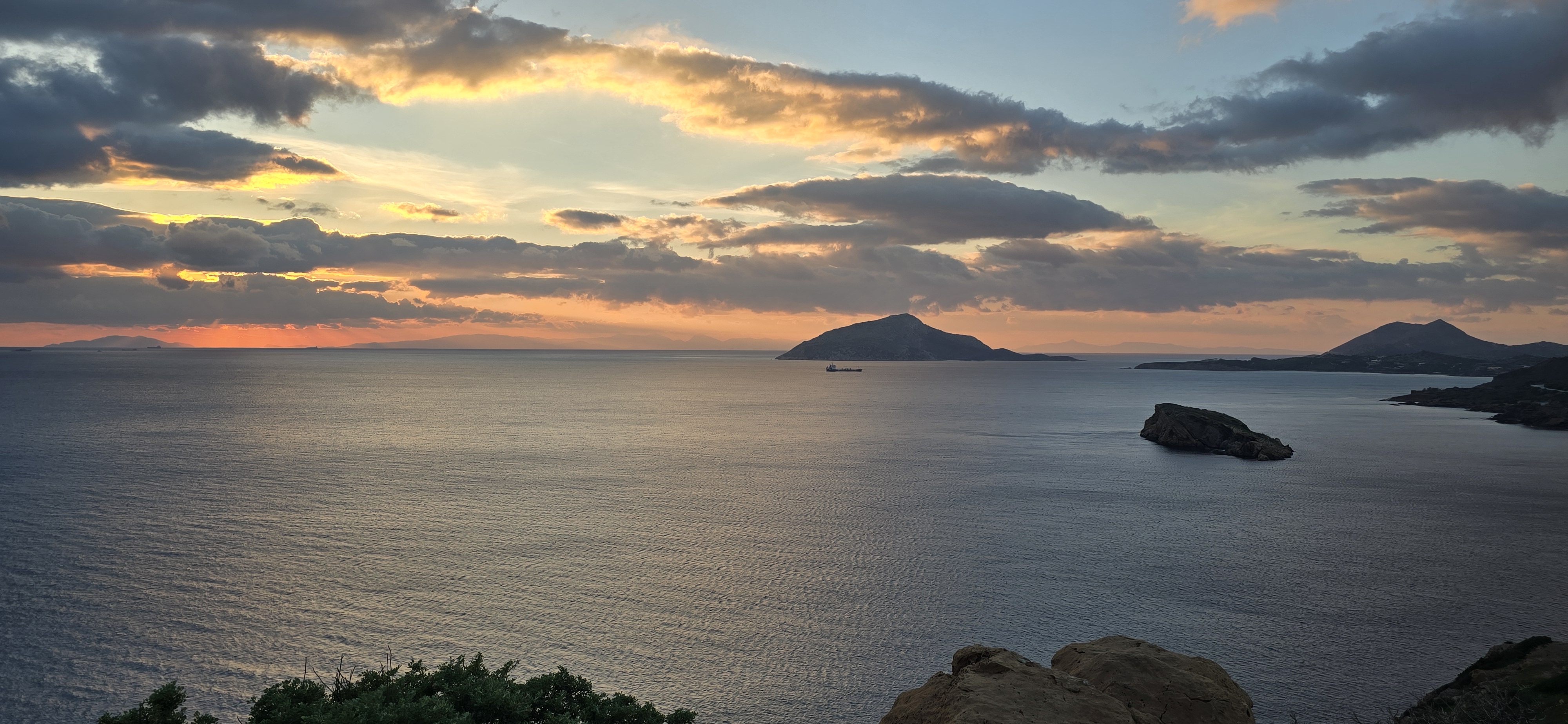
    And even after the sun disappeared, the sky refused to go dark.

    It glowed.

    Soft coral. Lavender-gray. A fading wash of gold that lingered against the blues.

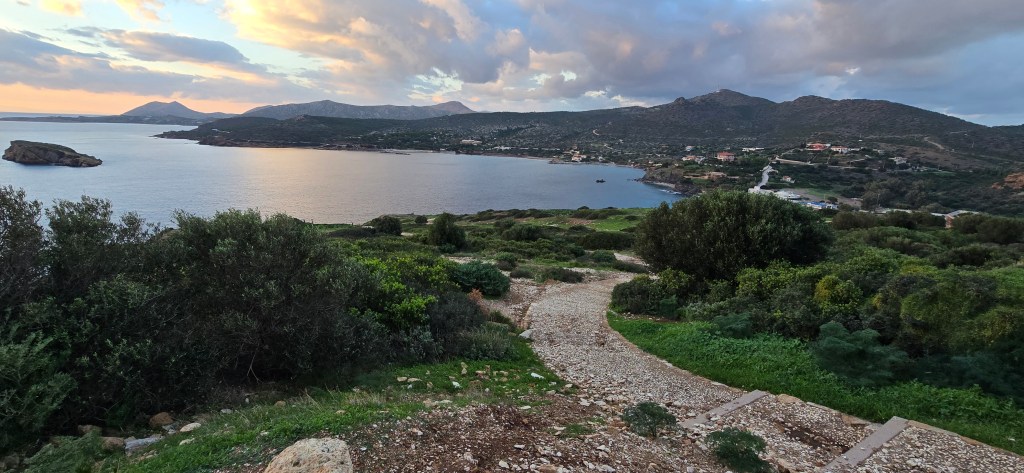
    We walked carefully back toward the bus in that lingering light, surprised at how bright everything still felt — as if the day wasn’t quite ready to let go.

    🍽 Full Circle

    We decided to get dinner together — and where did we go?

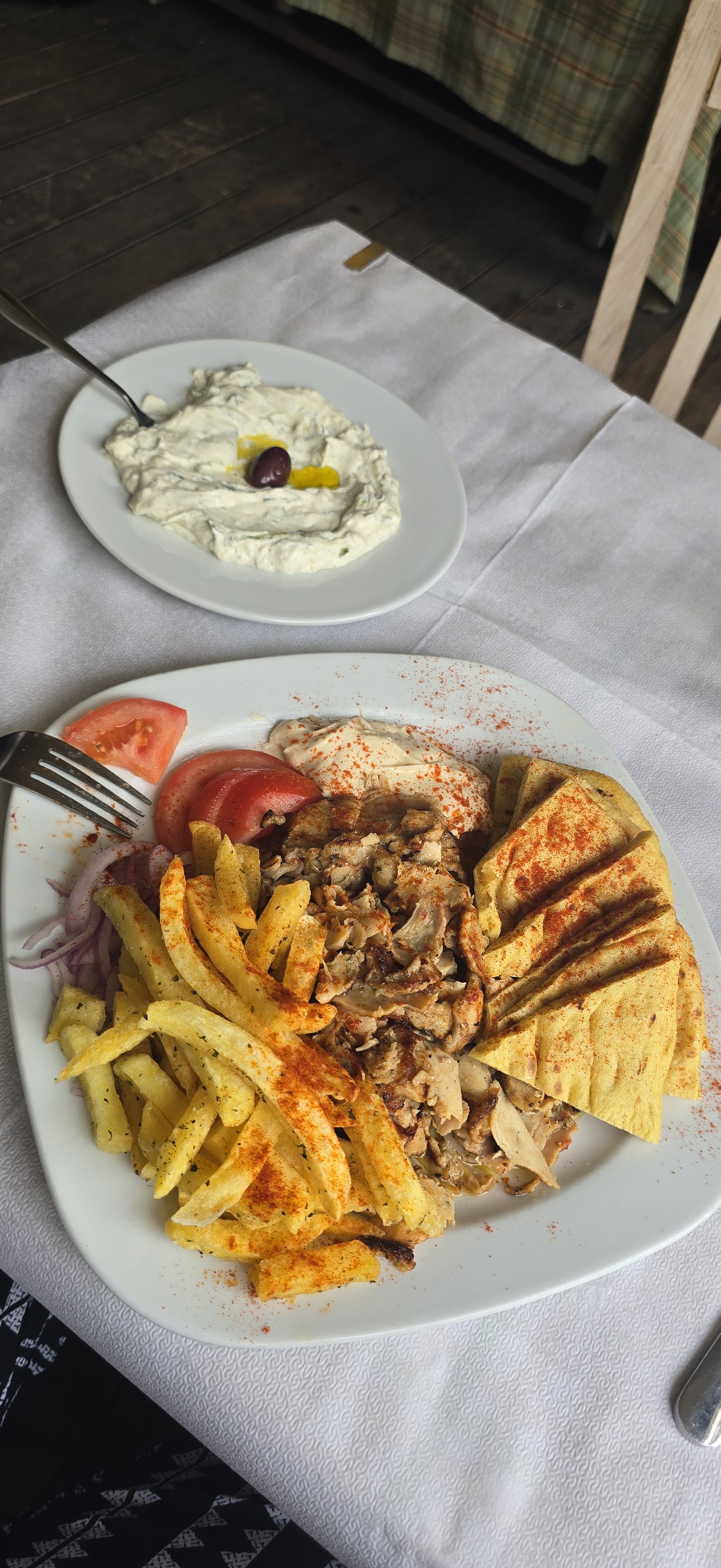
    Back to the souvlaki spot from my first night.

    Because when something is that good, you return. And add a new appetizer to try.

    And somehow, that felt fitting.

  • ✨ Intro Blurb 

    Some places don’t just survive history — they absorb it.

    December 9th began before the city was fully awake, stepping onto marble that has known worship, war, fire, devotion, destruction, and rebuilding. The Acropolis doesn’t hide its fractures. It doesn’t pretend it was never broken. And maybe that’s what makes it sacred.

    This wasn’t just a morning of ruins and plaques (yes, I read every single one). It was a walk through endurance. Through layers of belief and rebuilding. Through a place that has been temple, church, mosque, monument — and still rises above the city.

    And still it stands.

    🏛️ Early Entry: Marble Before the Morning
    The sky was barely awake when I stepped through the gates. The marble still held the cool of the night, and for a moment, the Acropolis felt quiet — almost private. There’s something sacred about walking ancient ground before the crowds arrive. I had intentionally booked the very first entry time, which I highly recommend if you go: you beat the crowds, the views are stunning in the early morning, and (if it’s summer) you’ll beat the heat.

    I felt a soft, excited anticipation as I waited to enter through the gates. That could’ve been because I was trying to finish my breakfast treat and coffee too — last bite shoved in my mouth, last gulp of hot coffee (thankful for my Italian coffee-drinking skills now).

    And then I stepped fully onto the path

    It’s one thing to see the Acropolis from afar. It’s another to feel the stone beneath your feet — stone worn by worshippers, philosophers, soldiers, priests, and ordinary citizens who climbed these same hills carrying offerings, prayers, swords, or expectations. I tried to imagine their belief — how real their gods must have felt to them. How sacred this ground must have seemed before it knew fire, siege, explosion, and erosion.

    Standing there, I felt the weight of devotion layered with destruction. Faith and fragility in the same place.

    🎭 The Theatre: Where Stories First Took the Stage
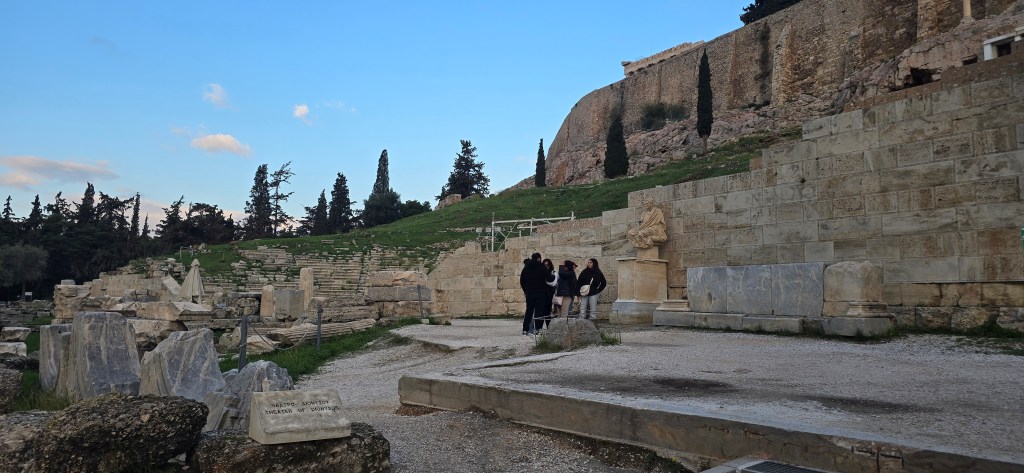
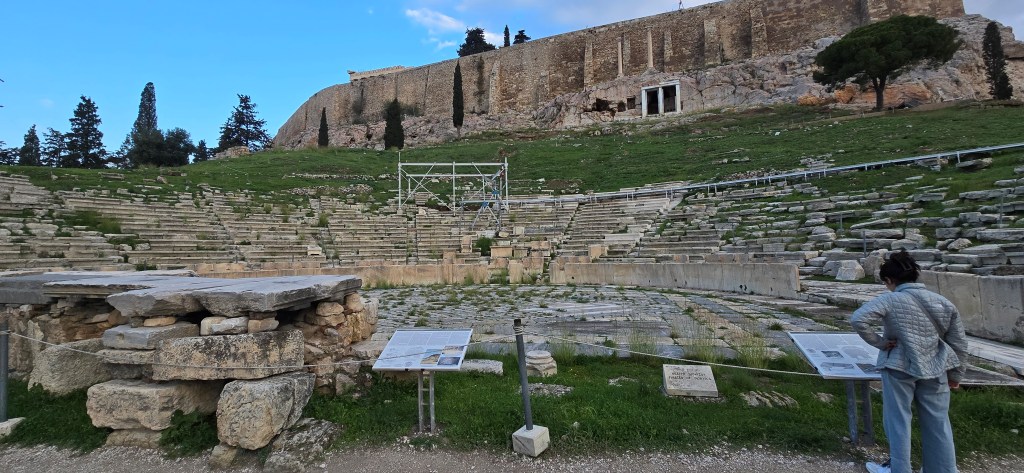
    The first major section you walk is the eastern and main entrance to the theatre. This entrance would have been used by the priests and officials for the performances during the Dionysian festival of the city. Along the northern side of this entrance, statues once stood honoring dramatic poets and the three most famous tragedians — Aeschylus, Sophocles, and Euripides (completed around 330 BC).

    East of this monument, the honorary base and statue of the most important representative of New Comedy, Menander, was completed in 291 BC. He is credited with writing over 100 plays and winning the competition multiple times. His innovative work focused on ordinary people, and he is considered the father of psychological drama. One other statue base, most likely from the 2nd century BC, has not been identified. Restoration work in this area was completed in 2012.

    Standing there, I couldn’t help but think how wild it is that stories meant to move hearts thousands of years ago still echo on stages today. I’ve sat in audiences. I’ve stood under lights. I’ve directed scenes. But standing at the birthplace of theatre felt different — like seeing the first spark before the flame. I almost didn’t want to leave… I took one last glance back toward the stage below, then turned and let the path guide me higher — one quiet step at a time.

    (Yes, I read every single plaque.)

    🏛️ The Peripatos & The Stoa of Eumenes: The In-Between Spaces
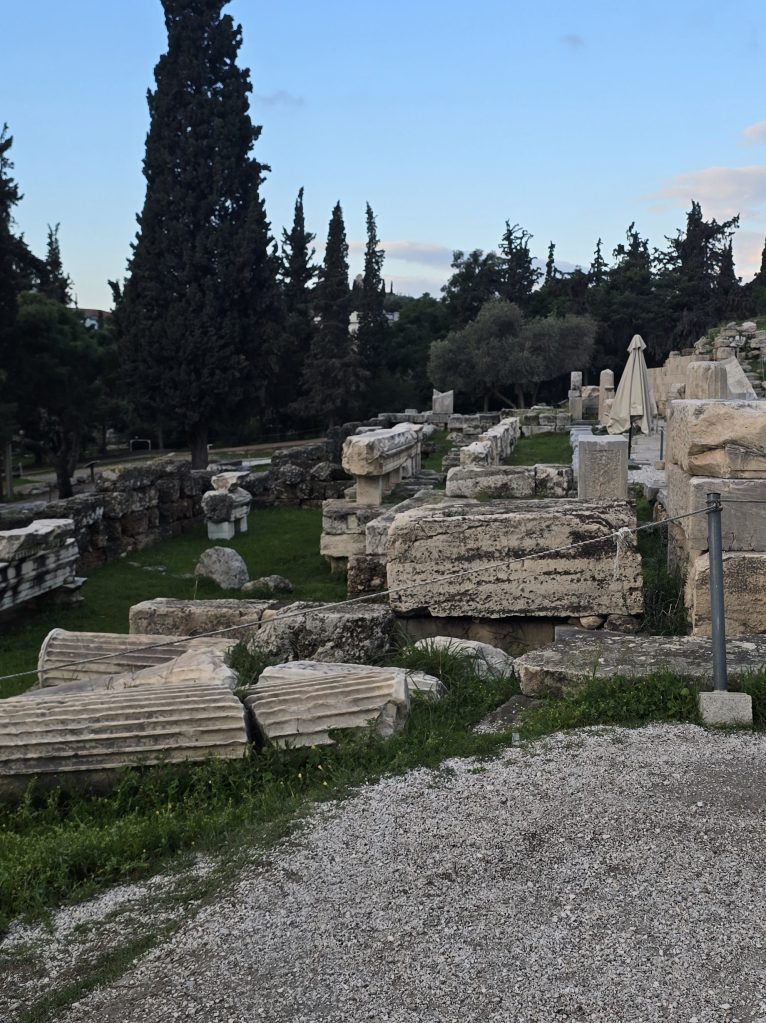
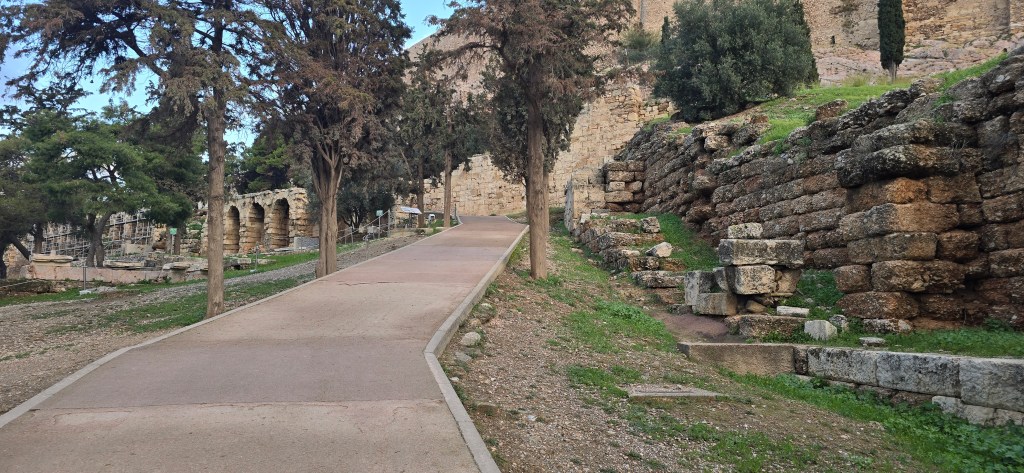
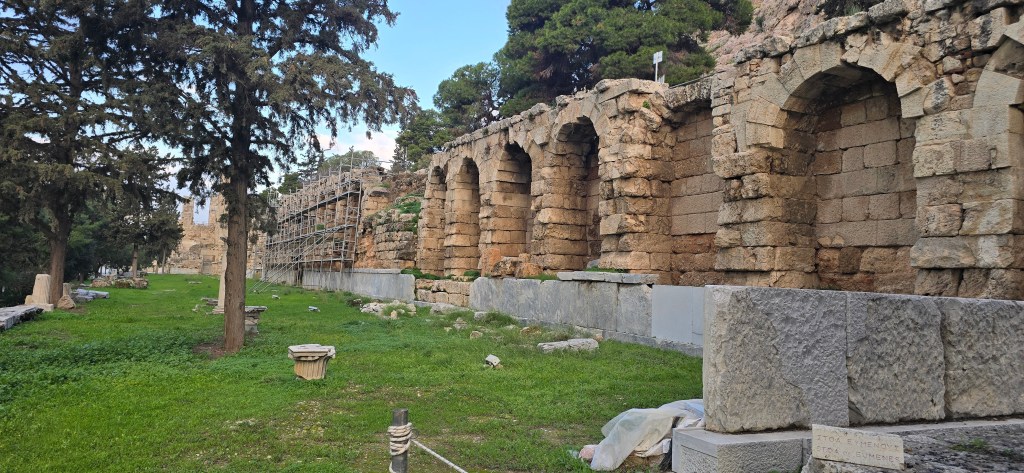
    Next, I walked up a modern pathway that lies on top of the Peripatos — the ancient road that circled the Acropolis — toward the Stoa of Eumenes. The King of Pergamon, Eumenes II (ruled 197–159 BC), donated this structure. It measured 163 m x 17.65 m and was two stories tall. What we see now is the arched wall built to reinforce the first floor (the wall would have stretched across the grassy area — I’ll insert the photo below).

    I stood there trying to picture it: two stories tall, stretching across the hillside, filled with movement and conversation. This wasn’t just architecture. It was shelter. It was gathering. It was the in-between space before the performance began. I imagined people waiting there in the shade, adjusting robes, debating philosophy, laughing before tragedy unfolded below in the theatre.

    🏺 Temple of Asklepios: Healing, Hope, and Surrender
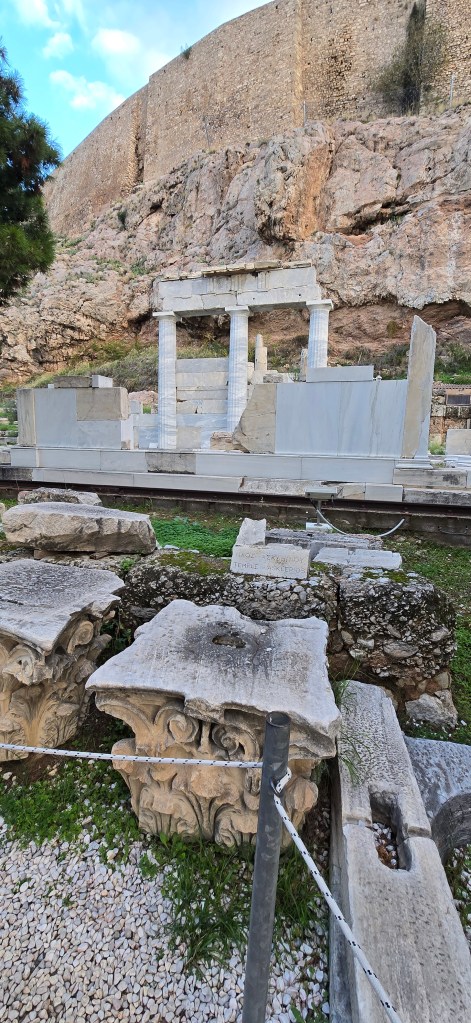
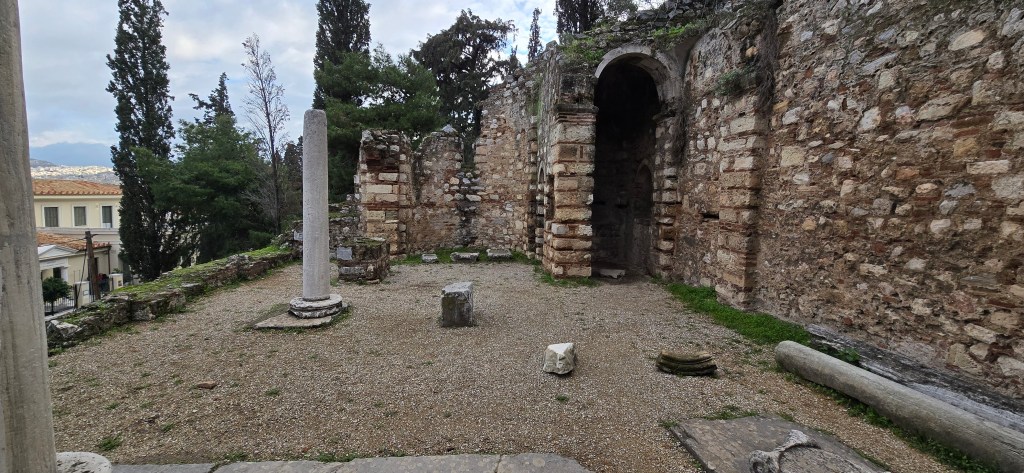
    The Temple of Asklepios followed, founded in 420 BC by the citizen Telemachos. When I read that name, I knew I had heard it somewhere before. After a quick search, I realized why: Telemachos is also known as the son of Odysseus, King of Ithaca, and his wife Penelope. As strange as it may seem, I really enjoy The Odyssey and The Iliad, so this made me ridiculously excited.

    The sanctuary was built in honor of the god Asklepios and his daughter Hygieia. Inside was a depiction of the arrival of the gods in Athens and their reception by Telemachos. The sanctuary would have included an altar, dining and lodging for priests, and two galleries. Visitors seeking healing would spend the night there, hoping to see the god in their dreams and be healed.

    The idea of lying down in hope — trusting that healing would come in a dream — felt strangely familiar. Faith has always required surrender.

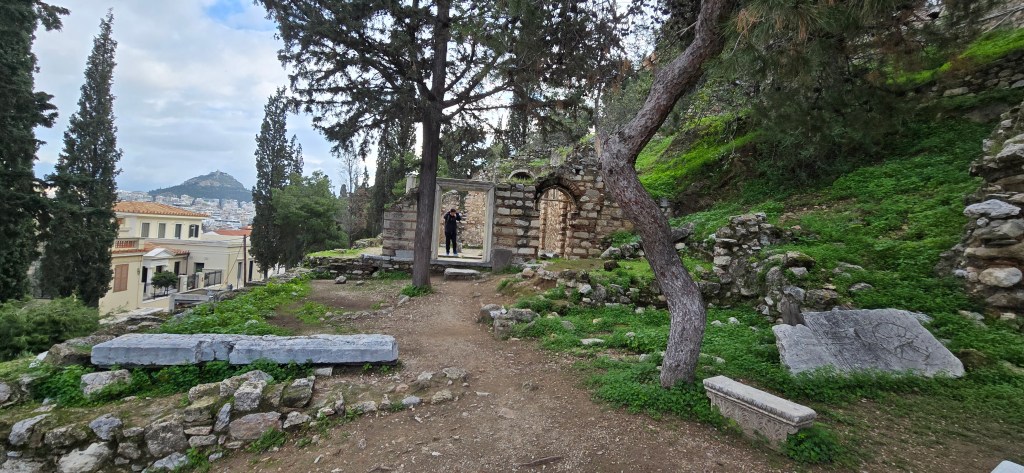
    In the 6th century AD, when Christianity replaced paganism, the buildings of the Asklepieion were integrated into the complex of a large three-aisled basilica. During the Byzantine period (11th–12th century AD), two small, single-aisled churches were built on the site as well.

    It amazed me how large the columns were and how they would have been hand-carved and moved.

    🧱 The Hand-Built World: When Stone Refuses to Be Ignored
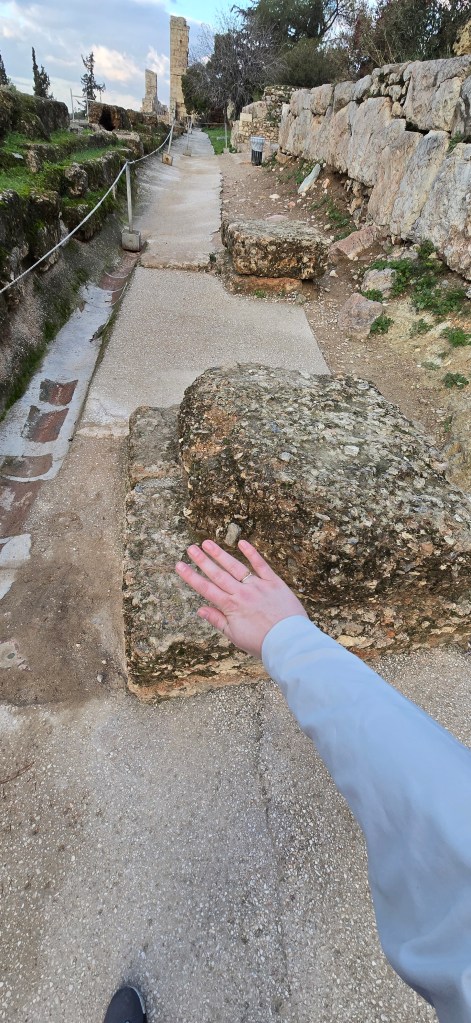
    Walking along the way, it was difficult to keep moving because I kept finding myself just staring up at the walls that would have been built by hand. I kept stopping mid-step, tilting my head back, trying to understand how something this massive was carved and raised without machinery. The scale of it humbles you. It refuses to be rushed past.

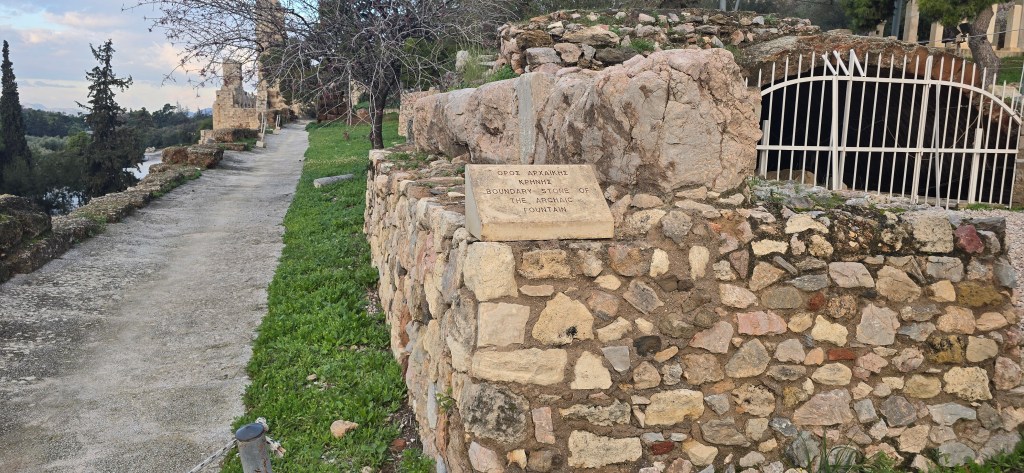
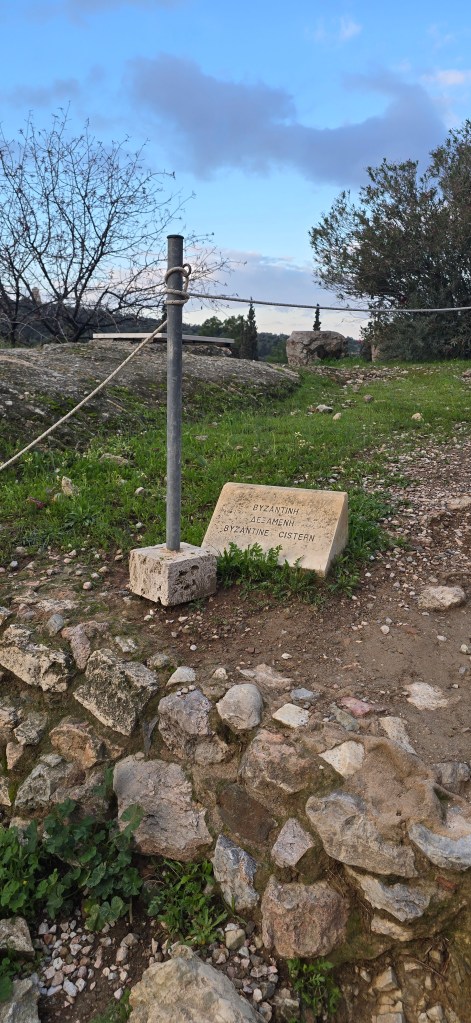
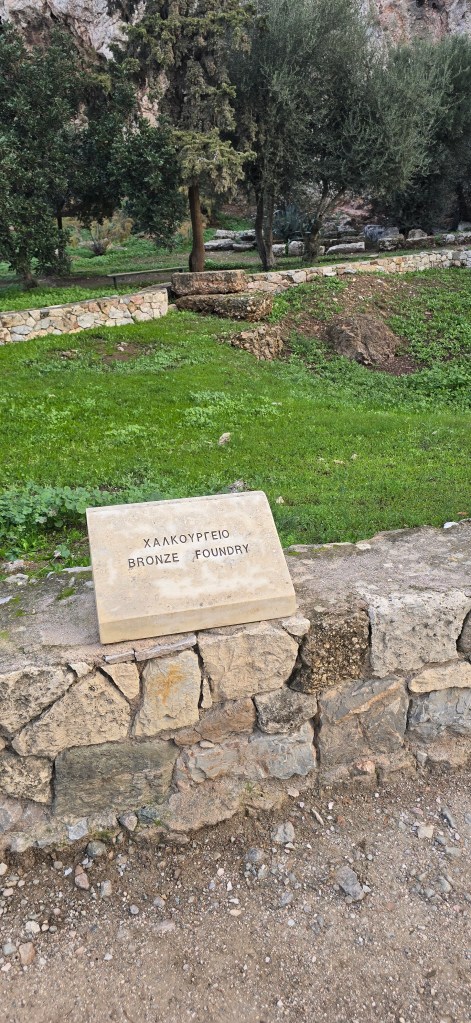
    Along the route, I passed a bronze foundry, cisterns, fountains, and views of modern Athens — a reminder that the ancient world and the living city still share the same breath.

    The path curved again, and I followed it without hesitation, as if the hill itself were unfolding its next story just ahead of me.

    (I promise I didn’t memorize all these dates… I just took photos.)

    🎶 Odeion of Herodes Atticus: Music Where Grief Once Lived
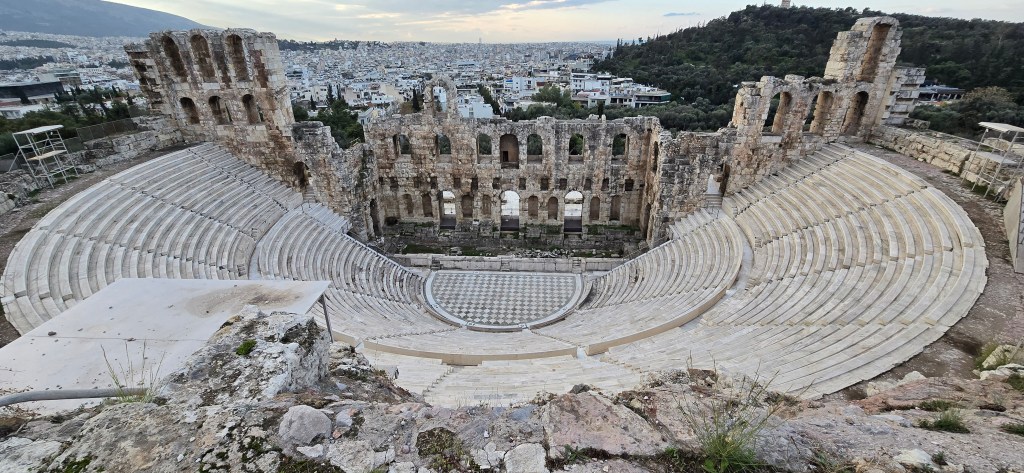
    Next on the journey was the Odeion of Herodes Atticus, an ancient stone Roman theatre located on the southwest slope of the Acropolis. The theatre was completed in 161 AD and was built by Herodes Atticus in memory of his wife.

    Even empty, it feels alive. You can almost hear the acoustics testing themselves against the stone. The fact that performances still happen here today — that music continues where grief once inspired its construction — felt quietly poetic.

    The theatre was destroyed by the Heruli in 267 AD and wasn’t restored until the 1950s. This 5,000-seat theatre was one of the largest of its time and is still used today as a premier venue for the Athens Festival.

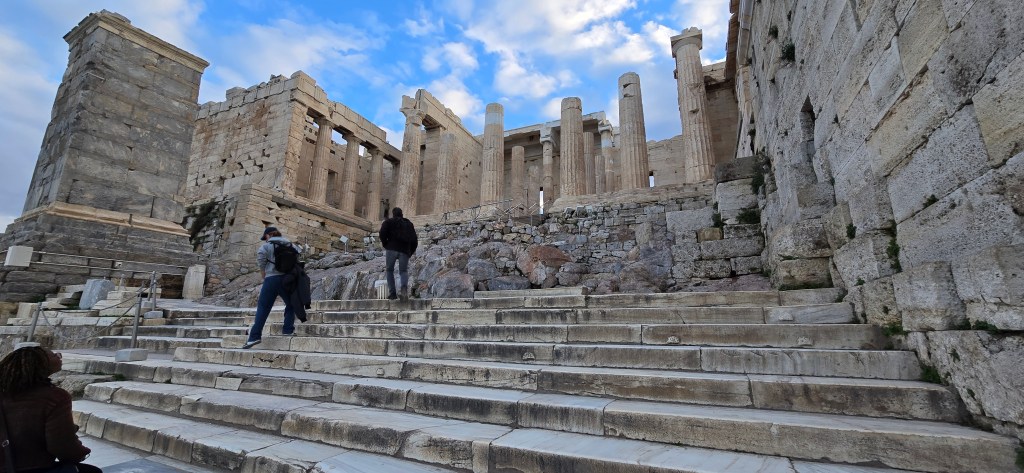
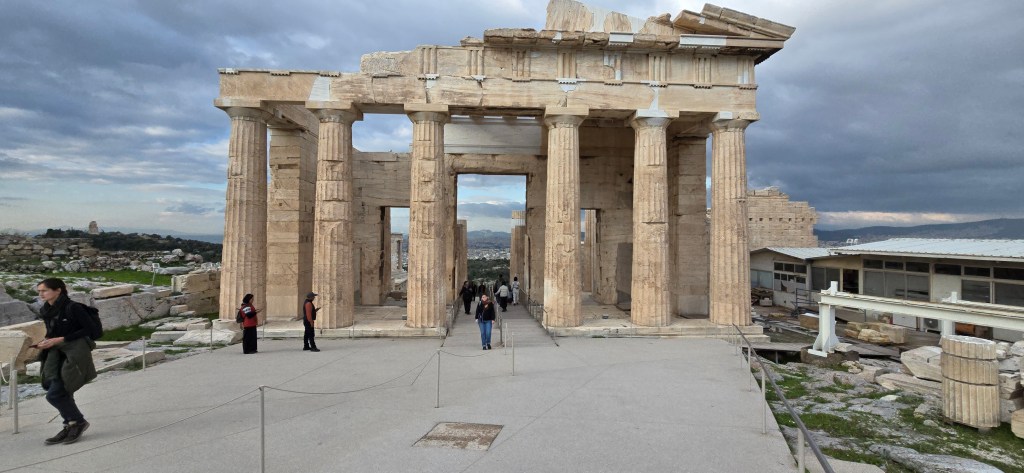
    From there, you continue upward toward what would have been the western gate… and then up the steps into the Propylaea.

    🚪 The Western Gate: Where Ancient and Modern Meet
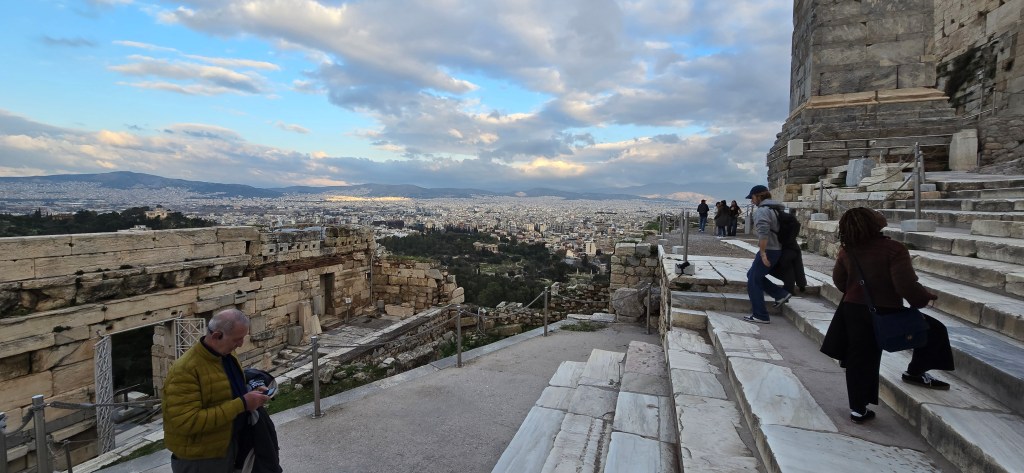
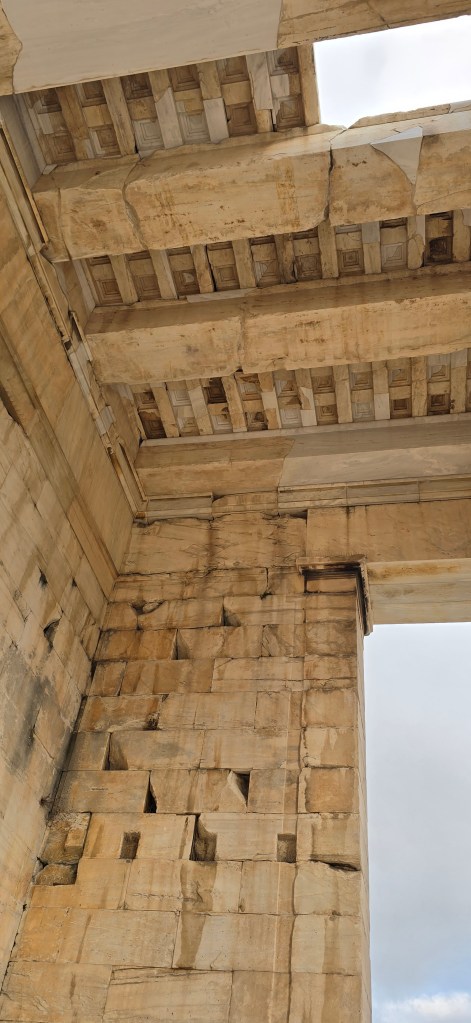
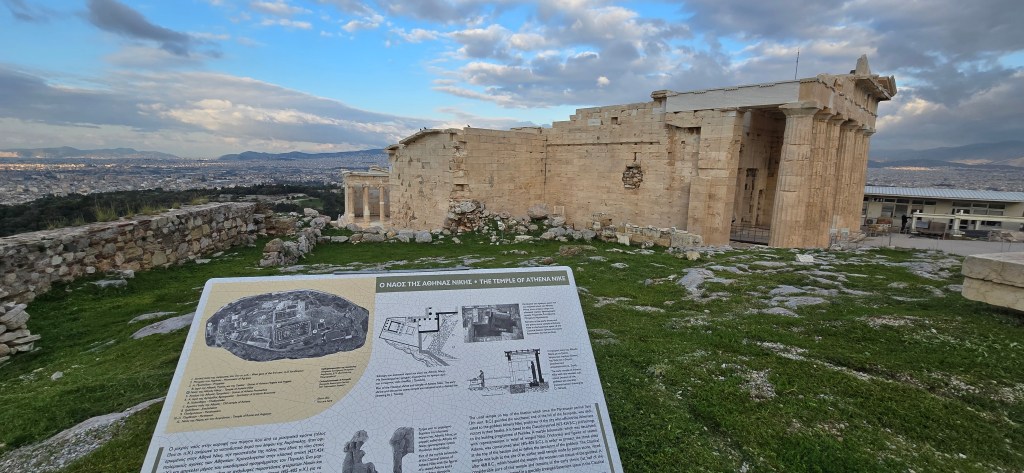
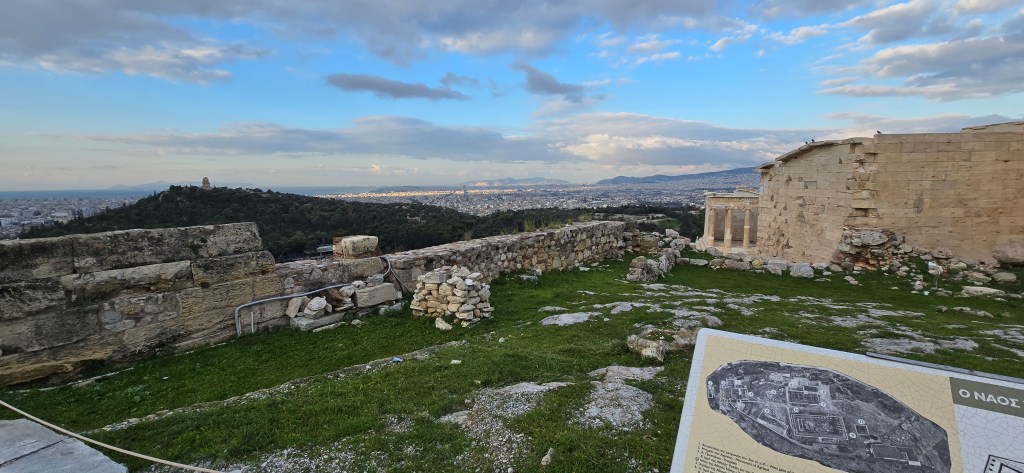
    To the left is the Monument of Agrippa, to the right the Temple of Athena Nike, and straight ahead the Propylaea. The grandeur of the steps alone was enough to make me walk in awe.

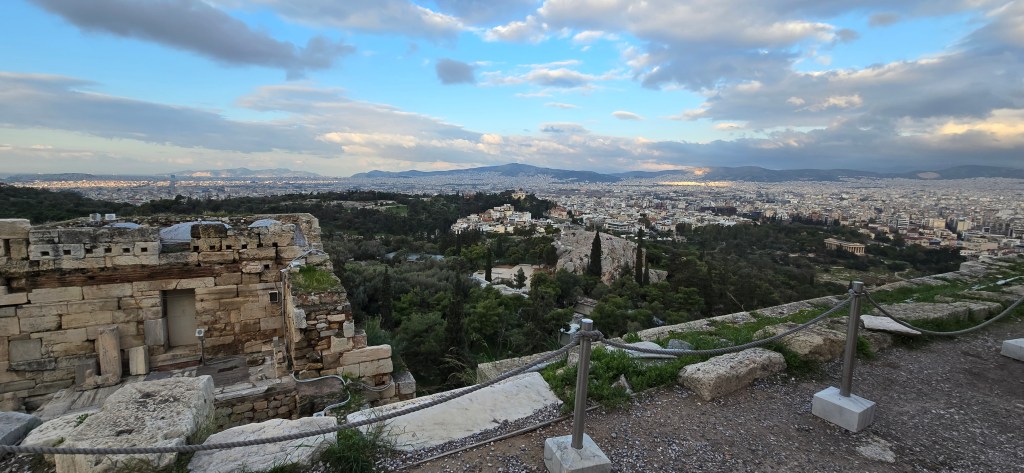
    Beyond the gate, the contrast was breathtaking — lush green, ancient marble, and modern Athens spilling out below. Below me, the city buzzed with traffic and café tables. Behind me, marble older than empires. Somehow, neither erased the other.

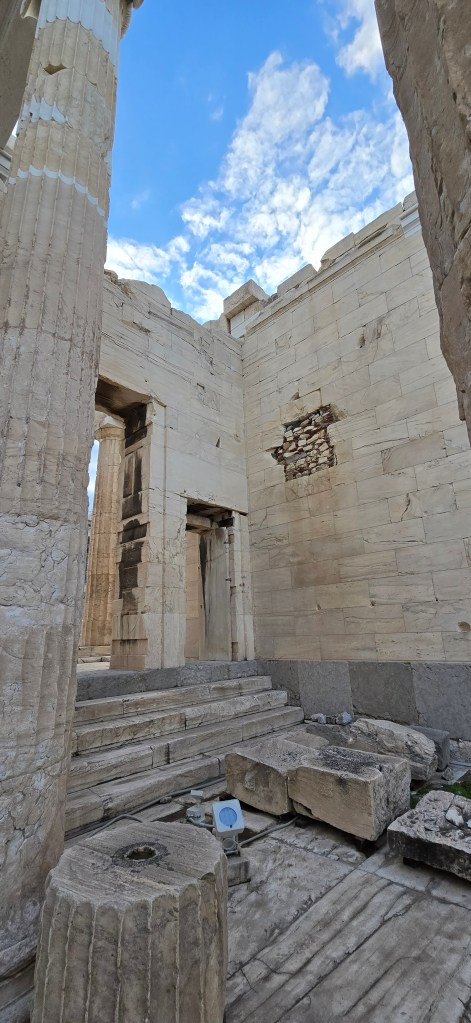
    Walking around, you can see areas where restoration work has made the stone look “new,” and other portions left untouched — a visible reminder of time, repair, and what endurance actually looks like.

    Looking out toward the sea, the water was crisp blue and dotted with white boats. I imagined ancient wives awaiting their warriors returning from battle, the hope they placed in their gods. The fresh air and wind felt like the breath of every life that had looked out from this very spot before mine. And in the distance, I could see the monument I’d reached the day before — the same place where I’d looked toward the Acropolis and wondered what it would feel like to stand here.

    🏛️ The Propylaea, Agrippa, and Athena Nike: Victory, Ceremony, and Power
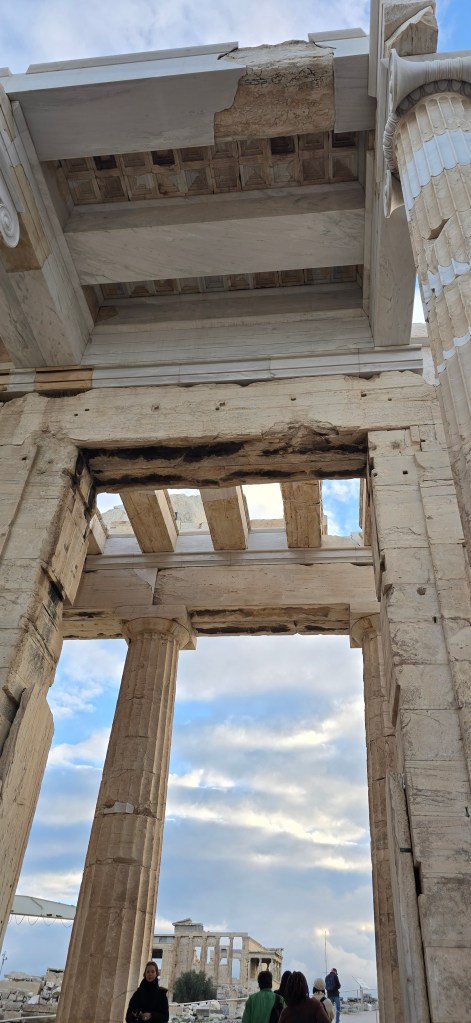
    The Propylaea served as the monumental ceremonial gateway to the Acropolis, built between 437 and 432 BC. Traces left on the building show that the plan evolved considerably during construction, and the project was ultimately left unfinished.

    To the west (left for me) stood the monument dedicated by the Athenians to Marcus Vipsanius Agrippa, son-in-law and general of Emperor Octavian Augustus. Today only the marble base remains. The monument was dedicated between 27 BC (when Agrippa became consul for the third time) and 12 BC (the year of his death).

    Opposite the Monument of Agrippa is the Temple of Athena Nike. Athena Nike was the protector of the city and offered victory in battle. The original temple dates to the Classical period (427–424 BC). Sculptures depicted victorious battles — gods versus giants, Athenians versus Amazons, Greeks versus Persians. Many sculptures were recovered after the temple’s destruction in 1686 during Ottoman occupation and are preserved in part at the museum. The current temple was reconstructed in 1834 after Greek independence.

    🏛️ The Parthenon: Awe and Loss in the Same Breath
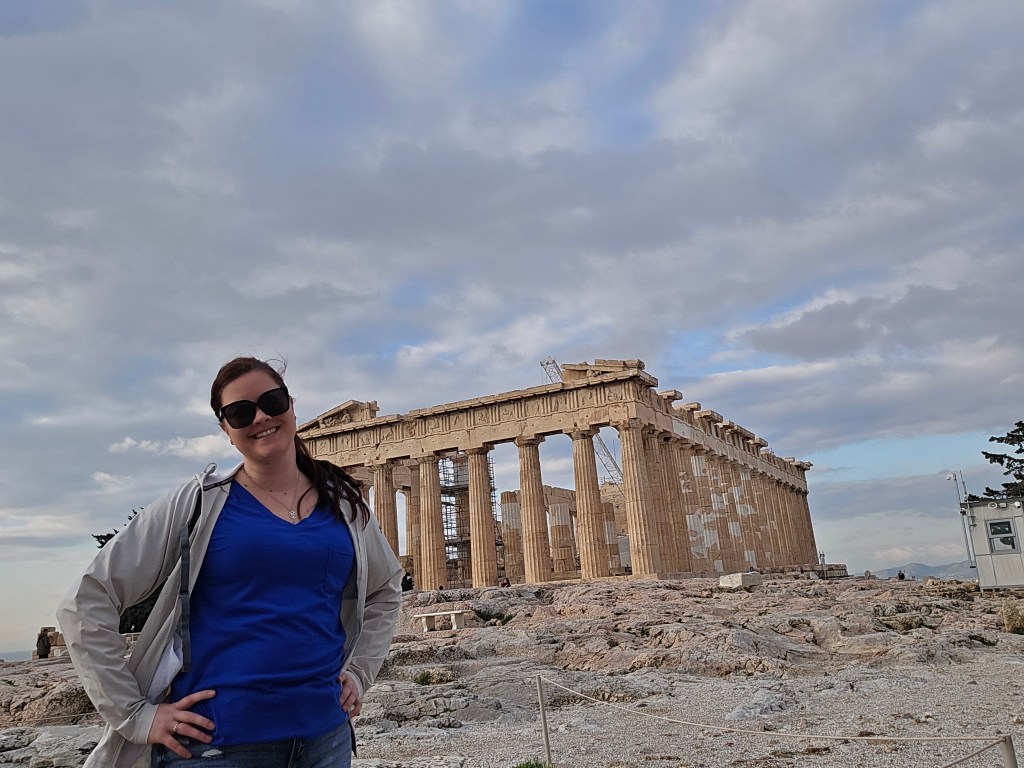
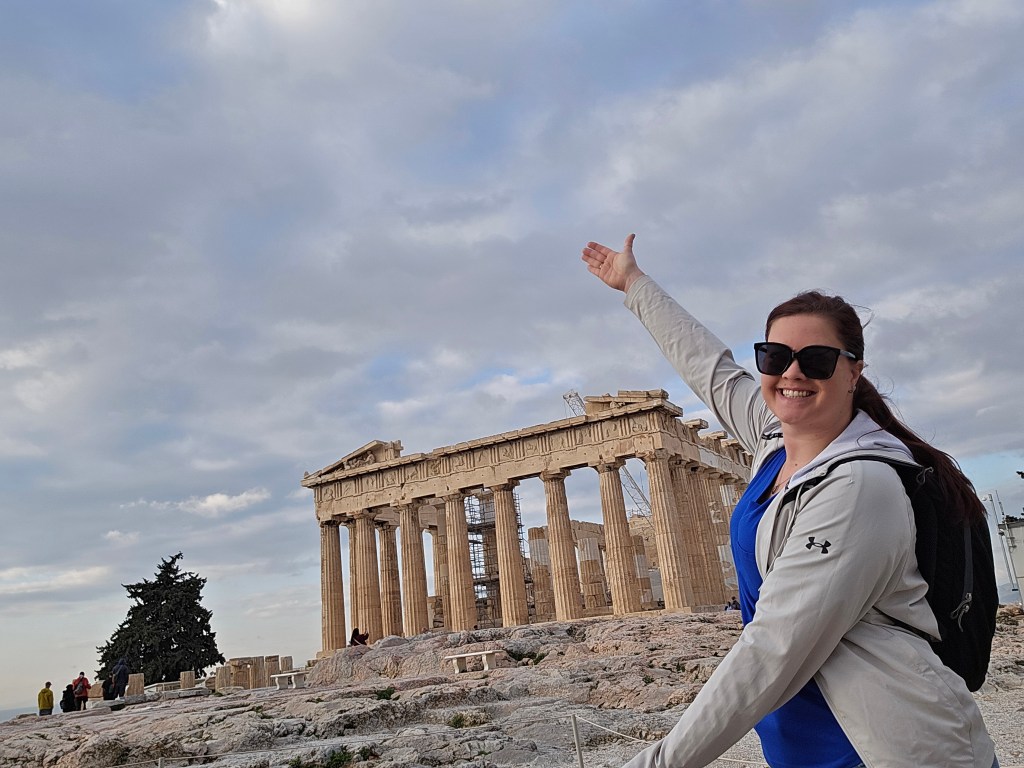
    And then… the Parthenon.

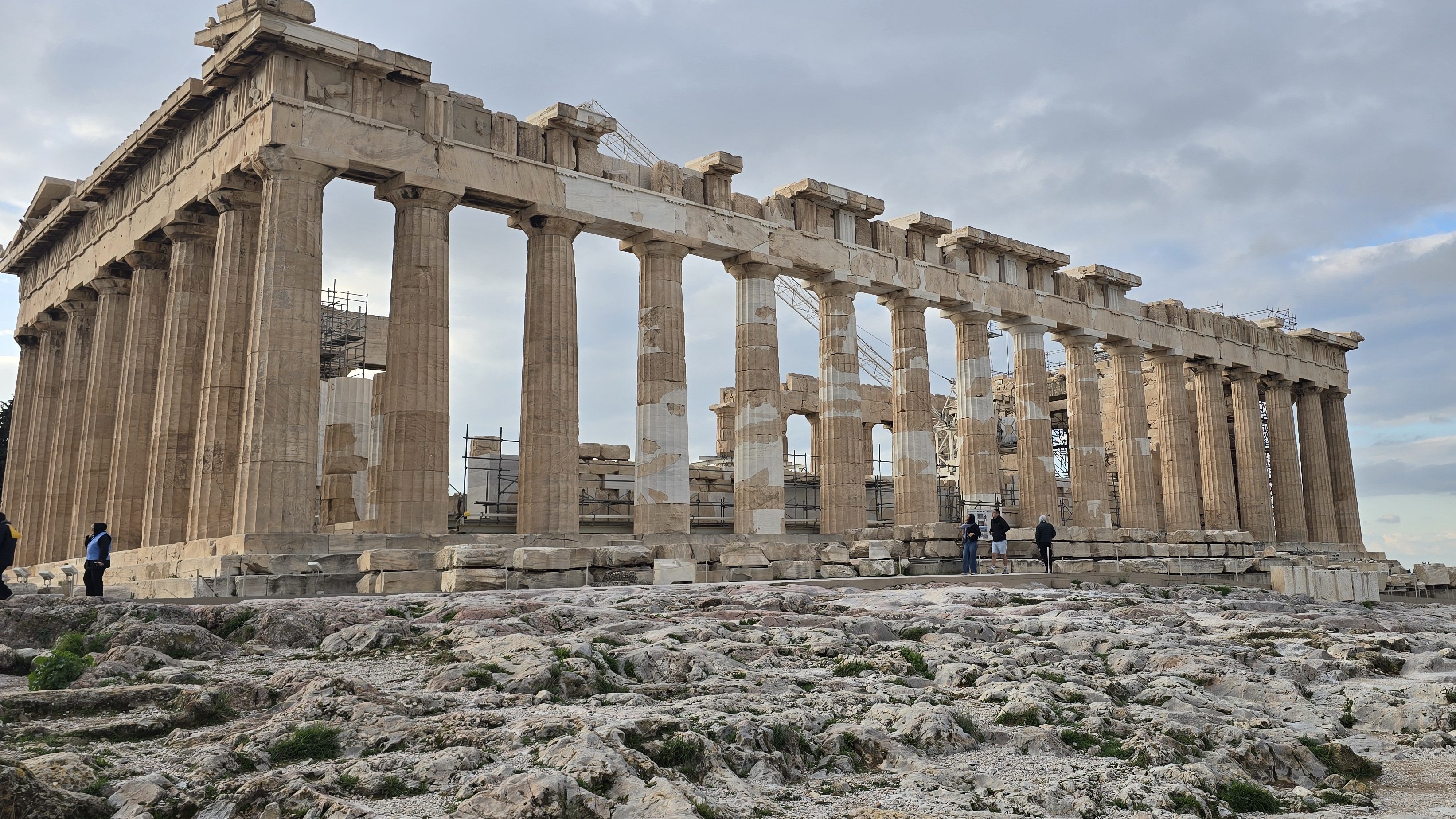
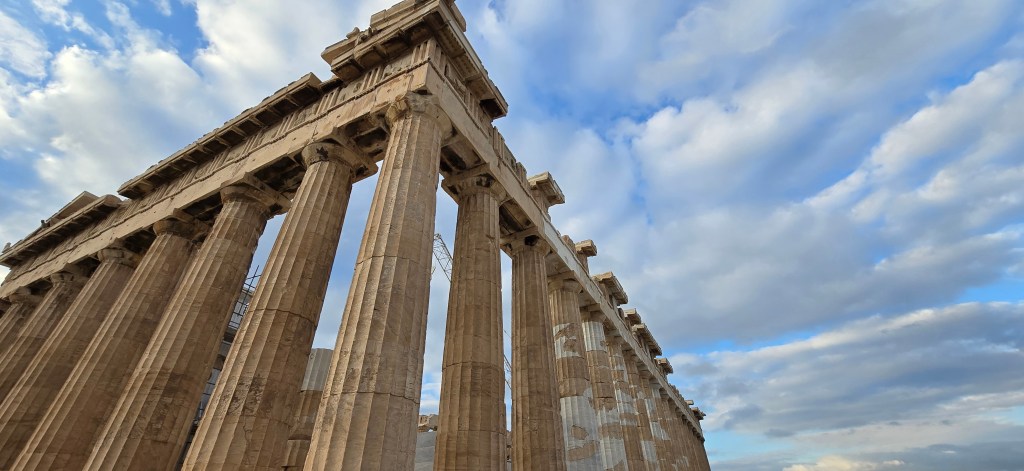
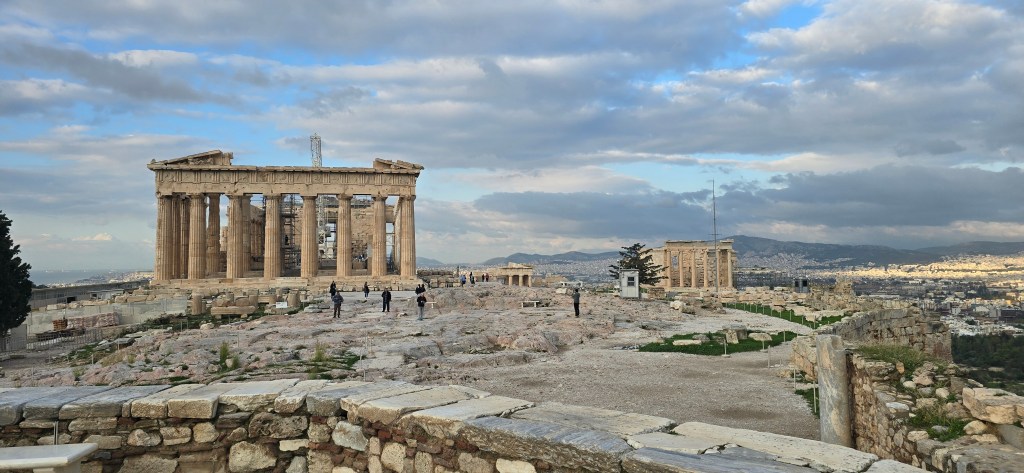
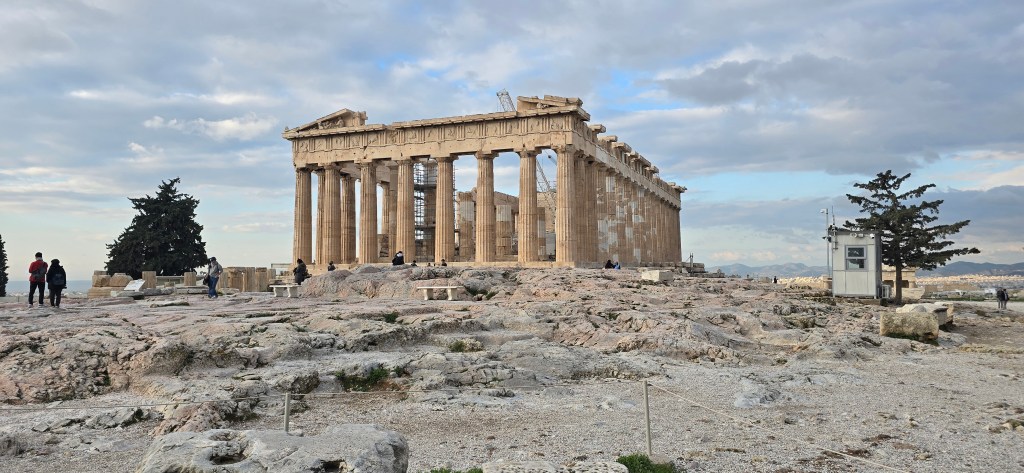
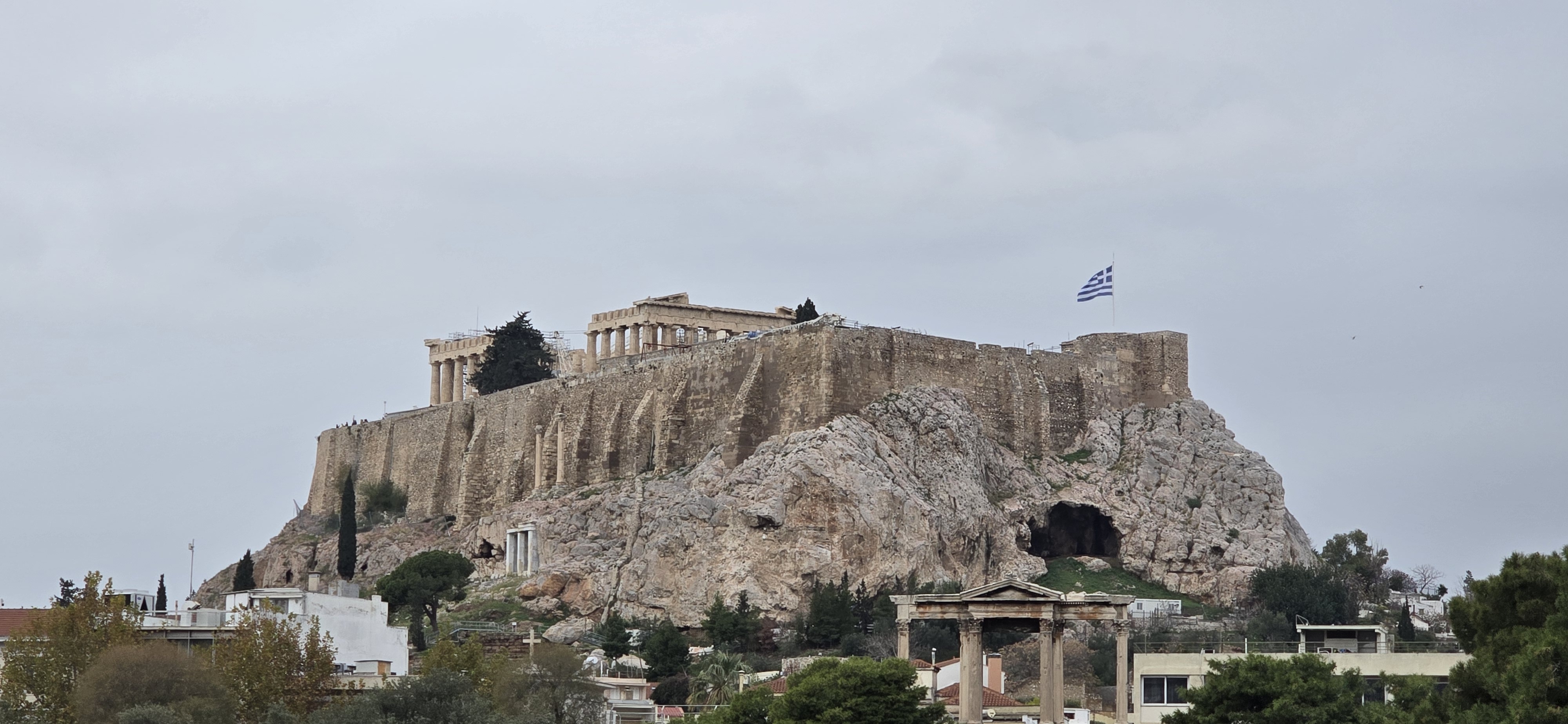
    The Parthenon is what most people picture when they think of Ancient Athens. It crowns the Acropolis — enormous, iconic, and visible from so many corners of the city. Dedicated to Athena Parthenos, it became the most important building for the re-establishment of the Acropolis sanctuary after the Persian sack in 480 BC.

    It was built in 447–438 BC, and its sculptures were completed in 432 BC. Over the centuries, additions were made — including a bronze shield dedicated by Alexander the Great from the spoils of his victory at the Granikos River in 334 BC, and later honors to the Roman Emperor Nero in 61 AD.

    In the 6th century, during the spread of Christianity, it was converted into a church dedicated to “Holy Wisdom,” and in the 11th century to the Virgin Mary. In 1458, when Athens surrendered to the Ottoman Turks, it became a mosque.

    The Parthenon has endured the weight of time — and sieges. In the late 3rd/4th centuries AD, its interior was destroyed by fire. In 1687, during the Venetian siege, a cannonball made a direct hit that destroyed the roof and many sculptures (some burned fragments can be seen today inside the Acropolis Museum).

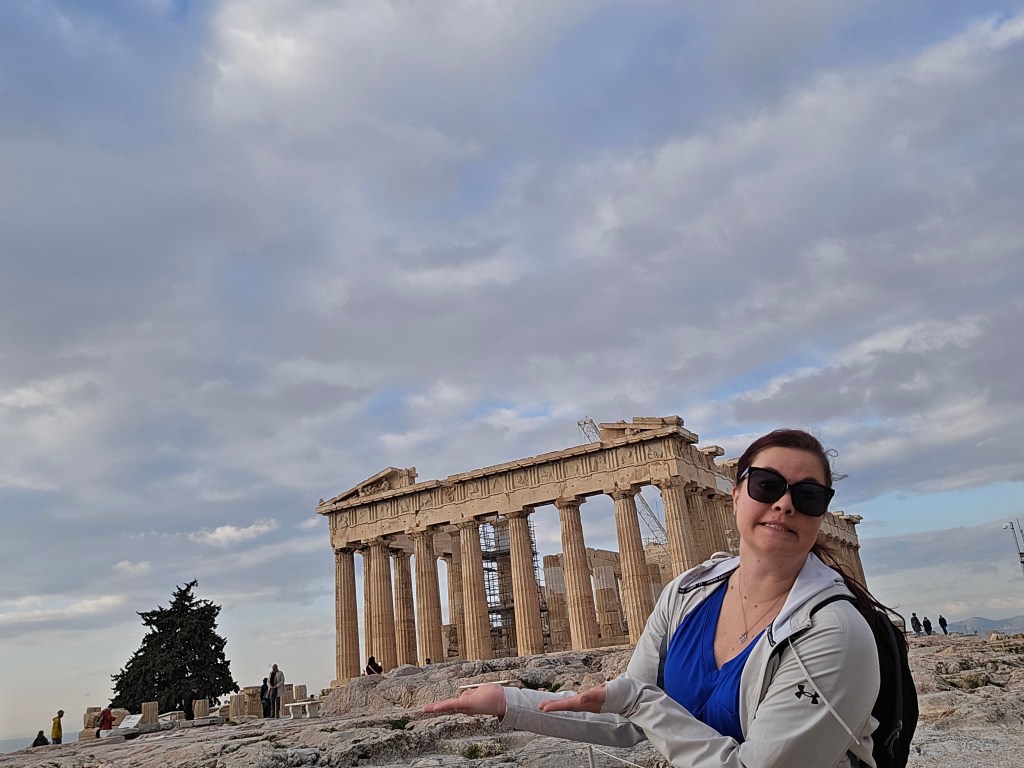
    The most severe damage came in 1801–1802, when Thomas Bruce, the 7th Earl of Elgin, removed a large portion of sculptures and compromised structural elements. Knowing that so much of what once crowned this place now sits in a museum thousands of miles away felt complicated — awe and loss in the same breath. There’s something unsettling about knowing parts of a story live far from the place they were born. It made the emptiness feel louder. In total, 19 sculptures, 15 metopes, and 56 sawn blocks of the frieze were transported to England; today these items can be viewed in the British Museum in London. (I had fun taking these photos — enjoy all the heavy lifting I did to get them for you!)

    The Parthenon doesn’t pretend to be untouched. Its fractures are visible. Its history is complicated. It has been temple, church, mosque, ruin, symbol. And yet, it refuses to disappear.

    Fire. Conversion. Siege. Explosion. Stripped sculptures.
    And still it stands.

    🇬🇷 The Flag and the View: Stillness Above the City
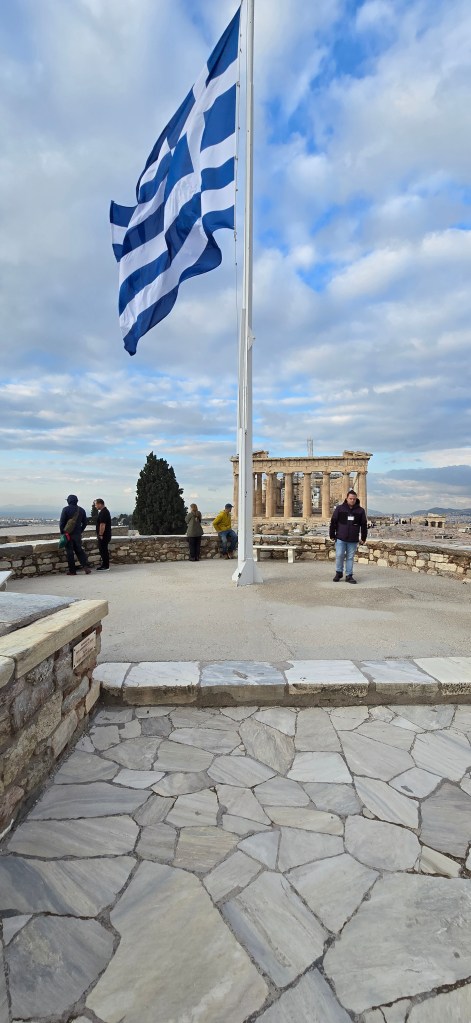
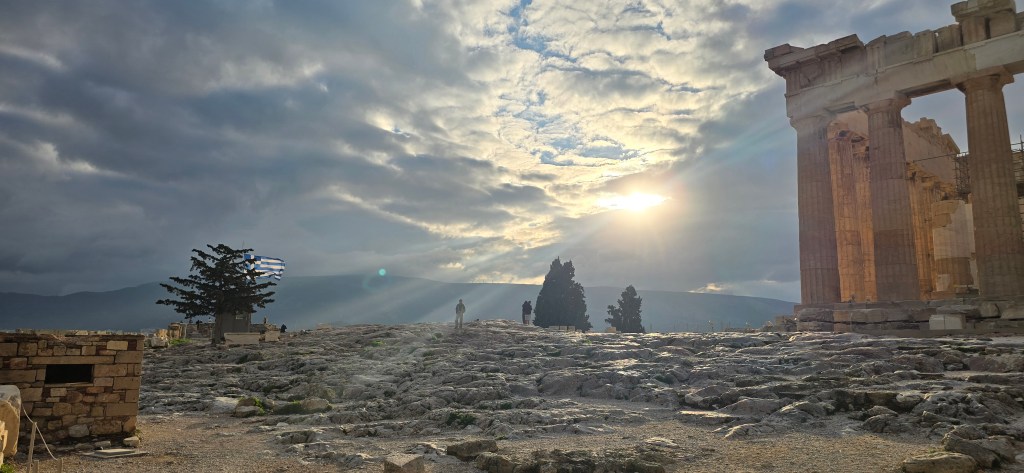
    Once I walked around the Parthenon’s right side, I passed the Temple of Rome and Augustus and found myself facing a giant billowing Greek flag — the kind of sight that makes you stop without choosing to. The flag snapped sharply in the wind, its blue almost impossibly vivid against the sky. It didn’t feel symbolic in a political way — it felt resilient. This place has been burned, conquered, converted, restored… and still it rises. I watched the flag and felt something steady settle in my chest. Resilience doesn’t always shout. Sometimes it simply endures.

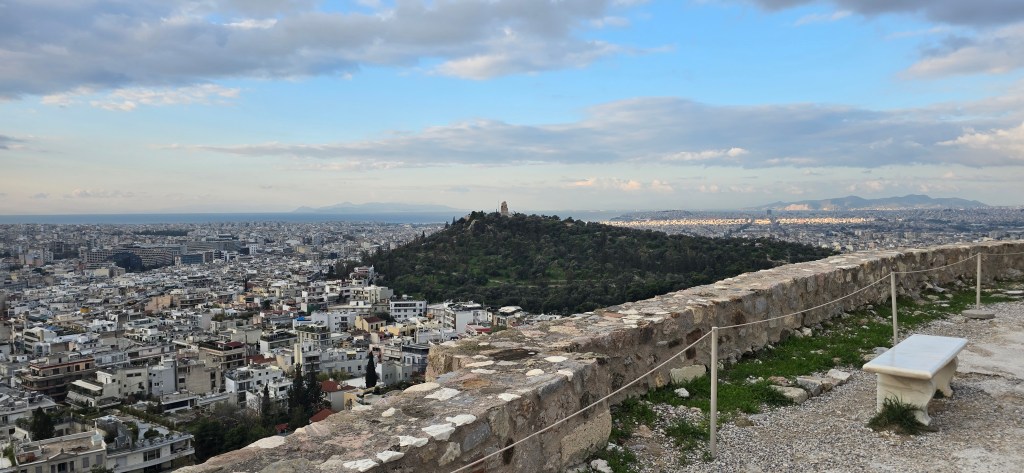
    And then the view opened up.

    The sea gleamed in the distance. The city stretched out in every direction, rooftops and streets and soft morning light spilling over everything like it was blessing it. The wind tossed aside the noise of other conversations until it felt like the world had quieted just for a moment — not empty, not lonely… just still.

    There weren’t many of us up there yet — maybe twenty people scattered across the rock, all moving slowly, all speaking in softer voices like we’d stepped into a place that didn’t want to be rushed. I love watching awe pass across someone else’s face because it reminds me I’m not the only one feeling it — that this kind of wonder is human, and shared, and timeless.

    I know it gets packed later. You can see the waves of people from below. But that morning? It felt like the Acropolis let me stand in its silence long enough to actually feel it.

    🌿 The Pandroseion: Myth as Memory
    Moving to the left side of the Parthenon, I was reminded quickly how uneven the ground is up there. I was grateful for my tennis shoes — even though I could still feel the rocks underfoot.

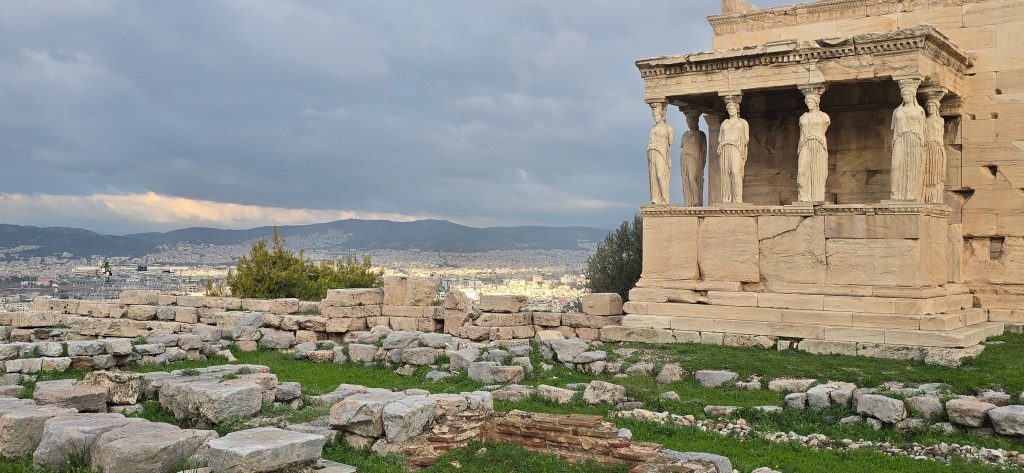
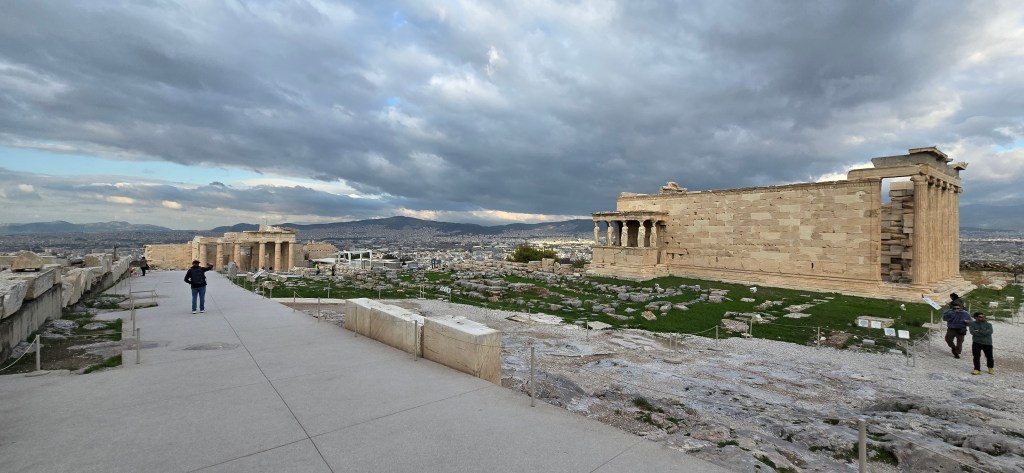
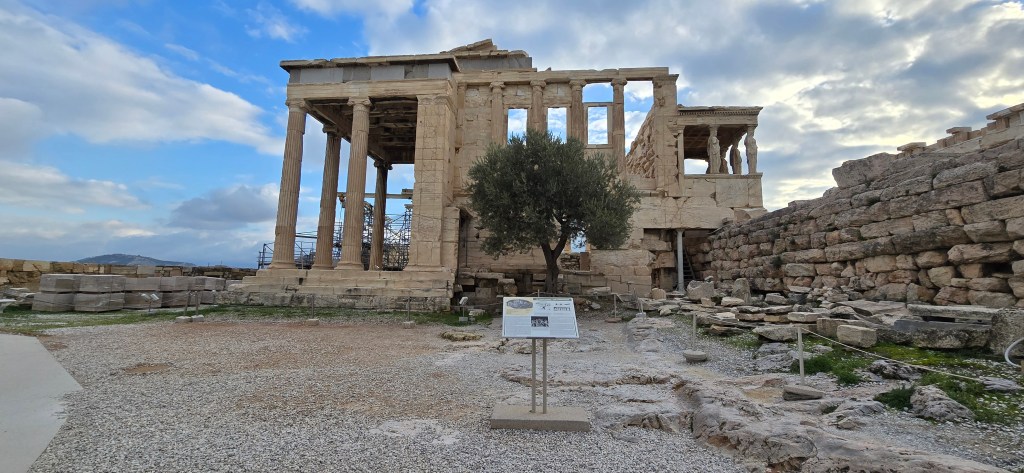
    That path brings you to the Pandroseion on the north side of the Old Temple of Athena. It was dedicated to Pandrosos, the kind and obedient daughter of the legendary King Kekrops. She was the first priestess of Athena Polias, patron goddess of the city. This was one of the oldest and most sacred areas of the Acropolis — the site of the contest between Athena and Poseidon for the city’s patronage: her sacred olive tree and his salty spring. The tomb of King Kekrops was also believed to be located here. King Kekrops, according to the legend was the judge between thee great Athena and Poiseden contest.

    Even here, mythology felt less like fantasy and more like identity. These weren’t just stories. They were origin narratives — explanations for belonging.

    The Pandroseion was destroyed in 480 BC by the Persians and later restored and altered (either 431–406 BC or 421–406 BC).
    Note: the olive tree present today was planted in the 20th century in memory of Athena’s sacred, legendary tree.

    💧 Klepsydra Spring: The Sound That Outlasts Empires
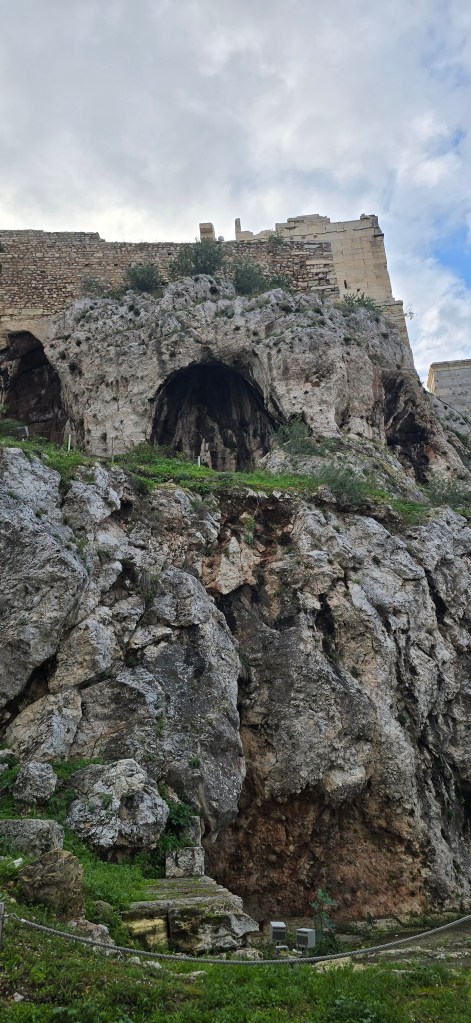
    Walking back through the western entrance, I rounded the path to explore the backside of the Acropolis. Here you pass the Paved Court of Klepsydra — the most important spring on the Acropolis rock, functional since antiquity. On the north side, it sits below the Sacred Caves of Pan, Zeus, and Apollo.

    The Klepsydra monument is composed of two buildings: the fountain and the paved court, both built during the 5th century BC. The court was used for six centuries and was accessible by stairs until rock collapses in the 1st century AD. During the 3rd century AD, it was abandoned and covered by dirt. Excavations began in the 1870s and were completed in 1940. Restoration of the fragile floor took place from 2011–2015, and reinforcement has been added under the structures.

    The sound of the water is softer than you expect — steady, persistent. Water that has flowed here for centuries, long before any of us arrived to marvel at it.

    ⛪ Leaving the Hill: Centuries Before Coffee
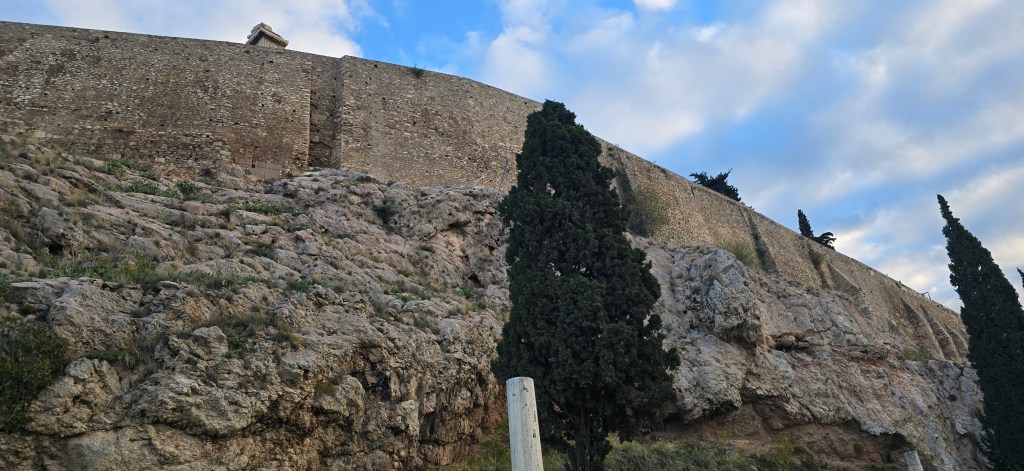
    As you leave this area, you also come across the Church of St. Nikolaos or Serapheim, believed to have been built in the first Turkish domination (1458–1687).

    Leaving the Acropolis hill on the opposite side, I was heading toward the places where St. Paul would have been spreading Christianity.And it wasn’t even 9:15 in the morning.
    I had already walked through centuries before most people had finished their first cup of coffee.

  • Coffee, Warmth, and an Unhurried Start

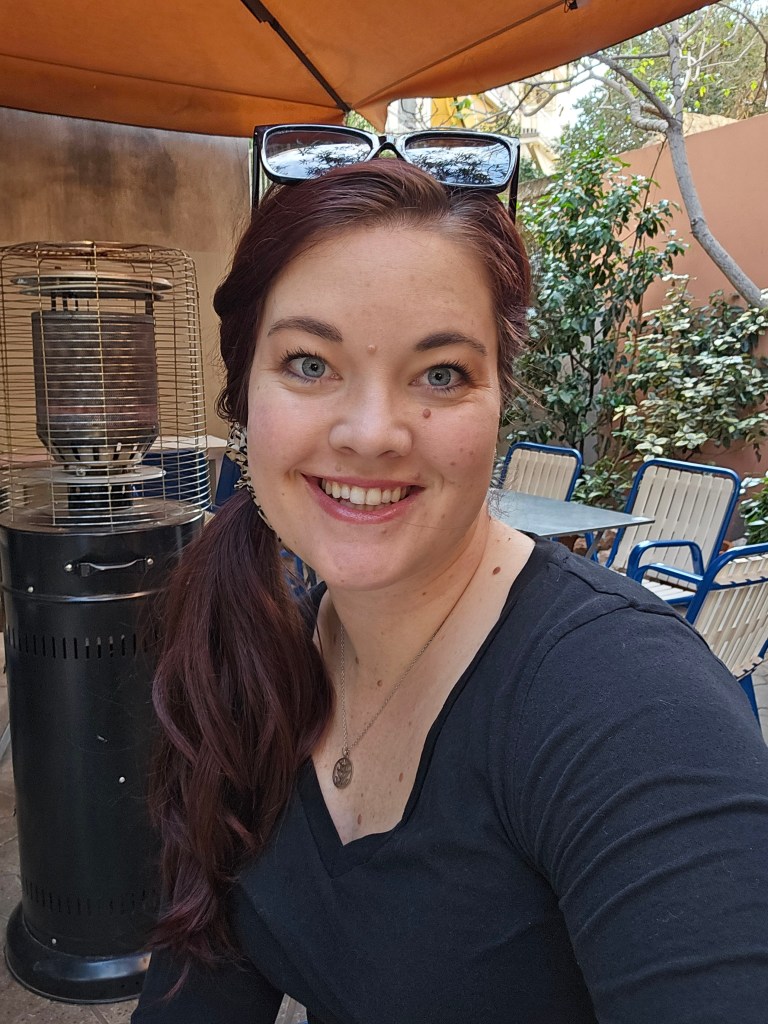
    I started the morning with breakfast at a local favorite, and it felt exactly right. I sat out on the patio with a heater nearby to take the chill off the air, letting the day unfold slowly instead of rushing it.

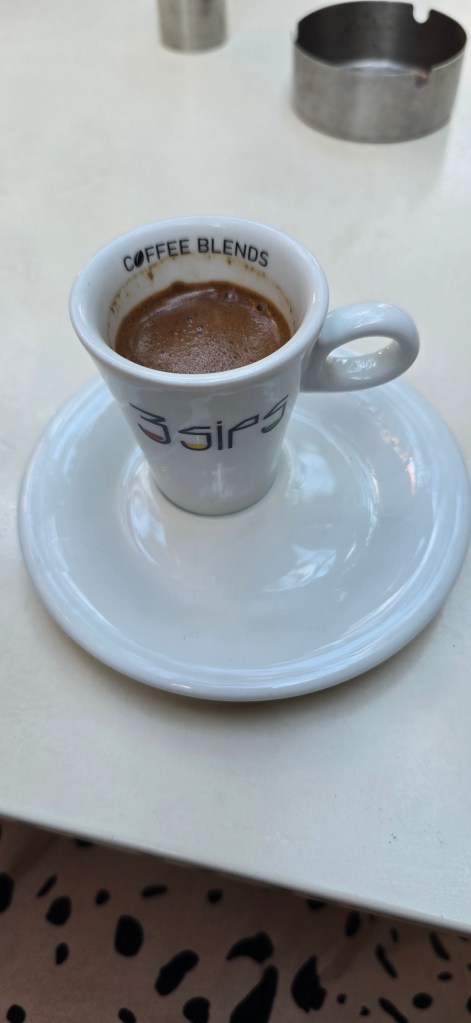
    This was my first taste of Greek coffee — and it surprised me. It was hot, but incredibly smooth, with a richness I couldn’t quite place at first. Greek coffee is brewed slowly in a small pot called a briki, where finely ground coffee is simmered rather than filtered. The grounds settle at the bottom, which means you sip carefully and never drink it all.

    There’s also a tradition tied to it: once you’re finished, the cup is turned upside down on its saucer and left to cool. The grounds form shapes along the sides, which some believe can be read — a way of catching glimpses of what lies ahead. I smiled at that idea… and immediately felt like I was in Harry Potter, attempting to read tea leaves. (For the record: I am not Hermione. 🔮😂).

    When it came time to order food, I couldn’t decide between two items… so I got both.

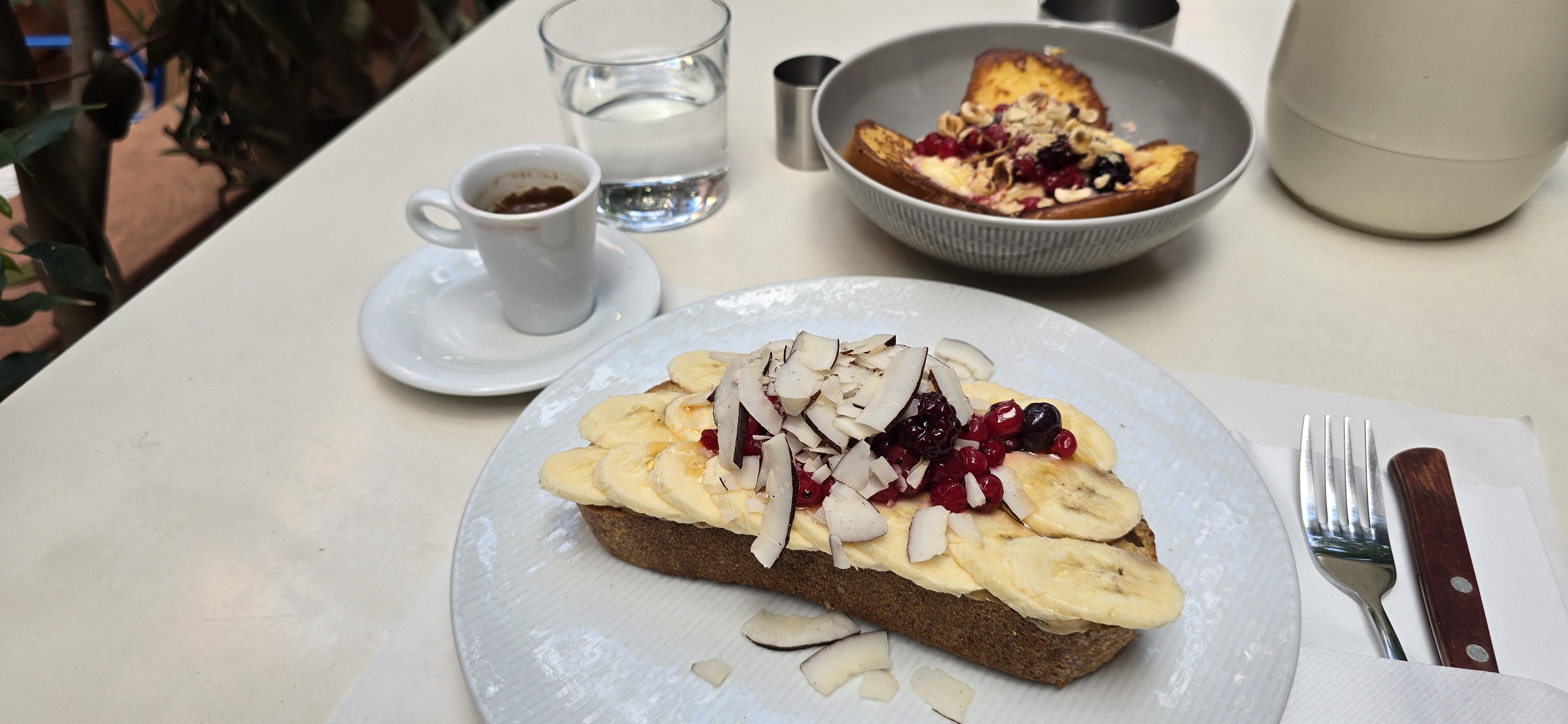
    One was banana toast — peanut butter, banana, forest fruits, coconut, and agave syrup on sourdough. Bright, fresh, and layered with flavor.

    The other was French toast, topped with white chocolate crème, agave syrup, forest fruits, and hazelnuts. Decadent and indulgent in the best way.

    Both were excellent, but if I went back? I’d want all the banana toast toppings on the French toast instead of what came with it— because that would’ve been perfection.

    Off the Beaten Path (As Usual)

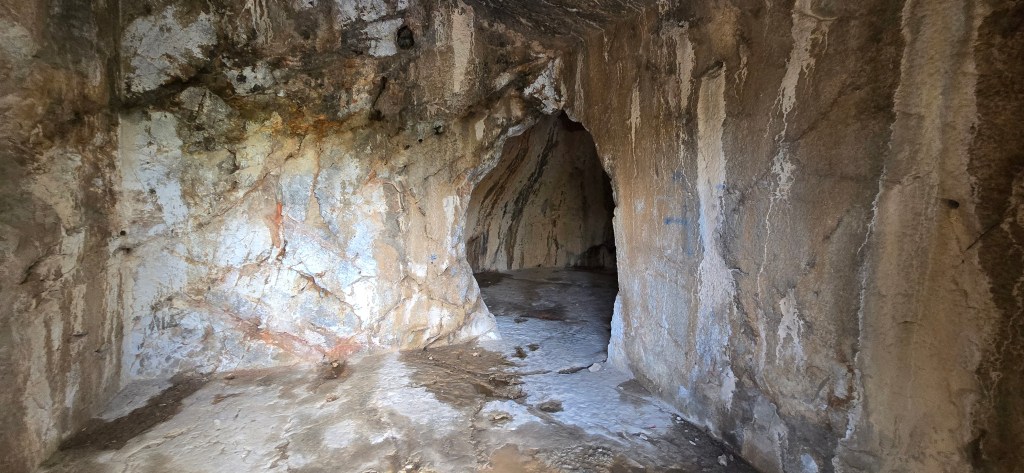
    After breakfast, I set out to explore. I knew my first destination: the caves where Socrates was imprisoned and where the ideas behind The Allegory of the Cave were formed.

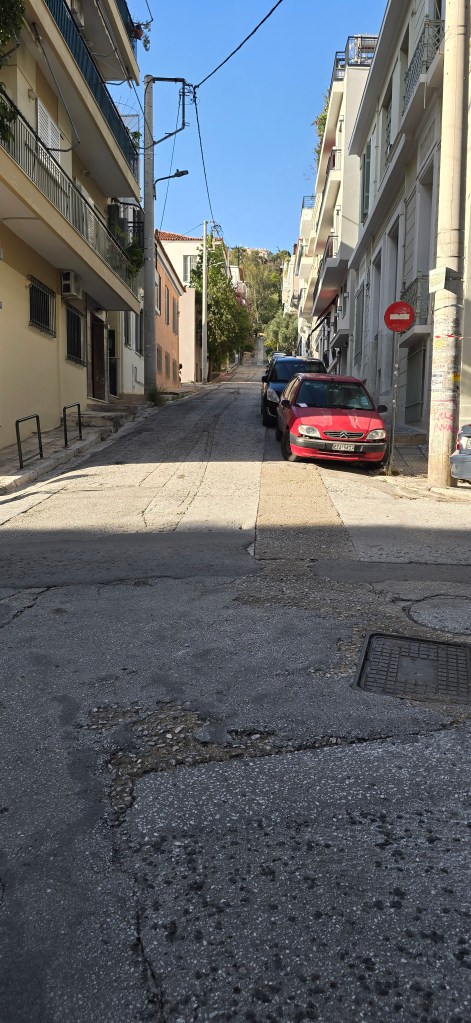
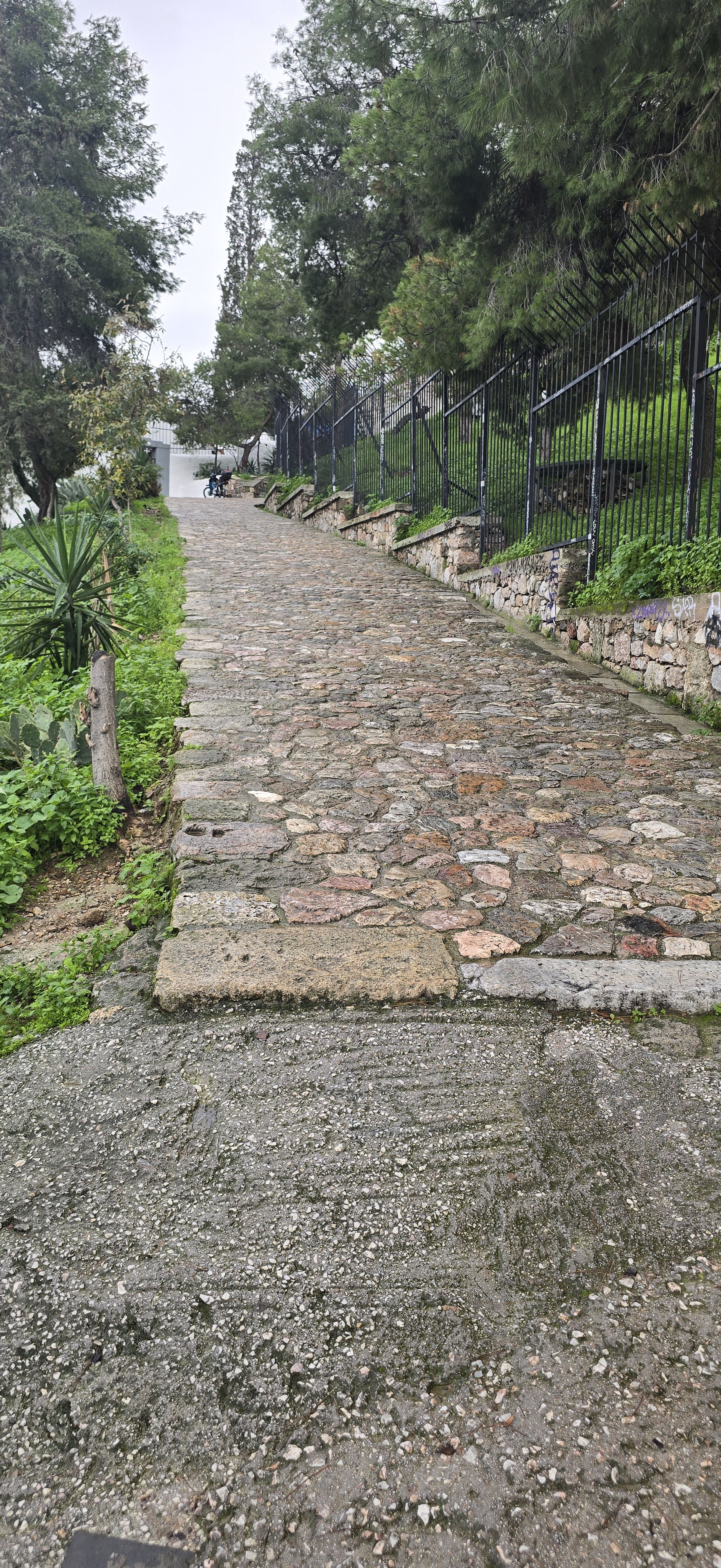
    On my way there, I wandered — something I seem to do instinctively these days. I looked up and saw what I thought was a wall.

    It wasn’t a wall.
    It was the road.

    Straight up.

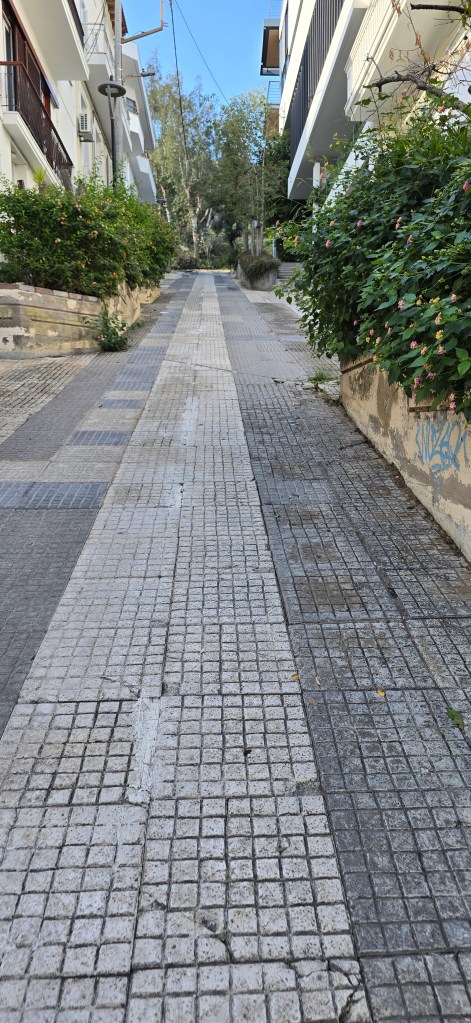
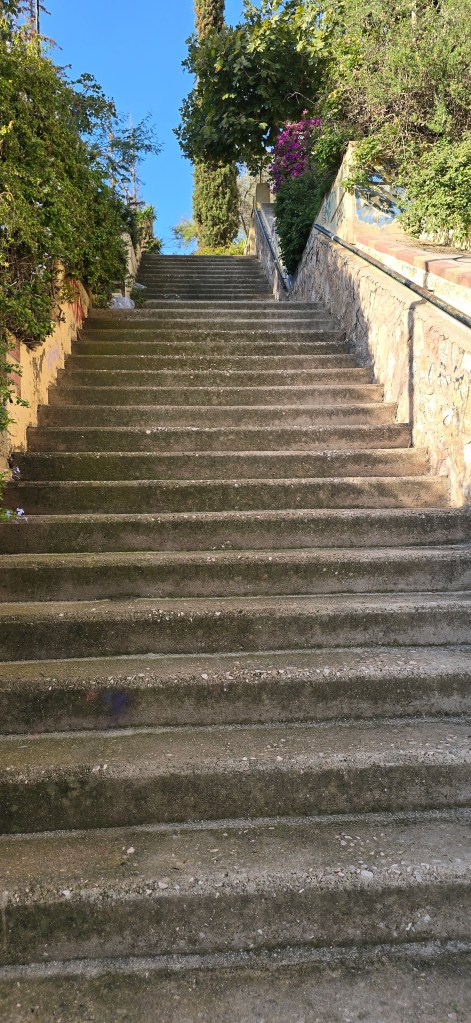
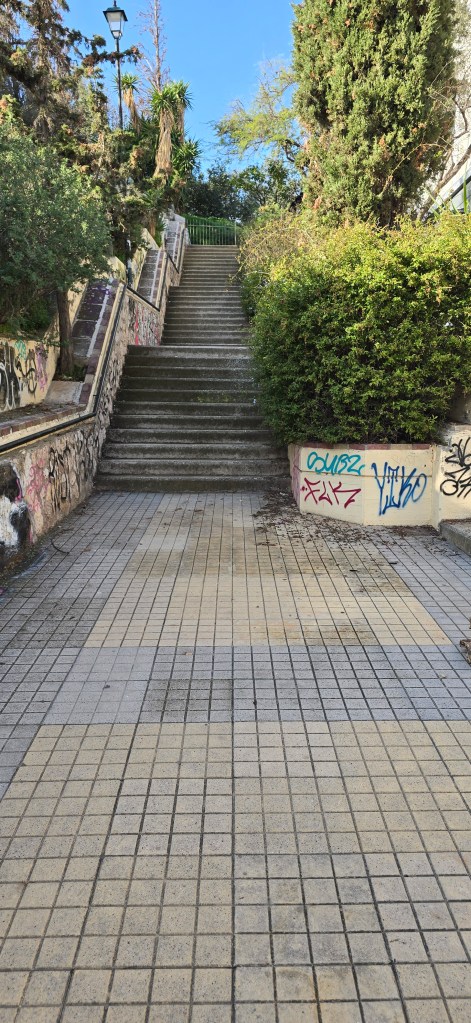
    A steep climb that immediately made me laugh. I leaned into it and started my way up, only to be met by a set of stairs I couldn’t see the end of. Up I went… to find more stairs. I conquered those too and finally continued into the surrounding park area.

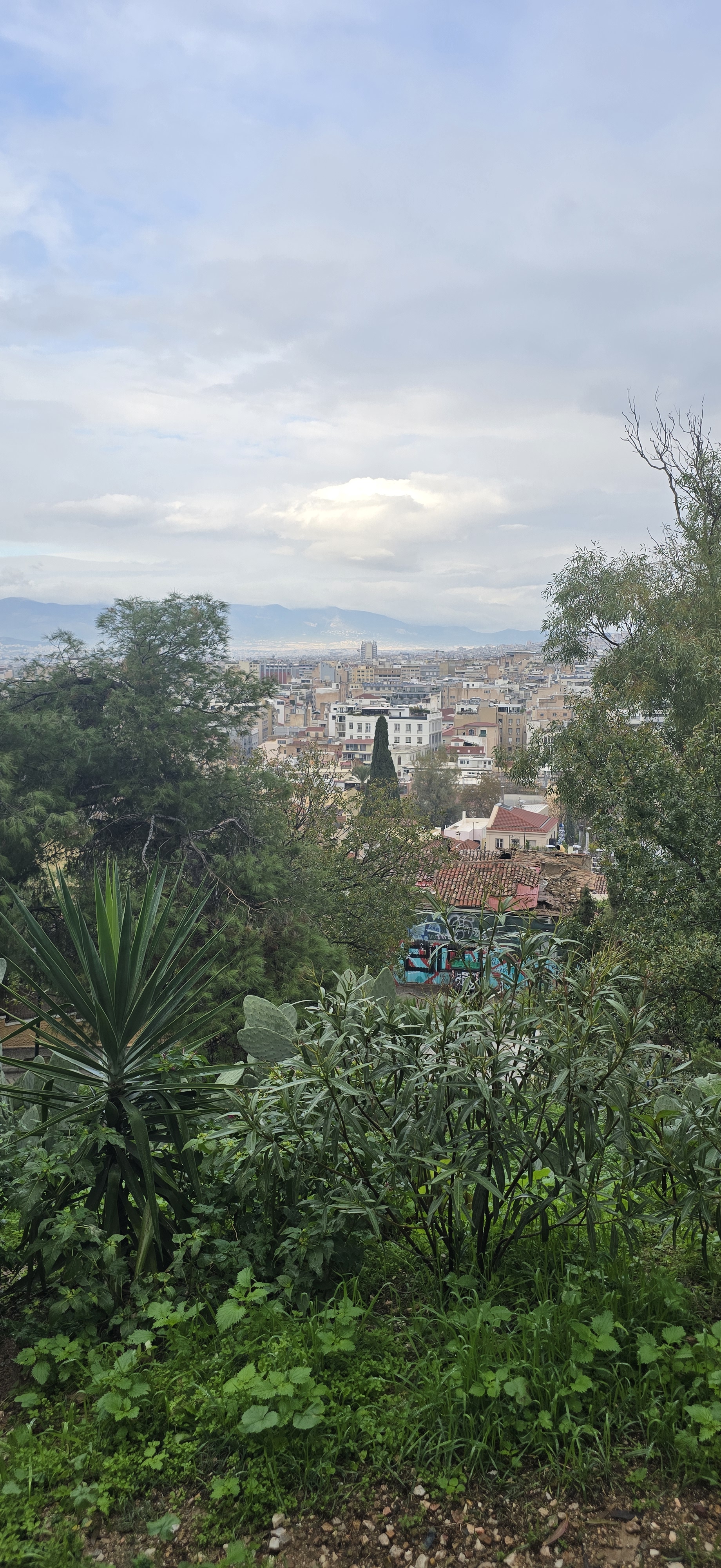
    It was gorgeous.

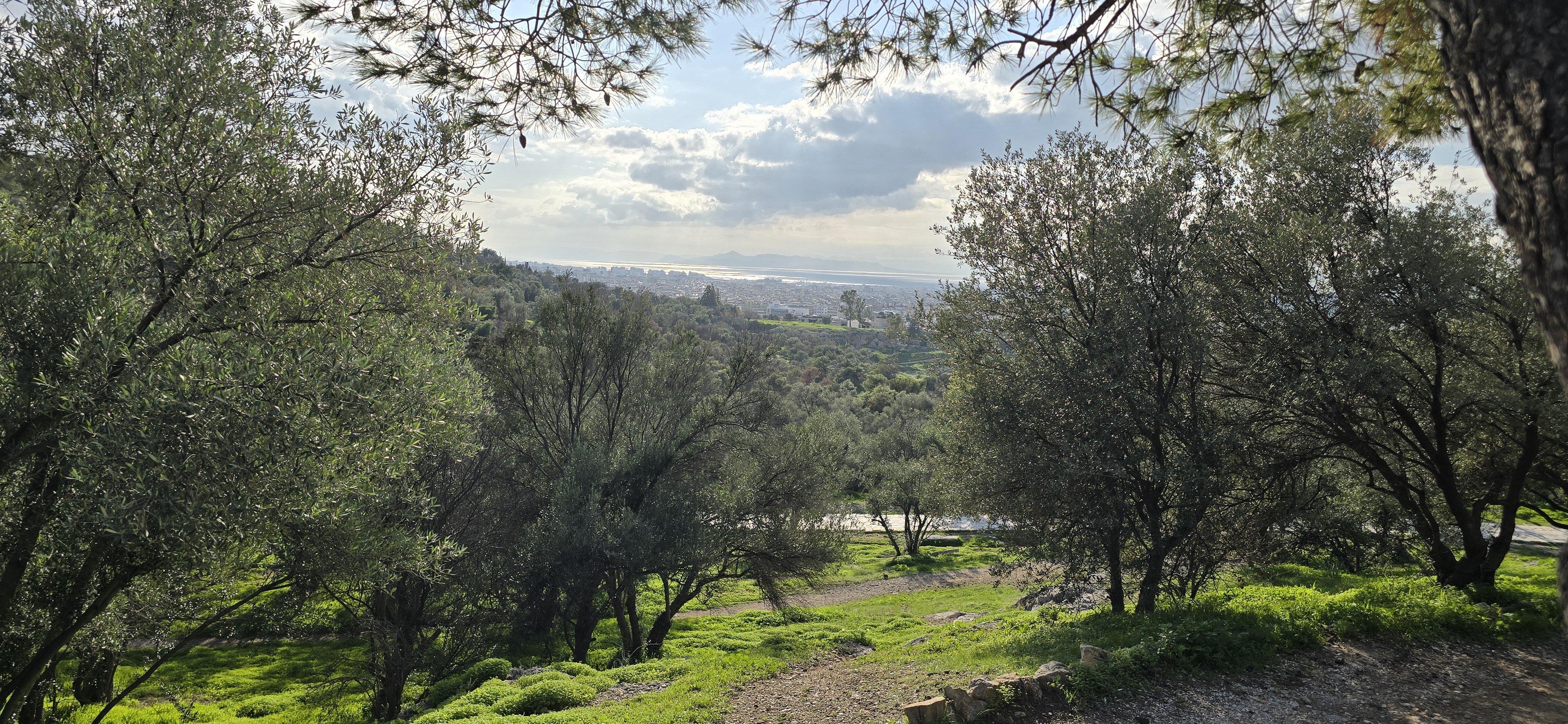
    Walking those paths, it was easy to imagine ancient Greeks moving through the same terrain — philosophers, messengers, citizens navigating these hills long before modern roads existed. I record little voice notes for myself while traveling, and one of them captures me panting and saying, “This would be much more fun side-by-side.” The terrain actually reminded me of Heart Attack Hill — for those of you who know it, you know exactly what I mean.

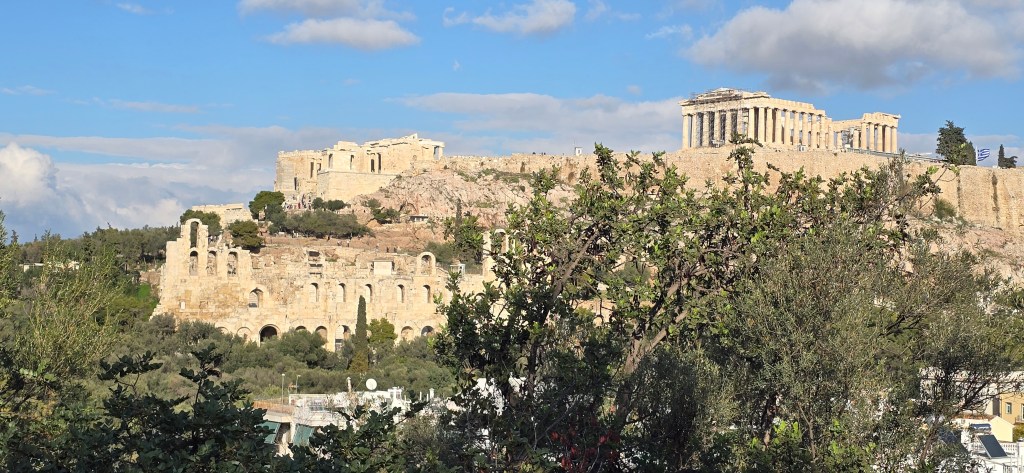
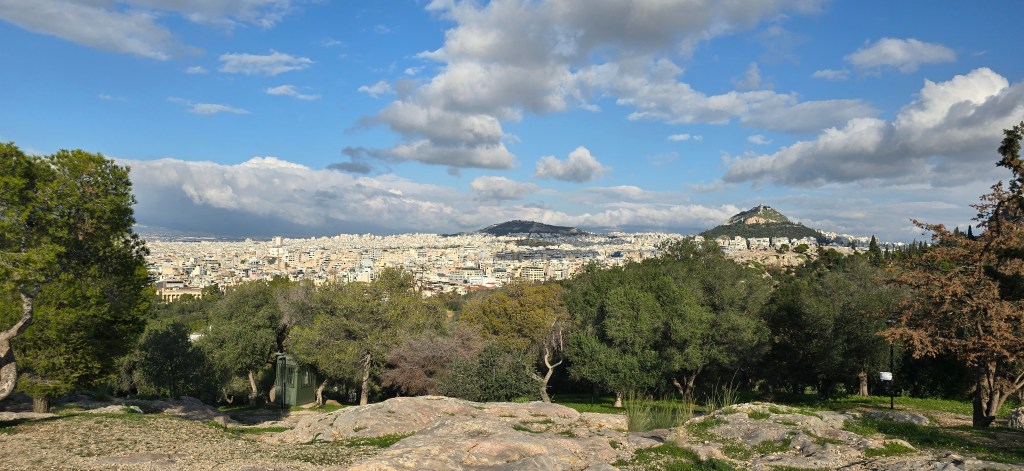
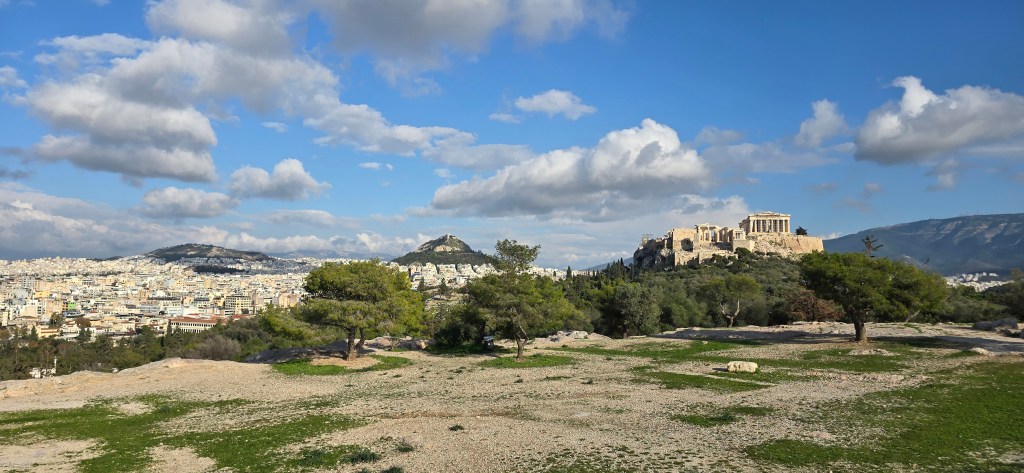
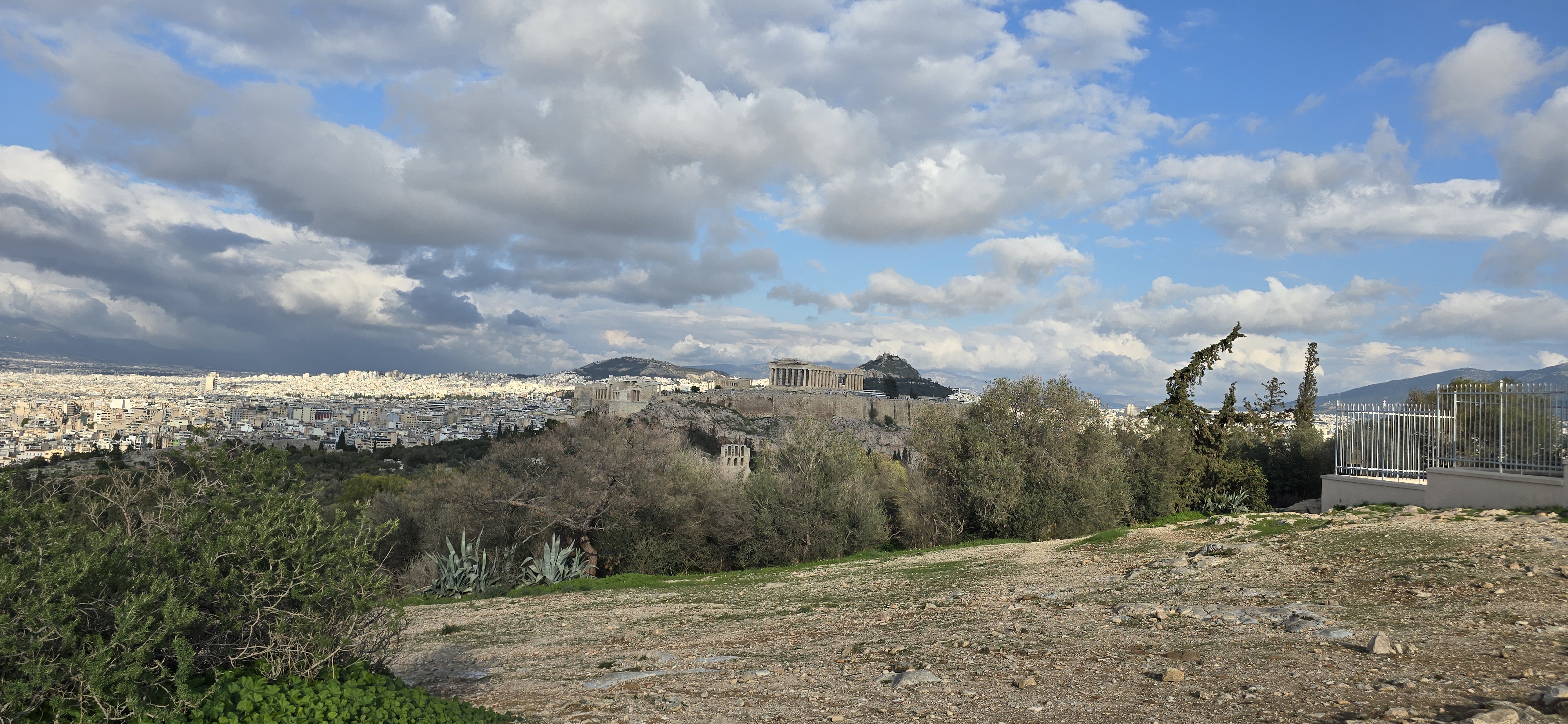
    From there, I could also see the Acropolis in the distance. I imagined standing on that hill centuries ago — during the time of St. Paul, or even earlier — catching sight of the temples in their full splendor. The photos don’t do justice to the awe-inspiring grandeur of the view.

    History Beneath Every Step

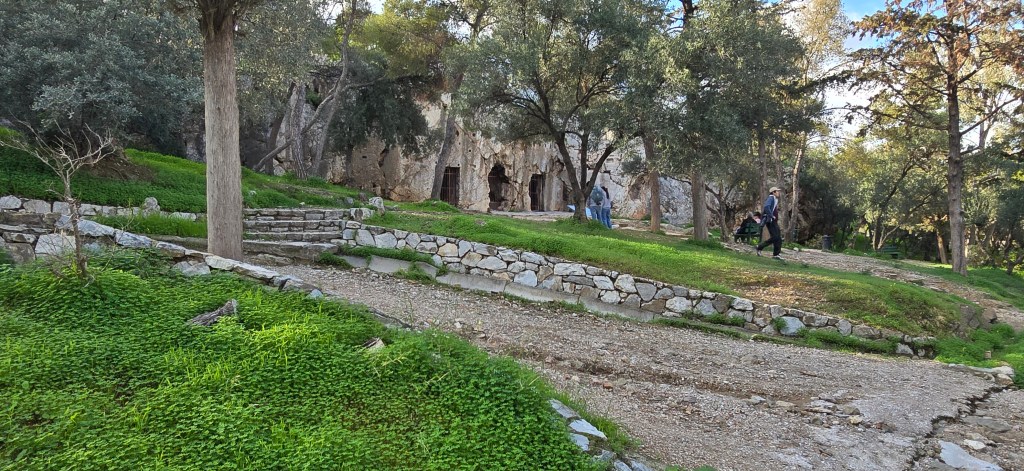
    I walked next to the Prison of Socrates, a place layered with history. During World War II, the structure was sealed with concrete and used to hide antiquities from the Acropolis and the National Archaeological Museum — a quiet act of preservation in the middle of chaos.

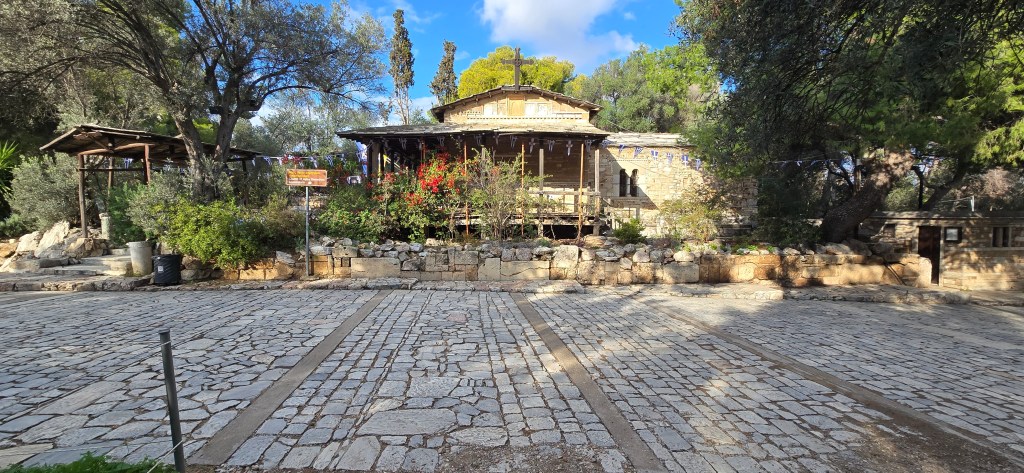
    Nearby stands the Church of Agios Dimitrios Loumbardiaris, a small 12th-century Byzantine chapel with a remarkable story. According to tradition, the church was saved by a miracle in the 17th century when a Turkish commander attempted to bombard it — only for lightning to strike him the following day. Inside, frescoes dating to 1732 still remain. The church’s current form comes from a careful restoration in the 1960s, honoring both its Byzantine and post-Byzantine history.

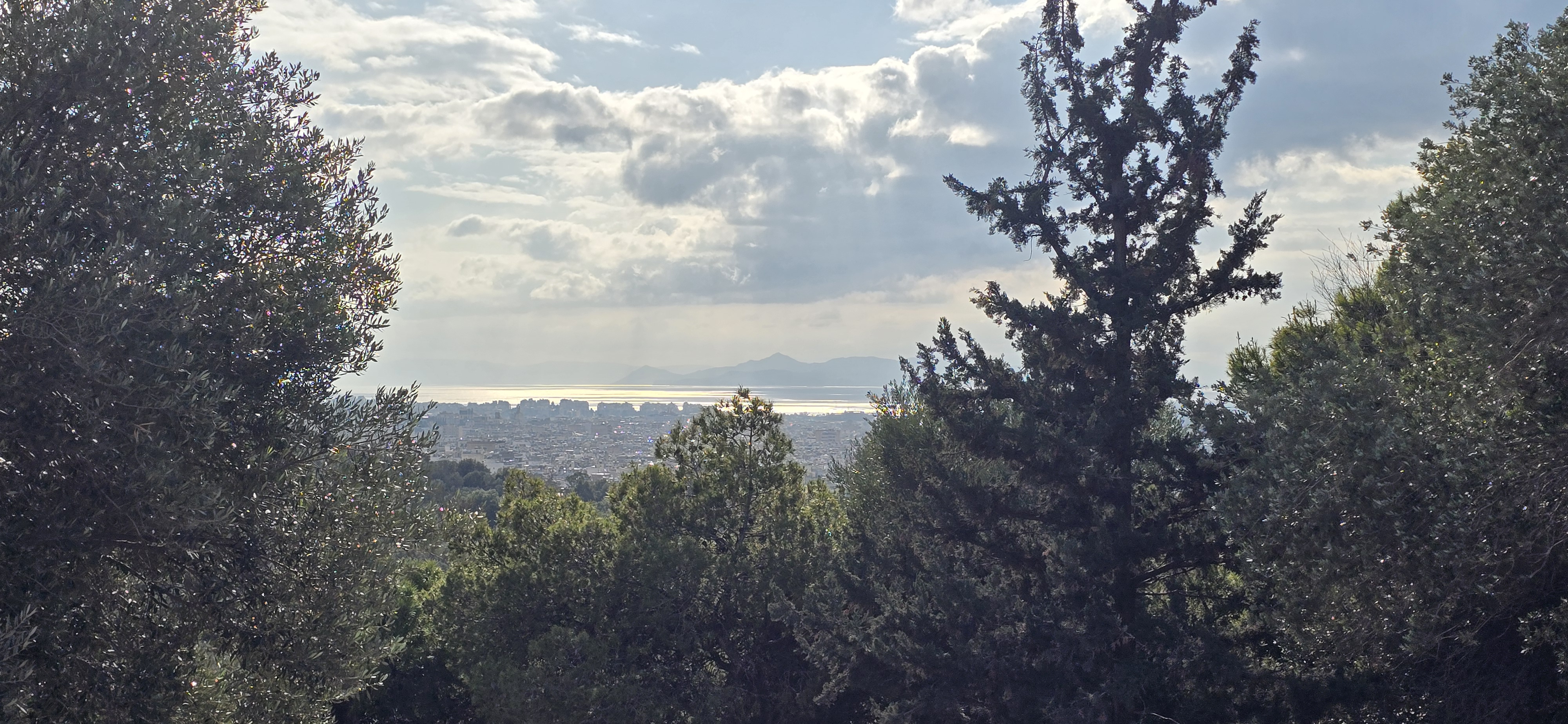
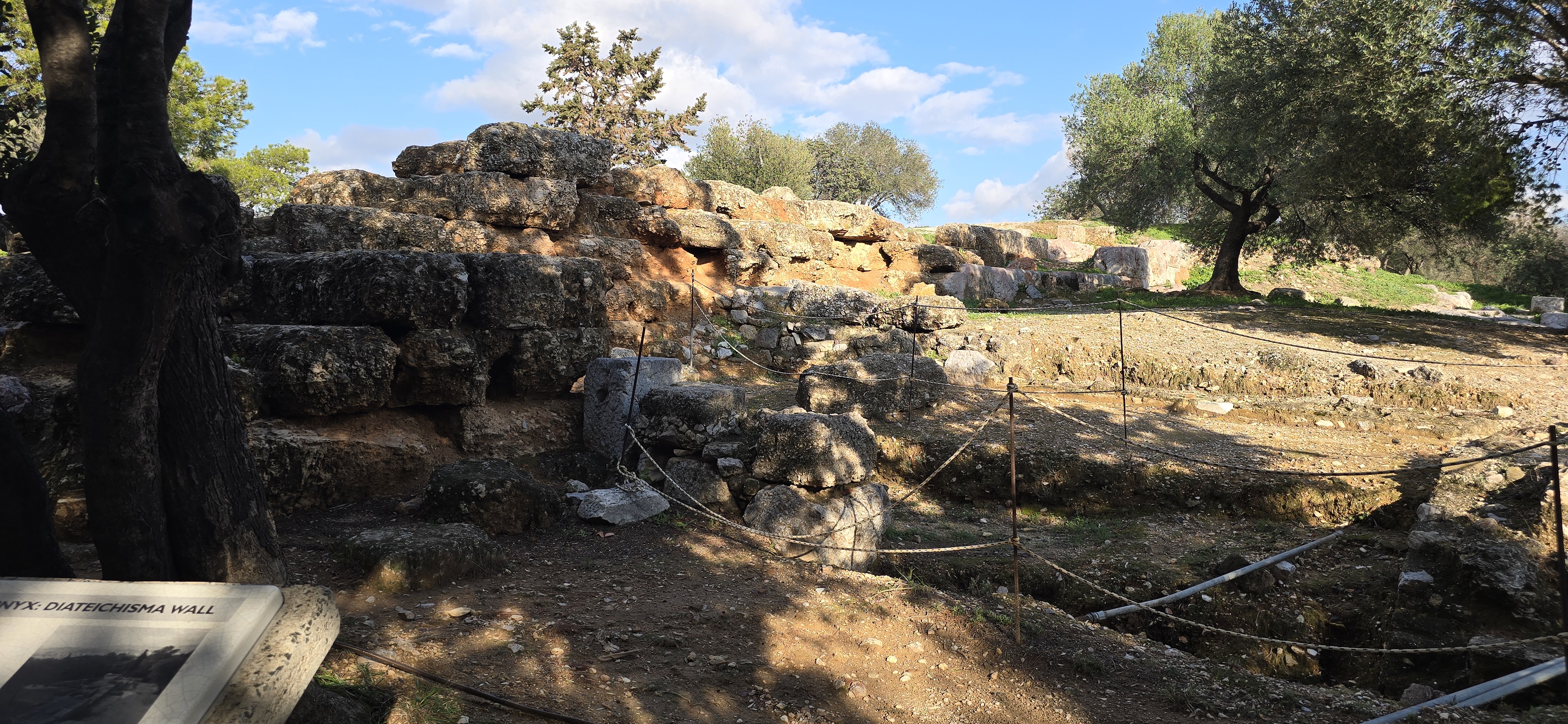
    I continued wandering through wide open spaces toward the Hill of the Pnyx and the Diateichisma Wall, one of Athens’ most significant fortification monuments. Stretching nearly 900 meters, the wall dates back to the 4th century BC and was reinforced over time in response to threats — Macedonian, later Roman, and beyond. It’s a physical reminder that cities, like people, strengthen themselves layer by layer.

    Choosing the Harder Path

    While wandering, I spotted a tower high on a hill and decided to try to reach it. I didn’t know the exact route — only the general direction. It was enough to start.

    There were multiple paths to choose from.

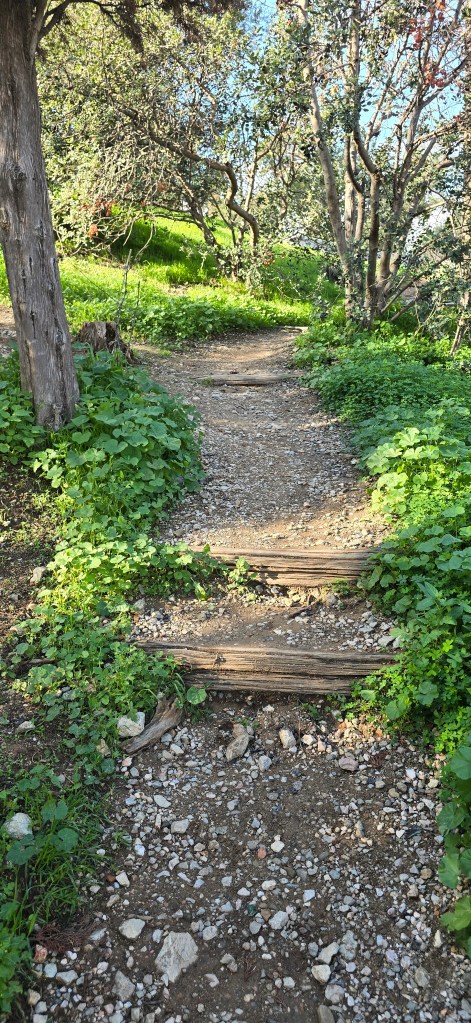
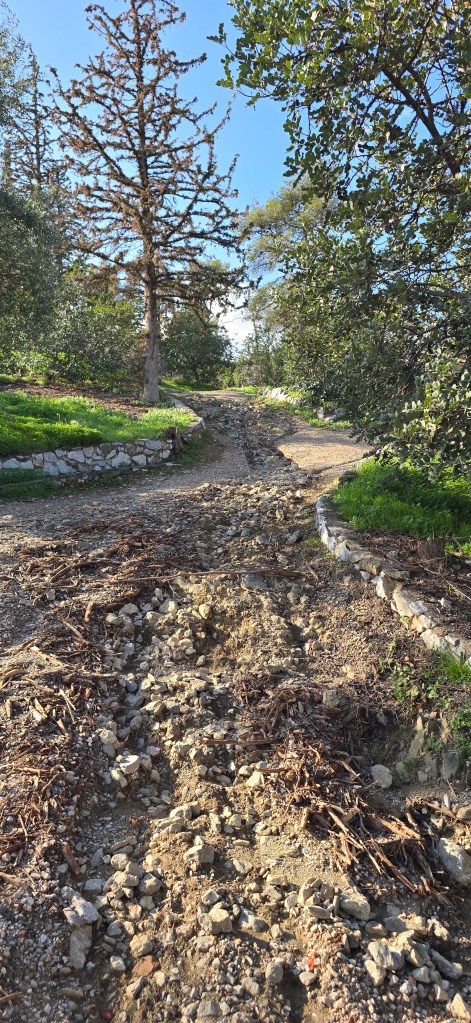
    Some were smooth, paved, and well-worn. Others were rugged — dirt underfoot, loose rocks shifting as I stepped, steeper inclines with no carved stairs to guide the way. Without really thinking about it, I kept choosing the less-traveled paths.

    Why?

    Because they were more fun.
    And because they offered better views.

    The easier paths curved gently, shaded by trees that blocked much of the scenery. The harder ones demanded more effort — but after each difficult stretch, they opened into something breathtaking. A wider view. A clearer perspective. A reminder of why I’d chosen that route in the first place.

    As I walked, I found myself talking with God. Thinking about promises. About direction. About how often faith looks exactly like this: moving forward without a full map, trusting the general direction you’ve been given.

    Some paths look easier, but take longer.
    Others ask more of you, but get you there faster.

    There were moments I stopped entirely — not because I was lost, but because I wasn’t sure which turn to take. Both paths looked plausible. One looked safer. The other looked harder. I stood still, took in the beauty around me, checked my bearings, and listened — not for certainty, but for peace. And kept taking the more difficult view.

    Just as I rounded one final bend, the tower came into full view.

    I had arrived.

    Below me, I could see the easier path winding its way up — longer, gentler, and far more indirect than the one I’d taken. Standing there, I smiled. Not because the harder path had been superior, but because it had trusted me with the journey.

    Sometimes the way forward isn’t the most obvious one — it’s the one that asks you to keep going, even when you can’t yet see the end.

    At the Top: The Hill of the Muses

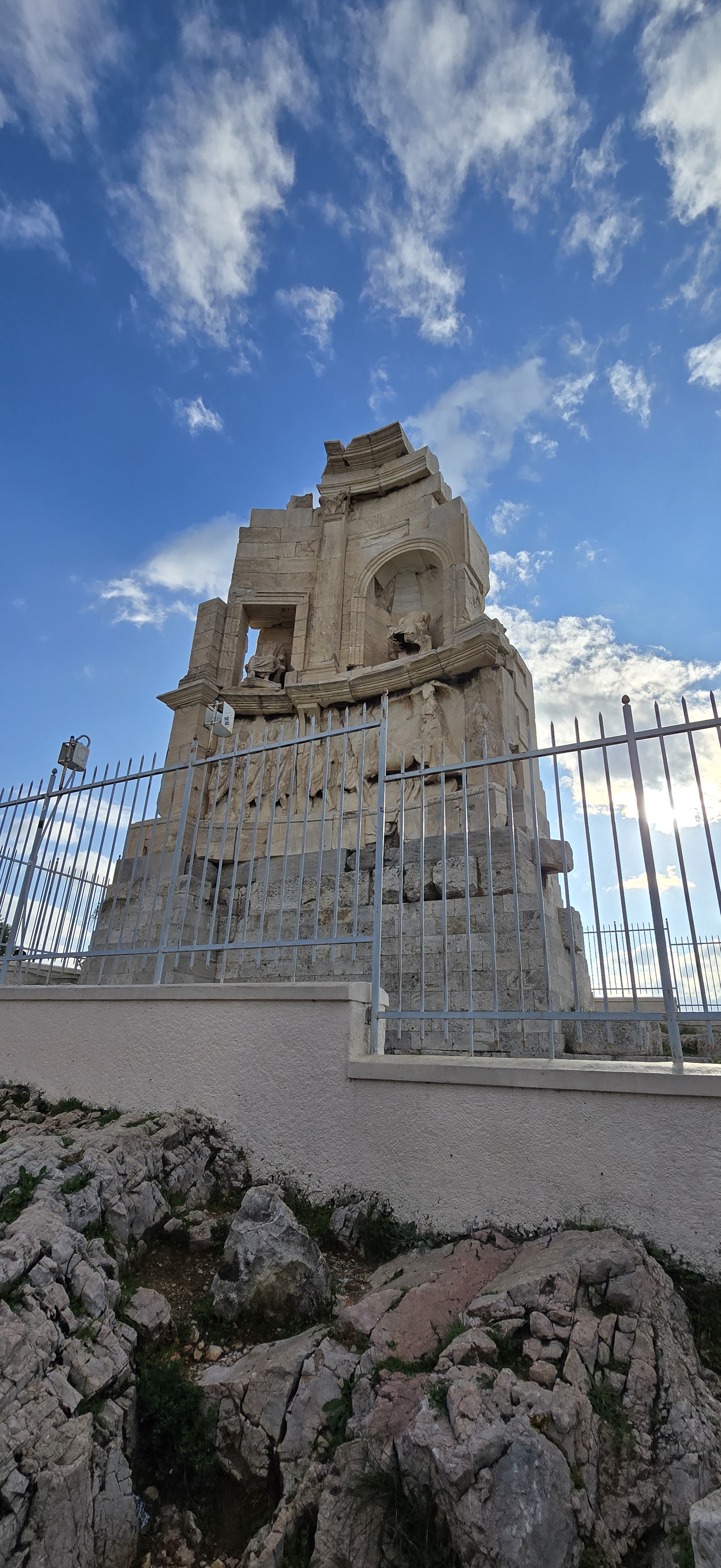
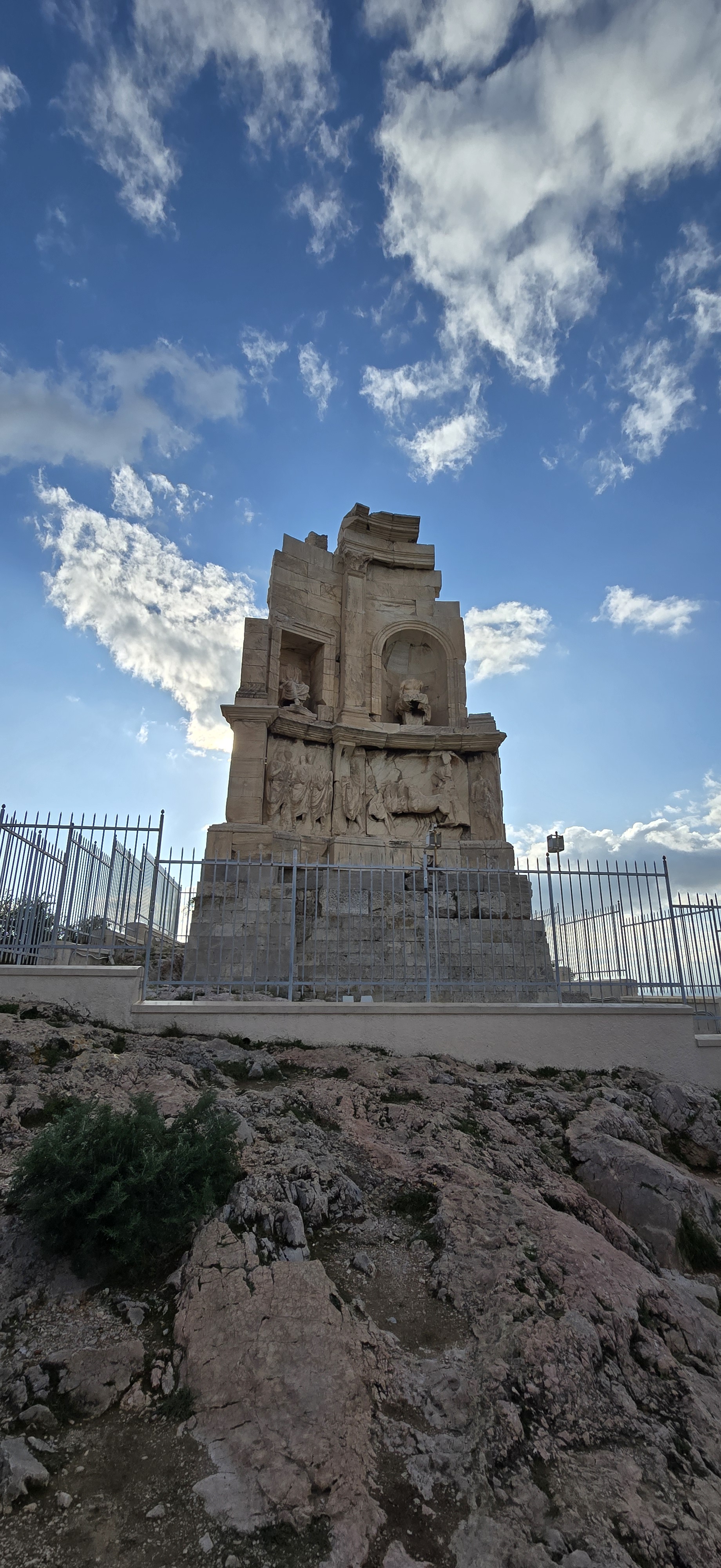
    I had reached the Hill of the Muses, the highest of the hills west of the Acropolis. Named for the poet Mousaios, the area once served as a shrine, later a strategic stronghold, and eventually the site of the Philopappos Monument, built in the 2nd century AD.

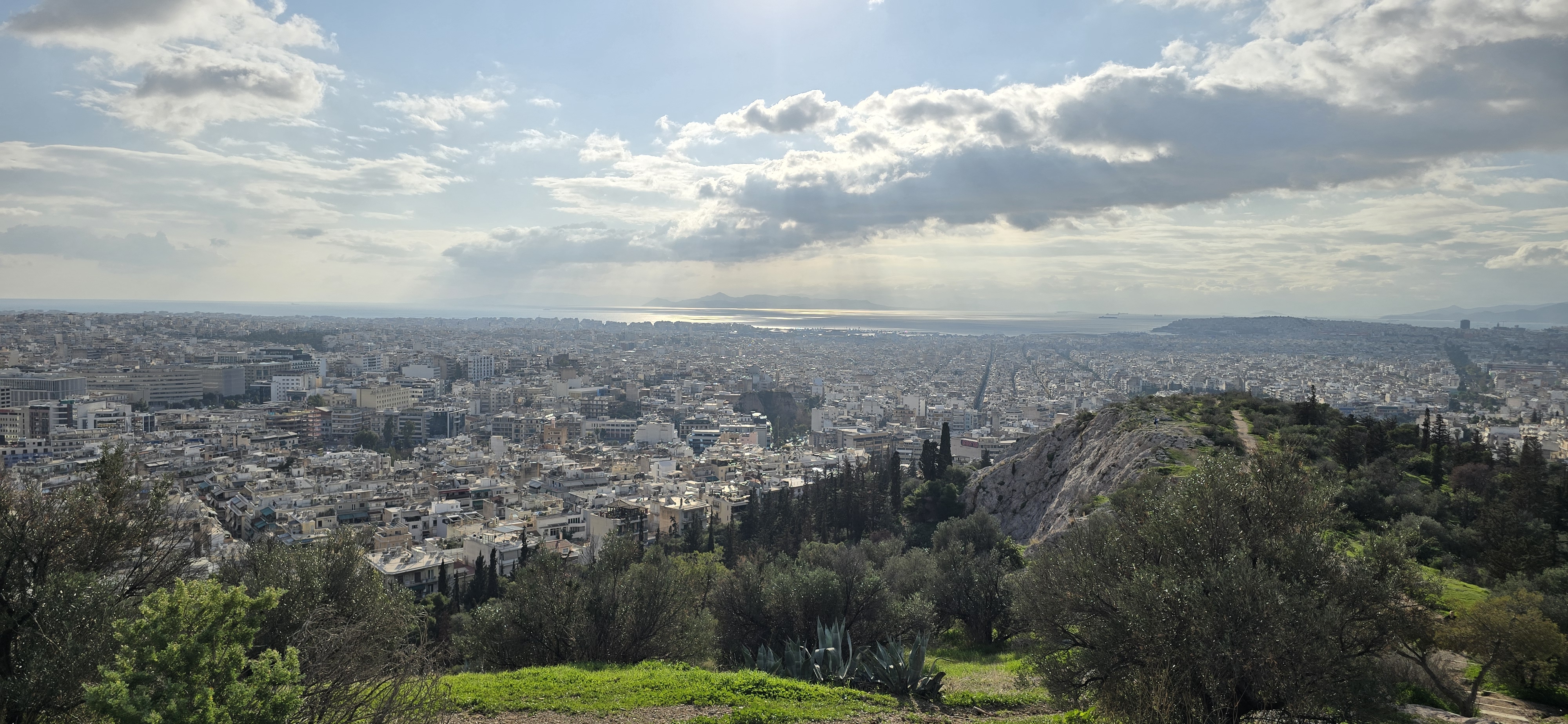
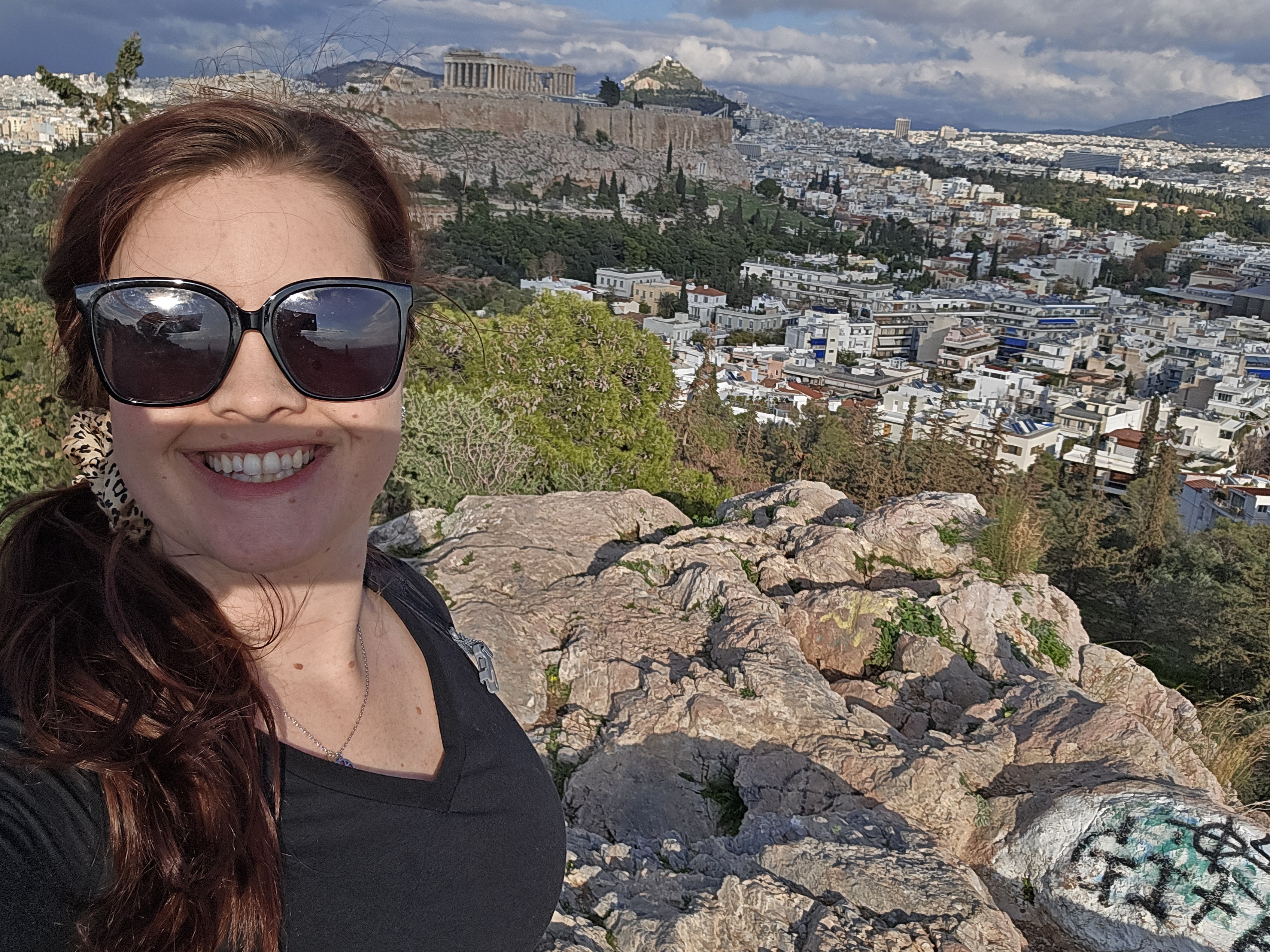
    From the top, I could see everything — the Acropolis, the city, and the waters beyond.

    That was my wandering for the day. No set plan. No checklist. Just following curiosity and nature’s signs. 

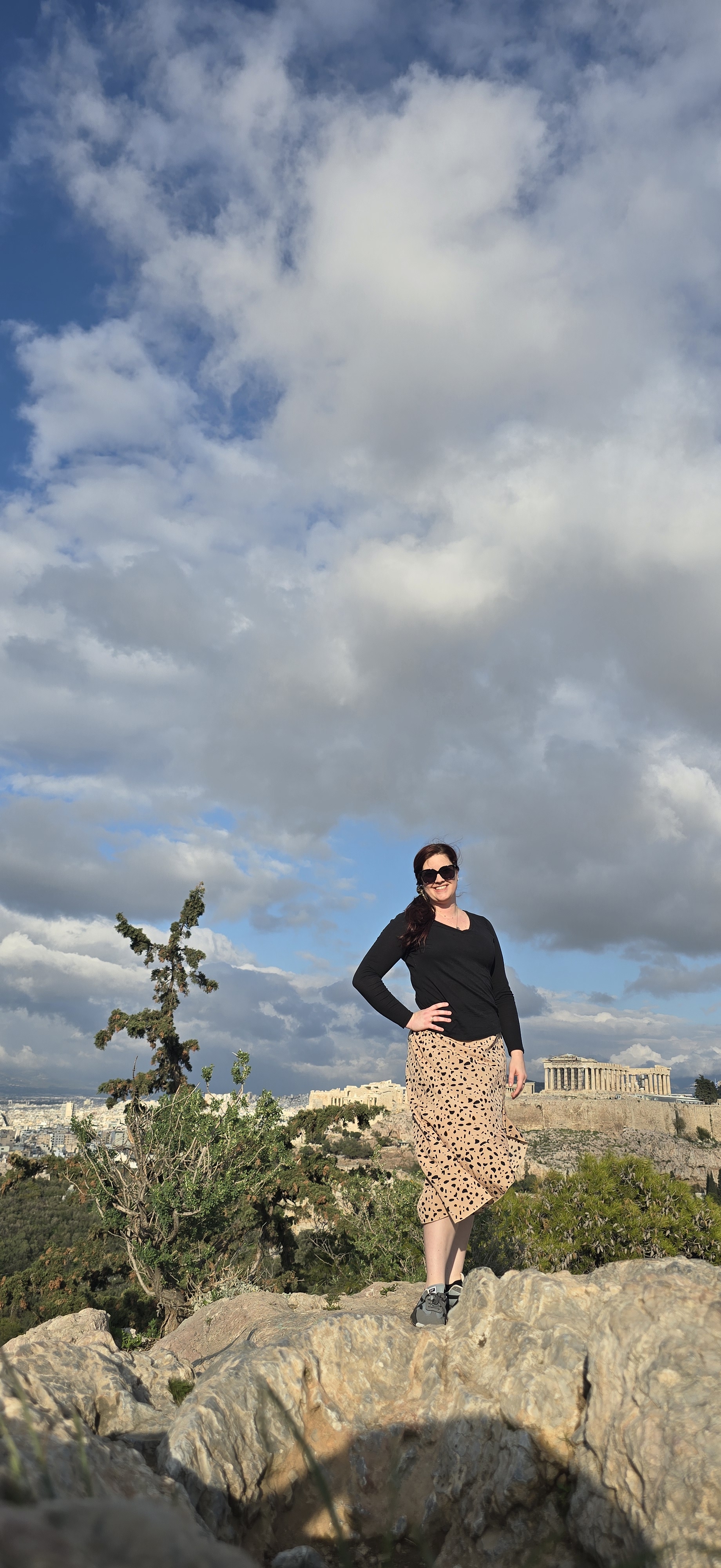
    I even captured what I was wearing — my first time hiking in a skirt! I didn’t know it would be a full hiking day. After that, it was time to head back to the hostel, shower, and get ready for dinner.

    A Birthday Dinner Above the City

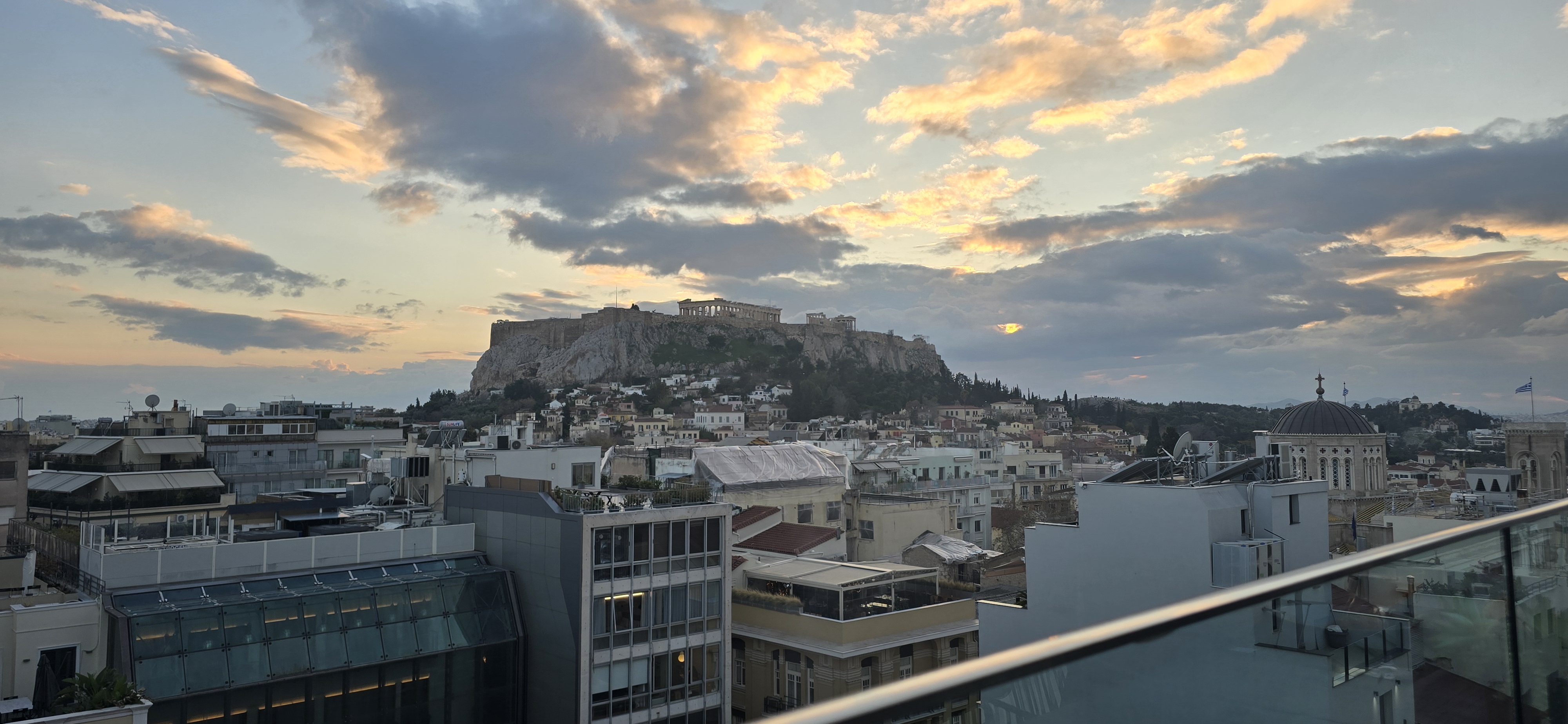
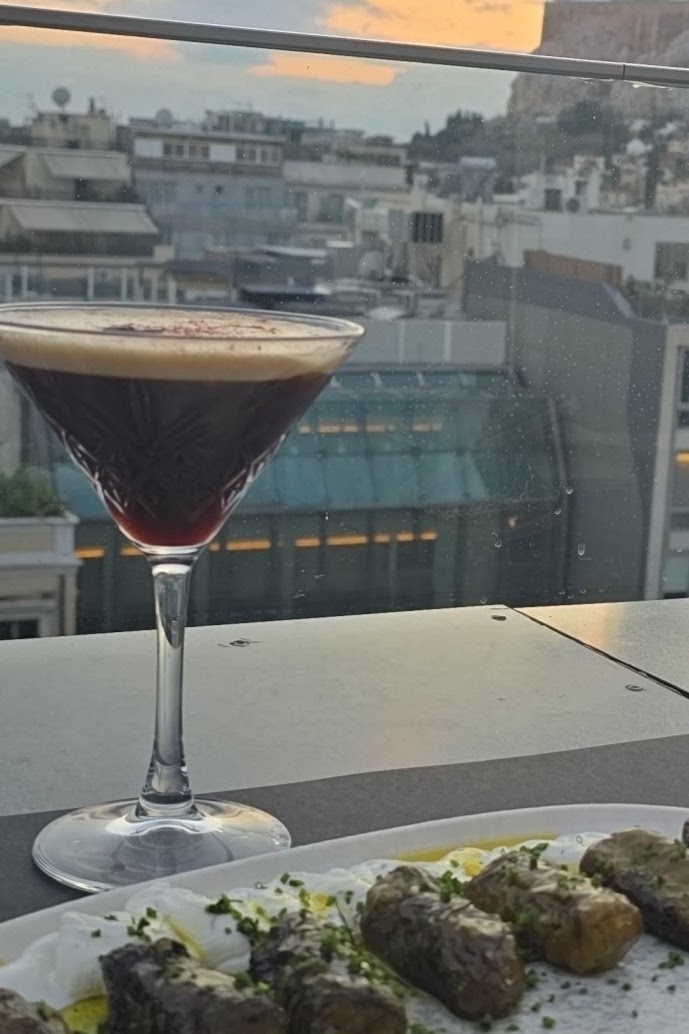
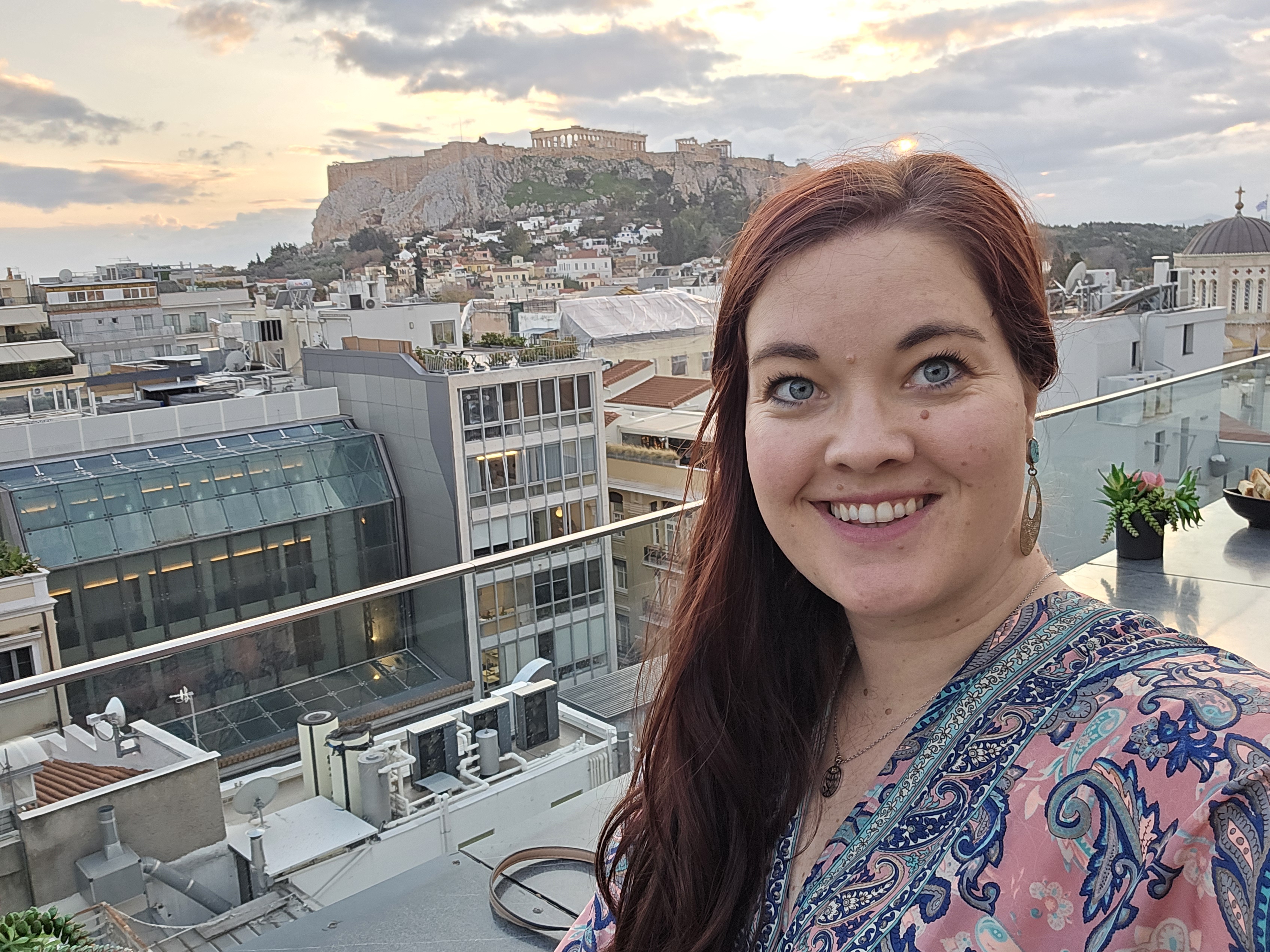
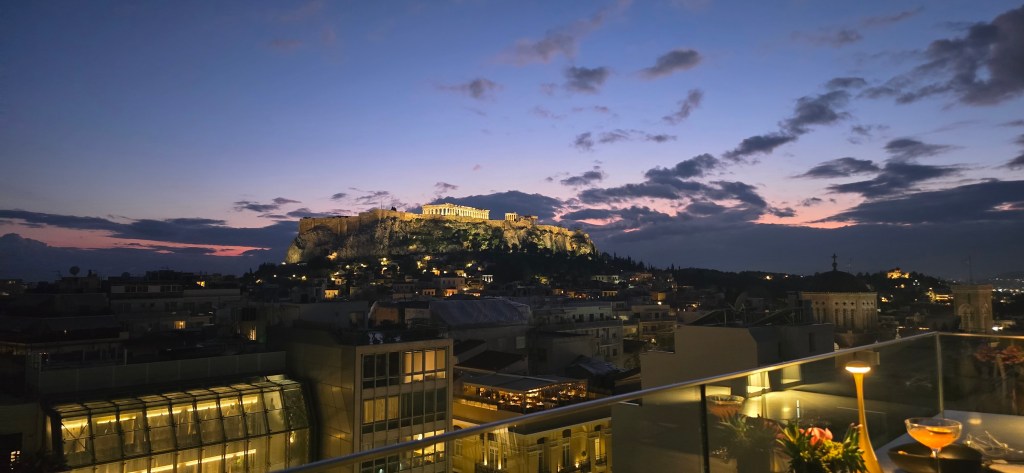
    Dinner that evening was at Elysium, a rooftop restaurant perched high above the city, with a direct view toward the Acropolis. I chose a seat at the very edge of the balcony — the kind of place where you don’t just see the view, you sit inside it.

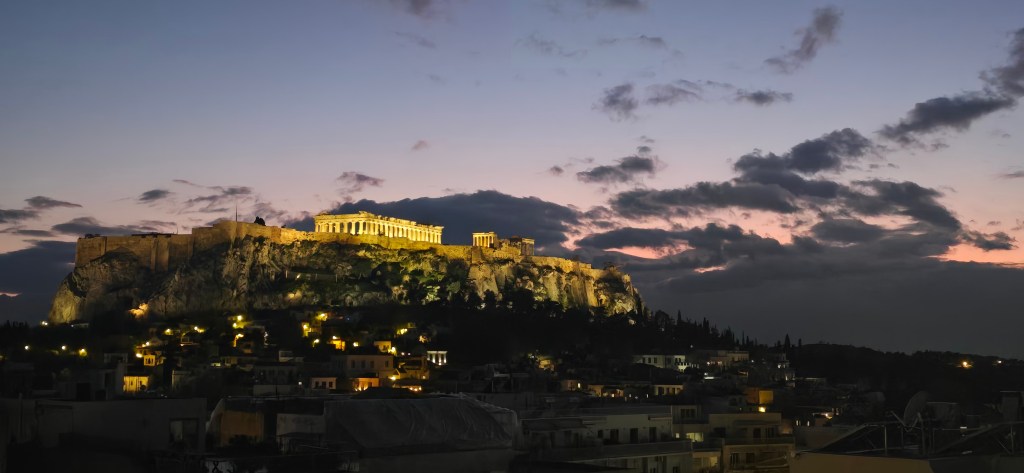
    As the sun began to set, the city softened. Rooftops stretched out below me in quiet layers, and beyond them the Acropolis rose — steady, ancient, and impossibly present. The light shifted slowly, clouds catching gold and gray, the Parthenon standing watch as if it had done so every evening for thousands of years. It felt reverent without trying to be.

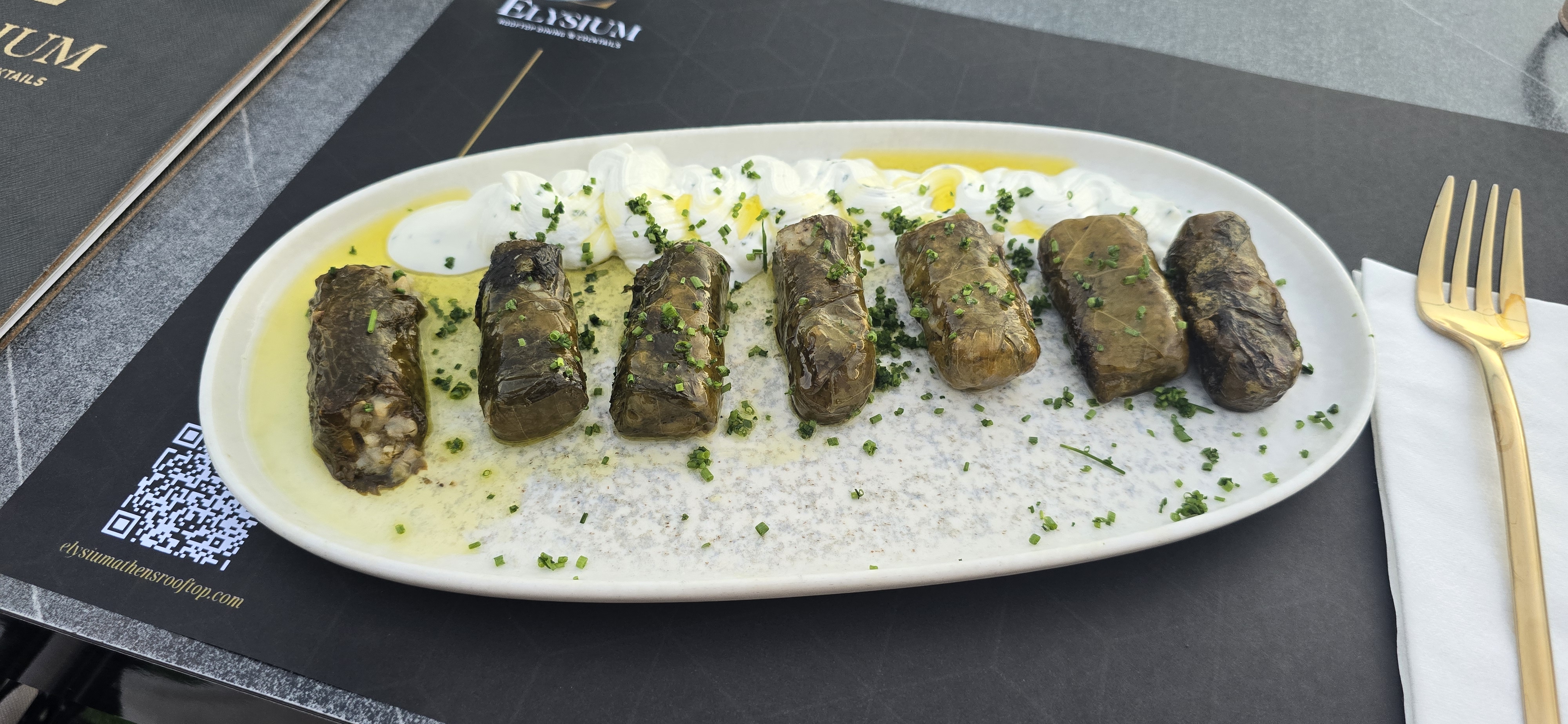
    I started with the traditional stuffed vine leaves served with yogurt sauce — delicate, bright, and deeply satisfying. A must-try.

    Then, finally-thanks to a friend’s recommendation, an espresso martini — Dark Obsession — made with vanilla vodka, Kahlua, Frangelico, white chocolate, gingerbread, and espresso. Rich, smooth, and indulgent in a way that felt perfectly timed.

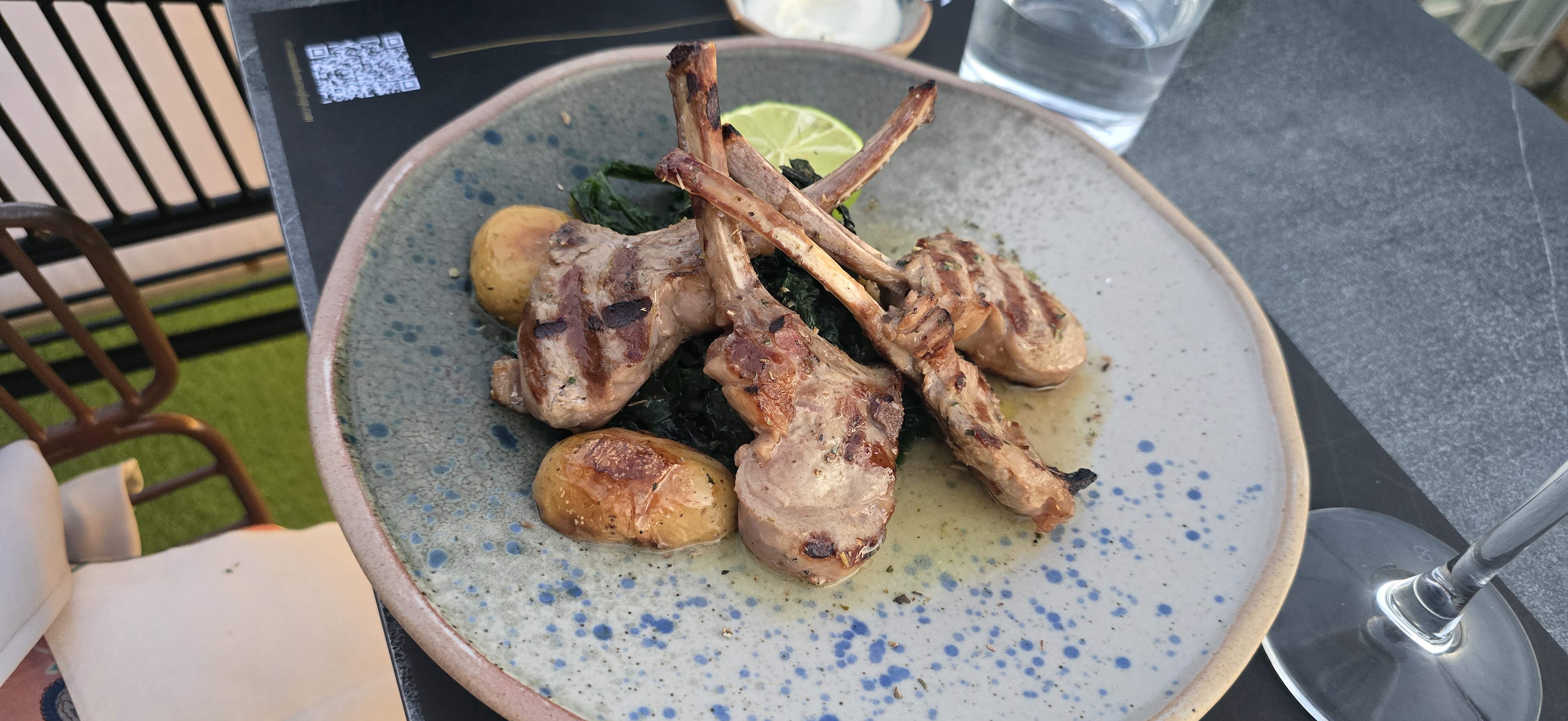
    For my main course, I ordered the grilled lamb chops with baby potatoes and seasonal greens — beautifully prepared, hearty without being heavy, and exactly what the evening called for.

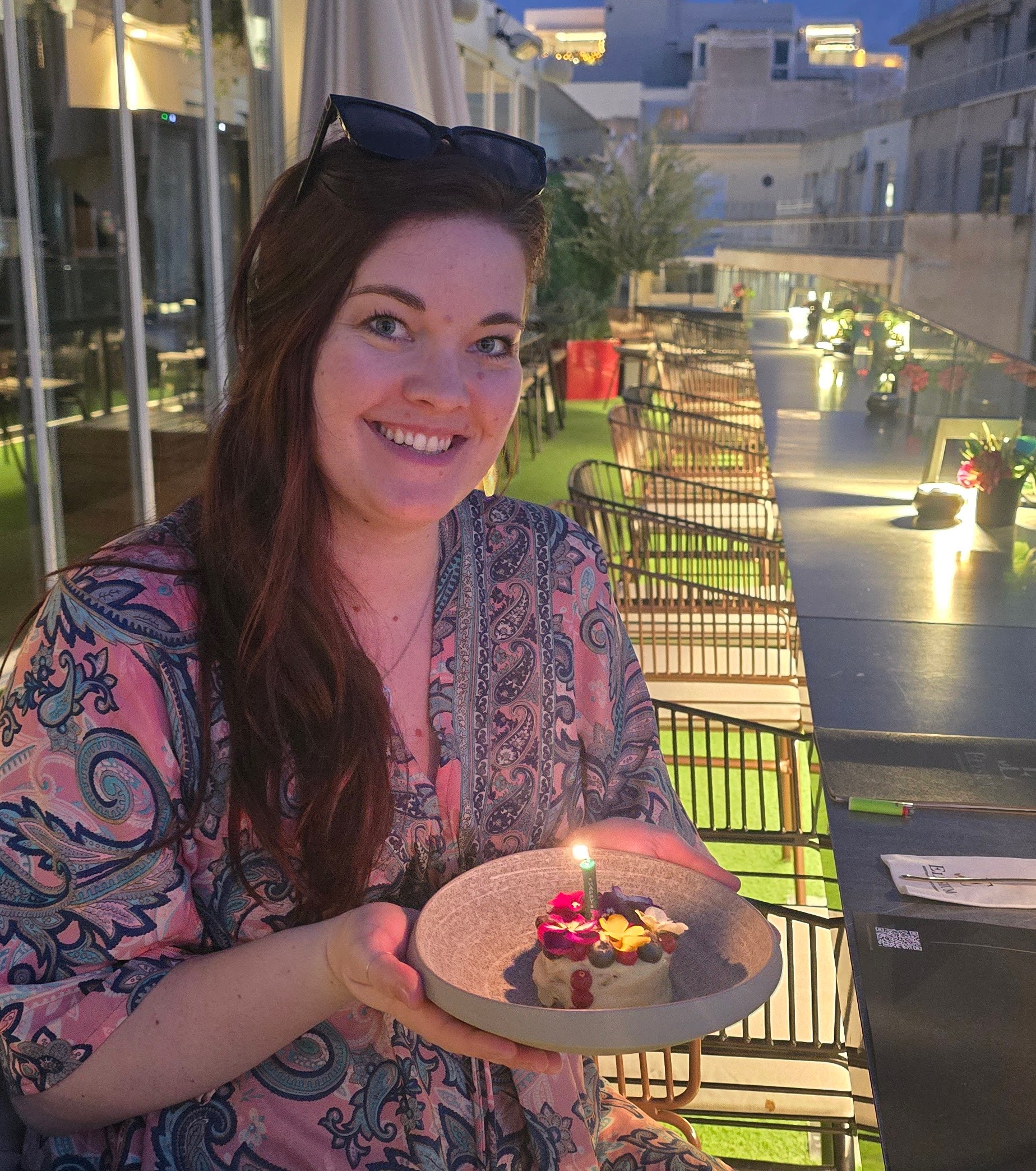
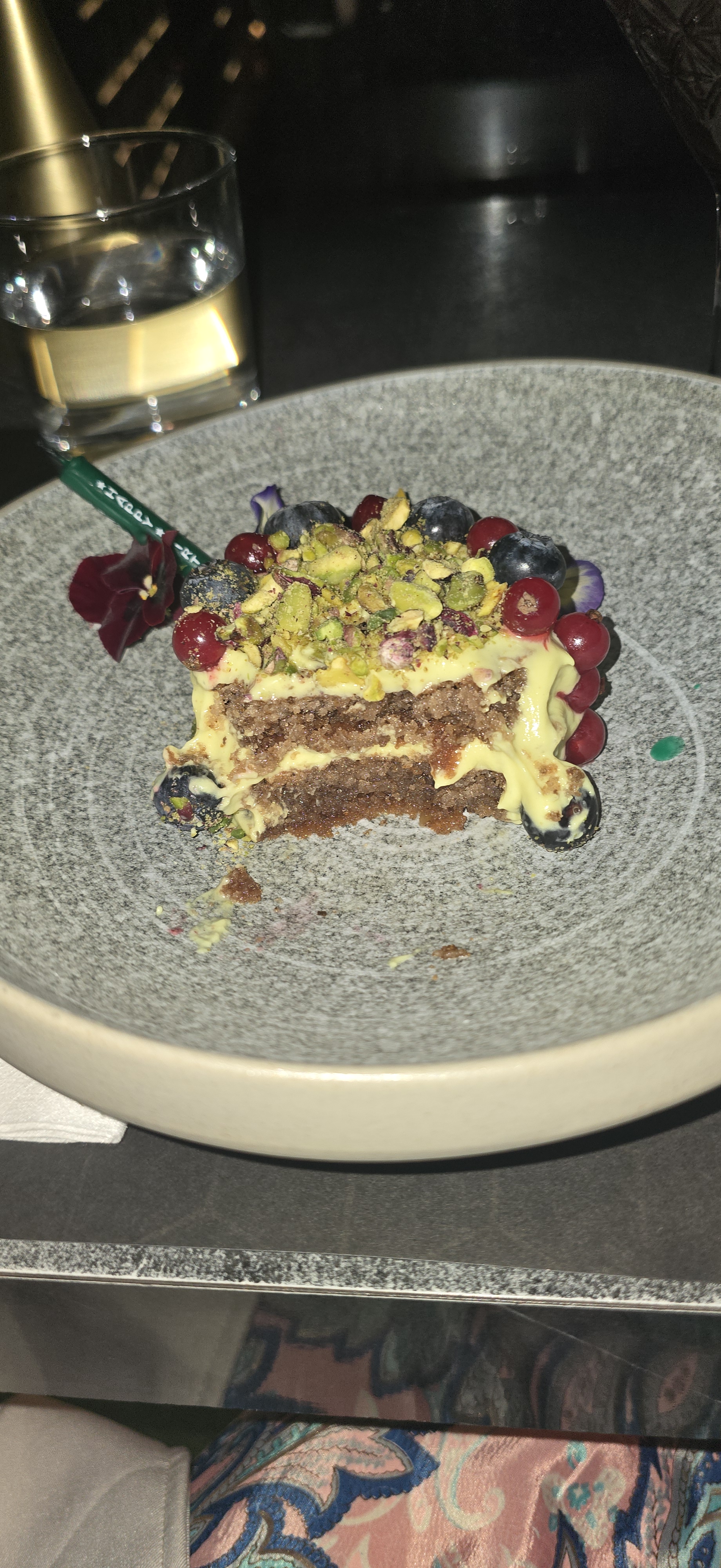
    At some point, the manager overheard that it was my birthday. Without warning, a dessert appeared — pistachio frosting layered over a soft cake center, crowned with berries, tiny flowers, and a single candle. I still don’t know exactly what it was, but it felt like a gift rather than an item on a menu.

    As night settled in, the Acropolis lit up — glowing against the dark sky, luminous and calm. I kept looking back at it between bites, between sips, between thoughts. Some views don’t ask for commentary. They ask for stillness.

    And that night, high above Athens, stillness felt like the most fitting way to celebrate another year of becoming.

    Unexpected Company & Christmas Lights

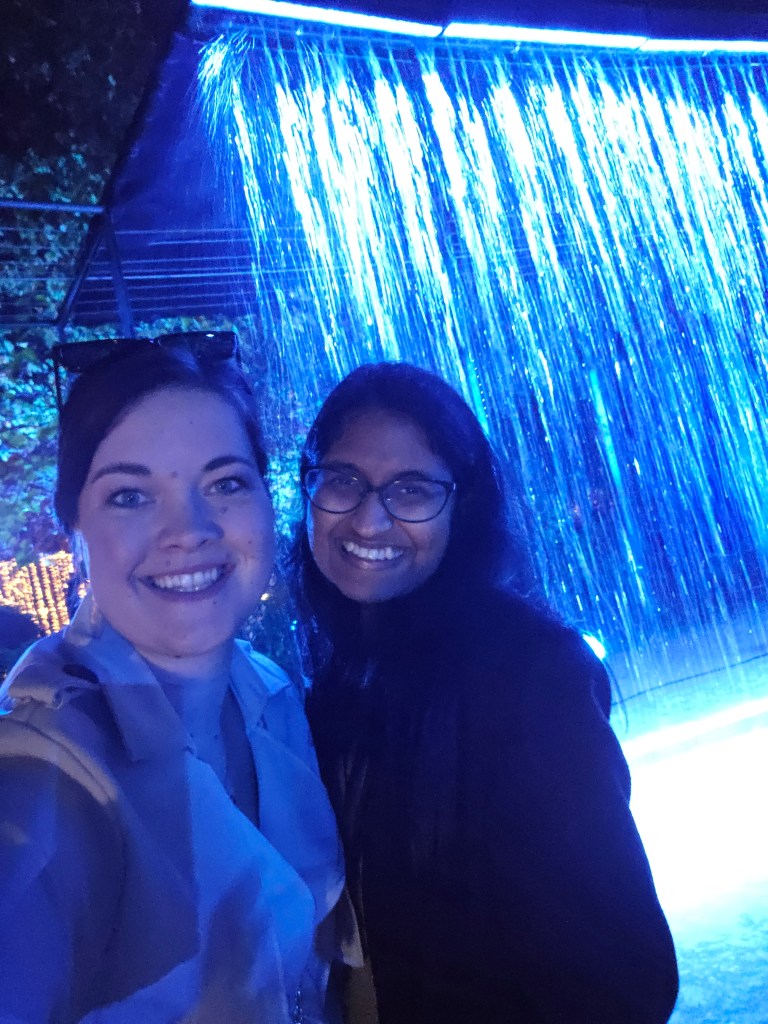
    While dining, another solo traveler sat nearby. Her drink looked amazing, so I asked what it was — and that turned into conversation. She was in Athens for work, visiting a friend, and invited me to join them at the Christmas market after dinner.

    It was my first Christmas market of the season.

    People were bundled up like it was freezing, while I wore a dress and coat — earning plenty of concerned looks. The market had the traditional stands of craft vendors and food, but the light show was magical. I took countless videos and screenshots — hopefully I can upload a few to the blog, and if not, they’ll live on my social media. (Note: they will live on. my social media).

    We went our separate ways that night, knowing we’d cross paths again the next day — both booked on sunset tours, different companies, same destination.

    Final Thought

    That day wasn’t loud or rushed.
    It was layered.
    Faith-filled.
    Unplanned in all the best ways.

    And on my birthday, of all days, I was reminded that sometimes the most meaningful journeys come when you choose the path less traveled — and trust that God knows exactly where it leads.

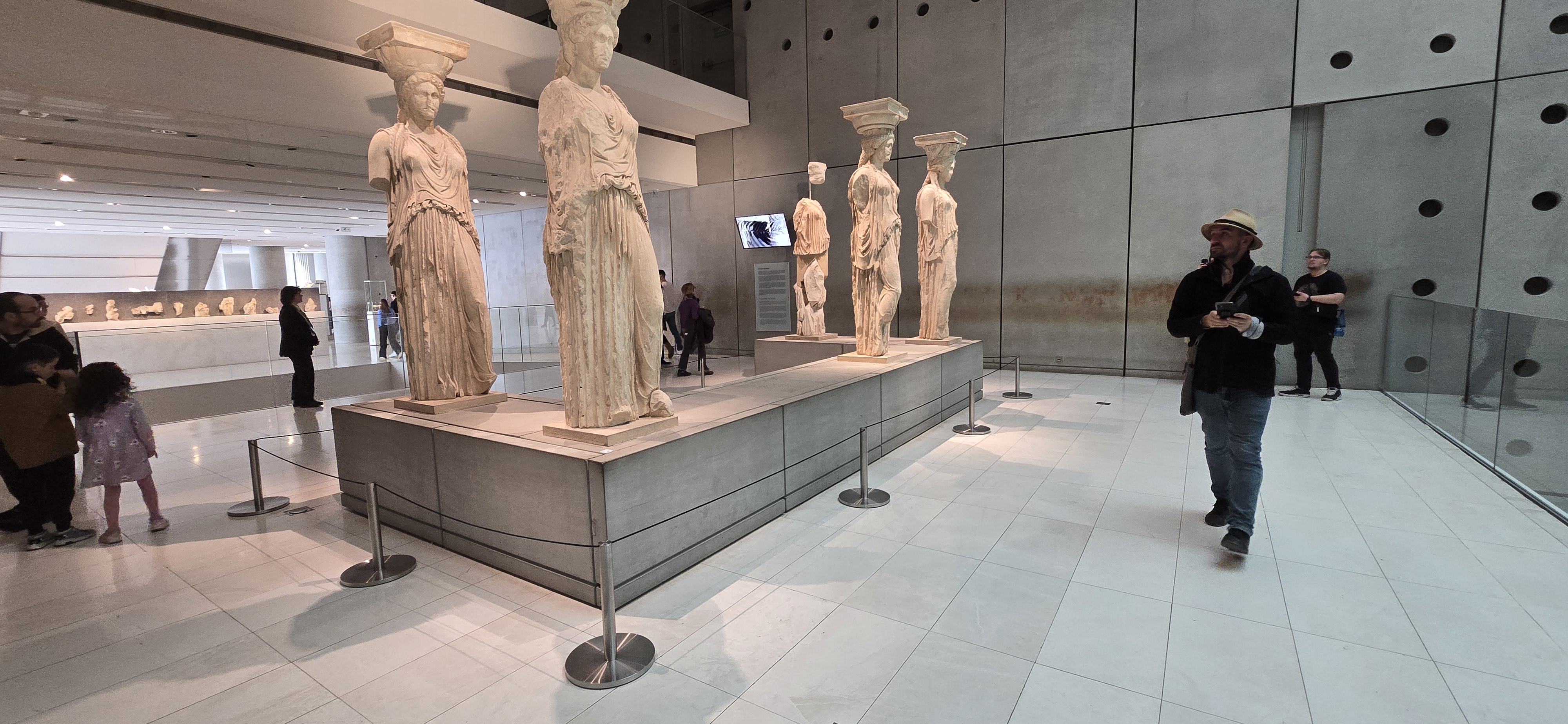
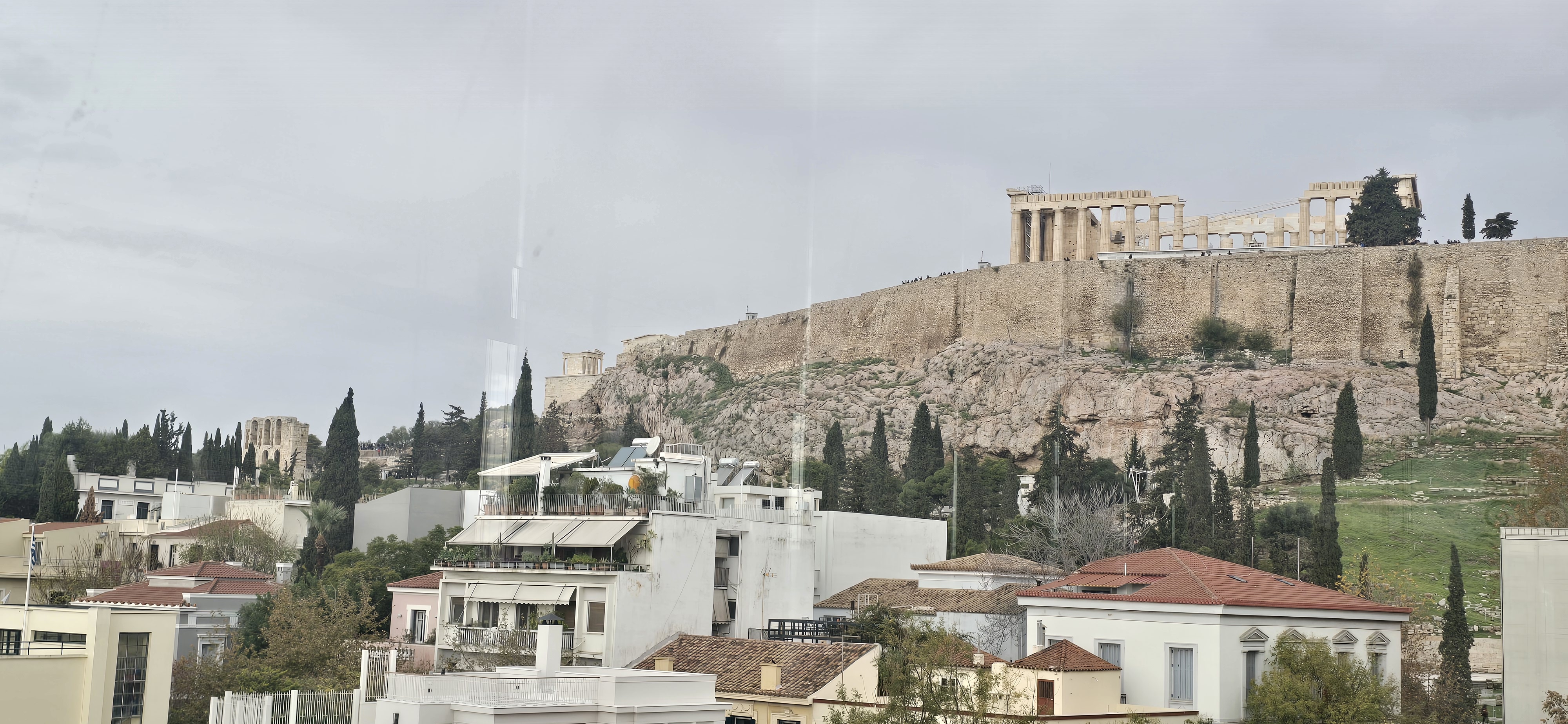
  • When I stepped back outside after the Acropolis Museum, the sky had shifted. What had been clear when I entered was now softened by a light drizzle — not enough to send anyone running for cover, just enough to slow the pace and quiet the city a bit.

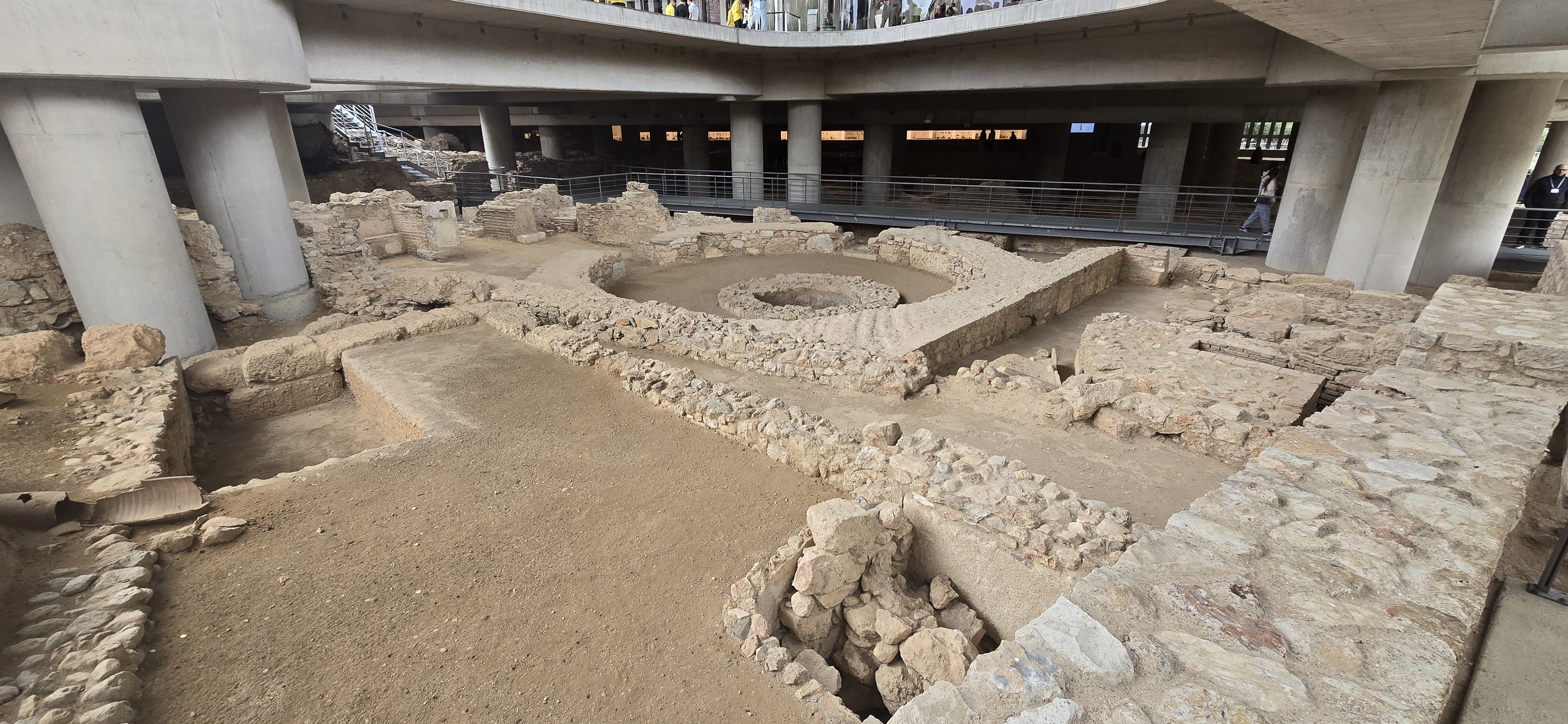
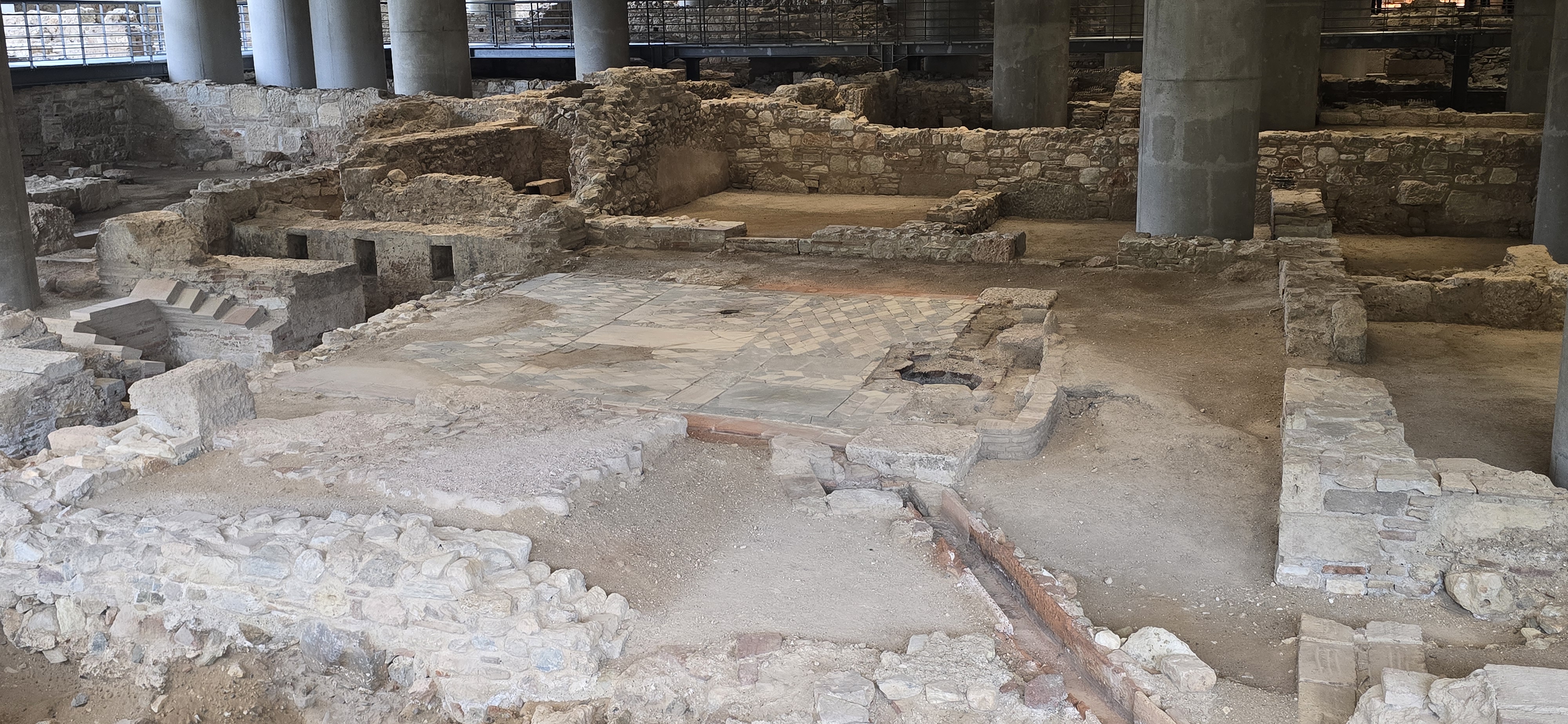
    Athens hummed gently around me, but my thoughts lingered behind, still tracing the layers I had just walked through. I didn’t rush toward my next destination. After moving through centuries of faith, daily life, healing, marriage, and ritual, it felt wrong to immediately shift back into sightseeing mode. The museum had given me more than facts — it had given me context. Weight. Perspective.

    Every step away from it felt intentional, like I was carrying those stories with me now — not just seeing ruins, but understanding the lives that once filled them. The drizzle felt almost fitting, a soft punctuation mark on everything I had just absorbed.

    I adjusted my bag, took a slow breath, and continued on — unhurried, more aware, and quietly grateful that I had started here first.

    Temple of Olympian Zeus: Standing Before a Fallen King

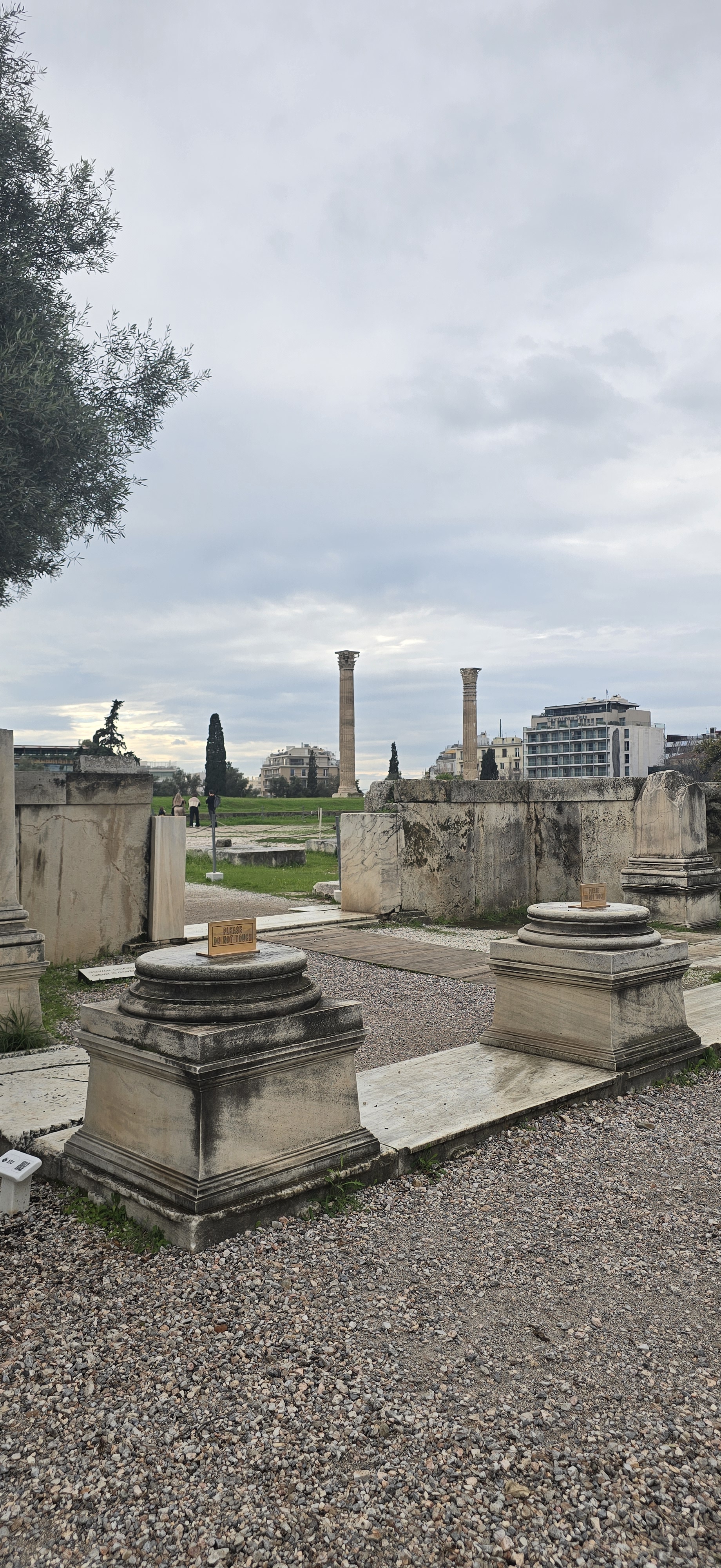
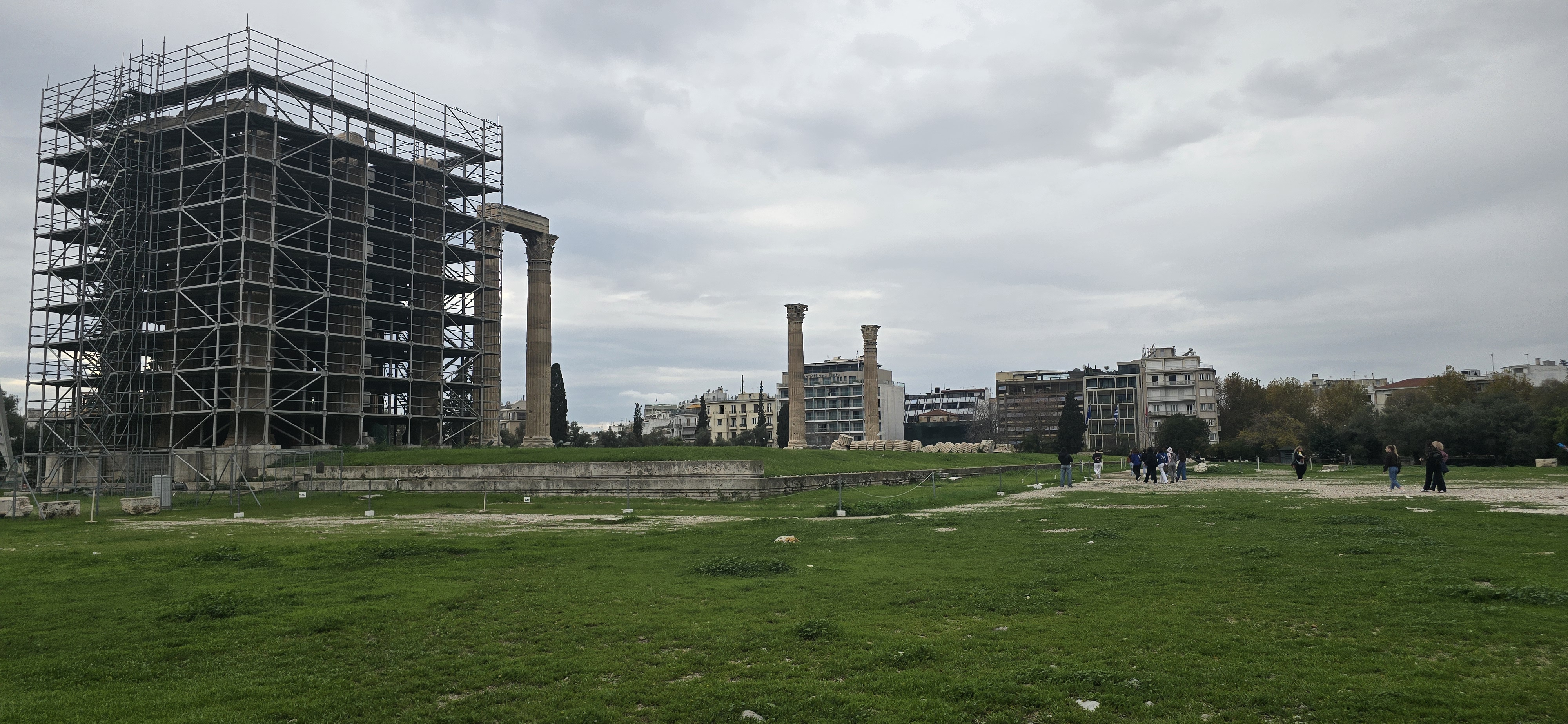
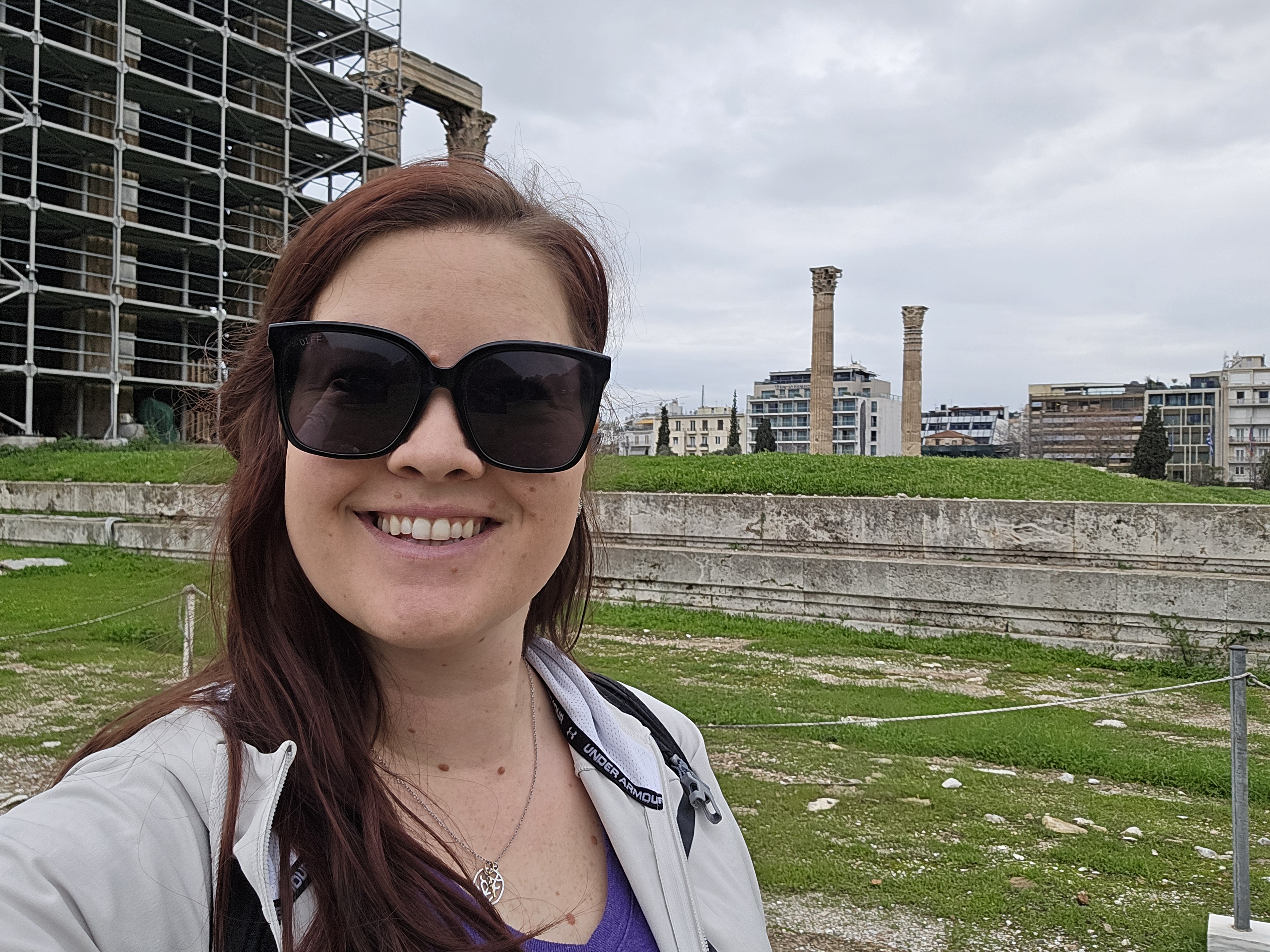
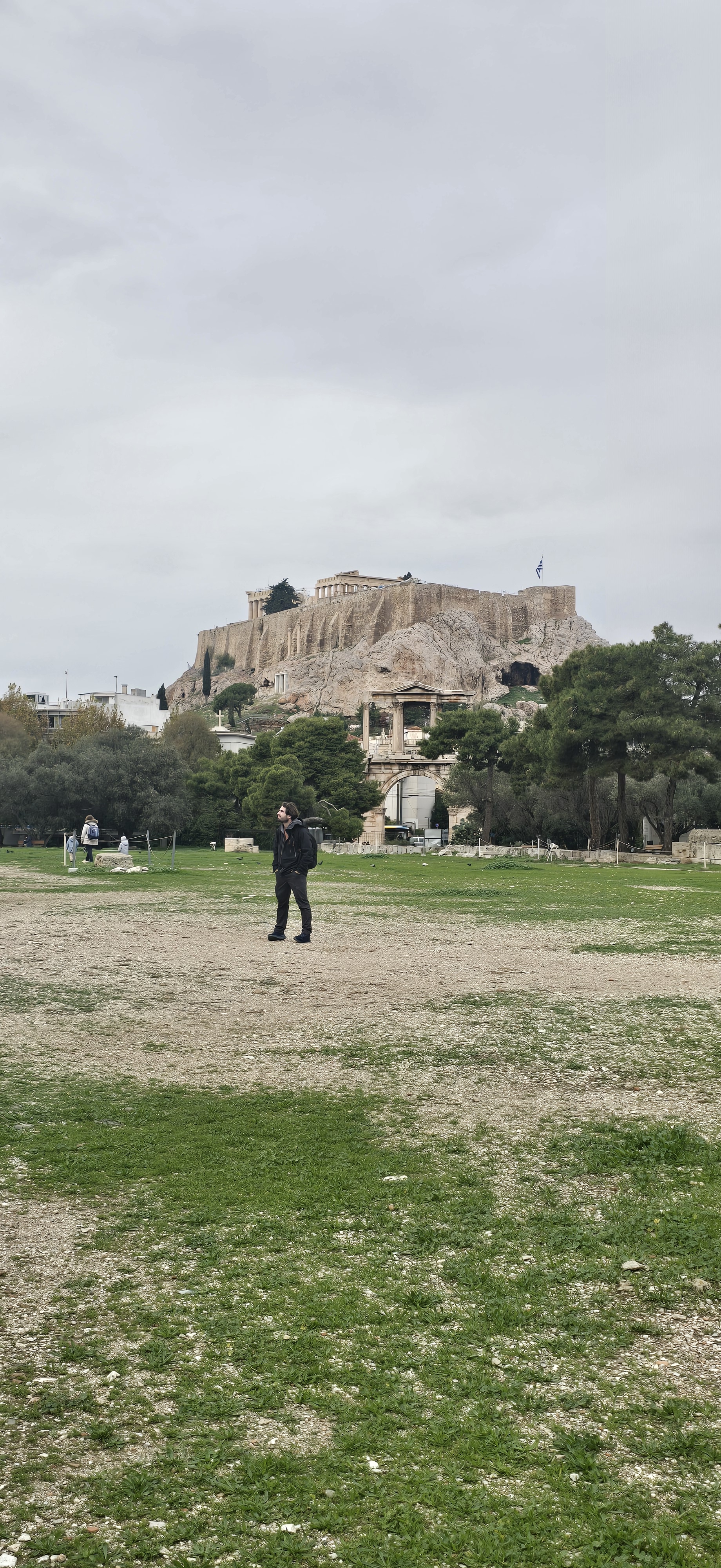
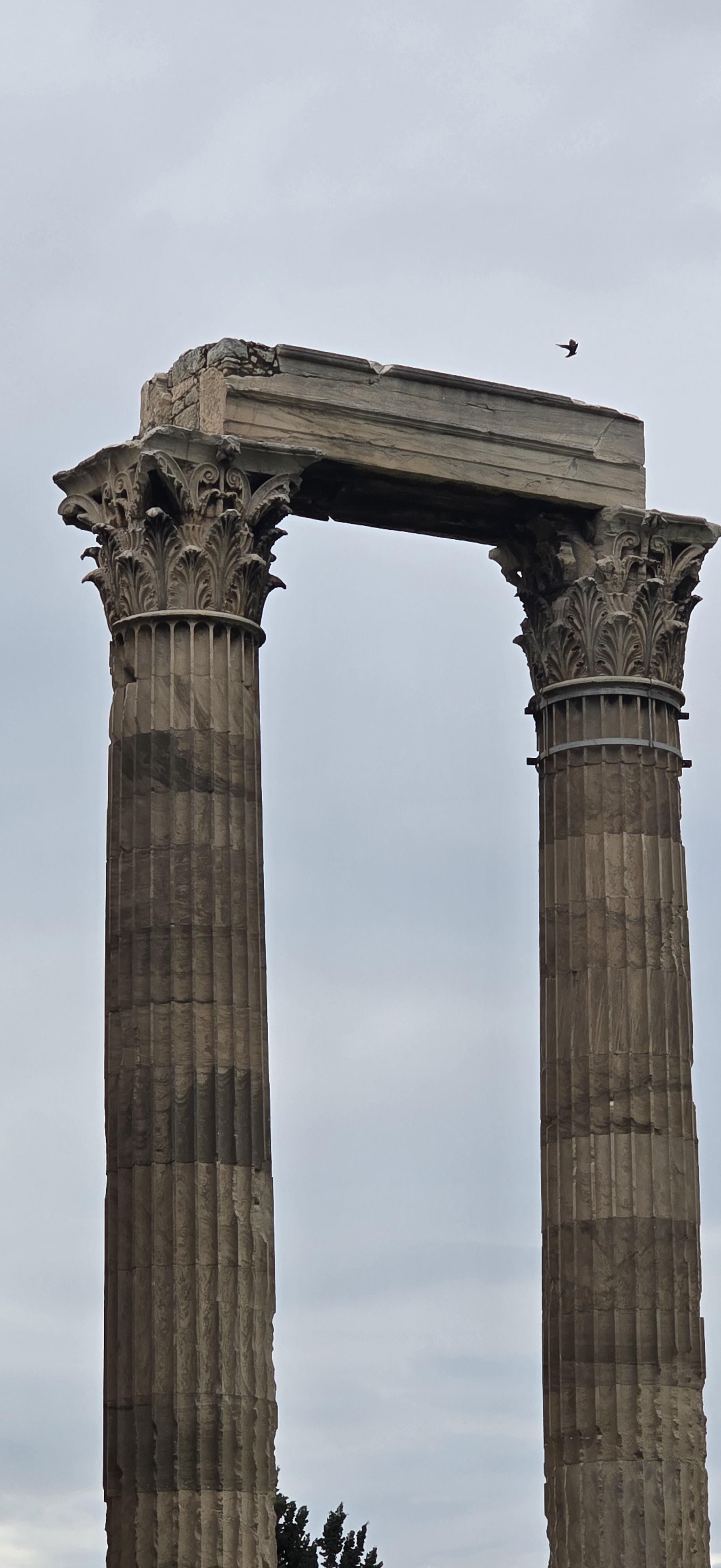
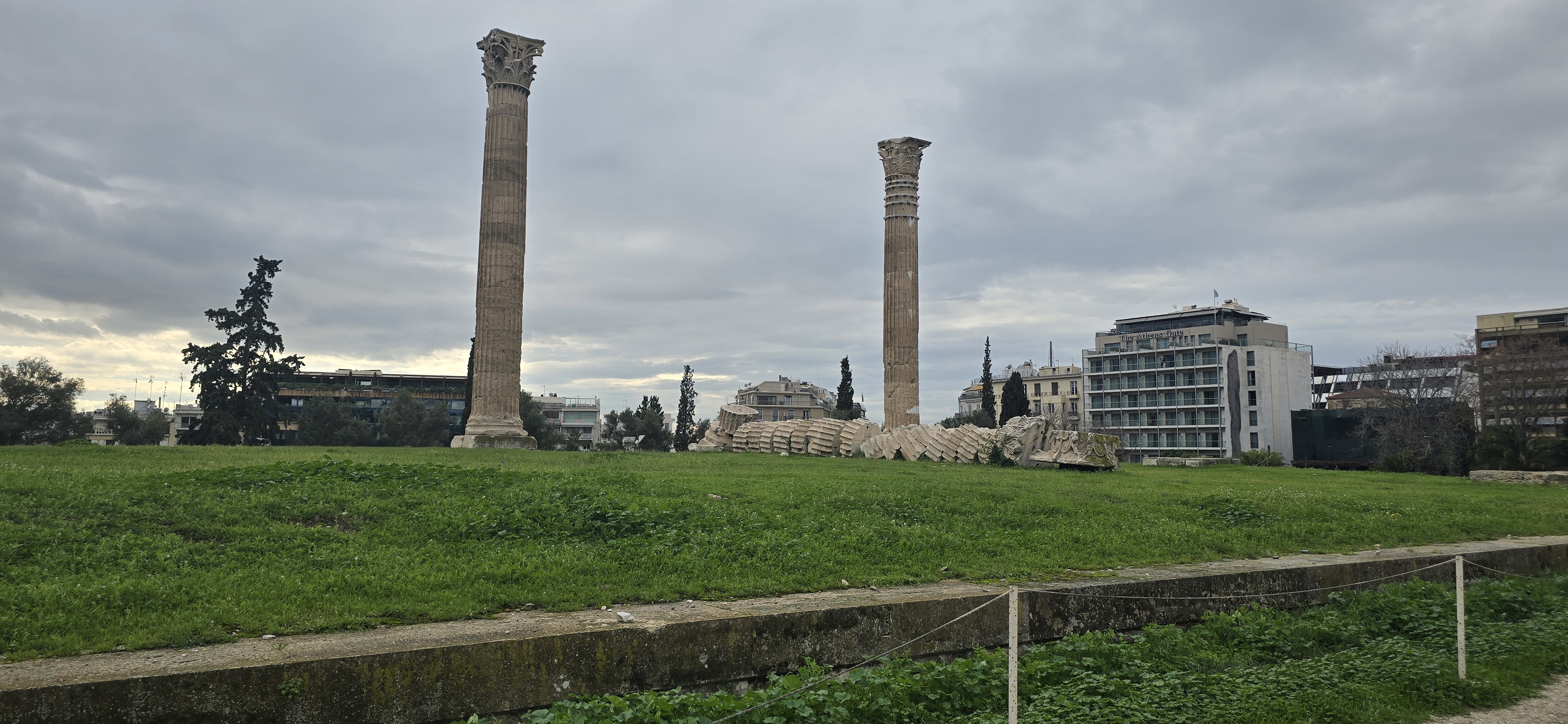
    By the time I reached the Temple of Olympian Zeus, the drizzle had lifted, though the ground still glistened beneath my feet — rain-darkened stone reflecting the towering remains above. Restoration work was underway on parts of the site, a quiet reminder that even ancient giants require care, patience, and time.

    Zeus was not just another god in the Greek pantheon — he was the king of them all. Ruler of the sky and thunder, guardian of order, law, and justice. This temple was built not merely to honor him, but to proclaim power, devotion, and permanence. Construction began centuries before it was completed, spanning generations who believed the work itself mattered, even if they would never see it finished.

    Standing there, I felt humbled.

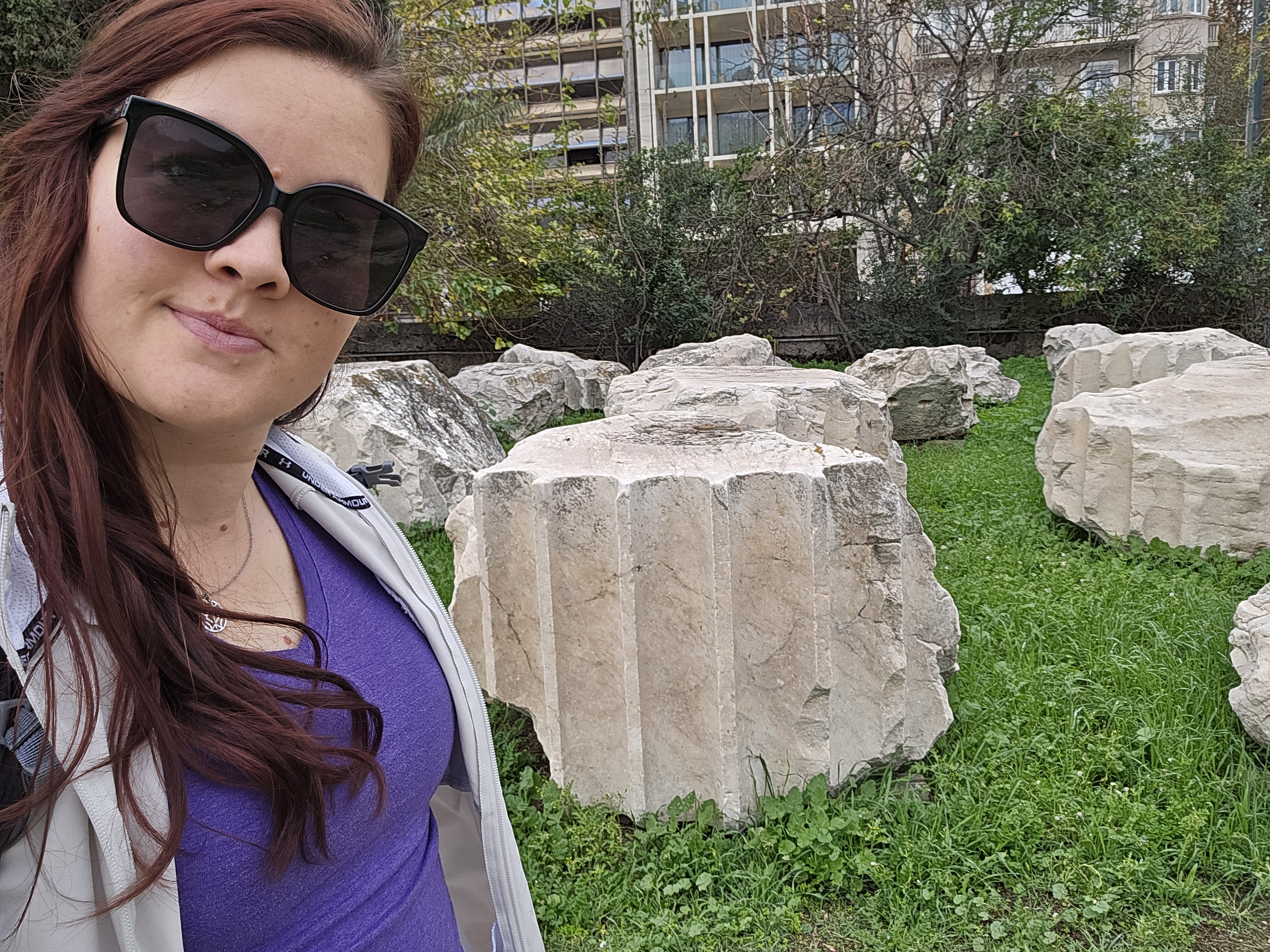
    The columns rose with a gravity that pulled your gaze upward whether you meant to look or not. They didn’t overwhelm — they commanded. And even the fallen pieces scattered across the ground were massive — stone drums taller than my waist, reminding me that even in ruin, this place still holds authority.

    There was something grounding about that. Seeing such scale — not pristine, not complete — yet still profoundly powerful. The temple didn’t need perfection to make its point. Time had worn it down, earthquakes had claimed pieces, and still… it stood.

    I lingered longer than I expected, walking slowly between the columns, letting the size and silence settle in. The Temple of Olympian Zeus isn’t about what remains intact — it’s about what endures. About strength that doesn’t disappear when things fall apart, but changes form.

    And maybe that’s why it stayed with me.

    Athens National Garden: A Glimpse of Something Eternal

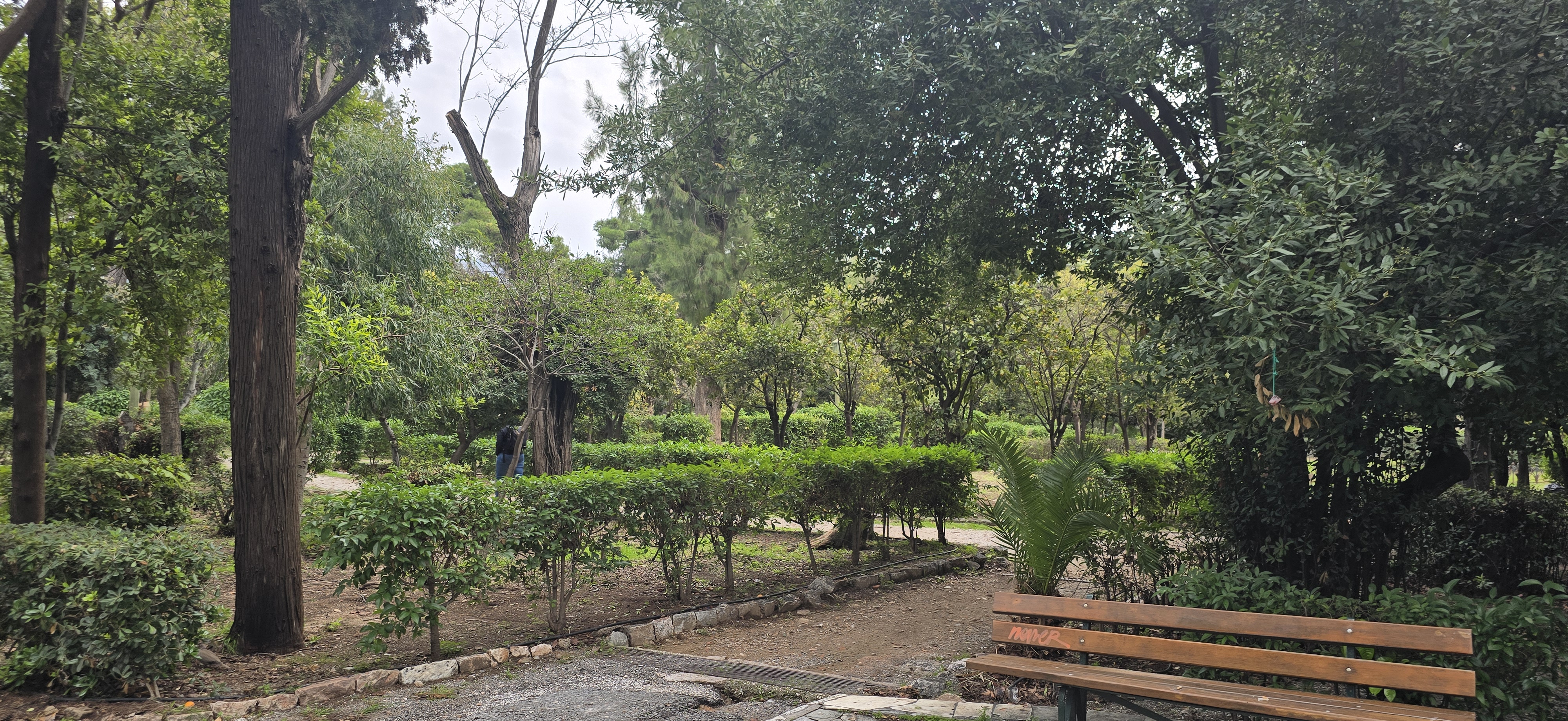
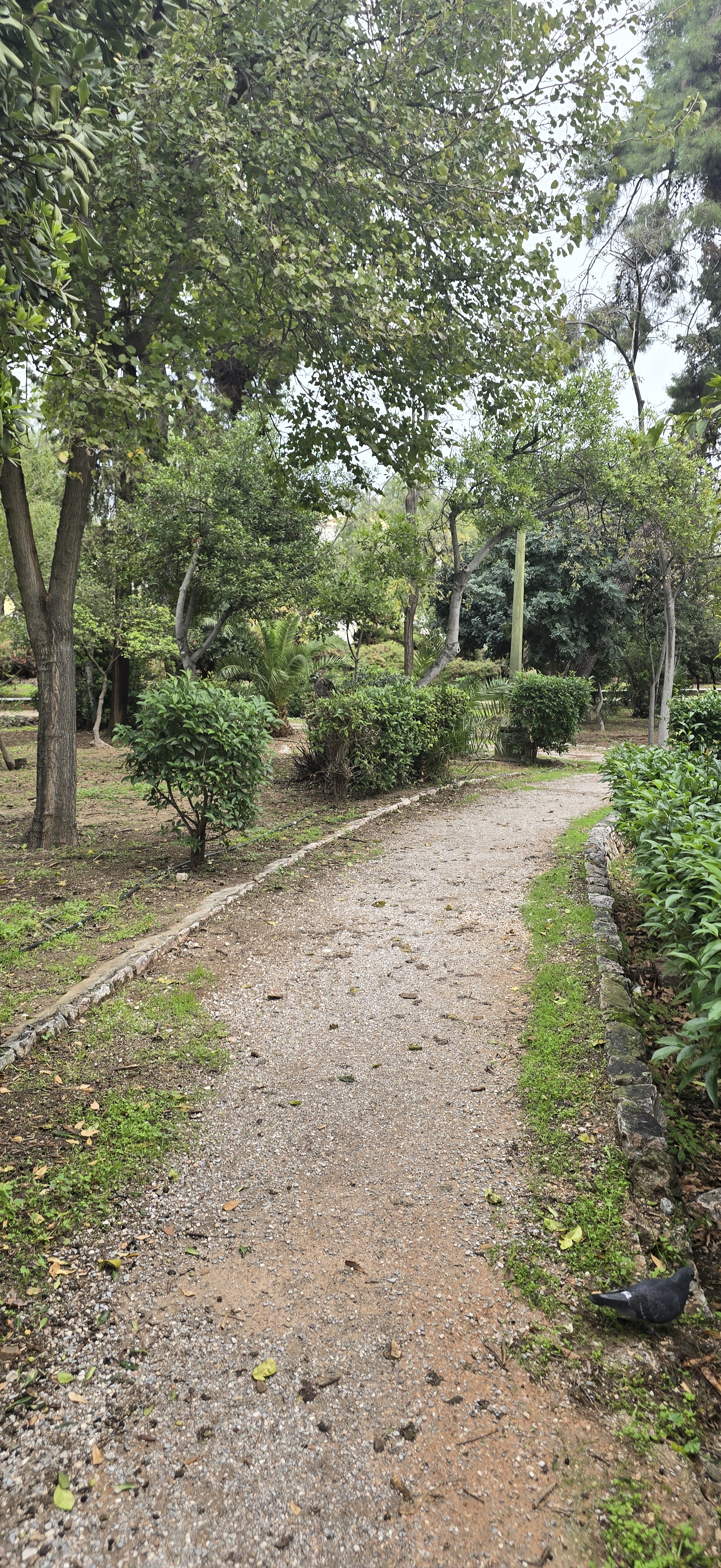
    The garden didn’t appear all at once. I had to walk a bit to reach it — past streets still damp from the earlier drizzle, past stone and traffic and the steady rhythm of the city. And then, almost quietly, the entrance opened, and the noise softened behind me.

    Inside, everything slowed.

    The paths curved gently, the air felt cooler, and the ground still held traces of rain. It was one of those spaces that doesn’t announce itself, but invites you in all the same. After standing among towering columns built to honor gods and power, this place felt like a deliberate contrast — not grand, but deeply peaceful.

    As I walked, I found myself thinking about the Garden of Eden — the way we’re told about it from such a young age as the first home, the place where everything was whole, unbroken, and beautifully ordered. If a garden made by human hands could feel this restorative, this intentional, this alive, I couldn’t help but imagine how breathtaking our eternal home must be — a place designed not for monuments, but for communion, rest, and presence.

    The garden didn’t feel like an escape from the city; it felt like a reminder placed within it. That even in places shaped by centuries of ambition, conquest, and survival, there is still room for beauty that exists simply to be enjoyed. Stillness planted right in the middle of motion.

    I moved slowly, not wanting to rush the moment. It felt like a pause God had placed along the path — a quiet reassurance that becoming doesn’t always happen through striving. Sometimes it happens through remembering what we were made for in the first place.

    When I eventually turned back toward the streets, I carried that peace with me — the sense that glimpses of eternity can meet us here and now, tucked between stone and story, if we’re willing to notice them.

    Wandering Without Urgency — Shops & Small Streets

    I did have a destination in mind — the Roman Forum — but I wasn’t in a hurry to reach it.

    On the way, Athens invited me to slow down. Small shops lined the streets, not calling out for attention, but quietly open, as if they had been there long before me and would remain long after. Windows held ceramics, linens, jewelry, postcards, and everyday objects that felt less like souvenirs and more like fragments of daily life.

    I found myself easing my pace without realizing it. Pausing. Looking longer. Letting curiosity guide me instead of the clock.

    One shop, in particular, lingered with me — a small custom leather sandal workshop tucked along the way. The scent of leather filled the space, and rows of handmade sandals lined the walls, each pair shaped with care rather than haste. I watched for a moment as the craftsman worked, hands steady, movements practiced, creating something meant to last.

    If it had been summer — or if I’d had even a little extra room in the single bag I brought — I’m almost certain I would have walked out with a pair. Instead, I carried the moment with me: a quiet appreciation for craftsmanship, patience, and the beauty of things made slowly, intentionally, and by hand.

    These streets weren’t grand or monumental — they were lived-in. Narrow lanes, worn stone underfoot, the soft hum of a city moving at its own rhythm. Locals greeted one another in passing. Shopkeepers stood in doorways. Conversations drifted past in Greek, melodic and warm, even when I couldn’t understand the words.

    Walking this way — toward something, but not rushing to arrive — felt quietly freeing. It reminded me that purpose and presence don’t have to compete. You can move forward while still allowing yourself to notice, to linger, to be.

    By the time I reached the end of those streets and turned back toward history once more, I felt lighter somehow — grounded, unhurried, and deeply aware that some of the most meaningful moments come not from arrival, but from the way you choose to walk toward what’s next.

    Roman Forum: Where Layers Speak

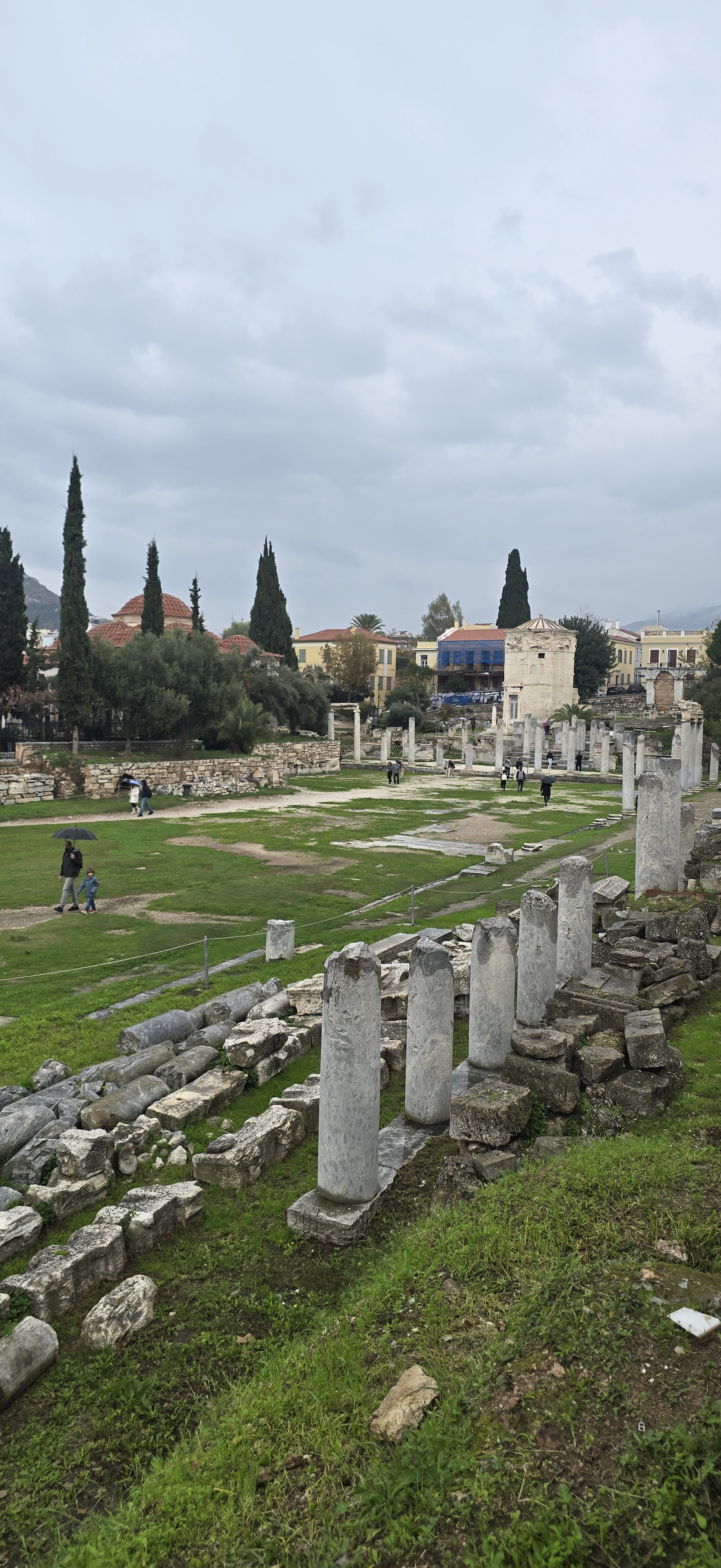
    By the time I reached the Roman Forum, the day had softened. The drizzle had passed,d leaving the ground darkened and slick, the stones holding on the memory of rain. What felt fighting, somehow a place where history itself lingers in layers, never fully dry, never fully gone.

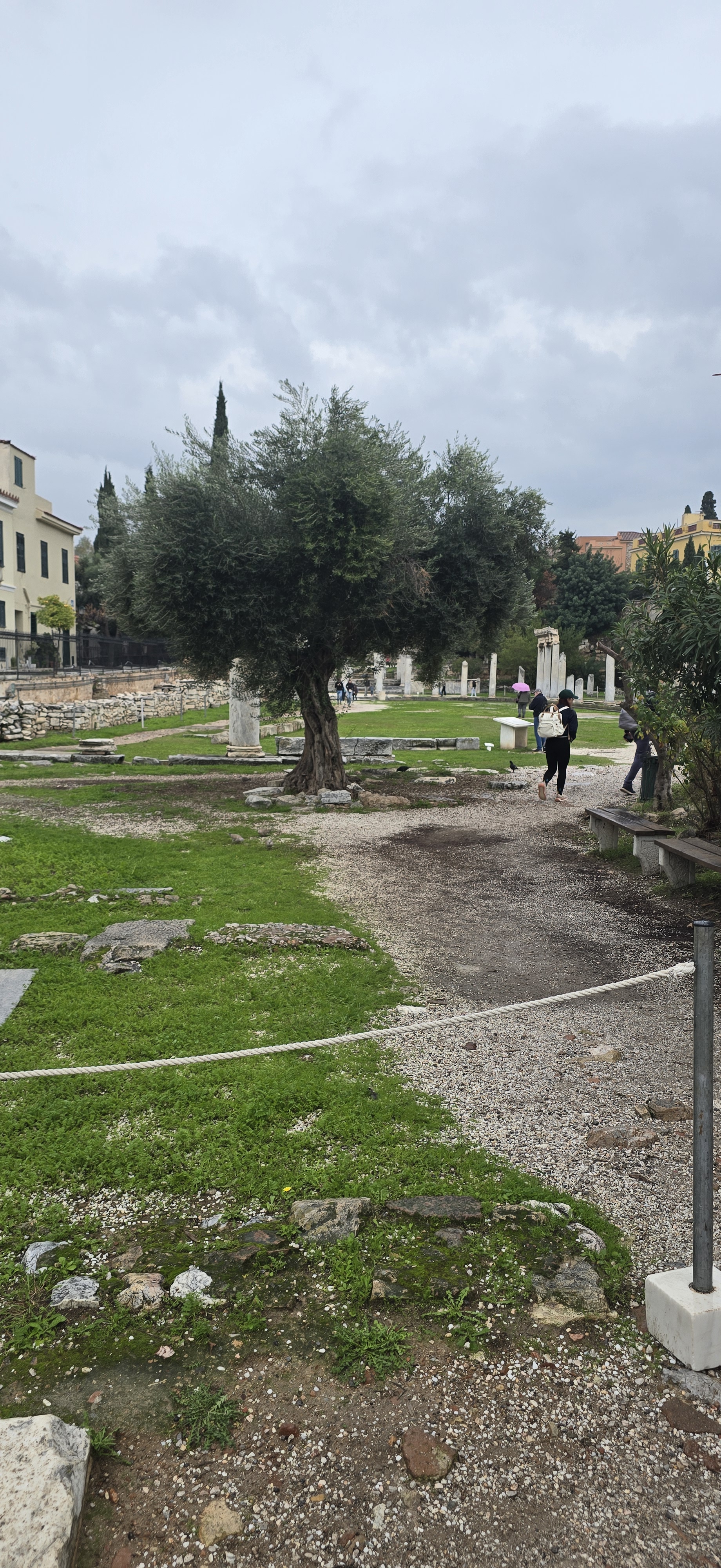
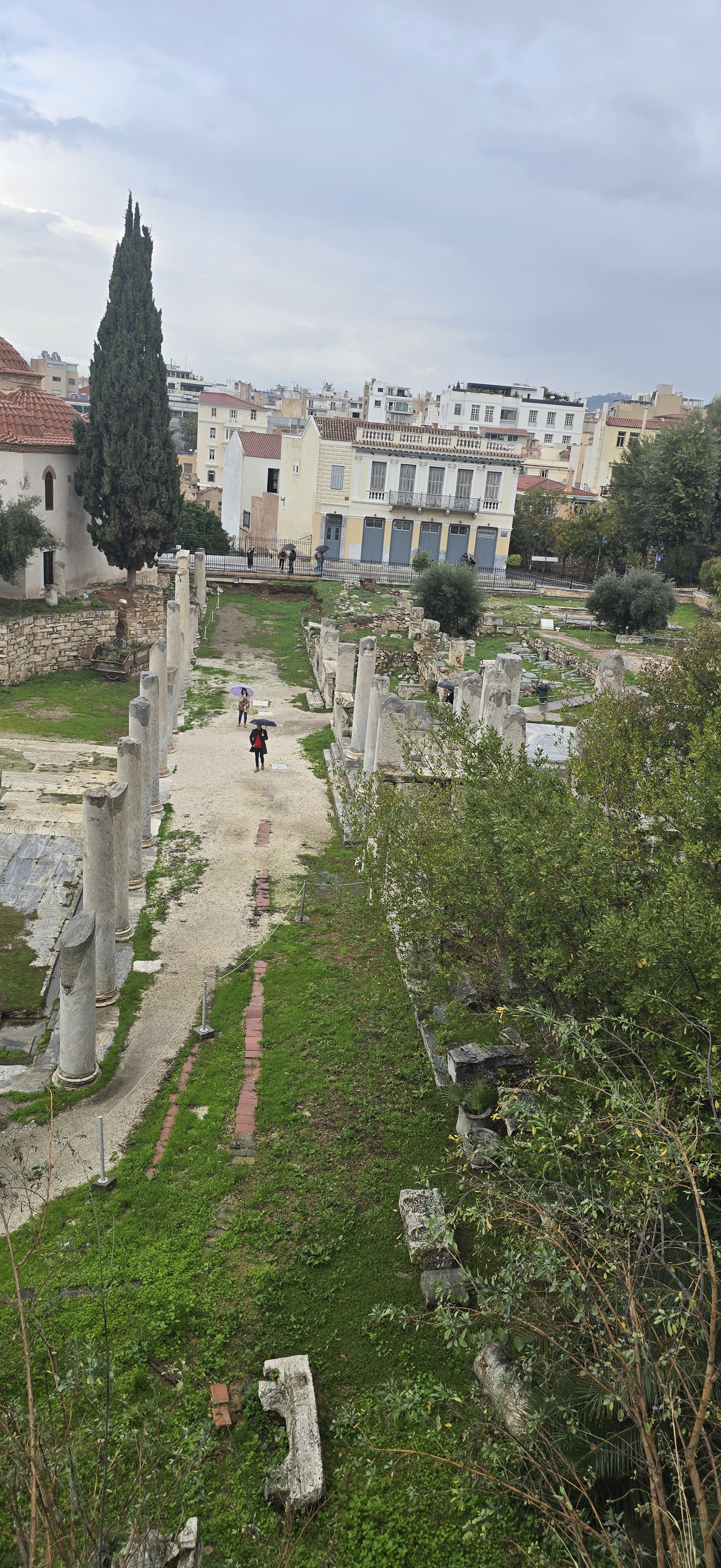
    Walking through the Roman Forum in Athens didn’t feel like stepping into ruins so much as stepping into evidence. Edience of an empire that once stretched its reach here, leaving behind columns, foundations, and fragments that quietly coexist with the Greek world surrounding them. It was a reminder that Athens isn’t a single story- it’s a conversation between civilizations.  

    I moved slowly, letting my eyes trace the outlines of broken pillars and scattered stone. There weren’t monuments meant to impress anymore; they were remnants meant to endure. Places where merchants once traded, officials once debated, citizens once gathered- now reduced to outlines and echoes, yet still unmistakably significant. 

    What struck me was the persistence. The way Roman life had layered itself onto Greek soil, not erasing what came before, but building alongside it. The Forum didn’t stand apart from the city- but was woven into it, much like everything else I’d seen so far. Old roads, reused stones, repurposed spaces. History doesn’t rush but accumulates and teaches by remaining. 

    As I walked on, I thought how often we expect things- cities, lives, even ourselves- to start clean. But Athens keeps reminding me-meaning is made in layers. What lasts isn’t always what’s flawless, but what’s willing to hold what came before and keep standing anyway. 

    A Detour I Didn’t Plan- and Needed

    Somewhere after the Forum, my GPS faltered- or maybe I did. The blue dot on  my screen hesitated, recalculated, then quietly led me away from the route I thought I was on. I followed anyway, without urgency, without frustration. By now, I’d learned that detours often carry their own kind of intention. 

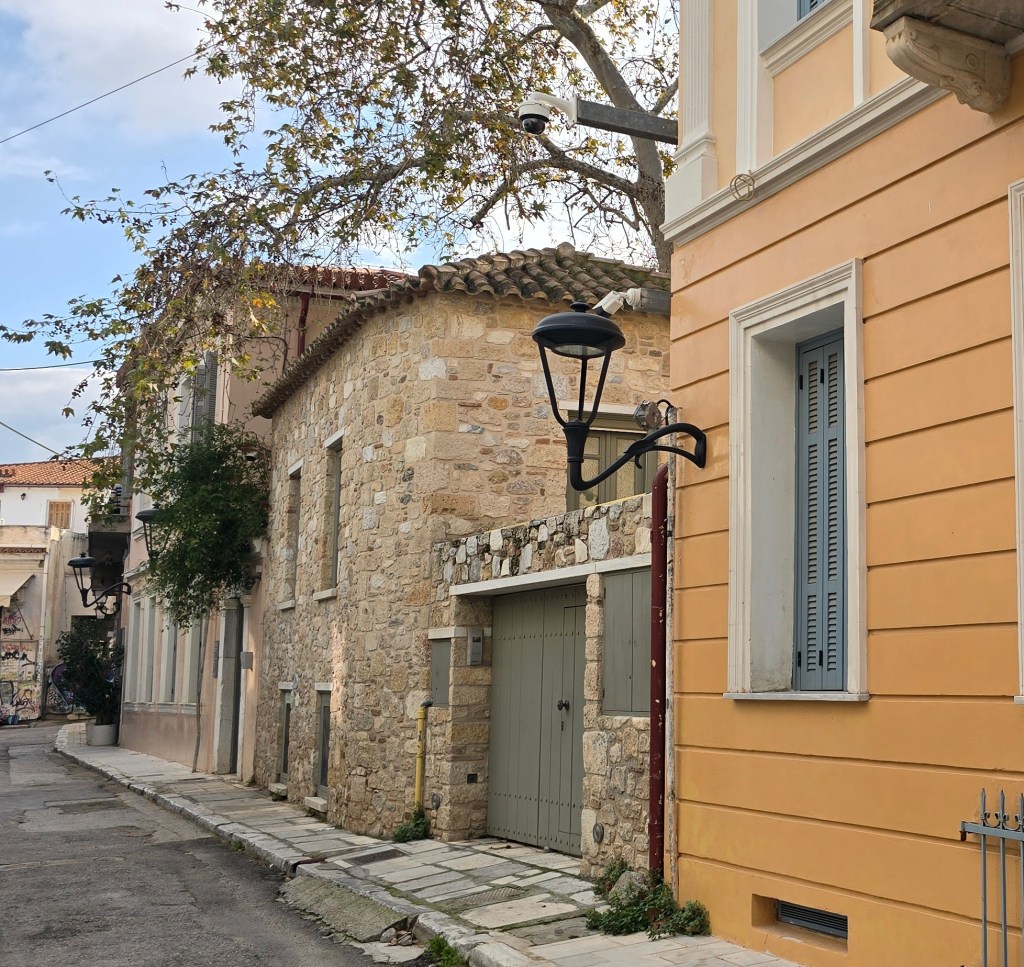
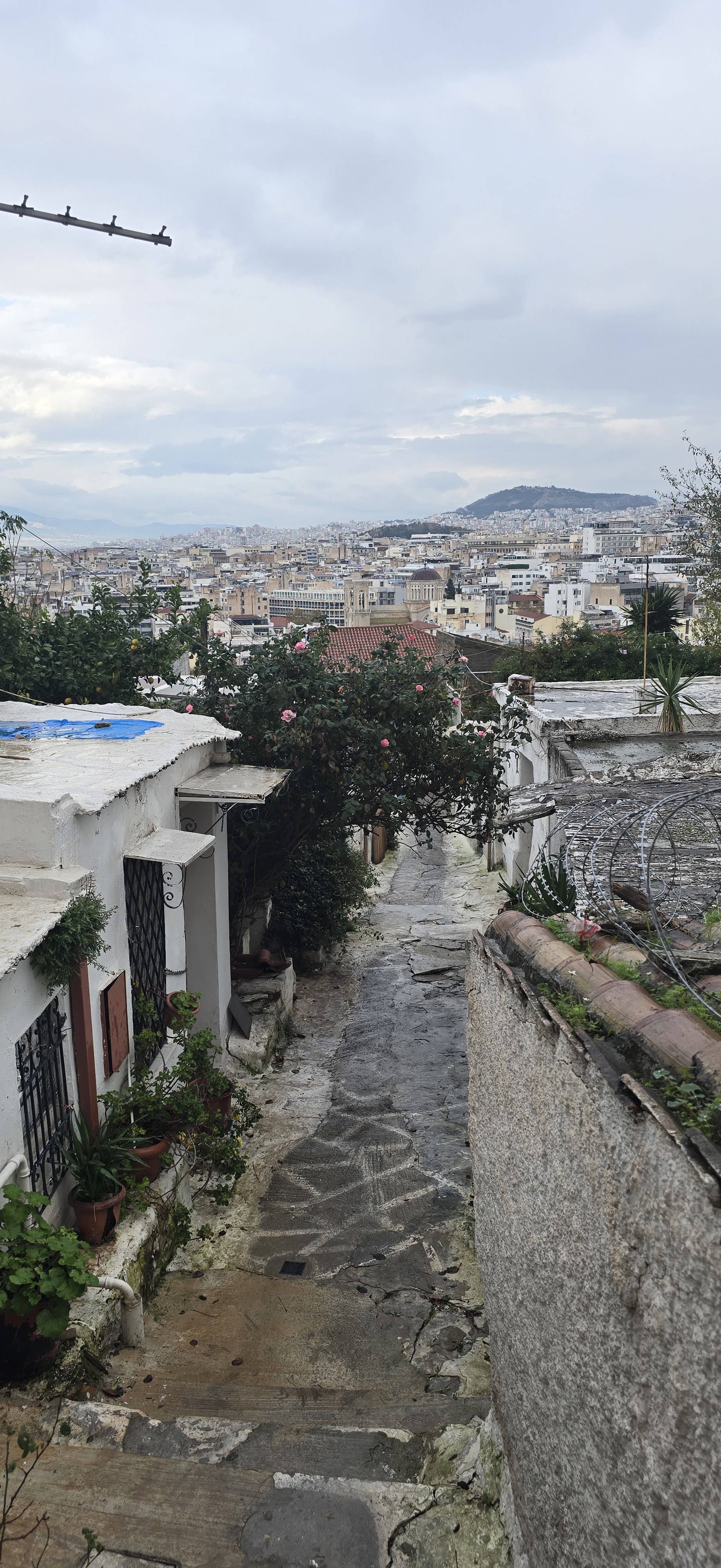
    THe streets narrowed. The noise softened. Suddenly, I was walking through a neighborhood that felt entirely different from the Athens I’d known just moments before- whitewashed walls, pops of that famous Greek blue, small balconies, simple lines and soft corners, like a pocket of the islands tucked into the city. It felt intimate, hidden, just a secret for me. 

    And then I saw it. 

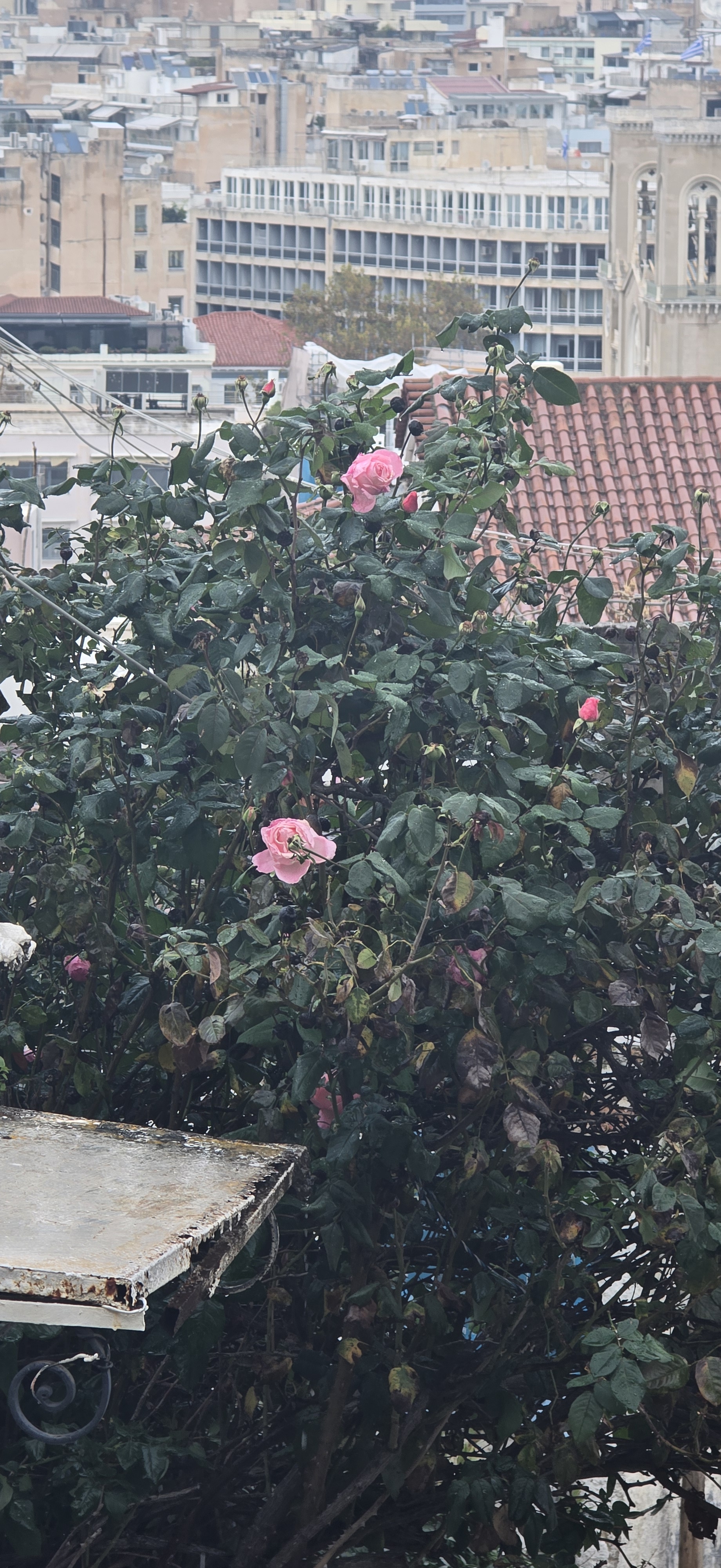
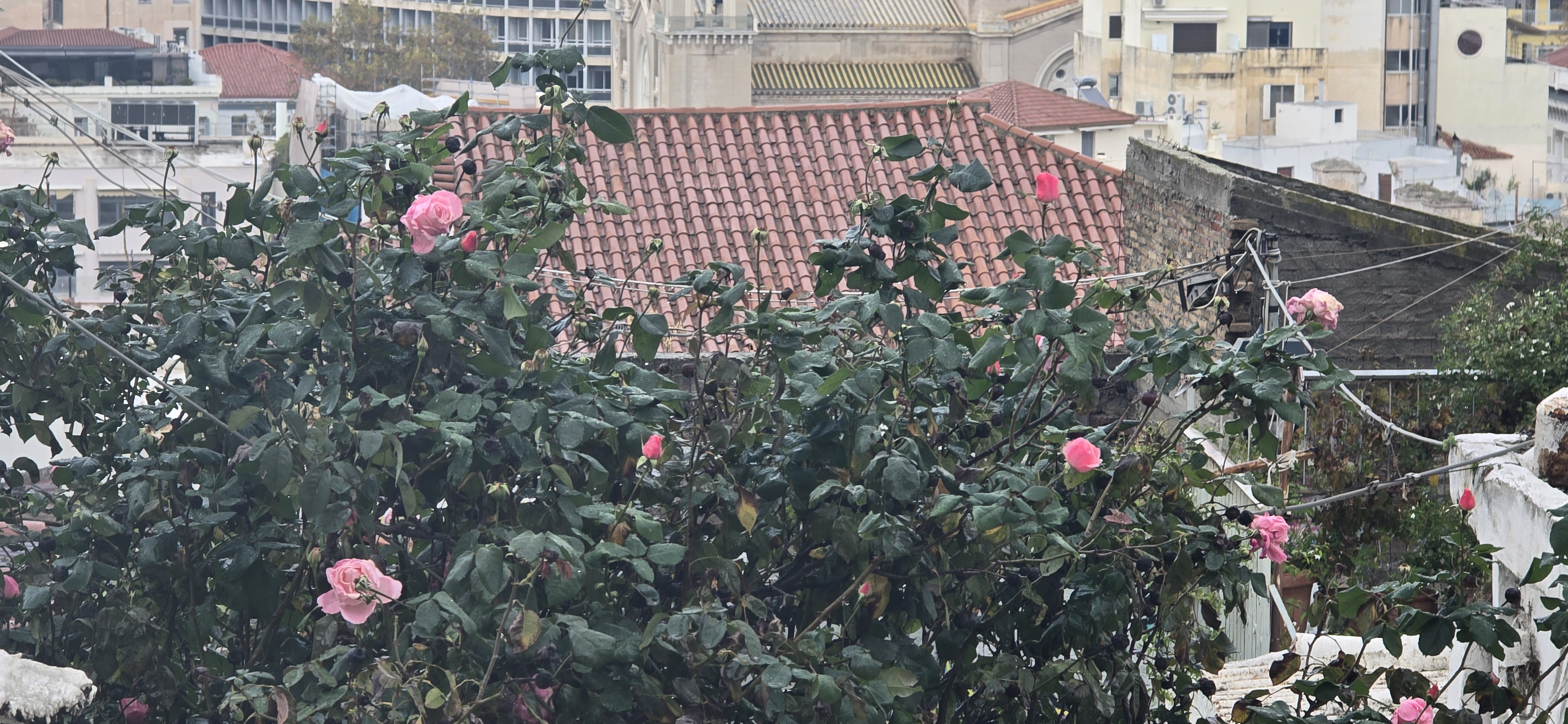
    A rose tree- not a bush, but tall and reaching- dotted with soft pink blooms, their color gentle but unmistakable against the street. It stopped me in my tracks. Roses growing upward, not carefully contained, not ornamental- just there, thriving in their own way. 

    I stood there, letting the moment settle. It felt symbolic without trying to be. A reminder that sometimes the most meaningful things appear when you’re not following the plan exactly- when you allow yourself to wander just enough to be surprised. 

    I didn’t rush away from that feeling. I let it linger as I kept walking, still slightly off-course and still uninterested in correcting myself. Hunger crept in gently and I followed my instincts instead of the map. The same instinct that had let me to the roses. 

    Lunch appeared right when I needed it at a small, beautiful spot tucked along the same unplanned route, warm and inviting. It was as if it had been placed there on purpose-I took it as an extension of the moment rather than a coincidence. 

    I sat on the patio, ate slowly, and let myself rest. The detour was nourishing in more ways than one. 

    The Roses I Didn’t Ask For

    As I finished lunch and wandered back to the hustle and bustling streets, I noticed a woman selling flowers nearby- armfuls of blooms gathered together, vibrant and alive against the grey stone around us. I smiled as I passed, not thinking much of it at first. 

    But then she noticed me. 

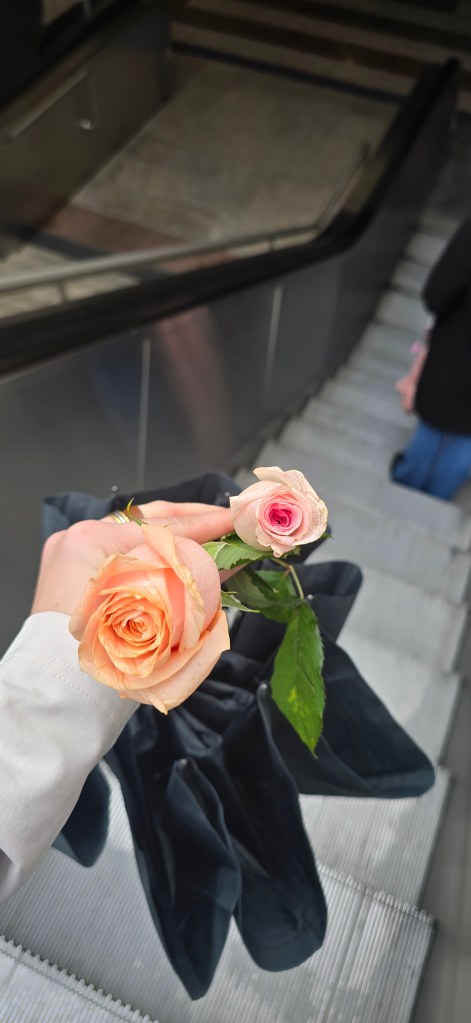
    She stepped closer, her eyes kind and certain, and without hesitation she reached out, selecting a few flowers-roses to be exact- from her bundle-soft pink, the same shade I had just stood admiring on that unexpected detour. She pressed them gently into my hands and said something along the lines of, “I think you need these.”

    I tried to protest, to insist I hadn’t asked, but she wouldn’t hear it. Something, she said, told her I was meant to have them. 

    I stood there holding the roses, a little stunned, a little emotional, and far more moved than I expected to be. After the rose tree. Afer the wandering. After the quiet pause at lunch. It felt less like chance and more like punctuation- as if the day itself was underlining a message I’d already been invited to notice. 

    I thanked her, genuinely, and continued with the roses in my hand, smiling to myself. Some gifts don’t come from plans or maps. Some arrive simple because  you were open enough to receive them. 

    And sometimes, you don’t need to understand why you were given something- only to carry it with you for the rest of the walk. 

    Closing Reflections: Letting the Day Speak

    As I began going to my dinner location I realized how full the day had been-not in the way of checklists of landmarks, but in meaning. I had walked among monuments and gardens, ancient stones and ordinary streets, plans and detours. I had followed mas, ignored them, and found myself exactly where I needed ot be. 

    Nothing about that day felt rushed, or forced, or loud. It unfolded slowly, like it trusted me to keep up. 

    There’s something sacred about days like that- the ones that remind you that becoming doesn’t always require bold decisions or dramatic moments. Sometimes it happens in the quiet yeses: yes to wandering, yes to pausing, yes to noticing what’s right in front of you. Yes to receiving what you did’t ask for. 

    As I carried the roses with me-petals soft, stems firm- I thought about how much of life is like this city: layered, ancient, and still alive. Built over time. Shaped by what came before. Strengthened not by perfection, but by endurance. Some paths are revealed only once you’re already walking them. 

    Not every return is a step backward-some are simply the long way toward what’s still alive. 

  • I started the day the right way: with a delicious breakfast of stafidopsoma — soft, hearty raisin bread rolls, similar to bagels — and a cup of Greek coffee. ☕
    The coffee surprised me in the best way: larger than Italian espresso, smooth, and to-go, which made it perfect for the walk ahead. Fueled, caffeinated, and curious, I set off toward the Acropolis Museum.

    Arriving at the Acropolis Museum

    Even before stepping inside, the museum makes its intentions clear. As you walk up, you can look straight down through glass floors at ancient ruins beneath the building itself — history literally layered under your feet. You’ll get a closer look later, but that first glimpse alone is enough to stop you in your tracks.

    From the museum grounds, I also saw the Acropolis itself for the very first time in person.
    And honestly?
    Wow.

    I couldn’t help but wonder: Who had stood here before me, looking up at that same hill? What were their lives like? Were we similar in ways I’ll never know?

    I had purchased my ticket in advance (highly recommend — it lets you skip the line), so I walked straight inside.

    First Impressions Inside

    The entrance opens into a wide, airy hall, with artifacts lining both sides and grand stairs rising at the far end. I didn’t really know where to begin — so I followed instinct.

    The first section that caught my attention featured artifacts from the Sanctuary of the Nymph, located on the southern slope of the Acropolis.

    The Sanctuary of the Nymph — Marriage & Ritual

    The signage explained that in antiquity, the slopes of the Acropolis served as a transitional zone between the city and its most sacred spaces — a place where myths and daily life intertwined.

    Near the major sanctuaries of Dionysos and Asklepios was a small open-air sanctuary dedicated to the Nymph of marriage and wedding ceremonies. Here, Athenians left offerings such as loutrophoroi — vessels used for the nuptial bath — along with perfume containers, cosmetics, jewelry, figurines, and ritual objects.

    What struck me most was the explanation of marriage in ancient Athens:

    Marriage wasn’t about romance. Its purpose was to ensure legitimate offspring. Girls were often married young to much older men chosen by their guardians. Weddings followed a strict ritual calendar, lasting three days and culminating in public and private ceremonies.

    Looking at the objects — items tied to preparation, ceremony, and expectation — I felt the weight of how structured life once was, especially for women. These weren’t just artifacts; they were echoes of lived experience.

    Across the Hall: The Sanctuary of Asklepios — Healing & Hope

    Directly opposite were artifacts from the Sanctuary of Asklepios, the god of medicine and healing.

    His symbols — the snake and staff — are still used today in modern medicine, which felt surreal to realize. Ancient belief still shaping contemporary life.

    The Athenian Asklepieion was founded in 420/419 BCE and functioned as a healing center. Patients would wait in porticoes, hoping to be healed through dream visions of the god. Many of the offerings displayed were depictions of healed body parts — tangible expressions of gratitude and faith.

    Later, in the 6th century AD, a Christian basilica dedicated to the “healing saints” was built directly on the site — another layer added, not erased.

    Small Sanctuaries, Many Beliefs

    The museum also explored the smaller sanctuaries scattered across the slopes of the Acropolis, where gods, heroes, and nymphs were worshiped in caves and open-air spaces.

    Aphrodite appeared here in multiple forms — as protector of marriage, unions, and the people themselves. Faith wasn’t centralized; it was woven into daily life, into movement, into space.

    The Sanctuary of Dionysos — Birthplace of Drama

    One of the most fascinating sections focused on Dionysos, god of wine, vegetation, and ecstatic celebration.

    His sanctuary on the southern slope became the birthplace of theater itself. Festivals held here eventually led to dramatic competitions — and the first performances of plays by Aeschylus, Sophocles, Euripides, and Aristophanes.

    Standing there, realizing that Western drama began as a form of worship, celebration, and storytelling — it felt like watching the roots of art reach up through time.

    Leaving the First Galleries

    By the time I reached the end of these initial sections, I already knew this museum wasn’t something to rush.

    This wasn’t just a collection of objects.
    It was belief layered on belief, ritual built upon ritual, faith evolving without disappearing.

    And I had only just begun.

    Upstairs: The Acropolis: A Living Timeline of Athens

    Many sections here photography was not allowed, so I sadly don’t have a ton of photos here.

    1. The Acropolis at the Beginning of Its Story

    The Acropolis was never just a monument — it was chosen early on as a place of life.

    Long before marble temples crowned its summit, the rocky hill at the heart of Athens offered what early settlers needed most: natural springs, defensive height, and open land. From the Neolithic period through the Bronze Age, the Acropolis served as a place of habitation, protection, and worship.

    By the Mycenaean period (around the 2nd millennium BC), it had become a fortified citadel — surrounded by massive “Cyclopean” walls so enormous later generations believed giants must have built them. Within these walls lived rulers, nobles, and worshippers who honored Athena as their protector long before her city bore her name.

    The Acropolis was already sacred — not because it was beautiful yet, but because it was essential

    2. From Sacred Hill to Religious Center

    As Athens grew from scattered communities into a unified city, the Acropolis became its spiritual heart.

    Small sanctuaries dotted its slopes, dedicated to gods, heroes, and nymphs — especially Athena, Pan, Aphrodite, Dionysos, and Asklepios. These open-air sanctuaries blurred the line between daily life and divine presence. Faith wasn’t set apart from the city; it was woven into it.

    Marriage rituals, healing practices, festivals, and civic identity all passed through these sacred spaces. The Acropolis became the meeting point between myth and human life — where gods were honored and people brought their fears, hopes, and gratitude.

    3. The Archaic Acropolis & the Birth of Democracy

    Between the 7th and early 5th centuries BC, Athens transformed.

    This era saw the rise and fall of tyrants, social upheaval and reform, and the groundwork for democracy.

    Reformers like Solon and later Cleisthenes reshaped Athenian society, expanding political participation and limiting aristocratic control. During this time, the Acropolis took on a monumental character — no longer just sacred, but symbolic of the city’s evolving identity.

    Temples, statues, and offerings filled the summit, celebrating Athena not only as a goddess, but as a symbol of civic unity and power.

    4. Destruction & Defiance: The Persian Wars

    In 480 BC, everything burned.

    The Persians invaded Athens, looting and destroying the Acropolis, tearing down temples, and setting sacred spaces on fire. Statues were smashed and buried in pits — not discarded, but intentionally preserved beneath the rubble.

    What followed is one of the most powerful moments in Athenian history: the choice not to erase the scars.

    For decades, Athenians left the ruins visible as a memorial — a reminder of loss, resilience, and survival. Victory at Salamis renewed their confidence, but they remembered the cost.

    5. Classical Athens & the Acropolis Reborn

    Under Pericles in the mid-5th century BC, Athens reached its height.

    The Acropolis was rebuilt — not simply restored, but transformed into a statement of cultural, political, and artistic supremacy: the Parthenon, the Erechtheion, the Temple of Athena Nike

    These buildings reflected: Democratic ideals, Imperial confidence, artistic perfection

    The sculptures of the Parthenon told stories of gods and mortals, victories and festivals, portraying Athens as the center of order against chaos. The Acropolis became a declaration: this is who we are.

    6. War, Change, and Endurance

    Athens’ power did not last forever.

    The Peloponnesian War weakened the city. Macedonian rule followed. Rome later absorbed Athens into its empire — yet, unlike many cities, Athens was spared destruction. The Romans revered its intellectual and artistic legacy, preserving and restoring monuments rather than replacing them.

    Over centuries: pagan temples became Christian churches; the Acropolis became a fortress; statues were repurposed or buried; faith changed, but sacredness remained

    Even through Byzantine, Ottoman, and modern eras, the Acropolis endured — reshaped but never erased.

    7. Why the Acropolis Still Matters

    The Acropolis is not frozen in time.

    It is a place where: empires rose and fell, faith shifted forms, democracy was imagined, art reached for the divine, destruction was met with rebuilding

    Every stone carries the weight of belief — belief in gods, in people, in ideas larger than any one life.

    Beneath the Museum: Homes of Ancient Athens

    Next, I wandered into the section where the museum opens directly onto the ancient homes built beneath it. Standing there, I wasn’t looking at ruins behind glass — I was looking into lives.

    These houses date back to the end of the 4th century AD, a time of residential prosperity for both the neighborhood and Athens as a whole. They weren’t lavish or extravagant, but they were spacious, thoughtfully designed homes belonging to middle-class Athenians — families who lived full, ordinary lives in a city shaped by extraordinary history. Built atop the remains of even older dwellings, these homes evolved layer by layer, remaining in use until the early 6th century AD.

    As I leaned closer, details began to emerge: entryways worn smooth by countless footsteps, quiet courtyards that once held conversation and laughter, wells that supplied fresh water, and carefully laid pipelines guiding water to latrines and bathing areas. It was infrastructure meant not for spectacle, but for living — for cooking meals, raising children, washing hands, and beginning and ending days.

    Standing there, I couldn’t help but wonder about the people who moved through these spaces. Who waited in these doorways? Who gathered in these courtyards at the end of a long day? What worries did they carry, what hopes did they whisper, what prayers rose quietly with the steam of warm water?

    This section felt especially grounding. Empires rise and fall, temples dominate skylines — but it’s in places like these that life truly happens. Seeing these homes reminded me that ancient Athens was not only shaped by philosophers and warriors, but by ordinary people living faithfully within the rhythms of their days.

    And for a moment, time felt thinner — as if their lives weren’t so distant from ours after all.

    Why This Museum Matters: Setting the Stage Before the Stones

    Before temples.
    Before ruins.
    Before postcard views.

    This museum explains why Athens became what it is.

    Before stepping onto the Acropolis itself, I’m so grateful I began here. The museum doesn’t just display fragments of the past — it teaches you how to see in layers. It reveals how lives were built on top of other lives, how homes rose over older foundations, how faith, routine, devastation, and renewal all shared the same ground.

    It sets teh stage.
    It gives context.
    It reminds you that history is layered — not erased.

    Understanding those layers changed everything for me. The Acropolis stopped being a distant monument and became a living narrative — not just of gods and glory, but of ordinary people navigating daily life, rebuilding after loss, and continuing forward even when the ground beneath them carried stories far older than they could imagine.

    Walking through the museum felt deeply familiar. Not because I’d been there before, but because I’ve lived a layered life too — built upon seasons, rebuilt after loss, strengthened through time. It reminded me that becoming works the same way. We don’t begin on blank ground. We walk paths shaped by what came before — lessons, wounds, faith, choices, love, loss — all layered beneath our feet.

    And maybe that’s why starting here matters. When you understand the layers, you stop rushing toward the monument and start honoring the foundation. Growth doesn’t come from erasing what’s beneath us, but from learning how to walk it with awareness.

    By the time I left the museum, I realized I wasn’t just preparing to see ancient ruins — I was being invited to honor the layered paths in my own life. To move forward not by rushing past the past, but by understanding it. When you know the story beneath your feet, every step carries meaning. And what comes next isn’t just something you see — it’s something you enter, already becoming.

    Some foundations are worth revisiting — not because they failed, but because they were strong enough to be built on again.

  • What would you do if you found out your school break just happened to fall over your birthday?

    Two weeks before, I decided I was taking myself to Greece. 🇬🇷✨

    There wasn’t much of an itinerary for this first day — and honestly, that felt perfect. This was a travel day. A soft landing. A quiet beginning to something I’d been looking forward to experiencing. 

    ✈️ Milan to Athens

    Traveling from Milan to Athens turned out to be the easiest, least stressful airport experience I’ve had in a long time. From stepping off the train to walking into the terminal, checking in, getting my boarding pass, and gliding through security — no rushing, no yelling, no chaos. Just calm efficiency.

    It was… glorious.

    I flew out as evening settled in, and as the plane lifted off, Milan disappeared beneath a sky painted in deep reds and pinks. There’s an old sailor’s saying about red skies at night — sailor’s delight — and watching that sunset from above the clouds felt like a good omen for what was ahead.

    🌊 First Glimpses of Greece

    Flying into Athens at night was its own kind of magic. From my window seat, I could see the coastline traced in golden lights, boats scattered across the dark water like constellations below. It felt surreal — like I was watching the city slowly reveal itself, one glowing outline at a time.

    Touching down, I felt that familiar mix of excitement and focus: Okay. New country. New systems. Let’s figure this out.

    🚆 Navigating a New City

    The all-too-familiar task of navigating public transportation in a new country began almost immediately — but thankfully, my hostel had already sent clear instructions and tips via messages. I hopped on the train, rode it to the nearest stop, and found myself just about 80 meters from where I’d be staying.

    The hostel staff were incredibly helpful — communicative, kind, and thoughtful in all the ways that make solo travel feel less daunting. The only downside was that it wasn’t as walkable to major sights as my Scotland hostel had been — but with the train so close, it more than made up for it.

    🍽️ Dinner by Instinct

    By the time I arrived, hunger had fully set in. I followed my nose across the street and stumbled into what turned out to be the most delicious souvlaki imaginable. I also ordered grilled feta topped with honey and sesame seeds — salty, sweet, rich, and utterly addictive.

    It was the kind of meal that makes you pause after the first bite and think, Oh. Yes. This was the right choice.

    (Also: it made me drink a lot of water… and contemplate ordering more honey.)

    And the best part? The entire meal — souvlaki, grilled feta with honey and sesame seeds, and all — cost less than the price of a coffee and pastry in some cities.

    🌙 A Quiet End to Day One

    It was late, and I knew there was nothing else I needed from the night. I headed back to the hostel, took a long shower, and climbed into bed — tired, full, and quietly content.

    Athens would wait until morning.

    Day one didn’t need to be loud or packed with sights. It was enough to arrive, to eat well, and to rest — knowing that tomorrow, a city layered with history, stories, and sunshine would be ready for me.

    Red sky at night…sailors take delight
    Souvlaki
    Grilled feta with honey and sesame seed topping.
    Matched the wall in my hostel lobby when I arrived.